
Review · LATIN QUARTER TOURS
Paris Latin Quarter & Left Bank – History Walk (Small Group Tour)
Paris has a special mood on the Left Bank. On this Latin Quarter and St. Germain-des-Prés history walk, you get a tight route that links medieval Paris, the French Revolution, and Roman remains, with a guide who can tailor the story to what you care about.
I like the small-group, private-party feel. I also like the way the guide uses a tablet for photo and video context, which helps when you are looking at spots that do not always come with big explanations on the street.
One thing to plan for: not every stop includes admission. The Roman baths area and the Pantheon have entrance fees not included, so your final cost can creep up if you want to go inside those sites.
Key highlights worth your attention
- Historian guide with tailored commentary so you can lean into Revolution stories or church and Roman details
- Tablet-based visuals (video, photo, and 3D-style explanations) for Roman ruins like the Thermes de Lutece
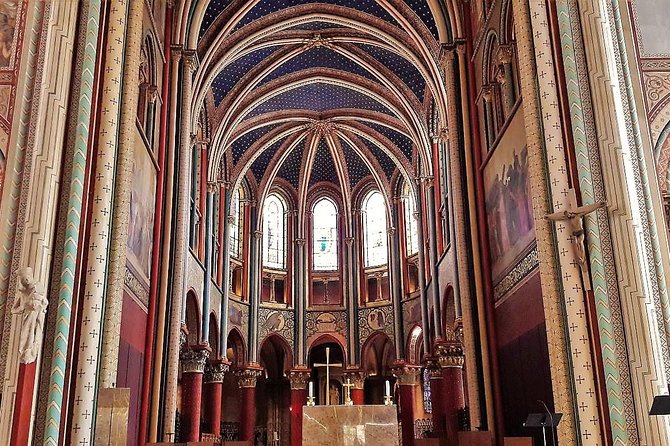
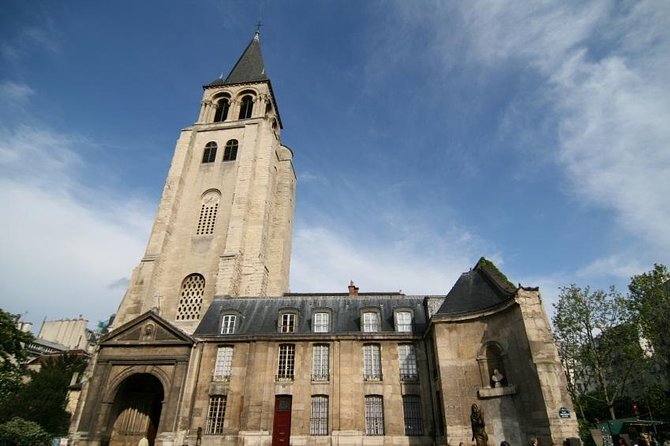
- Saint-Germain-des-Prés first, including the church’s oldest parts dating to 990 AD
- Cour du Commerce Saint-André for Revolution-era names like Danton, Marat, and Robespierre
- Luxembourg Gardens stop with the French Senate context and the Medici Fountain built in 1630
A 2 to 2.5 hour Left Bank walk with real structure
This is a short, focused history route that lasts about two to two and a half hours. It starts at the Benedictine Abbey area of Saint-Germain-des-Prés around 11:00 am, then finishes near place de la Contrescarpe. The walk is designed to move at a human pace, with time set aside at each stop, but you still have room to ask questions and shift emphasis.
The “private” part matters. This is described as a private tour for your party, yet the overall max group size is capped at 10. In real terms, that usually means less crowd jostling and more back-and-forth with your guide, which is ideal if you like history but do not want to sit through a lecture.
The guide is bilingual, and the tour runs in all weather conditions. You should dress for a city walk, and if it looks like rain, bring an umbrella. One review specifically flagged a hot day and mentioned the chosen sites worked well, even during heatwave conditions, which is a good reminder to bring water and sturdy shoes.
You can also read our reviews of more walking tours in Paris



Saint-Germain-des-Prés Church: the oldest layers you can actually see

You begin inside Saint-Germain-des-Prés, starting with a full tour of the church before heading out into the neighborhood. The key detail to know is that parts date from 990 AD, which is a wild anchor point for your whole walk. Even if you are not a church-history person, it helps to start here because the rest of the itinerary then feels like one long timeline stretching forward.
What I love about this opening is the contrast. You get something ancient and grounded first, then you transition into Revolutionary Paris and Roman remains. That order gives your brain a reference point, so later names and ruins land with more meaning.
You will also get a neighborhood stroll afterward, including a charming square and a local food market. That market stop is not just a nice pause. It is a reminder that the Left Bank is not only a set of monuments. It is a living neighborhood, and the walk gives you that everyday texture without adding a long museum detour.
What to consider
If you are hoping for a quick “look from the sidewalk” style tour, this stop is more hands-on. You should be ready for time inside the church before you move on.
Cour du Commerce Saint-André: Revolution names in a quiet passage
Next comes Cour du Commerce Saint-André, one of Paris’s oldest passages. This spot has a “how did they fit a whole story here” feeling. It is compact, but it connects to major people tied to the French Revolution: Danton, Marat, and Robespierre.
This is also where the guide’s tablet visuals can be useful. Passages can look simple if you just glance at them, but with a bit of context, you start noticing details you would normally miss. You are not just walking through an alley, you are walking through layers of political life.
The story also stretches into the coffeehouse world. You will see the city’s oldest café, now operating as a restaurant, where Franklin and Jefferson are linked with revolutionary figures and philosophers like Voltaire. There is even a Napoleon anecdote about leaving his hat when he could not pay his bar tab, which your guide uses to humanize the era.
What to consider
The stop is short, so come ready with a question or two. If you want deeper details on any Revolutionary figure, this is a good moment to ask, since the tour is moving briskly to the next site.
You can also read our reviews of more historical tours in Paris






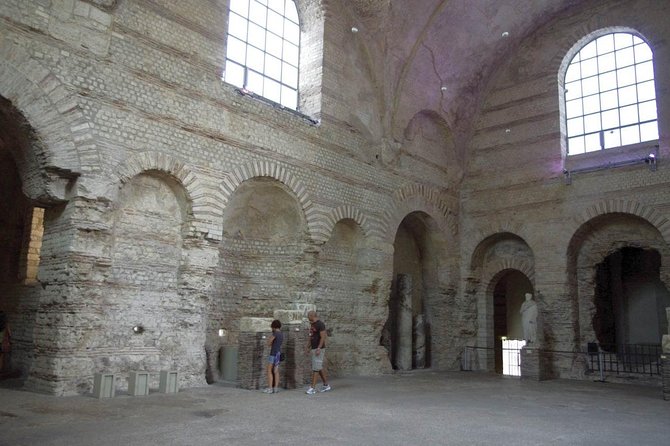
Les Thermes de Lutece at Cluny: Roman baths explained with visuals
Then you hit the Roman layer with Les Thermes de Lutece, using the Roman baths remains at Cluny. This stop is brief, but it aims to make the site understandable. Because ruins can feel like random stones, the guide uses video and visual materials, including 3D models, to explain the history and construction of the baths.
This is one of the biggest practical values of the tour: you are not left to guess. Even if you have seen Roman ruins before, the guide’s approach helps you connect what you are looking at to how baths worked and why this place mattered.
Admission here is not included, so there is a decision point. If you want to keep costs down, you can still use the stop for orientation. If you want the full inside experience at that site, plan to pay the entrance fee separately.
What to consider
Because this is a short stop, you should decide in advance if you want to spend time inside where applicable. If you prefer strictly free viewing, you can treat this as a guided “see and understand” moment.
Luxembourg Gardens: statues, the Senate, and the Medici Fountain built in 1630
After the Roman context, the tour shifts into a calmer, greener stretch at Luxembourg Gardens. This is one of the Left Bank’s classic public spaces, and the guide sets it up with specifics so it is not just a stroll.
You will learn that the gardens hold 110 statues, including a working model of the Statue of Liberty. That detail alone is worth filing away for later, because it gives you something concrete to look for as you move through.
You will also connect the gardens to government and art history. Luxembourg Palace, built in 1612, is now home to the French Senate. And the Medici Fountain dates to 1630, which helps you see the park as a long-running stage for politics, leisure, and design.
This stop is a good reset. It breaks up the heavier history points so your brain can process what you have already heard. If you like photos, this is also where you tend to get better angles, since parks give you space instead of tight passageways.
What to consider
The garden stop is short. If you want a long wander, use this tour as a guided “first look,” then return later on your own with extra time.
Pantheon: tombs plus Foucault’s pendulum story
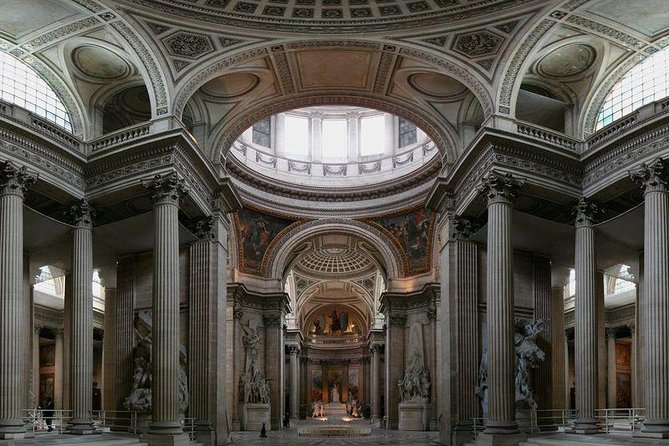
The next stop is the Pantheon, a mausoleum to some of France’s best-known thinkers and national figures. You will get a guided overview that includes the tombs of Voltaire, Diderot, Rousseau, Hugo, Dumas, St. Exupéry, and also scientists Pierre and Marie Curie. That list is dense, but the guide uses it to explain how France frames national memory.
One standout topic here is the story of Foucault’s pendulum. Even if you know the concept, hearing it in this setting makes it feel less like a random science fact and more like part of a national identity story.
Admission is not included for this stop. That means you can go in if you choose, but you should expect extra cost. If your priorities are Roman ruins and Revolution history more than interior museum time, you may decide to keep this as a guided exterior-orientation moment and save your energy.
What to consider
If you want both the Pantheon interior and other paid stops, this tour can become a multi-price outing. Check the “not included” items ahead of time so the total feels intentional.
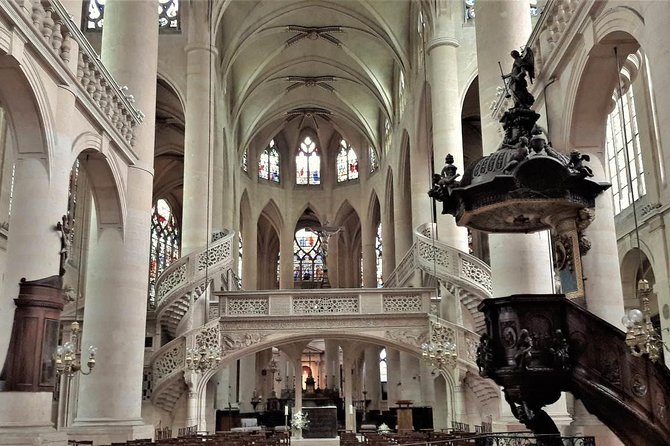
St Etienne du Mont: baroque drama and a 30ft rood screen
St Etienne du Mont is a baroque church stop, and it is one of those places that feels instantly dramatic when you see the scale. The headline detail: the church holds the nation’s largest rood screen, a carved stone screen about 30 feet wide.
This is the kind of stop that benefits from a guided explanation. Baroque design can feel like visual noise if you do not know what you are looking for. The guide focuses on the screen and other baroque treasures inside, so you get a better read on why the church looks the way it does.
If you care about art and architecture, this is a high-value moment. If you mainly want big Revolution names, you may still appreciate it because the tour is not only about politics. It is about how religious and artistic power shaped the city.
Admission is not required for this stop, which makes it a straightforward addition to your walking day.
What to consider
Churches can involve steps and indoor walking. Wear shoes you trust, especially if you are visiting in rain or after slick weather.
Arenes de Lutece: a Roman arena finish near Contrescarpe
You end at Arenes de Lutece, another Roman remnant. This feels like a fitting closure because you started with early medieval Paris and a church rooted in centuries around 990 AD. Finishing at a Roman vestige reinforces that the Left Bank is stacked with time periods, not just one.
The guide explains the fascinating history and construction of the site using video and other visual support. That matters because arenas are not always self-explanatory. You might know it is Roman, but you still want the “how it worked and what it meant” part, and that is what the guide aims to provide.
This last stop is short, so think of it as a guided highlight rather than a long stay. Still, it gives you a strong “wrap-up feeling” since you leave with a clear last anchor point.
What to consider
If you love Roman sites and want more time at the end, plan a nearby follow-on visit on your own. This tour gives you the context, then hands the rest to you.
Price and value for an $85.98 Left Bank history walk
At $85.98 per person, you are paying for a historian guide, a private-party dynamic, and tablet-based visual support. The duration is about two to two and a half hours, so you are roughly in the neighborhood of mid-$30s to low-$40s per hour. That can be a good deal in Paris when you factor in guide expertise and when you realize that a lot of the stops need explanation to make sense.
Your money also goes toward flexibility. The tour is described as able to tailor the commentary to your interests, which is rare in rigid “checklist” walks. If you want more on Revolution names, you can steer there. If you are more curious about Roman layers and architecture, you can focus the guide’s attention.
Where the price can shift is entrances. The Roman baths stop and the Pantheon have entrance fees not included. If you plan to go inside both, it adds up. But if you treat those as optional and focus on guided understanding, you can keep spending more controlled. Food and drinks are also not included, so budget for your own breaks.
Who this tour suits best
You will likely love this if you:
- want a walkable Left Bank timeline in one outing
- enjoy history told with names and scenes, not just dates
- like when a guide uses visuals to make ruins and architecture easier to grasp
It might be less ideal if you want a museum-heavy day. This route is built for streets, squares, churches, and a couple of major landmarks, with guidance that keeps moving.
A practical note on pacing, weather, and what to bring
This experience operates in all weather, so plan for conditions rather than hoping for perfect skies. Bring an umbrella if rain is possible, wear warm clothing in winter, and bring bottled water if you are visiting in hot months. Solid walking shoes matter because you will be on foot through multiple stops.
A real review also called out a hot day during a heatwave, and the route still worked because stops were varied and the guide kept things moving. That is another reason to pack light but prepared, rather than relying on luck.
Also note: the operator requires a liability waiver before starting. If you want to avoid delays, have your booking details ready on your phone.
Final call: should you book this Left Bank history walk?
I’d book this if you want a guided, small-group way to connect Saint-Germain-des-Prés, Revolutionary Paris, Roman remains, and baroque church art without turning your day into an exhausting museum sprint. The best part is how the guide builds meaning, especially with tablet visuals for spots that would otherwise feel harder to interpret.
Skip it or downgrade your expectations if you want long time inside big-ticket interiors. Since key stops may require separate admission and the time at each stop is relatively short, you should be ready to treat this as a smart overview with optional paid add-ons.
FAQ
How long is the Paris Latin Quarter and Left Bank history walk?
The tour runs about 2 hours to 2 hours 30 minutes.
Where does the tour start and what time does it begin?
It starts at Église de St Germain des Prés, 3 Pl. Saint-Germain des Prés, 75006 Paris, and the start time is 11:00 am. The end point is place de la Contrescarpe, Pl. de la Contrescarpe, 75005 Paris.
Is this a private tour?
The tour is described as a private tour for just you and your party, and it has a maximum group size of 10 travelers.
What is included in the price?
Included features are a local guide, a private tour setup, and use of a tablet by the guide for photo and video documentation.
Are entrance fees included for all stops?
No. Entrance fees to museums and monuments are not included, including sites where admission is listed as not included.
Is food or drinks included?
No, food and drinks are not included.
Will the guide be bilingual?
Yes, the tour is operated by a bilingual guide.
Does the tour run in bad weather?
Yes, it operates in all weather conditions. You should dress appropriately and bring items like an umbrella if it is raining.
Are children allowed?
Children must be accompanied by an adult.
Is free cancellation available?
Yes, free cancellation is available. You can cancel up to 24 hours in advance for a full refund.
More Walking Tours in Paris



More Tours in Paris






More Tour Reviews in Paris






Not for you? Here's more nearby things to do in Paris we have reviewed












Latin Quarter Tours, side by side.
 ★ 5.0Paris Bike Tour Hidden Secrets in the Latin Quarter & Le Marais neighborhoodsTickets from $54766 guest reviews
 ★ 4.3Latin Quarter Guided Pub Crawl to Bars and ClubsTickets from $14532 guest reviews
Old Town & Latin Quarter Guided Walking TourTickets from $41404 guest reviews
 ★ 4.5Paris Latin Quarter Pub Crawl Bars and ClubsTickets from $30394 guest reviews
 ★ 5.0Paris – Latin Quarter Free Tour in English (Tip-Based)Tickets from $3269 guest reviews
 ★ 5.0Latin Quarter Paris Guided Walking Tour Semi-Private 12ppl MaxTickets from $59254 guest reviews
 ★ 5.0Paris Latin Quarter Food Tour – Full French Meal by Do Eat BetterTickets from $95217 guest reviews
 ★ 5.0Paris Latin Quarter Walking Tour plus Seine River Cruise OptionTickets from $41203 guest reviews
This tour also belongs to