
Review · LE MARAIS TOURS
Le Marais/Paris – The Historic, Trendy, Jewish, LGBT district
Le Marais feels like real Paris, not a postcard. This guided walk takes you off the main tourist radar, threading together Place des Vosges and the surrounding Marais streets with story-rich stops tied to Parisian writers, monarchy, and everyday life.
What I like most is the combo of architecture you can actually see up close and the way the tour connects the area to the Jewish quarter and wider LGBT Paris culture. One caution: it is only about 1.5 to 2 hours, so if you want long sit-down breaks or museum time, you will need to plan extra time on your own.
Key highlights and why they matter
- Small group pace (up to 10): you get real back-and-forth with your guide, not just a lecture.
- Place des Vosges to the Jewish quarter: a focused route that still covers several distinct Marais “eras.”
- Hotel particulier streets: you learn why these aristocratic mansions shaped what you see today.
- LGBT and Jewish context: the tour is designed for more than shopping and viewpoints.
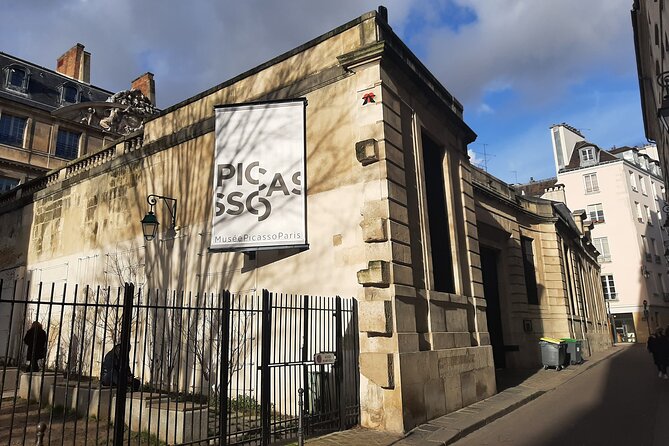
- Route ends at the Hôtel de Soubise area: it is easy to keep exploring afterward.
Le Marais: the historic, stylish district that also holds community stories
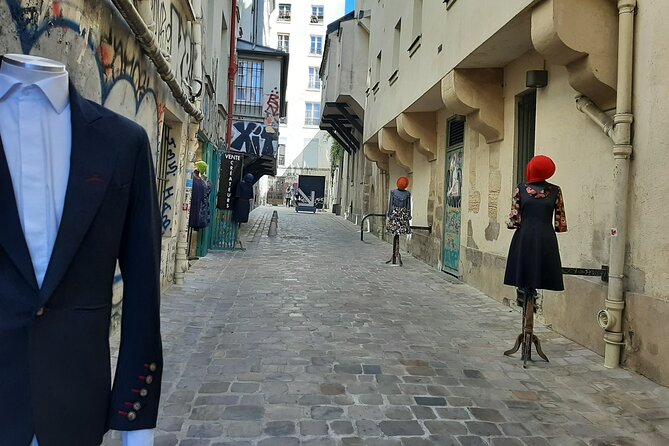
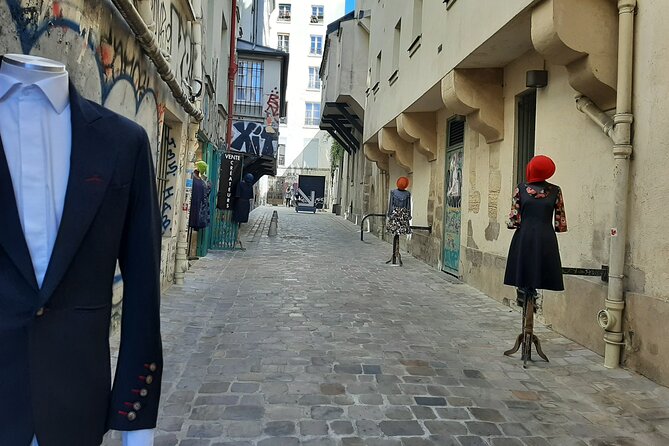
Le Marais is one of those Paris neighborhoods that can look simple on a map, then surprise you on the ground. You start in formal squares and famous buildings, then the streets tighten into narrow lanes lined with courtyards, gardens, and that unmistakable Paris mix of old stone and modern life. This tour works because it does not try to do everything. It picks a sensible pocket of the city and gives you a guided lens so you start noticing patterns fast.
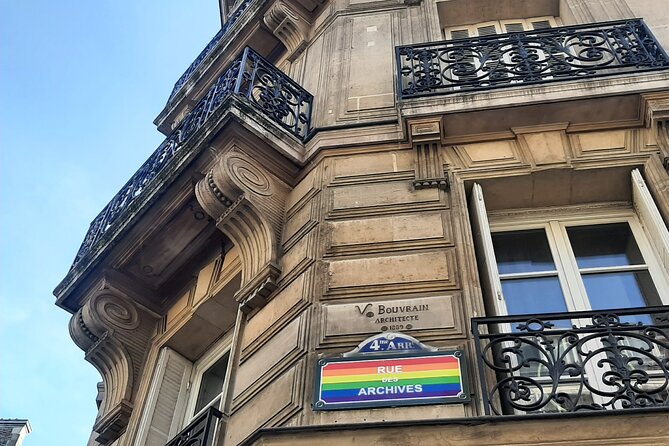
The big theme is how one neighborhood can reflect multiple identities at the same time. You get the aristocratic side, the Paris-writer side (Victor Hugo is a key name here), and the community side, including the area associated with the Jewish quarter and the LGBT history of the Marais. If you like walking tours where the guide helps you connect what you see to why it exists, this style fits.
And yes, it is trendy. But it is not only about looking at boutiques. The walk is also about understanding the space, then letting you shop and snack at your own rhythm afterward.
You can also read our reviews of more historical tours in Paris



Price and what you really get for about $48
At $48.39 per person for roughly 1.5 to 2 hours, this is not a “cheap-and-fast” deal. The value is the human factor, meaning you are paying for a guide to translate buildings, street layouts, and neighborhood shifts into something you can remember.
You also get a small cap of 10 travelers, and that matters. In a crowded group, you hear facts but you do not ask follow-up questions. Here, the guide can tailor the route to your interests. That is how people end up feeling like they did more than a sightseeing walk. It turns into a conversation with structure.
Two other details shape the value. First, the tour runs in English. Second, it is a mobile ticket experience, which is usually less hassle than paper. The only real “cost” is what you choose to add yourself, like snacks and coffee, since those are not included.
Timing: how to fit this into your Paris day
This walk is short enough to work on a travel day and long enough to change how you see the neighborhood. With the typical duration in the 1 hour 30 minutes to 2 hours range, you can pair it with a longer museum block later or a relaxed dinner nearby.
Book timing is another smart angle. The tour tends to sell closer to the trip date, with an average booking window of about 47 days in advance. That does not mean you must book a month and a half early, but it does mean the better slots can disappear. If you want a specific day and you are traveling during peak season, plan ahead.
Meeting point, end point, and why this route is convenient
The start is at Paroisse Saint-Paul Saint-Louis, 99 Rue Saint-Antoine (75004). The finish is at Musée des Archives Nationales – Hôtel de Soubise, 60 Rue des Francs Bourgeois (75003).
Even if you do not love “logistics talk,” route planning matters on foot tours. This one ends in an area that is still central to wandering. You are not finished in the middle of nowhere. You are close to more sights, and the neighborhoods you covered are right around you.
The tour is also described as being near public transportation, and service animals are allowed. In practice, that means you should be able to get there and start walking without feeling stuck.
Stop 1: Place des Vosges, Victor Hugo’s writing address
The walk begins at Place des Vosges, a square that used to be called Place Royale. This matters because it is not just a pretty landmark. It is a clue to how the area shifted from royal power to a broader city role.
Here, the connection to Victor Hugo is a major anchor point. You get context about Hugo living and writing nearby, including his association with the romantic novel Notre-Dame de Paris. If you have read the book, or if you only know the title from films, this stop helps you connect literature to geography.
You also have modern layers around you. The square area is linked with modern art galleries, so you are not stuck in one time period. That mix is part of why this square keeps pulling people in year after year.
Practical note: a square start is good if you are freezing or jet-lagged. You can orient quickly, then the walk moves into narrower streets.






Stop 2: Le Marais streets and the look of power, up close
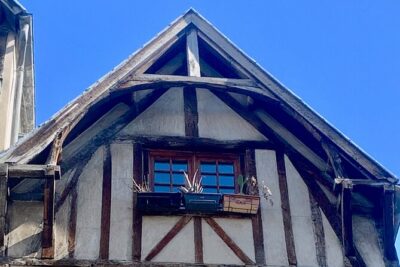
From Place des Vosges, you move into Le Marais proper, where the architecture starts telling you a different story. This is where you are looking at hotel particuliers, essentially aristocratic urban mansions. Even if you never memorize architectural terms, you will start recognizing the pattern: grand facades, tight urban spacing, and the feeling that these buildings were designed for influence.
The tour focuses on the French style of aristocracy and royalty. You learn what makes the streets and buildings feel distinctive, and you also get help interpreting what you see when you pass courtyards or side entrances.
One reason this stop works is that it is visual. You do not need to be an architecture buff. The guide’s job is to translate the look into meaning, like why certain streets feel private even while they sit in the middle of the city.
Possible drawback here: if you are expecting only “big iconic monuments,” this part may feel more about texture. It is narrow-street Paris, not parade-ground Paris. If that is your vibe, you will love it.
Stop 3: the Jewish quarter, courtyards, gardens, and casher pastry
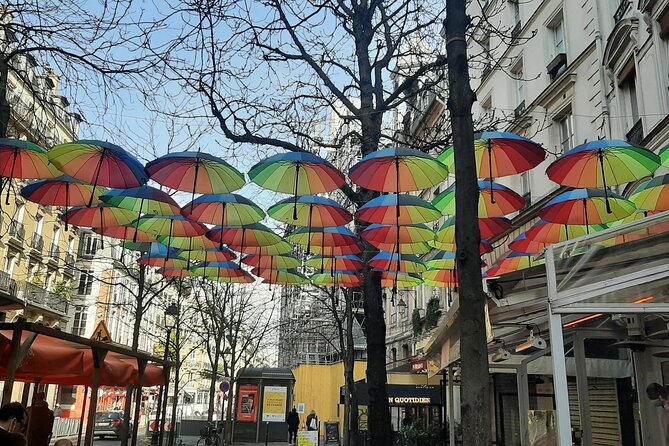
The final core part of the route focuses on the Jewish quarter area of Le Marais. The emphasis is on getting beyond the obvious photo stops, and instead seeing the off-tourist corners: courtyards, gardens, and the neighborhood rhythm.
Food shows up in a natural way. You are not told to treat pastry like a souvenir checklist. Instead, you get pointed toward refined casher pastry and the kinds of food shops that reflect the community’s everyday presence. If you like tasting culture, this is where you will feel Paris as a living neighborhood instead of a set of monuments.
This stop is also where the tour’s identity promise becomes clearest. The walk is designed to cover both the Jewish quarter and LGBT-related context within the Marais area. Even if you come for one angle, you leave with a wider sense of how communities shaped and shaped again what the neighborhood became.
Cold-weather tip: if you plan to snack here, bring your hands back into your pocket afterward. Narrow streets and dessert stops can make time pass faster than you expect.
Your guide is the real engine of this tour (Jill and Eric)
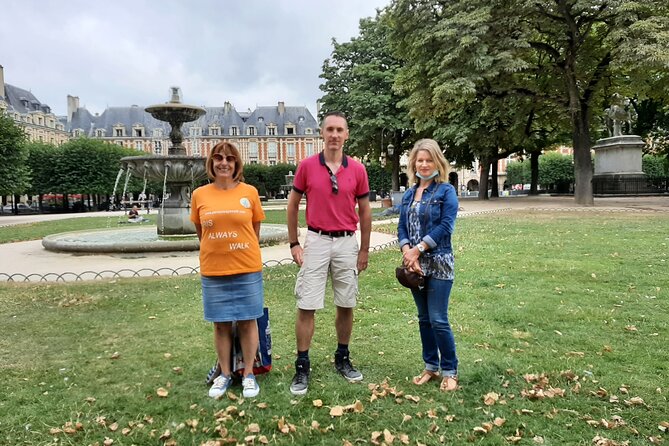
The reason this tour scores so high is not just the route. It is the guide experience. In the accounts tied to this tour, Jill is repeatedly praised for being engaging, energetic, and willing to adjust the walk based on what you care about. People describe how she checks expectations at the start, then follows through with a route that makes sense for that group.
That tailoring shows up in practical ways. For example, one theme is pacing and focus, like moving toward architecture details when someone is into buildings, or shifting emphasis when the goal is specifically Jewish quarter context. Another theme is how Jill connects the history to modern life in a way that feels alive, not like a textbook march.
Another guide name that comes up is Eric, who is also described as flexible. One account notes he changed the itinerary for a family that wanted more focus on the Jewish area. That is the difference between a “standard loop” and a guided walk where you get something slightly different based on your group.
If you are traveling with kids, or you want a guide who can keep attention without talking down, these guides are repeatedly described as doing that. One account also mentions sweet extras on a very cold day, including Christmas cookies handed out during the walk. That is not something you should plan around, but it does hint at the tone.
What the pacing feels like on the ground
A walking tour can either feel rushed or feel like you are being guided. This one aims for the second. The stop durations are built for a “walk, pause, learn, move” rhythm.
You start at a major square, then you transition into the tighter street fabric of Le Marais, then you cap with the Jewish quarter section. By the time you reach the food and courtyard areas, your brain has already learned what to notice. You are not trying to decode architecture from scratch at stop three.
Also, with a maximum of 10 travelers, the group stays small enough that you are not constantly turning your head to see what you missed. You can ask a question and still keep moving.
Practical tips so you enjoy this more (and stress less)
A few smart moves will make this tour feel smooth:
- Wear shoes you can trust on uneven sidewalks. Le Marais has classic Paris stone streets, and they can be slick in rain or cold weather.
- Dress for the weather. The tour is outside for the entire walk, and you are in a neighborhood where wind can cut through narrow lanes.
- Bring a bottle of water if you think you will get thirsty. Snacks and coffee or tea are not included.
- If you care about LGBT history specifically, say it early. The guide is described as tailoring, so your request can shape how you experience the route.
- Use the mobile ticket and keep your phone charged. It is part of the experience flow.
- If you want to extend your day, plan an extra hour after the walk. The route ends near the Hôtel de Soubise area, which makes it easy to keep wandering without losing your momentum.
Who this tour suits best
This is a great fit if you want:
- A short, guided walk that changes how you read a neighborhood.
- Culture with context, meaning architecture and community storylines, not only storefront photos.
- A guide who can adapt, especially if you have specific interests like Jewish quarter history or LGBT-linked context in the Marais.
- A smaller-group experience with room for questions.
It may be less ideal if you want:
- A full-day tour with lots of museum time.
- A food tour where snacks are built into the price.
- A high-speed route where you only want the most famous monuments.
Should you book this Le Marais walking tour?
Yes, I think you should book it if your goal is to understand Le Marais without wasting half your day guessing what you are looking at. The pricing makes sense because you are buying guided translation of street-level details, not just a walk through famous locations.
It is also a smart booking because the group size is small, the tour runs in English, and the itinerary style supports personalization. If you are planning a first visit to Paris and want a neighborhood that feels both stylish and meaningful, this is a strong choice.
If you are the type who loves atmosphere, architecture, and community stories, you will probably finish the walk thinking, okay, now I see why this place matters.
FAQ
How long is the Le Marais tour?
It runs about 1 hour 30 minutes to 2 hours.
How much does the tour cost?
The price is $48.39 per person.
Is the tour offered in English?
Yes, it is offered in English.
What is included in the price?
A tour guide is included.
Are snacks or coffee included?
No. Snacks and coffee and/or tea are not included.
What is the cancellation policy?
You can cancel for a full refund if you cancel up to 24 hours in advance. If you cancel less than 24 hours before the start time, the amount paid will not be refunded.
More Historical Tours in Paris




More Tour Reviews in Paris



Not for you? Here's more nearby things to do in Paris we have reviewed











Le Marais Tours, side by side.
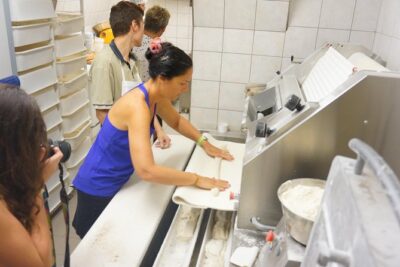 ★ 4.5Award-Winning Paris French Bakery Experience — Le Marais, 4th ArrTickets from $1141,186 guest reviews
 ★ 5.0Paris Le Marais Food Tour With 10+ Tastings, Cheese, Wine & MoreTickets from $102985 guest reviews
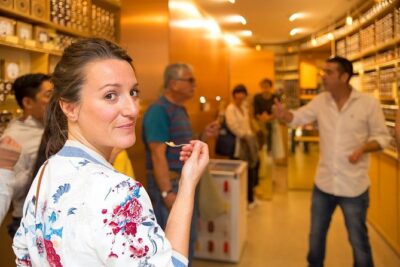 ★ 4.5Paris Le Marais District Original Food and Wine Tasting TourTickets from $157880 guest reviews
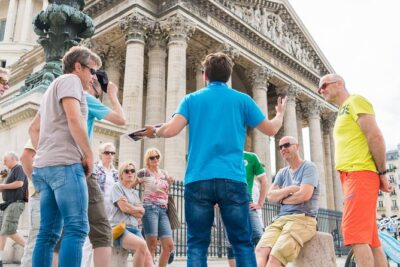 ★ 5.0Paris Bike Tour Hidden Secrets in the Latin Quarter & Le Marais neighborhoodsTickets from $54766 guest reviews
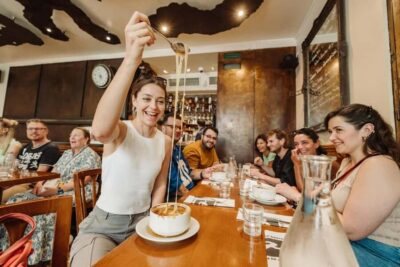 ★ 4.9Food and Wine Tasting Walking Tour in Le MaraisTickets from $113446 guest reviews
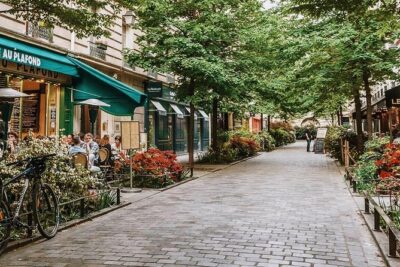 ★ 5.0Le Marais District & Jewish Quarter Guided Walking Tour 12ppl MaxTickets from $59361 guest reviews
 ★ 5.0Paris Le Marais Food & Wine Tour with Eating EuropeTickets from $163297 guest reviews
 ★ 5.0Marais Tour With a LocalTickets from $160289 guest reviews
This tour also belongs to