
Review · LE MARAIS TOURS
Marais Tour With a Local
Marais feels like Paris, up close. This 2.5-hour, small-group walk threads the Marais highlights with Jewish heritage context as you move street by street with a long-time local resident.
What I love most is the small group cap of six, which keeps it personal and lets you actually ask questions. Second, the itinerary lands you in the right places, from Aux Désirs de Manon to Rue des Rosiers, so you get both beauty and culture in one go.
One drawback to consider: the meeting point is 10 Rue de Rivoli, and if you arrive late or look in the wrong spot, it can be tricky to spot the start quickly. Give yourself a little extra time.
Key moments worth planning for
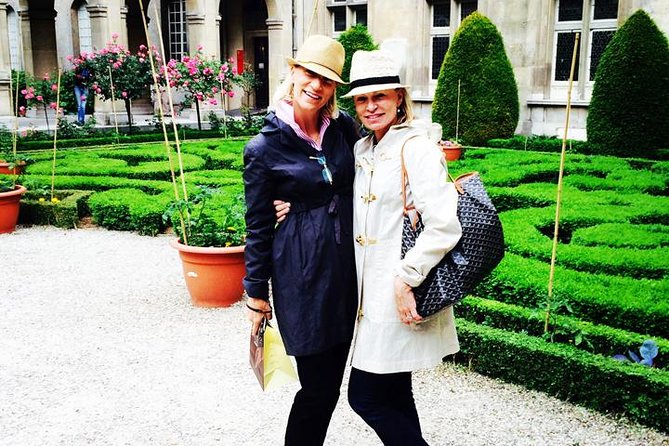
- Max six people keeps the pacing relaxed and the conversations real
- Bakery start at Aux Désirs de Manon sets the tone with an authentic neighborhood stop
- Place des Vosges gives you a breather in one of Paris’s most recognizable squares
- Rue des Rosiers focus brings Jewish delis and falafel into the story, including L’as di Falafel
- On-foot route makes it easier to read the neighborhood instead of just seeing it
Why the Marais is the best neighborhood to orient yourself in
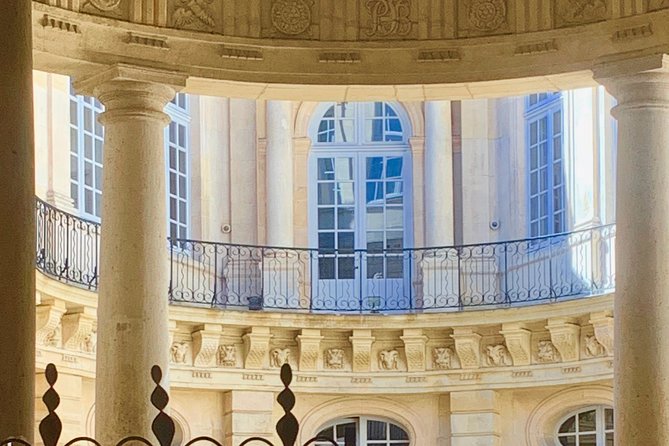
If Paris can feel like a lot, the Marais helps you reset. It is walkable. It is layered. One block you are surrounded by old stone and elegant façades, and the next you are surrounded by shops, cafés, and people going about normal life.
This tour works because it does not try to cram in every sight. Instead, you get a focused stroll through the kind of streets you will want to return to later, especially if you like neighborhoods that have both history and everyday energy. The guide also connects what you see to what came before, including centuries of Jewish heritage in the area, so the walk feels more than scenic.
You also get practical learning that sticks. When someone shows you where to look, the Marais stops being confusing and starts feeling legible, like you can finally picture how it all fits together. And because the pace is on foot, you have time to notice details that you would otherwise rush past.
You can also read our reviews of more tours and experiences in Paris.



Tour vibe, group size, and what you really get for $160.30
At $160.30 per person for about 2 hours 30 minutes, you are not paying for a giant group bus experience. You are paying for a tight, guided walk capped at just six people. That matters in Paris, where the difference between a crowded tour and a calm one is huge for attention and photo time.
This is also a private tour/activity in the sense that only your group participates. That typically means you are not competing with other languages, other schedules, or a chaotic crowd for the guide’s attention. In practice, this kind of setup helps you move like a small group of friends instead of like a line of tourists.
Language is English, which is a big plus if you want the historical storytelling to land clearly. The tour also uses a mobile ticket, so you can keep everything simple on your phone.
One more value point: admission tickets for the listed highlights are free. That does not mean the experience is free, but it does mean you are not getting stuck paying extra to access the core sights on the route.
The trade-off is that this is a walking tour. If you are hoping for mostly inside stops with long seated time, you might find it a bit more active than you expected. And if you are looking for a strict, lecture-heavy history session, you will likely want to engage the guide directly and ask for the deeper historical thread, since the tour also centers on neighborhood atmosphere and food-adjacent stops.
Stop 1: Aux Désirs de Manon Bakery, the Marais “hello”
The tour begins at Aux Désirs de Manon, a famous neighborhood bakery where you meet and start the walk. Starting with food makes sense here. The Marais is not only about monuments. It is about daily culture, and bakeries are a fast way to understand how locals think about time and comfort.
Even with a quick stop, this beginning helps you do two things right away:
- You get into a neighborhood mindset instead of a museum mindset.
- You learn what to look for as the streets start unfolding.
You are also in a good position to ask early questions. A first stop is perfect for that because you are not yet deep into the route. If you are the type who likes clarity, this is where the guide can help you frame the rest of the morning.
If you enjoy pairing your travel with small tastes, you may find that the guide is the kind of person who knows how to build in simple breaks. One of the strongest comments about the tour style is that it can feel like touring with someone who actually lives there, not someone reading a script. Coffee and pastry came up in accounts of this experience, and it fits the tour’s friendly, neighborhood-first vibe.
Potential drawback: if you are not interested in any food culture at all, you might wish the tour started with something more strictly architectural. But the bakery stop is brief, and it mainly acts as a warm-up for the larger story.
Stop 2: Place des Vosges, Paris’s 1605 square moment
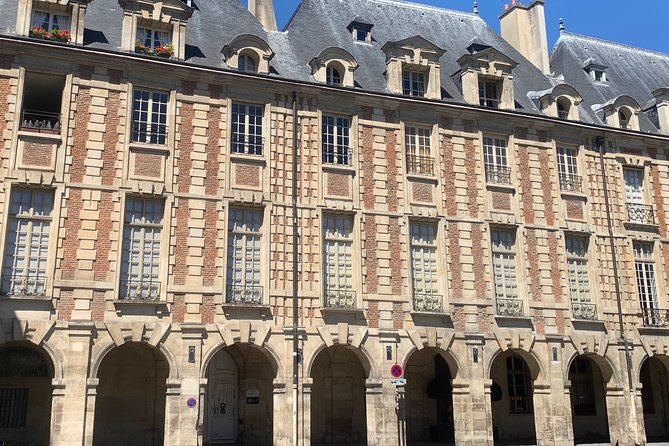
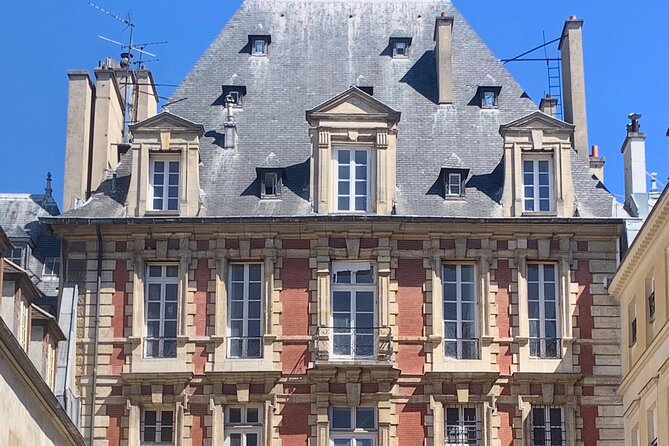
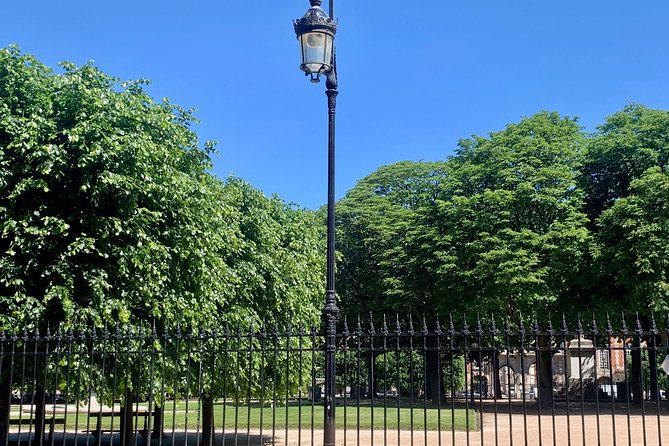
Next comes Place des Vosges, the first public square of Paris built in 1605. This is one of the best pauses you can choose in the Marais, because it gives you space to breathe and reset your eyes.
Why this stop works: you can actually see how the square functions. It is not just a picture spot. It is a designed public space that people still use. As you stand there, the surrounding buildings give you a quick lesson in how Paris balances order with charm.
A guided walk here does more than point out beauty. It helps you connect the square to the idea of centuries of life in this part of town. When you have context, the buildings start telling you a story instead of just being pretty backdrops.
You will likely also get a calmer pace in this stretch. One review described the tour as a stroll, not taxing, and this kind of square stop is part of why. You can take photos, absorb the symmetry and garden setting, and then continue with fresh energy.
Tip for your visit: if the morning is crowded, stand slightly back from the center paths so you can take in the façades. If the weather is dry, this is also a nice place to linger for a minute before moving on.
Stop 3: Rue des Rosiers, Jewish food streets and real street life
The heart of the Jewish heritage focus shows up on La Rue des Rosiers, a street famous for falafel and Jewish delis. This is where the tour becomes very “Marais,” meaning it feels like you are walking through a living neighborhood, not a staged set.
The route specifically calls out L’as di Falafel, which is a name many people recognize. Even if you do not order anything, the guide’s attention to this street makes a difference because it explains why these businesses and traditions belong in the broader history of the area.
This stop is valuable for two reasons:
- Food is a gateway to cultural memory. When the guide connects what you see to what came before, you understand the street beyond the menu.
- You learn how to navigate the neighborhood. Streets like this can feel overwhelming if you do not know what you are looking at. A local guide helps you recognize where you will want to go later.
There is also a small-group advantage here. In busy retail streets, the ability to keep moving without getting jostled helps you hear the commentary and still look around. The cap of six people makes that easier.
Possible drawback: if you are purely chasing history and are not interested in food culture, this part of the route may feel more centered on the neighborhood’s eating habits than on deep historical detail. The good news is that the guide can usually answer follow-up questions if you ask what you want to understand more.






Jewish heritage context, delivered through streets not lectures
A big promise of this tour is learning about the Marais’s Jewish heritage and centuries of history. The best way to understand this is to think of it as story-building along the route.
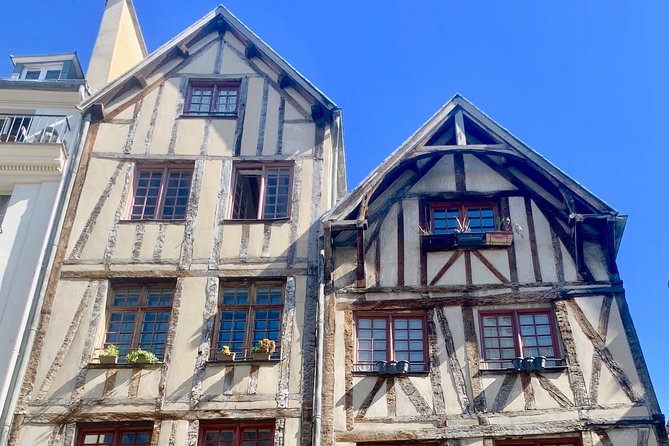
You are not locked into a classroom style. Instead, the guide points out what is around you and explains what it means. That approach works well in the Marais because the neighborhood itself is the archive. Buildings, street layouts, and even the shopfront culture all help explain how people lived and how the area evolved.
The guide is also part of the reason this lands well. Richard, a long-time expat resident of the Marais, is described as someone who combines local pride with a curious outsider’s perspective. In plain terms, you get history that feels personal and human, not distant.
This kind of context is especially helpful if it is your first time in the Marais. You can leave with a mental map that includes both the pretty streets and the deeper layers. Then, when you return on your own, you are not just wandering, you are recognizing.
If you want maximum historical depth, I would do one simple thing: ask a question early about the particular era or community thread you care about most. With a small group and a friendly guide, you are more likely to get an answer that fits what you are actually trying to learn.
Walking logistics that make the experience smoother
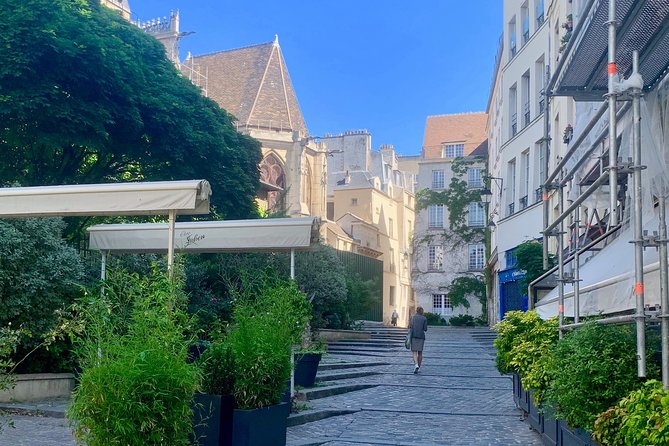
This tour is built for walking, with three main stops and time to absorb what you see in between. It is about 2 hours 30 minutes, so it is long enough to feel like you covered real ground, but short enough that you will not feel trapped.
Here is how to make it easier on yourself:
- Wear comfortable shoes. The Marais streets are charming, but they are still Paris streets.
- Have the meeting address ready: 10 Rue de Rivoli, 75004 Paris. A few minutes of extra buffer time can prevent the kind of start-day stress that one person experienced.
- Expect a neighborhood pace, with occasional pauses. It should feel like a stroll with commentary rather than a race.
- Bring a phone charger or at least battery confidence, since you have a mobile ticket and you may need your map.
Weather matters here. The experience requires good weather, and if it is canceled due to poor weather, you should expect a different date or a full refund. That is a simple but important planning point for anyone traveling in shoulder season.
Also, since the tour is near public transportation, you can keep your day flexible. If your schedule is tight, being close to transit helps you recover quickly if plans change.
Who should book this Marais walk, and who might not love it
This is a great fit if you want:
- A small-group Paris neighborhood orientation in the Marais
- A friendly local perspective, especially through Richard’s stories
- A guided connection between street life and Jewish heritage context
- A calm route that is not overly exhausting
It is also a solid choice if you like practical sightseeing. You are learning where to look and what to return to later, not just checking off points on a list.
You might want to think twice if:
- You dislike food-related stops at all. The tour starts at a bakery and focuses on Rue des Rosiers, which is tightly linked to falafel and delis.
- You want a very lecture-driven history session. Some visitors prefer that, and this tour leans more toward neighborhood atmosphere plus history woven in.
Should you book this Marais tour with a local?
Yes, I think this is a smart booking for most first-timers and for anyone who wants a richer Marais visit without planning every hour. The value is strongest when you appreciate small-group guidance, and when you like learning through streets, not from a screen.
Book it if you want to:
- get your bearings fast in Le Marais
- see Place des Vosges with context
- walk Rue des Rosiers with the story behind the food culture
I would hesitate only if you are highly sensitive to meeting-point confusion or you want a history-only approach with zero emphasis on food stops. If that is you, message with the organizer before you go so expectations are crystal clear.
If you do book, plan for a relaxed pace, arrive a bit early at 10 Rue de Rivoli, and use the small group size to ask questions. That is when this tour turns from sightseeing into something that feels like you actually understand the neighborhood.
FAQ
Where does the Marais tour start?
The tour starts at 10 Rue de Rivoli, 75004 Paris, France.
How long is the tour?
It lasts about 2 hours 30 minutes.
How big is the group?
It is a small-group tour capped at six people.
Is this a shared group tour?
It is a private tour/activity, so only your group participates.
What language is the tour offered in?
The tour is offered in English.
What stops are included in the itinerary?
The main stops are Aux Désirs de Manon, Place des Vosges, and La Rue des Rosiers (with mention of L’as di Falafel).
Are there admission tickets to pay for the stops?
The listed admissions for the stops are free.
Is it near public transportation?
Yes, it is near public transportation.
What is the cancellation policy?
You can cancel for free up to 24 hours in advance for a full refund. If you cancel less than 24 hours before the start time, you will not receive a refund. If the tour is canceled due to poor weather, you will be offered a different date or a full refund.
More Tours in Paris





More Tour Reviews in Paris
Not for you? Here's more nearby things to do in Paris we have reviewed












Le Marais Tours, side by side.
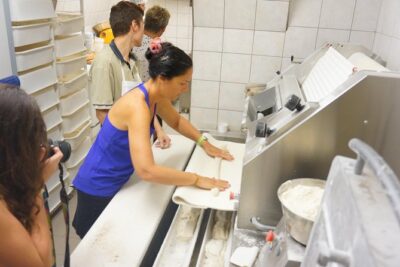 ★ 4.5Award-Winning Paris French Bakery Experience — Le Marais, 4th ArrTickets from $1141,186 guest reviews
 ★ 5.0Paris Le Marais Food Tour With 10+ Tastings, Cheese, Wine & MoreTickets from $102985 guest reviews
 ★ 4.5Paris Le Marais District Original Food and Wine Tasting TourTickets from $157880 guest reviews
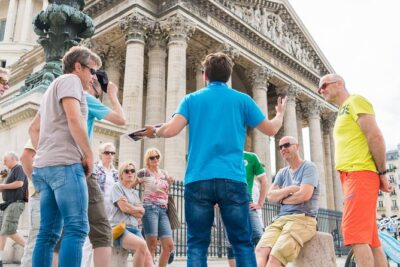 ★ 5.0Paris Bike Tour Hidden Secrets in the Latin Quarter & Le Marais neighborhoodsTickets from $54766 guest reviews
 ★ 4.9Food and Wine Tasting Walking Tour in Le MaraisTickets from $113446 guest reviews
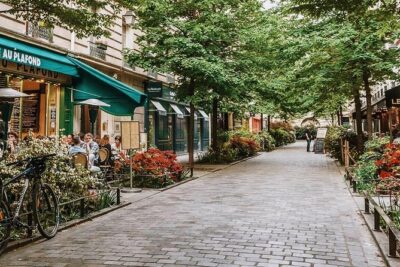 ★ 5.0Le Marais District & Jewish Quarter Guided Walking Tour 12ppl MaxTickets from $59361 guest reviews
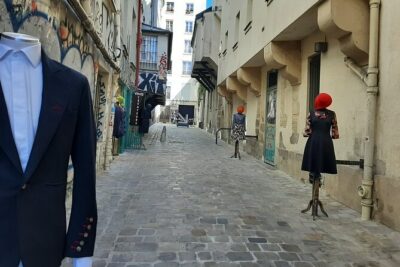 ★ 5.0Le Marais/Paris – The Historic, Trendy, Jewish, LGBT districtTickets from $48341 guest reviews
 ★ 5.0Paris Le Marais Food & Wine Tour with Eating EuropeTickets from $163297 guest reviews
This tour also belongs to