
Review · LE MARAIS TOURS
Le Marais District & Jewish Quarter Guided Walking Tour 12ppl Max
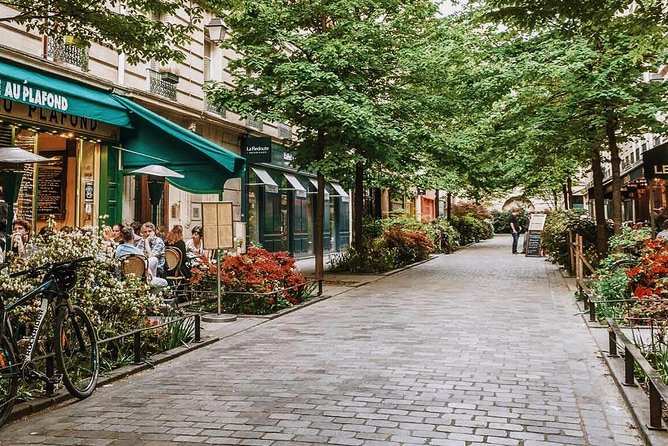
The Marais tells stories at every corner. This small-group, English walking tour pairs royal landmarks with the Jewish Quarter, so you get a clear sense of how this part of Paris became what it is today.
I love the tight 2.5-hour route that keeps you moving between major sights without feeling rushed. I also love how the tour adds context around streets and places like Rue des Rosiers and the Joseph-Migneret garden, not just architecture. One consideration: synagogues are not included because access is restricted to worshippers for security reasons.
Key highlights to look for on this walk
- Max 12 people means more time for questions and less “herding cats” energy.
- English-speaking guides lead you through the Marais with clear historical threads.
- Most stops are outside with free admission, while Musée Carnavalet and Centre Pompidou require tickets if you want entry.
- Jewish Quarter focus centers on streets like Rue des Rosiers and the Jardin des Rosiers with WWII memory.
- End at Hôtel de Ville so you finish in a big visual landmark, not a random side street.
- Rain or shine keeps the day plan intact, just pack the right shoes.
Why the Marais and Jewish Quarter work so well on foot
The Marais is one of those Paris neighborhoods where walking is the whole point. The streets are narrow, the courtyards are tucked in, and the architecture is varied enough that you notice details fast when someone points them out.
What makes this tour a good value is the mix. You start with older, royal-era landmarks, then you shift to the Jewish Quarter area tied to community life in the 18th and 19th centuries, and you end with major civic and modern sites. It’s a “see the change over time” loop, without needing museum passes to understand the big picture.
You can also read our reviews of more walking tours in Paris



Group size, pacing, and the 2.5-hour reality check
This is a semi-private tour with a maximum of 12 people. That matters because the Marais is easy to navigate when you have a guide, but it can feel chaotic in groups that are larger than this.
The duration is about 2 hours 30 minutes, and the walking is only “moderate fitness” level. The tour runs in all weather, so plan for real pavement time, plus a little waiting while the group regroups.
Also note this is not recommended if you use a wheelchair or have mobility limitations. If walking is an issue, I’d skip it or look for a different option with less time on foot.
Starting in Saint-Paul, finishing in Le Marais: the route logic
You start in the Saint-Paul area (postal code 75004) and finish in Le Marais. That end point is helpful because it drops you near where lots of people want to wander next, including places to eat and shop.
One small practical thing: the tour route can change due to national celebrations. If that happens, you’ll get an alternate route that still aims to show the highlights, but refunds or discounts are not provided for rerouting. That’s worth factoring if you are tightly scheduled.
Stop 1: Saint-Paul-Saint-Louis Church and the Jesuit architectural link
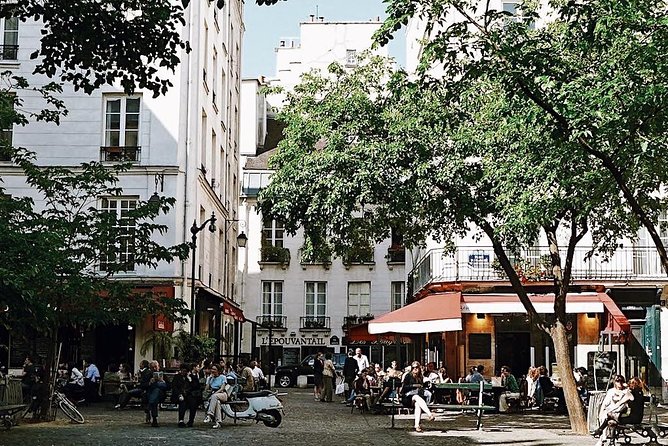
You begin at the 17th-century Église Saint-Paul-Saint-Louis. The guide connects it to Jesuit building traditions, including a design idea inspired by Rome’s Gesù, which helps you see how Paris borrowed and adapted European styles.
This is a good first stop because it gives you a “frame” for the rest of the walk. Once you understand the architectural influence, you start noticing similar thinking in nearby buildings and courtyards.
Expect to spend a short amount of time here, focused on what to look for, not on long interior viewing. Many stops on this tour are the same kind of quick, exterior-focused approach.
Hotel de Sully courtyard: Renaissance lines with Baroque elements
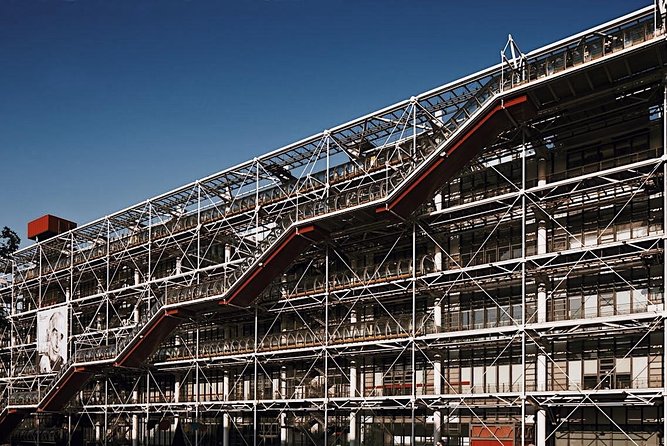
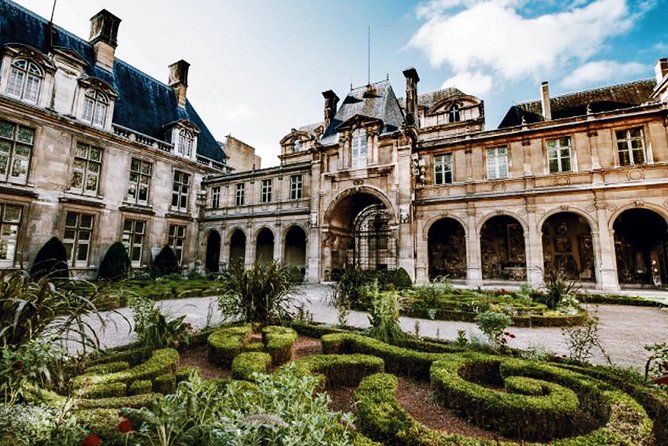
Next you pass by the Cour et jardin de l’Hôtel de Sully, built between 1624 and 1630. The building blends Renaissance style with Baroque elements, and the tour points out what that means visually as you move through the area.
The names matter here. The architects listed for the project are Jean 1er Androuet du Cerceau and Yves Boiret. Even if you never memorize architect names, you benefit from the guide tying design choices to the period.
This stop is also practical: courtyards and palace-adjacent spaces in the Marais can be hard to spot on your own. A guide helps you notice them without you needing a perfect map app.
You can also read our reviews of more guided tours in Paris






Place des Vosges: the planned-square classic you should not miss
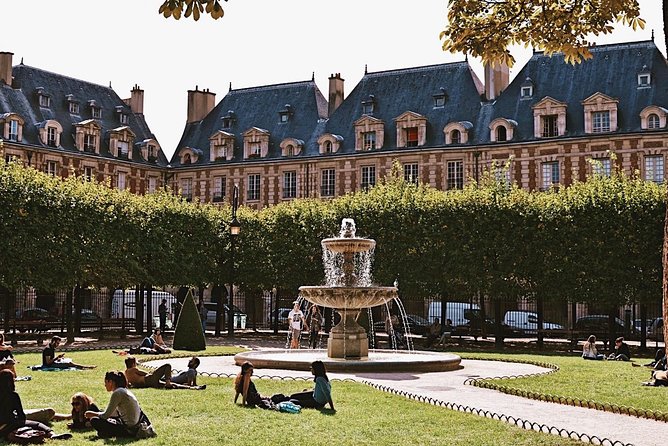
You make your way to Place des Vosges, often called the oldest planned square in Paris. It is one of those spaces where the geometry does something to your sense of scale, especially after you’ve been in tighter medieval-feeling streets.
The tour’s angle here is simple and useful: you get the why behind the beauty. And then you’re free to keep walking after the tour, because Place des Vosges is a natural anchor for the Marais.
If you like photos, this is one of the best stops. If you hate photos, it’s still worth the pause because it’s a clear reset point.
Rue des Francs-Bourgeois: fashion street with a history spine
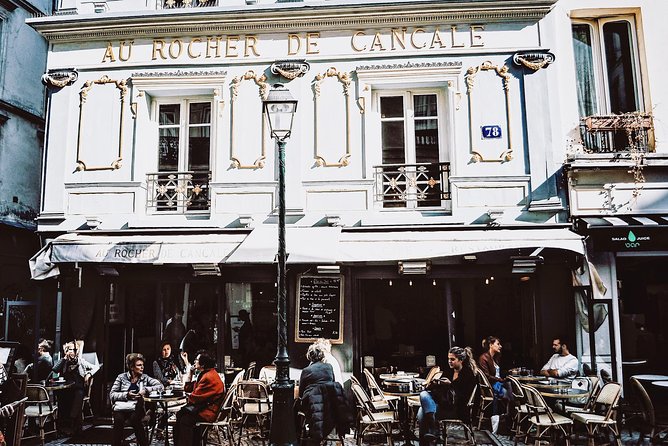
From Place des Vosges, you continue along Rue des Francs-Bourgeois, known for fashion shops and a lively shopping feel. But the point on this walk is that it is not just retail, it’s also a route through the Marais’s layered development.
The guide typically keeps you aware of what you’re looking at: street alignment, building edges, and how the area evolved around wealthy homes and later commercial energy. That helps your day feel like more than browsing window displays.
Musée Carnavalet and Hôtel Carnavalet: Paris told through old walls
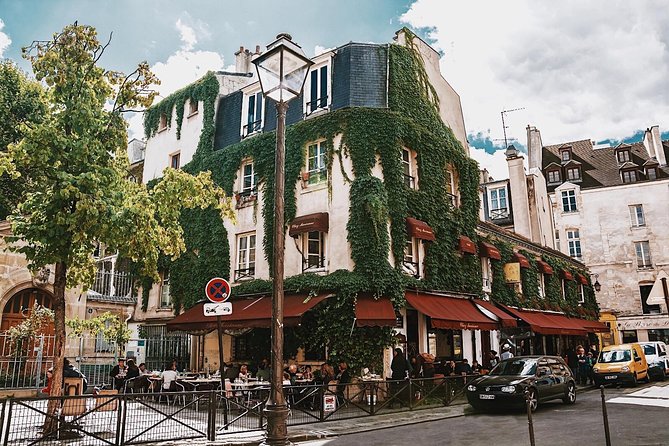
You spend time near Hôtel Carnavalet and Musée Carnavalet – Histoire de Paris. The Hôtel Carnavalet is highlighted as a rare example of Renaissance architecture in Paris, and the guide uses it to explain why this area holds clues to the city’s past.
Here’s the important practical detail: Musée Carnavalet admission is not included. So you’ll likely get the orientation and exterior context during the walk, then you can decide afterward if you want to buy a ticket to go inside.
If you’re trying to manage costs, this is a smart design. You don’t pay extra just to learn. If you want more, you can choose it.
Rue des Rosiers and the Pletzl area: street-level Jewish Quarter context
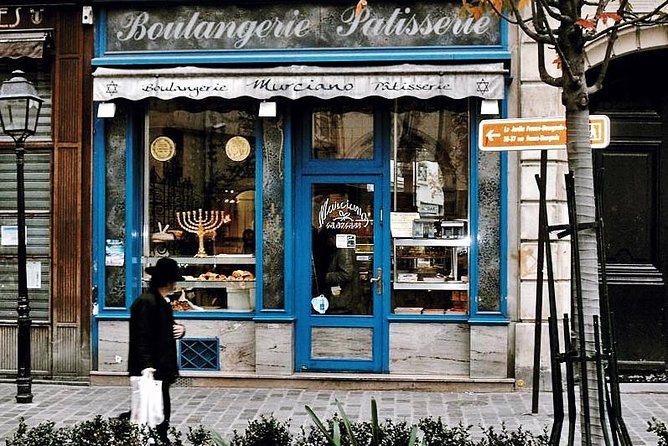
Then the tour shifts toward the heart of the Jewish Quarter experience. The guide walks you through the kinds of streets you’d otherwise just pass by, including areas associated with the Pletzl, with bakeries and boutiques.
A key moment is Rue des Rosiers, described as a central street in the Jewish Quarter. This is where you get a real “place-based” sense of community life over time, not only a list of dates.
And then there’s Jardin des Rosiers – Joseph-Migneret, a small garden tucked between buildings. The tour explains why it is named Joseph Migneret, a school principal who helped many students by hiding them in his home during WWII. He was eventually arrested and killed, and that context gives the garden a serious emotional weight.
I like this stop because it prevents the tour from becoming only aesthetics. You get a physical pause, then the memory of the people behind it.
Synagogues not included: what you will and will not see
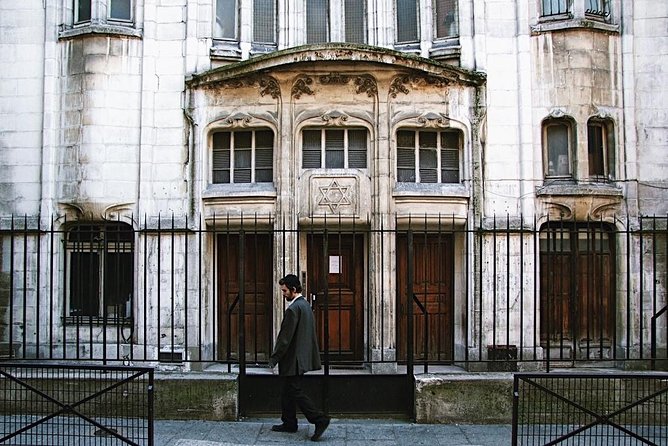
This tour does not include entry into synagogues. Access is restricted to worshippers for security reasons, so the walk focuses on street-level history and the wider neighborhood context instead.
That can feel like a drawback if you were hoping for interior visits. But honestly, for most people this becomes a manageable expectation once the guide explains why and keeps the focus on what you can access respectfully.
If interior access is your top priority, you may need a different type of tour designed for that purpose. For a neighborhood and context walk, this approach makes sense.
Centre Pompidou and the modern contrast you can’t unsee
Near the end, you head toward Centre Pompidou. It’s famous for its exterior look, often described as high-tech architecture, and the guide ties it to the idea of bringing different forms of art and literature together.
The timing is also smart. By the time you reach Pompidou, you’ve already seen older Paris architecture and Jewish Quarter streets. The contrast lands harder, and you get a sense of how Paris keeps reshaping itself in the same districts.
Pompidou admission is not included, so if you want to go inside, plan on buying a ticket separately.
Hôtel de Ville to Saint-Gervais-Saint-Protais: civic Paris and Baroque roots
You end at Hôtel de Ville, the city administration building. The tour notes that it has been the headquarters of the municipality of Paris since 1357, which gives the building an immediate sense of continuity even if you’re only seeing it from the outside.
Just next to it, you get a glimpse of Église Saint-Gervais-Saint-Protais, described as the first example of French Baroque style in Paris. It was a parish church until 1975 and is now associated with the Monastic Fraternities of Jerusalem.
This ending works well because you finish in a major hub. After the tour, it’s easy to continue exploring without needing a transit plan for a distant drop-off.
What you’ll learn from the guide, and why names like Hugo and Eden matter
The tour is led by professional English-speaking guides, and the human part seems to be a big reason it scores so high. Names that have shown up often include Hugo, Eden, Adrien, Tamari, Augustina, and Agustina, and the common thread is clear storytelling plus an ability to handle questions.
I’d expect a guide to point out little architectural cues you’d miss, and to connect them to why the Marais developed the way it did. If you ask questions as you go, you’ll likely get answers that make the neighborhood feel less like a postcard and more like a real place with real history.
Price value: why $59.69 can feel fair for what you cover
At $59.69 per person, you’re paying for a timed, guided route through multiple iconic areas of Paris in about 2.5 hours, plus the benefit of a small group.
A big part of the value is that many stops have free admission because you’re seeing the sights from outside. You’re not forced into museum entry fees just to make the tour worthwhile. The two exceptions called out are Musée Carnavalet and Centre Pompidou, where admission is not included.
So the math looks like this: you pay for the guide and the structure, then you decide if you want to add paid museum time. That’s often the best setup in Paris because it respects different budgets and different curiosity levels.
Practical tips that make your walk smoother
Wear comfortable shoes. This is a walking tour with moderate fitness expectations, and the Marais can mean lots of uneven stone and turns.
Bring water. The tour runs in all weather, so even on cool days you’ll want it, and on warm days it helps you stay cheerful instead of grumpy.
For weather, pack a small umbrella for rain and a hat during summer. Also, avoid large bags or suitcases, since those are not allowed.
And do not forget your mobile phone number with country code. The tour requires it, which usually ties into day-of communication and meeting points.
Who should book this tour, and who should skip it
This is a great fit if you:
- want a structured way to understand the Marais fast
- like architecture, city planning, and how neighborhoods change over centuries
- want a Jewish Quarter focus that stays respectful and realistic about access
It is not a great fit if:
- you need wheelchair accessibility, since the tour is not recommended for wheelchair users
- you dislike walking and rerouting, since the route can shift and you still need to cover the distance on foot
Should you book this Marais and Jewish Quarter tour?
Yes, I’d book it if you want an efficient, small-group way to connect royal-era Paris, iconic squares, and the Jewish Quarter streets into one coherent day. The pacing is long enough to feel worth it, but short enough that you can still enjoy dinner plans right after.
If you were hoping for synagogue interiors, adjust your expectations first. This is about neighborhood context and visible landmarks, not restricted interior access.
Finally, if you care about getting the “why” behind what you see, this kind of guided walking format is one of the best ways to get oriented in Paris without spending your whole vacation in lines.
FAQ
How long is the guided walking tour?
The tour runs about 2 hours 30 minutes.
What is the group size limit?
The group size is capped at a maximum of 12 travelers.
Is the tour offered in English?
Yes, it is offered in English.
Where do I meet the guide, and where does the tour end?
The tour starts at Saint-Paul 75004 Paris and ends in Le Marais.
Does the tour run in bad weather?
Yes, the tour will run rain or shine.
Are museum entrances included?
Most stops are free to view from the outside, but admission to Musée Carnavalet and Centre Pompidou is not included.
Are synagogues included on the tour?
No. The tour does not include entry into synagogues, because access is restricted to worshippers for security reasons.
Is this tour suitable for wheelchair users or limited mobility?
It is not recommended for those with walking disabilities or using a wheelchair.
What should I bring with me?
You should wear comfortable shoes, bring a bottle of water, and consider an umbrella for rain and a hat during summer. No large bags or suitcases are allowed.
What is the cancellation policy?
You can cancel for a full refund up to 24 hours in advance of the experience start time. If you cancel less than 24 hours before, the amount paid is not refunded.
More Walking Tours in Paris



More Tours in Paris




More Tour Reviews in Paris






Not for you? Here's more nearby things to do in Paris we have reviewed












Le Marais Tours, side by side.
 ★ 4.5Award-Winning Paris French Bakery Experience — Le Marais, 4th ArrTickets from $1141,186 guest reviews
 ★ 5.0Paris Le Marais Food Tour With 10+ Tastings, Cheese, Wine & MoreTickets from $102985 guest reviews
 ★ 4.5Paris Le Marais District Original Food and Wine Tasting TourTickets from $157880 guest reviews
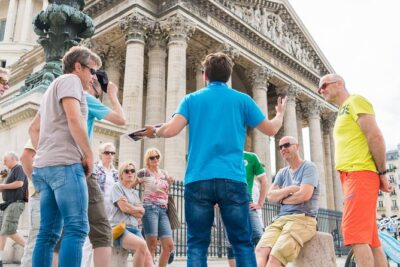 ★ 5.0Paris Bike Tour Hidden Secrets in the Latin Quarter & Le Marais neighborhoodsTickets from $54766 guest reviews
 ★ 4.9Food and Wine Tasting Walking Tour in Le MaraisTickets from $113446 guest reviews
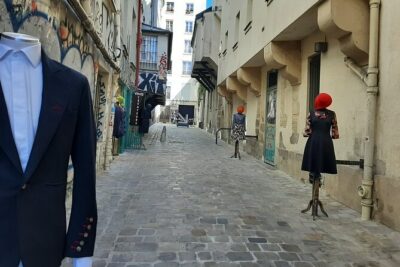 ★ 5.0Le Marais/Paris – The Historic, Trendy, Jewish, LGBT districtTickets from $48341 guest reviews
 ★ 5.0Paris Le Marais Food & Wine Tour with Eating EuropeTickets from $163297 guest reviews
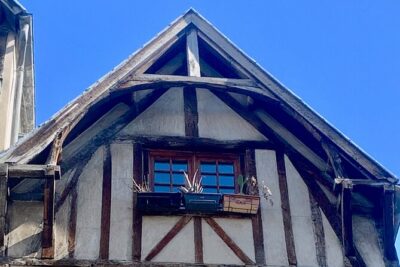 ★ 5.0Marais Tour With a LocalTickets from $160289 guest reviews
This tour also belongs to