Review · PARIS
Photo weekend for beginners
Your camera finally clicks with a plan. This 2-day Paris beginner photo weekend focuses on getting you shooting fast, not just reading about photography. You learn in real conditions across day and night, indoors and outdoors, with teaching built around immediate practice.
I especially like the small group size (max 8), which makes it easier to ask questions and get hands-on correction. I also like that the course is designed for real results quickly, with guidance that helps you work in Manual mode and also in semi-automatic modes like Aperture Priority and Speed Priority.
The main drawback to consider is that it is weather dependent, so you need decent skies for the outdoor, real-world shooting that the course emphasizes.
Key Highlights You’ll Actually Use
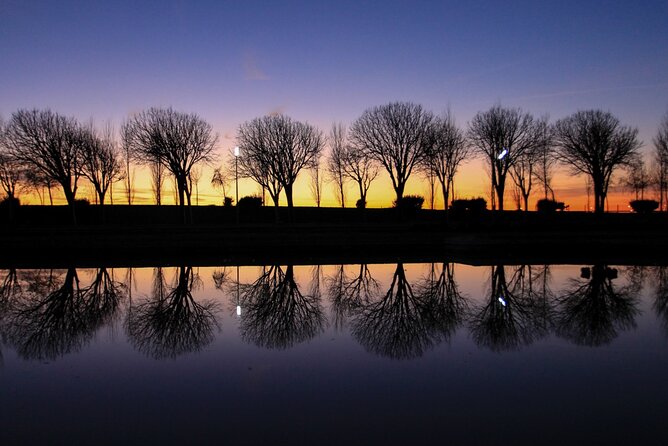
- Manual mode confidence fast with clear control of aperture, shutter speed, and focus choices
- Field practice in real light, including day and night, indoors and outdoors
- Exposure tools that prevent guessing like metering modes, exposure locking, and histograms
- Color and composition basics you can apply right away, from white balance to stops
- Small-group teaching (8 maximum) with an instructor known for accessible, patient explanations
- Solid take-home materials, including a booklet, video lessons after class, and a memorial diploma
Why This 2-Day Paris Photo Weekend Feels Different Than Solo Learning
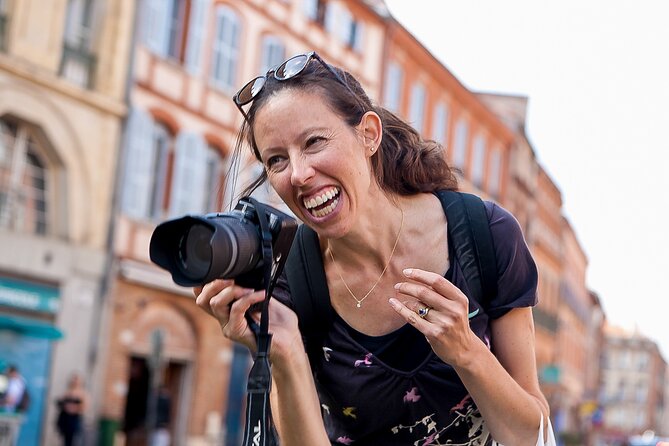
If you have ever stared at your camera menu like it is written in a secret code, this kind of course is built for you. The big idea is simple: learn the controls, then use them immediately in real scenes. PhotoProf has been running photography courses in Paris for nearly 10 years, and their method is built on practice, discussion, and experiments that help you see what works and why.
For me, the value is in the structure. You are not just collecting tips, you are training your eye and your hands to respond. You start Day 1 breaking down the big settings, then Day 2 you use that control to nail exposure and create more finished-looking images.
This is also a beginner-friendly format that does not require specialized gear. The course specifically notes that camera loan is not part of the experience, so you can focus on learning rather than logistics.
You can also read our reviews of more tours and experiences in Paris.

Meeting Point and Pacing: 10:00 to 18:00, With Real Shooting Time
The course starts at 115 Pl. du Carrousel, 75001 Paris, at 10:00 am. It ends back at the same meeting point, so you do not have to plan a separate rendezvous for the finish.
Each day runs 10:00 am to 6:00 pm, which is long enough to do more than one quick lesson and call it a day. You get time to test settings, review results, and adjust. For beginners, that pacing matters because photography changes when you can repeat the same idea a few times in different light.
Also, there is a maximum of 8 travelers, and that small size tends to make the teaching feel more like coaching than a lecture. If you have questions about the button you never pressed, or the setting you keep forgetting, this kind of group size is exactly what helps.
Finally, you receive a mobile ticket, and confirmation comes at booking time. That keeps the front end simple.
Day 1 (10:00 to 18:00): Taking Control With Aperture, Shutter Speed, and Focus
Day 1 is where you get your hands back. The course is focused on helping you regain control over what your camera does, so your photos stop looking accidental.
Aperture and depth of field, explained the practical way
You work on diaphragm opening and depth of field management. In plain terms, aperture is what decides how much of your scene stays sharp, and it also affects exposure. Beginners often memorize the numbers but do not connect them to the look. Here, you learn to connect aperture to the result, then test it.
Expect the kind of exercises where you try changing aperture and immediately see how the background blur shifts. That is how depth of field stops being scary and starts becoming a tool.
Shutter speed and motion control
Next comes shutter speed and motion management. This is the setting that helps you freeze action or let motion blur add feeling. If you have seen Paris street scenes where people look ghostly, or nighttime shots where everything smears, shutter speed is usually the culprit.
The course aims to show you how to choose shutter speed based on what you want the motion to do.

Focus: point versus continuous
You also learn point or continuous focus. This matters because beginners often focus-and-reframe without understanding what the camera is tracking. Once you know when to use point focus versus continuous focus, you get more keepers, especially when a subject is moving.
You are not stuck in one mode
By the end of Day 1, you should already be able to work in:
- Manual mode
- Aperture Priority (A/Av)
- Speed Priority (S/Tv)
And you do this day and night, plus indoors and outdoors. That mix is important. Learning Manual mode only in daylight makes it feel stable. Learning it across changing light makes it real.
Day 1 In The City: How Field Practice Helps You Learn Faster
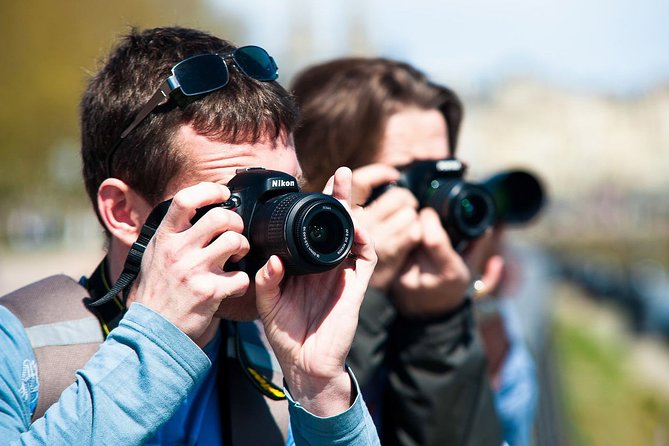
The course teaching approach is built around being out in the field under real conditions, not just in a classroom. That means you are dealing with actual light changes, real distractions, and situations where you cannot predict the scene perfectly. The goal is practice and discussion, with room to experiment, including learning from errors in a constructive way.
This part matters because photography skill is not just technical knowledge. It is decision-making. When you have to react to changing light, the settings you learned stop being abstract.
Also, students highlight an instructor named Alexis for accessible instruction and supportive exchange. If you get a teacher like Alexis, you will likely find the explanations grounded, with helpful prompts that encourage you to try things you have never tried before.
One small note: because this is hands-on, you will get the most out of it if you come ready to test settings yourself, even when the first results are not perfect. Think of Day 1 as training your camera muscle memory.
Day 2 (10:00 to 18:00): Exposure That Looks Finished, Not Just Exposed
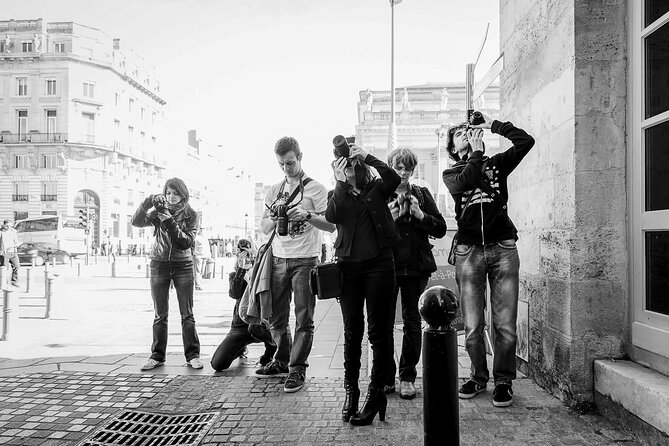
Day 2 is where your control turns into images that feel more complete. You start with real-life situations, so you can apply what you learned without relying on a single setting that only works in ideal conditions.
Ambient light and weather, including backlight
You learn management of ambient light (light, dark, backlight) and weather (sun, cloudy). Paris can shift quickly, and your camera settings need to respond to that. Beginners often use Auto exposure and then wonder why shots vary wildly. Day 2 helps you understand how light quality changes what you should aim for.
Exposure: metering, locking, histograms, and correction
Day 2 covers tools that reduce guesswork:
- Light metering modes
- Exposure locking
- Histograms
- Exposure correction
- Luminosity indices and stops
If that sounds like a lot, that is the point of the course format. You do not learn exposure as a concept only. You learn it as a set of practical steps you can repeat.
Histograms, in particular, tend to be a turning point. Once you understand what the histogram suggests about highlights and shadows, you stop relying on the screen alone, which can be misleading in bright or variable conditions.
Color control: white balance and saturation
You also work on white balance and saturation. Color problems are common in beginner photos, especially under mixed indoor lighting or cloudy outdoor skies. When you know what white balance is doing, you can correct a color cast instead of accepting it.
The course also focuses on how to adjust color choices to match the look you want.
Composition: the final structure
Finally, Day 2 includes image composition. This is not just about placing your subject. It is about making choices that turn an ordinary scene into a strong photo, especially when you are already thinking about exposure and color.
If Day 1 builds your technical control, Day 2 helps you use that control to build a photo you can be proud of.
The Hidden Value: Learning the Why, Not Just the How
A lot of photography content teaches settings in a way that makes you feel like you memorized a recipe. This course style is different because it connects the setting to the rendering, then gives you time to experiment until it clicks.
You are taught to disengage shooting parameters to regain control over rendering. That phrase matters because it reflects the real problem beginners have. You are not lacking equipment or talent, you are being controlled by your camera presets.
Once you learn aperture, shutter speed, focus mode, exposure tools, and color control, you can take creative ownership. That also makes travel photography more satisfying, because you stop hoping for good luck with the light and start planning how you will capture it.
And since the course is built for discussion and constructive questions, you get a safer learning loop. You can try, see why it failed, and adjust.
What’s Included (and What You Should Bring)

This experience includes:
- Written course support, a booklet you can reference later
- Video course materials after the session
- A memorial diploma
That take-home stuff can be very useful after the weekend when you start practicing again. The booklet gives you a structured review, and the videos help you refresh the steps you learned on Day 1 and Day 2.
What is not included:
- Loan of a camera
So plan around using your own camera system. If you are coming with a phone-only camera, this course may or may not match what you need, because the learning content refers to manual and semi-automatic modes, focus points, and exposure tools that are typical of interchangeable-lens cameras and advanced camera bodies.
The good news is that the course notes it is suitable for most travelers and that it is near public transportation, which matters because a 10:00 to 18:00 schedule needs easy access.
Price and Value: Is $370.43 Fair for Two Days in Paris?
At $370.43 per person for an approximately 2-day weekend, you are paying for structured coaching, real-field practice, and after-session materials. For beginners, what you are buying is time plus feedback plus a clear roadmap.
Here is how I think about value:
- You get roughly 16 hours across two full days (10:00 am to 6:00 pm each day).
- You are in a max 8-person group, which helps keep instruction more direct.
- You get a booklet plus video materials afterward, so the learning does not vanish the moment you leave.
- You get a guided method that leads you through the settings in the order that makes sense.
The only true cost you might add on your side is the travel time to the meeting point and using your own camera setup. But the course explicitly says a loan camera is not part of it, so you should budget around what you already own.
In short, for a beginner who wants a fast, practical foundation, this pricing can feel reasonable because it is not just information. It is coached skill-building.
Who This Paris Photo Weekend Fits Best
This experience is a strong match if you:
- Are new to Manual mode and want guidance that makes it feel manageable
- Want to understand exposure beyond basic brightness controls
- Care about learning settings that apply in real travel conditions, not just a controlled studio look
- Prefer small-group instruction where you can ask questions and get answers
It is also a good fit if you like structured practice. The course method is built around immediate application, experiments, and discussion. If you hate long lectures, you are likely to appreciate the hands-on pace.
If you already know how to shoot manual and read a histogram confidently, you might find parts move fast. But even then, the Day 2 focus on exposure tools, color choices, and composition can still help you tighten your workflow.
Should You Book This PhotoProf Photo Weekend for Beginners?
I would book it if your goal is clear: you want to stop fighting your camera and start making intentional photos. The best reason is the pairing of fundamentals with real-world practice across day and night, indoors and outdoors. You learn the core settings on Day 1, then you apply them to exposure and color control on Day 2.
You should also book if you value a supportive teaching style, and the name Alexis comes up in the kind of feedback that matters: accessible explanations and encouragement to experiment with buttons you probably never tried.
Hold off if you know you might miss outdoor shooting due to weather. Since the experience requires good weather, it is smart to plan with flexibility.
If you want a beginner photo course in Paris that gives you a practical skill system, this one is worth a serious look.
FAQ
Where is the meeting point for the PhotoProf photo weekend?
The meeting point is 115 Pl. du Carrousel, 75001 Paris, France.
What time does the experience start?
It starts at 10:00 am.
How long is the course?
It runs for 2 days (approx.), with each day scheduled from 10:00 am to 6:00 pm.
How many people are in the group?
The experience has a maximum of 8 travelers.
Is a mobile ticket provided?
Yes, the tour includes a mobile ticket.
What is included in the price?
Included materials are a written course support booklet, video course materials after the session, and a memorial diploma.
Is a camera loan included?
No, loan of a camera is neither necessary nor included.
What do you learn on Day 1?
You learn aperture and depth of field control, shutter speed and motion management, point or continuous focus, and how to work in Manual mode as well as Aperture Priority (A/Av) and Speed Priority (S/Tv).
What do you learn on Day 2?
You learn exposure and real-life scene handling, including ambient light and weather, metering modes, exposure locking, histograms, exposure correction, luminosity indices and stops, plus color tools like white balance and saturation, and composition.
Is good weather required?
Yes, the experience requires good weather. If it is canceled due to poor weather, you will be offered a different date or a full refund.
What is the cancellation policy?
Cancellation is free. You can cancel up to 24 hours in advance for a full refund. If you cancel less than 24 hours before the start time, the amount paid is not refunded.