
Review · LOUVRE MUSEUM TOURS
Mona Lisa & Louvre Masterpieces Tour with Reserved Access
The Louvre is massive, and time is short. This tour cuts straight to the works that most people come for, with reserved entry and an expert guide plus a headset so you do not miss the stories. It also starts in a smart place near the Arc de Triomphe du Carrousel, so you get oriented before you hit museum security.
I especially love how this route pairs the famous faces with the supporting cast. You stand up close to Mona Lisa, then you get to compare it with heavyweight classics like Venus de Milo and Winged Victory of Samothrace, which makes the whole collection click faster. The tour also leans into the drama of art history, from Renaissance giants to French sculpture, including pieces like Michelangelo’s Dying Slave and Canova’s Psyche Revived by Cupid’s Kiss.
One thing to plan for: you will be on your feet for a while. Even with reserved access, this is a walking highlights tour, so wear comfortable shoes and expect a brisk pace through major rooms.
Key highlights worth your attention
- Reserved access helps you start sooner and avoid ticket-line bottlenecks
- Headsets keep the guide’s explanations clear even in busy galleries
- Crowd-smart viewing for Mona Lisa, with practical tips on how to actually see it
- A lineup that moves from Greek and Roman antiquities to Renaissance masterpieces
- Time to keep exploring after the guided part, so your visit does not end the moment you feel ready
- Optional wine and cheese tasting upgrade for a fun Paris food break
Meeting at the Arc de Triomphe du Carrousel, not the Louvre entrance
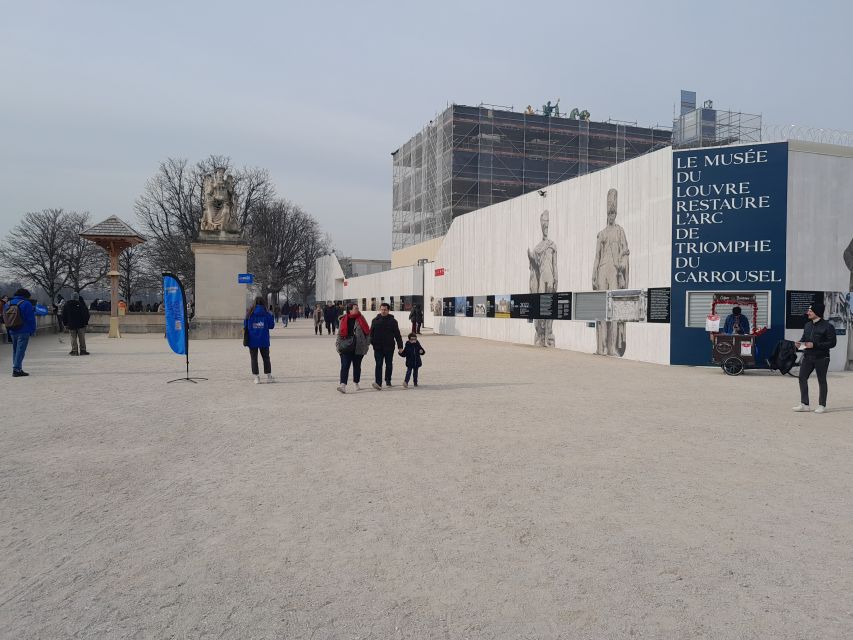
Your tour begins outside the Louvre area, which is a good thing. Instead of arriving at the most obvious entrance and getting swept into the busiest crush, you meet at the Arc de Triomphe du Carrousel. You will look for a horse-drawn chariot on top of the arch, and you can spot it across the road when you stand with your back to the Louvre Pyramid entrance, near the Tuileries Garden.
Look for coordinators in blue attire along the wall railing on the left side of the arch. That small detail matters because it keeps the start smooth, and the whole day feels less chaotic from the first minute. It is also one of those Paris moments where the setting already hints at what is coming: royal power, grandeur, and art that has survived centuries of change.
Practical tip: arrive a few minutes early. Security and crowd movement near the Louvre can make the first few minutes feel slower than you expect, even with reserved entry later.
You can also read our reviews of more tours and experiences in Paris.

How reserved access changes your Louvre experience
The Louvre is not just big, it is busy in a way that can drain your energy. This tour includes pre-reserved access and an entrance ticket, and it is designed to let you skip the ticket line. The payoff is simple: you spend your time in galleries, not in queues.
Once you get inside, there is still security screening for everyone. That is non-negotiable. But getting through the line portion faster means your guided viewing can start earlier, which helps a lot when you have a tight schedule.
Value angle: you are paying for time and guidance, not just entry. The museum is so large that even people with the best intentions tend to miss key works when they rely on wandering alone. With reserved access, you are buying back energy for the actual art.
The Louvre Pyramid photo stop and orientation moment
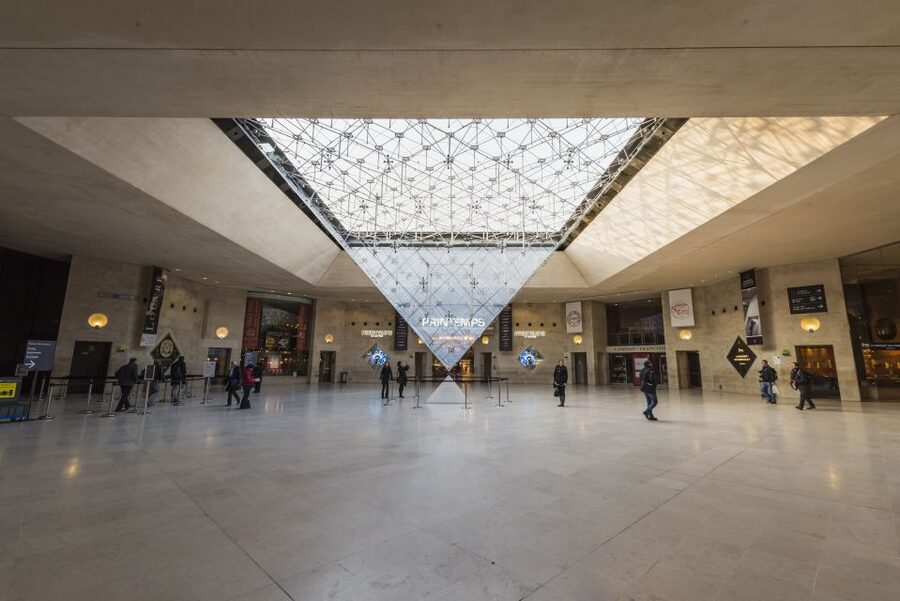
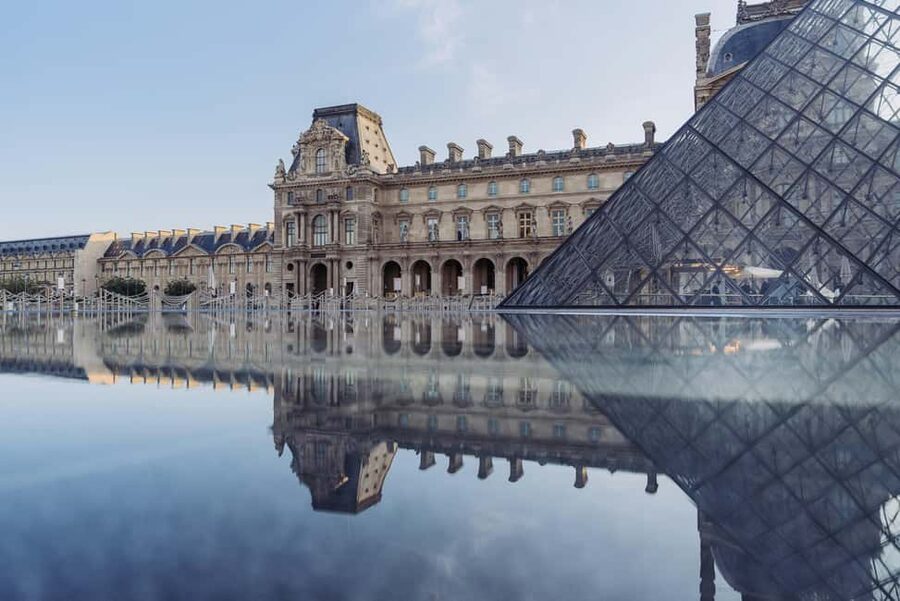
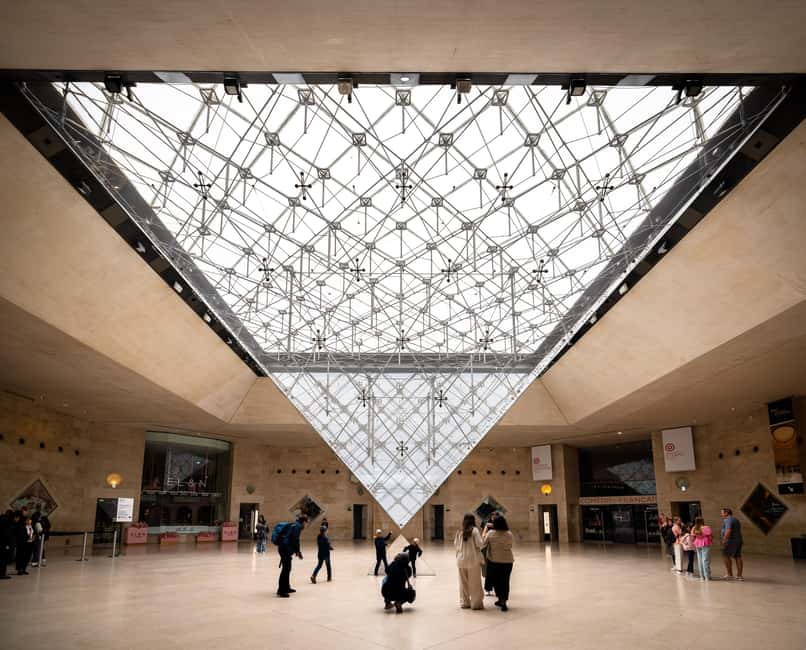
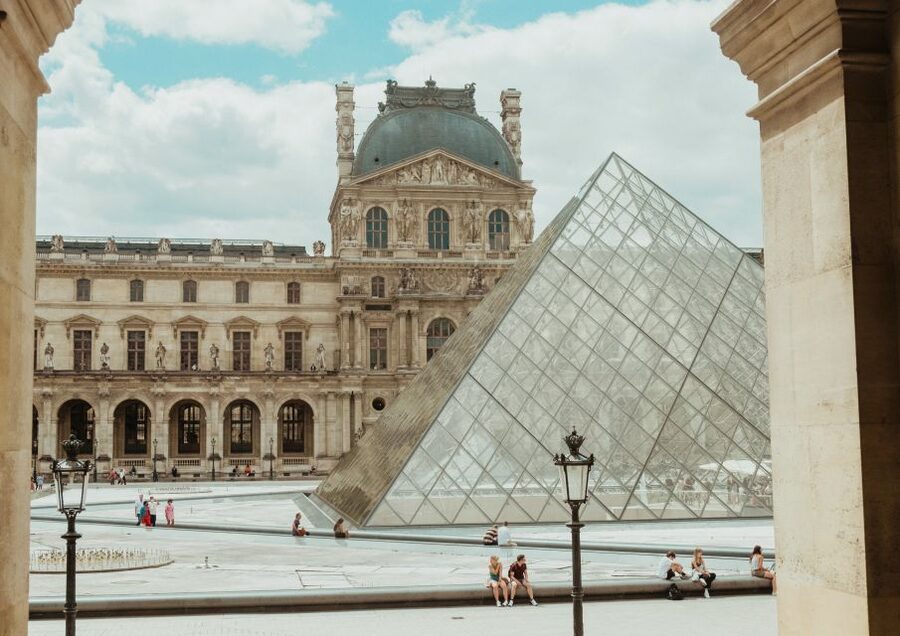
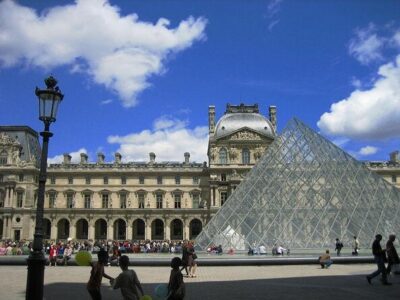
Before the serious art starts, you get a short stop at the Louvre Pyramid. This is more than a quick photo. It helps you orient to where everything is inside, and it sets the rhythm for the tour. Even if you have seen Louvre photos online, the real building structure is disorienting once you are there.
Your guide uses this early moment to get you oriented, then you move into the museum for a long guided chunk. The headset also kicks in here, so you can keep pace without constantly turning your head to hear directions.
If you get motion-sick or you just do not love crowds, keep your breathing steady right away. The Louvre crowd flow can be intense. The sooner you settle into the tour structure, the less you feel jostled by the place.
Greek and Roman antiquities: where the museum starts to feel real
One of the smartest things this tour does is not treating antiquities like an optional warm-up. You move through Greek and Roman antiquities so that the Louvre feels like a timeline instead of a random collage of famous names.
A highlight in this section is the Great Sphinx of Tanis, which brings you face-to-face with something that feels ancient in the best way. When you are surrounded by centuries of different art styles, a huge artifact like this is a reset button. It also helps you understand that the Louvre is not only a painting museum. It is a collector’s story that spans continents and thousands of years.
You also get a look at classical sculpture stops, including Venus de Milo and Winged Victory of Samothrace. Seeing these within a guided route makes them more meaningful than checking boxes. You learn how to read form, proportion, and expression, and you start noticing what later European artists were borrowing.
And yes, these are popular works. The trick is not avoiding them, it is knowing where and when to look so you get a real view.
Classic sculpture stops: Venus de Milo and Winged Victory
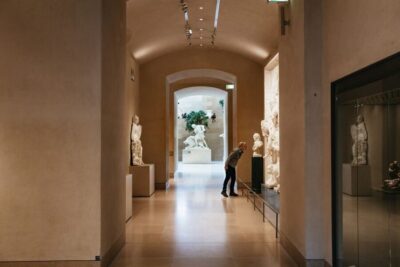
If you have only a few hours at the Louvre, sculpture can be the hardest category to do well on your own. On this tour, you get focused time with major pieces in the classical collections.
Venus de Milo teaches you how much personality can live in a fragment. Even without everything intact, the pose and balance carry. Then Winged Victory of Samothrace shifts the mood entirely, because it is all about movement and drama.
Practical perspective: when you arrive at sculpture galleries without a plan, you often end up stuck at the edges, trying to see through people. A good guide keeps the group moving so you are not always stuck at the same blocked angle.
This is also where you can use your headset to your advantage. The guide’s explanations help you look beyond the surface, so even a quick stop feels like you learned something.





Da Vinci, Raphael, and the Renaissance route you actually remember
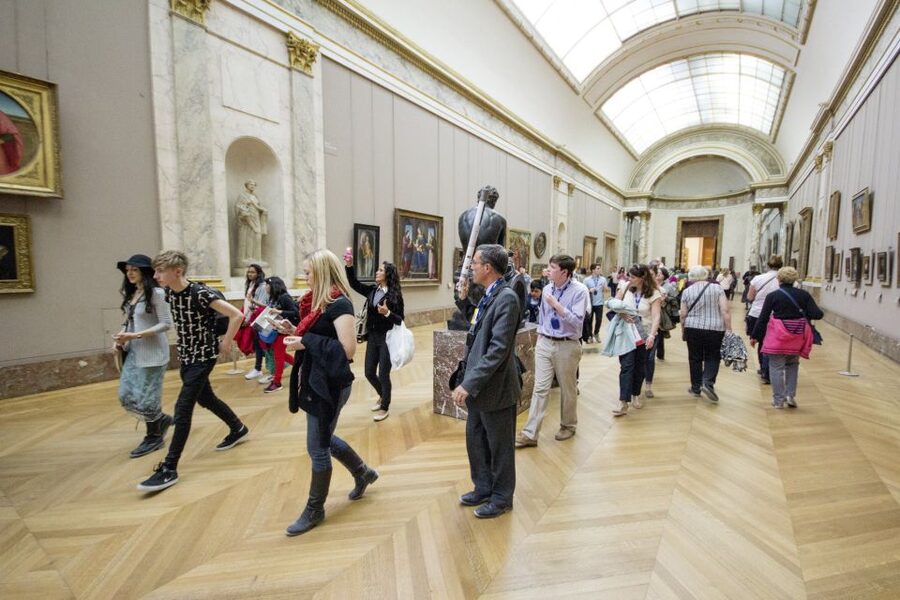
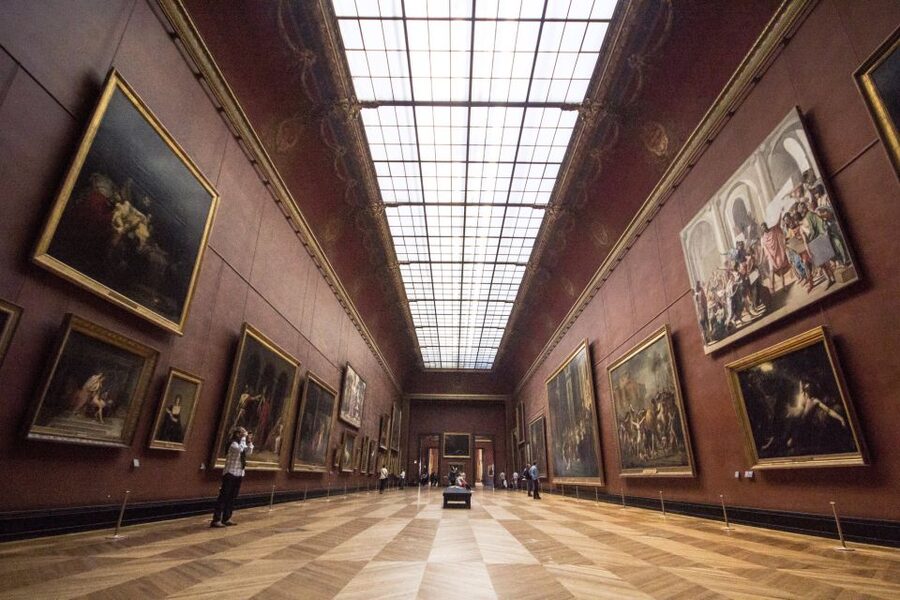
Now comes the section most people are waiting for. You see Da Vinci’s Mona Lisa and other major Renaissance works, including paintings associated with artists like Raphael. The point is not just to stare at masterpieces. The point is to understand what makes them famous.
You will hear the stories behind the works you are seeing, including what to pay attention to in composition and expression. And because the tour structure is designed to manage timing, you have a better chance of getting your moment at Mona Lisa instead of getting trapped in a moving wall of people.
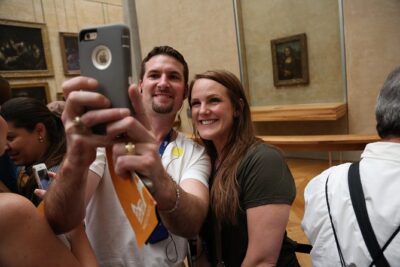
Here is a practical reality: Mona Lisa can be hard to see clearly because it is always crowded. Even with reserved access, you should not expect a quiet private viewing. What you can expect is guidance on how to find your viewing angle and what to look for while you wait for the crowd flow to shift.
You will also see other famous stops tied to Renaissance brilliance and dramatic subject matter, such as Caravaggio and Michelangelo. That mix matters because it shows how European art changes when painters and sculptors pull different emotional levers.
If you are new to art history, this tour is good at turning names into context. If you already love art history, it is still useful because it saves you the effort of figuring out the right room order.
Michelangelo and Canova: feeling the drama in sculpture

This tour does not treat sculpture as background. It spotlights specific pieces, including Michelangelo’s Dying Slave and the Romantic-era sculpture Canova’s Psyche Revived by Cupid’s Kiss.
The Michelangelo work is intense and physical. You get a sense of strain and movement that feels almost modern. Then the Canova piece adds a different kind of energy, more theatrical and myth-focused. Seeing those together helps you understand that sculpture is a language. It can be raw, polished, tragic, or tender, sometimes all within the same museum visit.
The value here is in pacing. When you try to do these stops alone, you often see one statue and then spend too long lost in the museum layout. A guided route prevents that.
Apollo Gallery and Napoleon Apartments: royal rooms, not just art
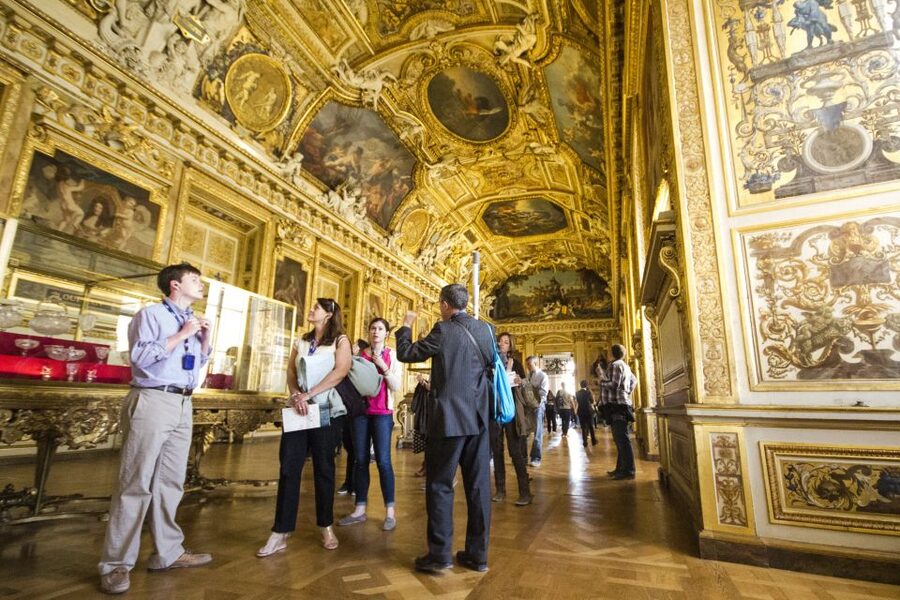
After the big-name highlights, you step into the Louvre’s layers of power. The tour takes you through the Apollo Gallery, once part of the Louvre’s royal heritage, and then into the Napoleon Apartments, where the opulent décor remains tied to Second Empire grandeur.
This is a key part of the experience because it reminds you that the Louvre is not only a museum. It is a palace complex that evolved over time. The rooms help you understand why some artworks were displayed in certain ways, and why the setting matters.
Even if you only skim interiors on a normal day, I think these stops are worth your attention. They connect the art to the place, so the museum feels coherent instead of random.
How the guided flow works, and where you get breathing room
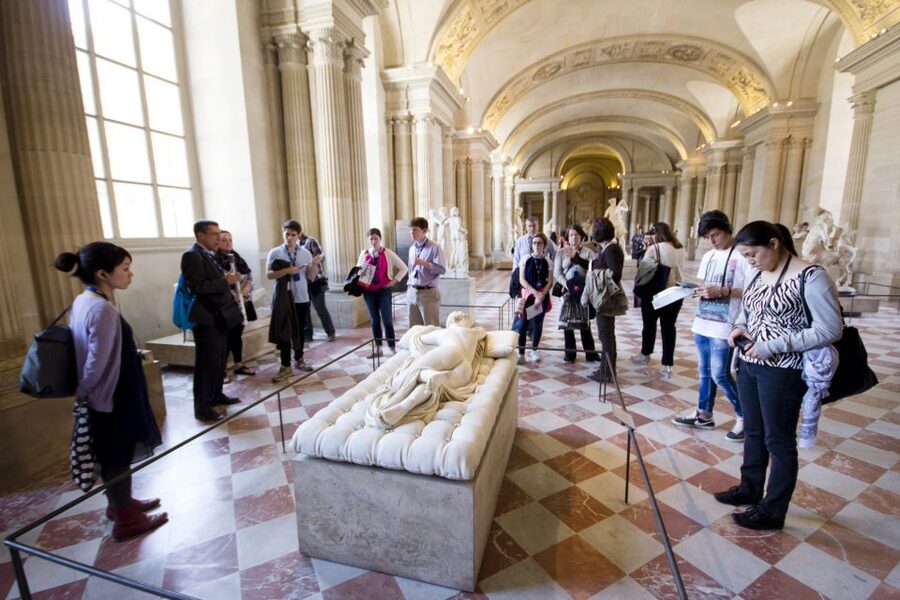
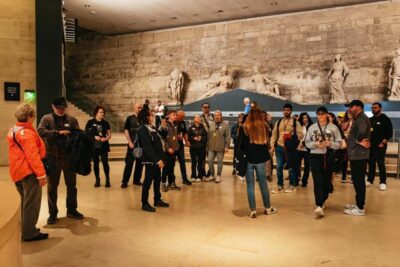
The structure is built around a guided period in the museum with an English-speaking guide, plus time afterward to keep exploring at your own pace. That combination is important. A guided pass gives you the right order and context. Self-guided time lets you linger where you actually feel drawn in.
Many guides on this route are praised for crowd management and for keeping the group together. In past experiences, names like Summer and Crystal stand out for clear, organized explanations and smart handling of the flow around the busiest rooms. Saeed, Hugo, and Omar also get mentioned for a mix of friendly patience and clear storytelling that keeps the art from becoming just a list of titles.
If you like your art with stories, you will probably enjoy the way the headset and guide explanations keep you engaged. If you prefer slow looking, plan to use your free time after the guided part for extra time with whichever works grabbed you most.
Coat and restroom breaks can be part of the rhythm. One review notes there was enough time to check coats and use the restroom, which is a relief because you do not want to lose prime viewing time to logistics.
The wine and cheese upgrade: a practical Paris break
There is an optional upgrade that adds a wine and cheese tasting at a high-end Parisian wine bar in central Paris. It pairs fine wines with artisanal cheese and charcuterie.
If you are the kind of traveler who gets museum fatigue, this is a strong add-on. It gives your brain a reset and lets you keep enjoying Paris culture in a different form. It also turns the end of the tour into a full experience instead of a quick exit from the museum into the street.
Value check: it is not mandatory, but if you enjoy food and like the idea of a guided art visit plus a guided tasting moment, it can be a great way to make the day feel complete.
Price and value: is $80 a good deal for the Louvre?
At $80 per person for a roughly half-to-three-quarter day experience, this price only makes sense if you treat it as a time-saver plus an art-education shortcut.
Here is the value math you should think about:
- Reserved access and skipping the ticket line reduce wasted time.
- The expert guide adds context, so you do not just see famous works, you learn what to look at.
- The headset means you spend less energy trying to hear over other visitors.
- The lineup covers major categories, so you are not stuck with only painting or only sculpture.
If you are an EU resident aged 18 to 26, entry to the Louvre itself is free, though the reservation fee still applies. In that case, the value leans even more heavily toward the guide and the reserved logistics.
Worth noting: you are also paying for the work of building a route inside a museum that can feel impossible to navigate. That alone can save you from spending your limited hours wandering and missing key rooms.
Who should book this tour
You will likely love it if:
- You are seeing the Louvre for the first time and want a fast path through the must-sees.
- You want context and stories, not just selfies.
- You dislike wasting time in queues and you like a structured plan.
- You want an easy way to compare masterpieces across styles, from Renaissance painting to classical sculpture and palace rooms.
You may want to skip or choose a different format if:
- You have mobility challenges. This tour is not suitable for wheelchair users or people with mobility impairments.
- You cannot walk for a decent stretch. The tour involves a fair amount of walking.
- You travel with baby strollers or large bags. These are not allowed, and oversize luggage over 55 x 35 x 20 cm is not permitted.
If you come in with realistic expectations, this tour is one of the best ways to get value out of limited time at the Louvre.
Should you book this Mona Lisa and Louvre masterpieces tour?
If you want the Louvre highlights without turning your day into a navigation puzzle, I would book it. The biggest reason is not just Mona Lisa. It is the way the tour stitches together classical sculpture, antiquities, Renaissance painting, and royal rooms into one guided storyline, with reserved entry and a headset that keeps you connected to the guide’s explanations.
My advice: wear comfortable shoes, plan for a walking pace, and treat the guided portion as your master map. Then use your remaining time to linger on the works that stuck with you, because the Louvre rewards repeat looking.
If that is your style, this tour is a smart, high-value way to start your Louvre visit and avoid the common trap of leaving overwhelmed and unsure what you actually saw.
FAQ
What is the duration of the tour?
The tour lasts about 3 hours, listed as 210 minutes.
Where is the meeting point?
You meet by the Arc de Triomphe du Carrousel, not at the Louvre entrance. Coordinators in blue attire stand along the wall railing on the left side of the arch.
Do I get reserved access and skip the ticket line?
Yes. The tour includes a pre-reserved access and entrance ticket, and it is described as skipping the ticket line.
Is the tour guided in English?
Yes. The guide is English-speaking, and you also receive a personal headset so you can hear clearly.
Is the wine and cheese tasting included?
The wine and cheese tasting is included only if you select the upgrade option. It is at a high-end Parisian wine bar in central Paris.
What is the tour like during the museum visit?
You’ll have a guided tour through top Louvre attractions and then time to explore on your own afterward.
Are large bags or strollers allowed?
No baby strollers are allowed. Luggage or large bags are not allowed, and items exceeding 55 x 35 x 20 cm are not permitted in the museum.
What should I bring?
Bring comfortable shoes. The tour involves a fair amount of walking.
Is the tour suitable for wheelchair users or mobility impairments?
No. It is listed as not suitable for people with mobility impairments and wheelchair users.
Where do you get dropped off after the tour?
You get drop-off locations listed as Louvre Pyramid and Ô Chateau.
More Tours in Paris




More Tour Reviews in Paris
Not for you? Here's more nearby things to do in Paris we have reviewed










Louvre Museum Tours, side by side.
 ★ 4.6Louvre Museum Timed-Entrance TicketTickets from $2671,977 guest reviews
 ★ 4.3Louvre Guided Tour with Reserved Access & Boat CruiseTickets from $8116,353 guest reviews
 ★ 4.5Louvre Museum Masterpieces Guided Tour with AccessTickets from $8612,023 guest reviews
 ★ 4.6Louvre Museum Entry Ticket With Host and River CruiseTickets from $1009,926 guest reviews
 ★ 4.1Priority Access Louvre with Host -Direct to Mona LisaTickets from $748,387 guest reviews
 ★ 5.0Louvre Museum – Exclusive Guided Tour (Entry Included)Tickets from $1816,296 guest reviews
 ★ 4.0Louvre Reserved Ticket and River Cruise ComboTickets from $376,054 guest reviews
 ★ 4.6Louvre Museum Hosted Entry and Mona Lisa AudioguideTickets from $815,235 guest reviews
This tour also belongs to