

Review · PARIS CITY TOURS
Paris Walking Tour , Historical Sites .
Five neighborhoods, one easy half-day loop. This Paris Historical Sites walking tour strings together classic monuments and daily street life, from Saint-Sulpice’s grand square to the cobblestones of Le Marais. I especially like the max 7 travelers setup, which keeps the pace calm enough for questions, plus the way the route spotlights Jewish tradition alongside fashion and food in Le Marais. One possible drawback: it moves at a walking pace, with most sights giving you a quick look rather than long museum time.
At about $96.79 per person for roughly 3 hours, it’s a strong “first afternoon in Paris” kind of outing. It’s offered in English, uses a mobile ticket, and runs from 1 Pl. Saint-Sulpice (75006) to Place des Vosges (75004). The guide behind the experience, Neda, is known for sharing Paris with energy, not just facts, and for helping you connect what you see to how people actually live here.
Key highlights to expect

- Small group cap of 7 for real back-and-forth with your guide
- Le Marais meets Jewish tradition and modern fashion, plus delis, bagels, and synagogues
- Saint-Sulpice inside access for free, with the famous fountain of the four cardinal directions
- Pont Neuf and a Seine-side walk that sets up major landmarks like Notre-Dame and Sainte-Chapelle
- Place des Vosges symmetry, with the area linked to Les Misérables author Victor Hugo
What you cover in this 3-hour Paris historical loop
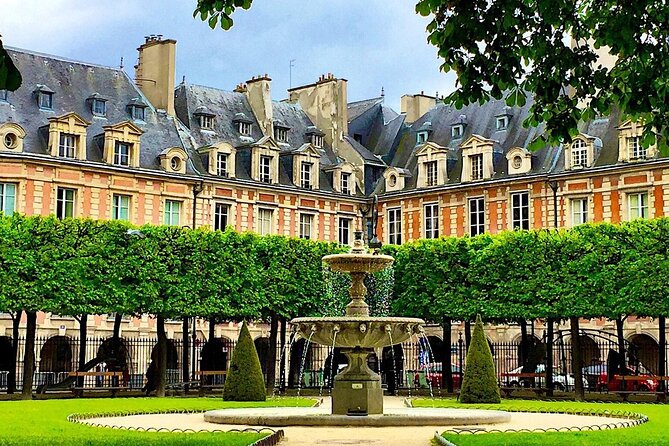
This tour is built around the idea that Paris history is not only in big-ticket monuments. It’s also in neighborhoods, street patterns, food windows, and the little design choices people keep making over centuries.
You’ll move through central Paris fast enough to feel like a win, but not so fast that you miss the vibe. The route touches five distinct areas that feel different from each other: Saint-Germain-des-Prés, the Pont Neuf bridge approach, the river and City Island area, Le Marais, and the formal beauty of Place des Vosges. That mix is exactly why I think the tour is good value. You’re not just ticking landmarks, you’re getting a map of how the city’s layers sit side by side.
You can also read our reviews of more walking tours in Paris



Entering Eglise Saint-Sulpice, the second-largest church in Paris
The tour starts at Eglise Saint-Sulpice. It’s not a random warm-up stop. It’s big, it’s atmospheric, and it’s in a part of Paris that feels more relaxed than the busiest tourist corridors.
A key detail here is the church’s claim to fame: the fountain of the four cardinal directions. When you see it in context, it’s easier to understand why people stop, look up, and then keep looking. The setting also matters. You’re in an open space near St. Germain des Prés, close to Luxembourg Gardens, so the church lands like an anchor before you head into the neighborhood bustle.
What to watch for: if you’re the kind of traveler who likes symbolism, this is a good stop. If you prefer moving quickly, plan on using your short window efficiently, because the tour keeps things brisk.
Saint-Germain-des-Prés: shops, museums, and literary Paris energy
Right after Saint-Sulpice, you head into the Saint-Germain-des-Prés quarter. This is one of those Paris areas that feels like it has a backstage life behind it: fine shops, creative energy, and plenty of cultural sights nearby.
During the guided time here, you’ll get a sense of why Saint-Germain-des-Prés has been tied to artists and writers for generations, and you’ll also get practical pointers on food and shopping streets. The tour time is about 35 minutes, which is enough to orient yourself, grab the names of a few worthwhile nearby places, and still have energy for the rest of the walk.
Small consideration: Saint-Germain-des-Prés is lively. If you’re sensitive to crowds and street noise, keep your expectations realistic. This is an active neighborhood stop, not a quiet stroll.
Pont Neuf and the Seine: oldest standing bridge, big-city views
Next comes Pont Neuf, described as the oldest standing bridge in Paris. Even if you’ve seen bridges in other cities, this one carries weight because it’s tied to long planning and long reigns: 1577 under Henri’s decree, then resumed in 1599 during the reign of Henri IV.
The tour’s goal at this stage is not to turn Pont Neuf into a long photo session. It’s to use it as a gateway to how Paris opens out toward the water. From there, you’ll walk along the river and toward City Island (Ile de la Cité), including the flower market area and views connected to major landmarks.
As you head that direction, you’ll also pass by the sights people dream about: Cathedral of Notre-Dame de Paris and Sainte-Chapelle. The value here is that you see how they relate to the streets and river edge, so they feel less like isolated postcards.
Practical tip: bring your comfortable shoes. The river-side segment is scenic, but it’s still walking through real Paris streets.
City Island and the river walk: where Roman roots meet modern crowds
This portion of the tour focuses on the river edge and City Island, which the route notes as the site where a fortress of the Roman governor once stood. That kind of detail is useful, because it gives you a mental timeline. Instead of imagining Paris as a flat map of eras, you start to picture layers under your feet.
You also get the chance to spot how this area functions today: people strolling, stopping for flowers, and using the river as a public living room. It’s a good contrast to the more neighborhood-focused stops like Le Marais. Here, Paris shifts into landmark mode.
If you want the “wow” factor without committing to a full day of cathedral tickets and timed entry, this river segment is the compromise. You get major buildings in your line of sight, plus you keep moving.
You can also read our reviews of more historical tours in Paris






Le Marais: cobblestones, independent fashion, and Jewish life side by side

If there’s one neighborhood on this route that feels like a story you can walk through, it’s Le Marais. You’ll spend about 1 hour here, and it’s designed to show you how style, culture, and community overlap.
The tour describes Le Marais as:
- small cobblestone streets
- cozy restaurants and food stops
- independent fashion boutiques
- contemporary art galleries and museums
Then comes the distinct angle that makes this stop more than a generic “old Paris district.” You learn about how Jewish traditions intersect with fashion in the area. You’ll also see the modern signs of that community in everyday places, including delis, bagel shops, and synagogues. And because Le Marais is not only about the past, you’ll also notice the contemporary rhythms: shops, browsing, and Sunday-style brunch energy.
Why this matters for you: if your travel style is part history, part food, part people-watching, Le Marais delivers. It’s also a neighborhood you can keep exploring after the tour, since you’ll leave with an intuitive sense of where to wander next.
The main drawback: because this is a busy shopping and dining area, it can be harder to talk over street noise. If you want the most out of the guide, stand near the middle of the group as you move and keep questions ready while you’re stopped.
Place des Vosges: symmetry, old-world charm, and Victor Hugo’s footprint
Your final major stop is Place des Vosges, one of Paris’s oldest and prettiest squares. The description is precise for a reason: this square is perfectly symmetrical, lined by 36 buildings. When you stand there, you can feel why architects and artists keep using it as a reference point.
The tour also connects the square to Victor Hugo. The Victor Hugo House museum sits here, and the route notes that he lived there on the second floor from 1832 to 1848. That detail adds a layer beyond “pretty square.” It makes the place feel inhabited by ideas, especially if you’ve read Les Misérables.
Plan to use your time intentionally. This is a good spot to:
- look at the building rhythm
- take photos without sprinting
- think about which neighborhood you want to return to later (Le Marais is often the top choice)
One practical note: the tour ends here, so it’s a convenient place to transition into dinner or a calm post-walk decompression.
Group size, pace, and how to get better answers from Neda

A cap of 7 travelers is not a small detail. It changes the entire experience. You’re more likely to get direct answers, follow-up explanations, and guidance that fits your interests rather than a scripted lecture.
From the way Neda guides, the best approach is to treat it like a conversation. If you ask about what you’re seeing, you’ll usually get practical context: how neighborhoods evolved, why certain monuments are where they are, and what to notice when you walk on your own later. The tour format also works well for first-time visitors who want orientation fast. You’ll leave with a clearer mental model of central Paris, especially the Left Bank to Le Marais to the river direction.
Pace reality check: the tour is roughly 3 hours. That means each stop gets its moment, not a half-day linger. If you love slow travel, think of this as your “get bearings and learn the why” walk, then use the rest of your trip for longer hangs at the places that grabbed you.
Price and value: is $96.79 worth it?
At $96.79 per person for about 3 hours, this is priced like a true guided walk, not a casual meetup. Whether it feels like value depends on what you want from Paris.
Here’s why I think it works for many travelers:
- You cover five different central Paris areas in one outing, which is hard to replicate efficiently without a lot of transit time.
- You get a small group format, which often translates to better questions and less standing around.
- Several stops are noted as free admission opportunities, including Saint-Sulpice.
- You end in a top location for continued exploration, Place des Vosges, instead of getting dropped somewhere inconvenient.
When it might not be the best fit:
- If you only want deep museum time or long cathedral viewing, you’ll likely want a more focused tour.
- If you hate walking, this is still a walking tour with frequent street transitions.
Who should book this Paris historical sites tour
I’d point you toward this tour if:
- you want a structured way to see central Paris in one half-day
- you’re excited by neighborhoods, not only monuments
- you like the mix of history plus modern street life
- you want an easy start to your trip, especially if it’s your first day or first afternoon
You might skip it if:
- you already have a tight plan that avoids large walking blocks
- you want museum-heavy content rather than guided streets and viewpoints
- you’re looking for a full “cathedral day” experience with long interior time at multiple sites
Should you book it?
Yes, if you want a smart, efficient way to learn Paris beyond the usual skyline photos. The combination of Saint-Sulpice, Pont Neuf and the Seine, Le Marais Jewish-life and fashion context, and the symmetry of Place des Vosges gives you a well-rounded snapshot without locking you into long indoor schedules. With a 7-person cap and a guide like Neda who keeps the tone lively, it’s the kind of tour that tends to make your next walks feel easier, because you understand what you’re looking at.
FAQ
How long is the Paris historical sites walking tour?
It lasts about 3 hours.
How much does the tour cost?
The price is $96.79 per person.
Is the tour offered in English?
Yes, it is offered in English.
What is the group size limit?
The tour has a maximum of 7 travelers, and it’s designed to keep interaction easy.
Where do I meet, and where does the tour end?
You meet at 1 Pl. Saint-Sulpice, 75006 Paris, and the tour ends at Place des Vosges, 75004 Paris.
Do I need a printed ticket?
No. You receive a mobile ticket.
Are there admission fees for the main stops?
The tour notes free admission for key sights such as Eglise Saint-Sulpice.
Is free cancellation available?
Yes. You can cancel for a full refund up to 24 hours in advance.
Are service animals allowed?
Yes, service animals are allowed.
More Walking Tours in Paris



More Tours in Paris






More Tour Reviews in Paris






Not for you? Here's more nearby things to do in Paris we have reviewed












Paris City Tours, side by side.
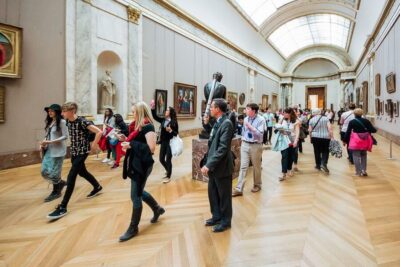 ★ 4.6Louvre Museum Timed-Entrance TicketTickets from $2671,977 guest reviews
 ★ 4.6Disneyland® Paris 1-Day TicketTickets from $6149,412 guest reviews
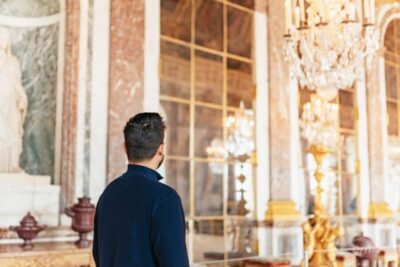 ★ 4.6Versailles Palace and Gardens Full Access TicketTickets from $1741,579 guest reviews
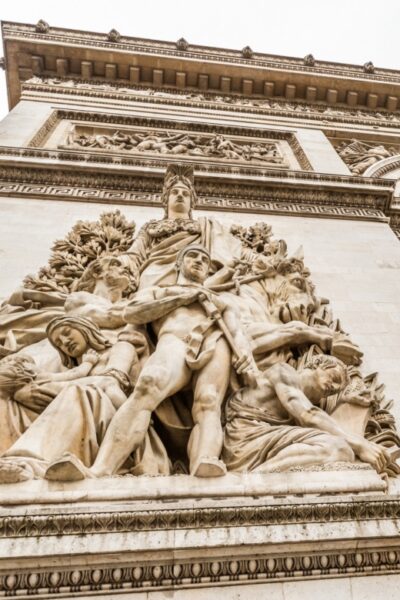 ★ 4.6Arc de Triomphe Rooftop TicketsTickets from $1834,264 guest reviews
 ★ 4.7Orsay Museum Entry TicketTickets from $1525,647 guest reviews
 ★ 4.4Evening River Cruise with MusicTickets from $2722,721 guest reviews
 ★ 4.4Eiffel Tower Entry Ticket with Optional Summit AccessTickets from $2920,035 guest reviews
 ★ 4.3Eiffel Tower Summit or Second Floor AccessTickets from $5917,248 guest reviews
This tour also belongs to