
Review · LATIN QUARTER TOURS
Paris – Latin Quarter Free Tour in English (Tip-Based)
Old Paris comes into focus fast. This English, tip-based walk turns the Latin Quarter into a story you can follow block by block. You start at Fontaine Saint-Michel and end in a lively square where you can keep eating and drinking.
What I like most is the value. It is pay-what-you-want, so you control your final cost, and the route packs major landmarks into roughly 2 hours. I also like how the stops feel connected, from medieval corners and old streets to university life and French big-history at the Pantheon.
One thing to consider: the pacing is brisk. You spend only 5 to 15 minutes per stop, so if you want lots of time inside museums or for long photo sessions, this tour is more about seeing and understanding than lingering.
Key things to know before you go
- Tip-based pricing lets you match the tour to your budget, with electronic payments for tips
- English guided stories that connect places, from medieval Paris to modern France
- A tight, smart route that hits old streets, churches, Roman remains, and the Pantheon
- Short stop times mean you get variety, but you will not slow down for long visits
- End at Place de la Contrescarpe, a great spot to continue with food and drinks
- Guides like Bruce and Sanna are highlighted for making history feel lively and easy to follow
Why this pay-what-you-want Latin Quarter walk can be a smart value
This tour is listed as Latin Quarter Free Tour in English, meaning the base price is low and your support is handled through tips. The important part for you is that you can stay flexible. If you feel the guide really earned it, you can tip accordingly. If you are on a tight trip budget, this format is still a way to get a structured walk without committing to a high fixed price.
You also get a lot of “planner-friendly” value. The experience runs about 2 hours, and the route is designed for walking. That matters in Paris. Even a short distance between major sights can turn into a long day when you do it solo, and you can waste time figuring out what is worth your effort. Here, your guide gives you a sequence, so you spend your energy looking at buildings and street scenes instead of doing guesswork.
One more practical note: tips are accepted only via credit/debit cards and electronic payments, and VAT is added to contributions. So if you are planning to tip in cash, adjust your plan. Bring a card you can use for the payment.
You can also read our reviews of more tours and experiences in Paris.



Route timing: morning or afternoon, plus an easy start and end
You can choose a morning or afternoon start time, which is a big deal in the Latin Quarter. This neighborhood works well in waves. Morning brings calmer streets and better light for photos. Afternoon can be more energetic, with more people around at cafés. Either way, the tour is designed to keep you moving and to fit into a day that already has museums or getting oriented by yourself.
Your tour begins at Place Saint-Michel (Fontaine Saint-Michel). The main end point is Place de la Contrescarpe. That ending location is not random. It is in the heart of the Latin Quarter, surrounded by restaurants, bars, and cafés, so you are not stuck far from food after the walk.
The experience is also set up for small-to-medium groups. Your booking price is described for a group up to 9, while the overall maximum is 50 travelers. In plain terms, you should expect a friendly walking pace, not a huge stadium crowd. You still get enough time for your guide to talk, but you should expect the Paris sidewalks are busy in general.
How the walk tells Paris’ story, from medieval streets to the Pantheon
This tour works because it treats the Latin Quarter like a living timeline. Your guide points out how Paris moved from medieval rhythms to a modern city in a surprisingly short span, described as only 70 years in the fountain stop. That framing makes the buildings you see feel more connected, not like a list of unrelated stops.
You will also notice a pattern in the route: each cluster of sights adds a different layer. There is street-level Paris (narrow lanes and old corners). There are religious landmarks (cathedrals and churches). There are layers of learning and art (book culture, universities, museums). Then the tour builds toward France’s big intellectual and historical figures at the Pantheon.
The big drawback with any story-based walking tour is time pressure. Here, you should plan to enjoy “watch and listen” instead of “stroll and soak.” Most stops are 5 to 15 minutes, so you will have to choose your priorities once you are there.
Fontaine Saint-Michel to Rue de la Huchette: the tour opens with Old Paris momentum
Stop 1: Fontaine Saint-Michel
The tour starts at a fountain tied to Paris rebuilding, and your guide sets the tone with a story about how the city transformed from medieval to modern in that short 70-year window. Even if you have seen Saint-Michel before, it is a smart place to begin because it gives you context before you move into the tighter Latin Quarter streets.
Stop 2: Rue de la Huchette
This is one of the oldest street walks you will do on the tour. You are guided through narrow, older-feeling Paris, with the focus on how the streets shaped life in the neighborhood long before today’s cafés and bookstores.
If you like photographing street details, do it here. The buildings are close, and the scene changes quickly as you walk.
Shakespeare and Company and Notre-Dame views: bookstores and cathedral energy
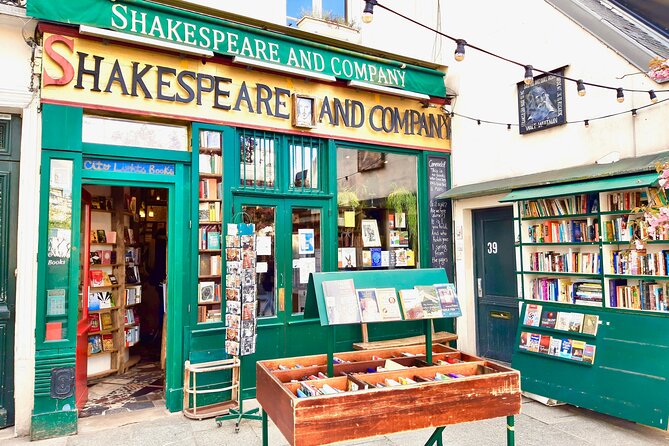
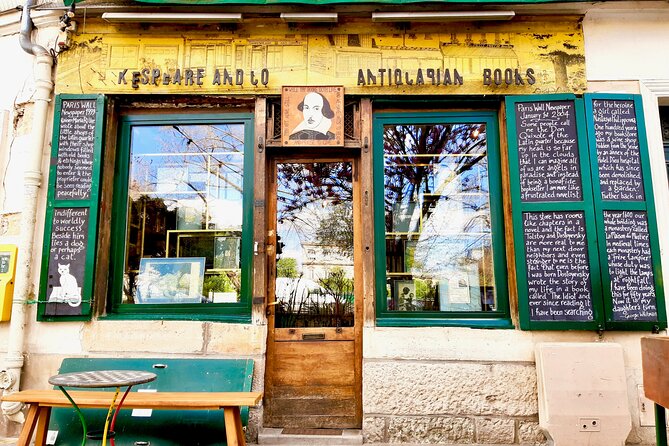
Stop 3: Shakespeare and Company
This iconic bookstore takes the Latin Quarter’s writer culture seriously. You get a snapshot of the Lost Generation vibe, with major names tied to the neighborhood such as Hemingway, James Joyce, and F. Scott Fitzgerald. Even if you do not buy anything, the storytelling around it helps you understand why this area became a magnet for authors.
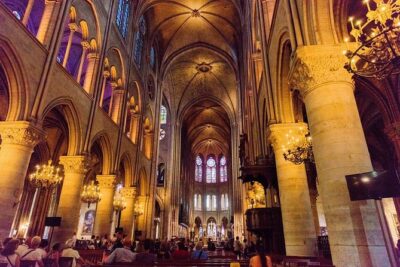
Stop 4: Cathedrale Notre-Dame de Paris
This stop is short, but it is focused on views. You get a moment to take in Notre-Dame’s scale from the surrounding streets and squares. Because your time here is brief, aim for one good panorama, then move on.
If you are hoping to spend a long time inside, plan that separately. This tour is about guided highlights, not a full cathedral visit.






The oldest tree ritual and Eglise Saint-Julien Le Pauvre
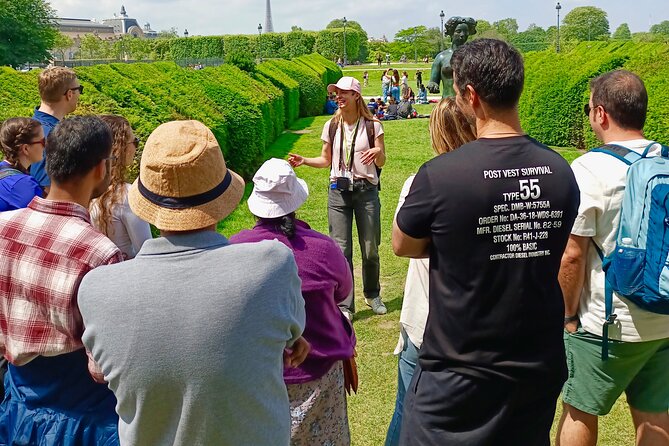
Between the big headline sights, the tour adds two “small but memorable” stops that give the area character.
One is the oldest tree in Paris, dating back to 1601. There is a tradition to touch its leaves and make a wish. It is a quick stop, but it is the kind of detail that makes the Latin Quarter feel like more than architecture.
Then comes Stop 5: Eglise Saint-Julien Le Pauvre
This church is described as one of the older buildings in Paris and once part of the education story alongside Notre-Dame. The church itself is modest compared with the grand cathedrals, but that is exactly the point. It is a reminder that “important” in Paris can mean quietly historical.
The tradeoff: because it is a brief visit, you might not get long to read everything. If you want to catch small details, slow down for a minute after your guide points them out.
Dali Sundial, Saint-Severin, and Roman-era remnants: three different styles of Paris
Stop 6: Salvador Dali Sundial
Dali loved the Latin Quarter, and the city has a sundial tied to his connection. The sundial represents the Camino de Santiago de Compostela, which gives you an unexpected cultural link between Paris and a famous pilgrimage route. It is a fun tonal shift after medieval streets.
Stop 7: Eglise Saint-Severin
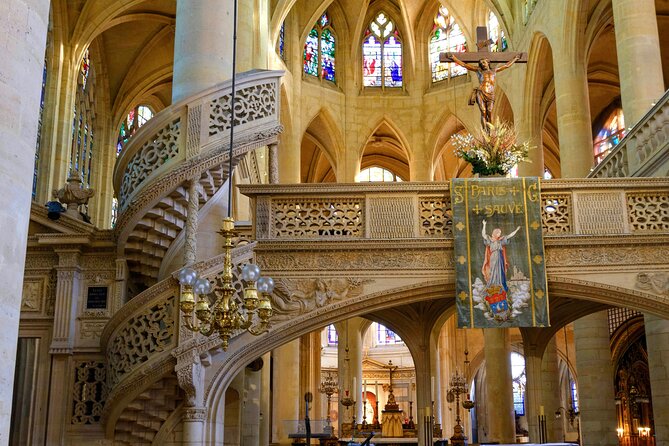
This is one of the places where the tour can really feel like a prize. The church is described as a 13th-century Flamboyant Gothic space with vaulted ceilings and palm tree columns. There is also a chance, if you get lucky, that pipe organ music is playing. If you care about atmosphere, this is a stop worth keeping your eyes open for small moments.
Stop 8: Les Thermes de Lutece
Then the tour drops you back into the Roman era. The Roman Baths are remnants of a larger complex dating to the Roman invasion period, with baths established around 52 B.C. You are not just hearing that Rome existed in Paris. You are looking at physical leftovers that shaped how the city grew after that era took hold.
A practical consideration: because these stops mix exterior and interior-feeling spaces, you should wear shoes that handle uneven old-stone sidewalks. The Latin Quarter rewards movement, but it can punish tired feet.
Musée de Cluny and La Sorbonne: learning culture in stone and books
Stop 9: Musee de Cluny
This is the Medieval Museum of Paris, housed in a building dating back to the 15th century. Your guide frames it as an ornate place filled with stories of Paris of old. Even though you are only at the stop briefly, the point is to connect the neighborhood’s medieval past with how it is preserved today.
Stop 10: La Sorbonne
La Sorbonne is presented as the 3rd oldest university in the world. The tour highlights that since the 11th century, the Latin Quarter has been the center of education and culture, with the university at its core. Your guide also mentions a major historical timeline point: a university dating back to 1257.
This is a great portion of the tour if you like how culture is built over centuries. It is not just about famous people. It is about institutions and the ideas they helped spread.
Pantheon: the tour’s main event and France’s big names under one roof
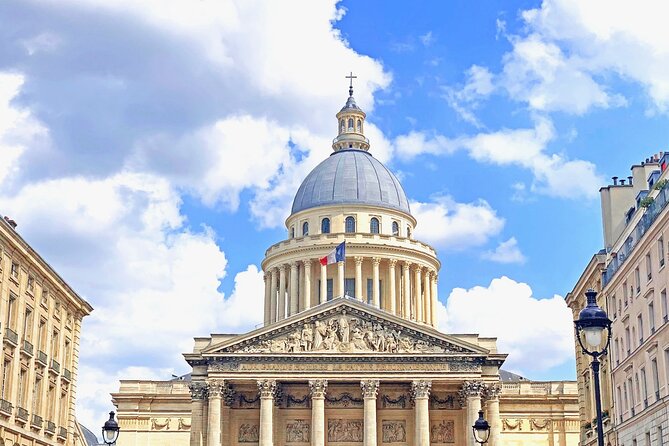
Stop 11: Pantheon
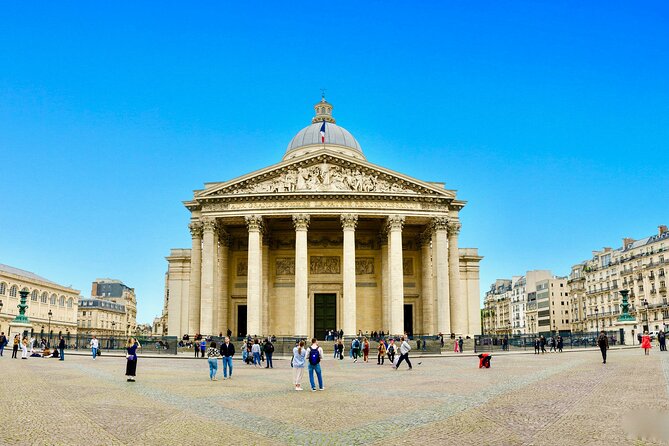
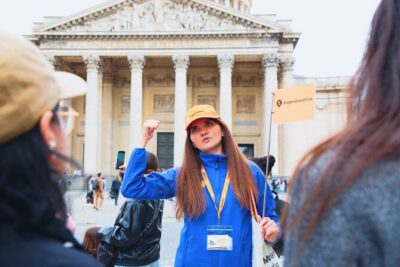
This is the centerpiece stop. The word Pantheon means all the gods, and the tour explains how the building started as a major religious structure and later became France’s important mausoleum. Your guide points to the idea of French greatness in a very literal way: influential figures buried inside, including Victor Hugo and Marie Curie, among many others.
In a tour like this, this stop does double duty. It gives you a dramatic “wow” moment visually, and it also gives the historical theme a clear conclusion. After walking through smaller churches, narrow lanes, and Roman remains, it is satisfying to reach a building that concentrates national history.
Keep in mind the stop is about 15 minutes, so prioritize what you want most from it. If you like the names, focus on that narrative. If you like architectural details, scan for symmetry and interior cues first.
St. Etienne du Mont and the Hemingway stop: Paris mythology and literary legend
Stop 12: St. Etienne du Mont
Inside this 15th-century church, the tour mentions the tomb and knuckle of Saint Genevieve, patron saint of Paris. Your guide also connects Genevieve to Paris during the Roman Empire’s decline. This is another “quick but powerful” historical framing moment.
Stop 13: Ernest Hemingway 1st home office
You get a short look at Hemingway’s first apartment in Paris and how the neighborhood influenced him. The connection is not just “Hemingway lived here,” it is the larger idea that the Latin Quarter shaped creative life. If you have any interest in literature, this final story stop gives the day a warm ending before you head into dinner mode.
Ending at Place de la Contrescarpe: your built-in food and bar plan
After the last historic stop, the tour ends at Place de la Contrescarpe. This is described as a lively square in the heart of the Latin Quarter with restaurants, bars, and cafés, so you are perfectly positioned to keep exploring on your own.
I like endings like this because you do not feel stranded after your guided hour. You can take what you learned and apply it right away, spotting the kinds of streets and buildings you heard about while you look for a meal.
If you want a practical plan, decide in advance what kind of evening you want. If you want a calmer dinner, go slightly away from the busiest core around the square. If you want energy, stay closer to the bars and café fronts.
What to look for when your guide is named Bruce or Sanna
The tour’s overall quality comes down to storytelling. The guide experience is described as certified expert and the writing emphasizes entertaining historic context. Names like Bruce and Sanna are specifically cited for being friendly and for making the history feel alive and easy to follow.
Here is how you can get the most out of that, even on a brisk route:
- If you hear a strong story hook, pause for 20 seconds and look at the building your guide mentioned. Paris rewards that small act.
- If the group moves fast, ask a quick follow-up question while you are walking. A good guide will adjust and keep it relevant.
- At the Pantheon and major landmark stops, focus your attention on one theme your guide is emphasizing, mausoleum history or architectural change.
Your guide is doing the hard work of turning stone into sense. Your job is to pick a few details per stop and actually notice them.
Who this tour is best for, and who might want something else
This is a good fit if you:
- Want a structured English walking tour of the Latin Quarter
- Like history that connects buildings to how people lived and learned
- Prefer a short, high-signal route over a full-day museum schedule
- Want a low-cost entry point using pay-what-you-want
You might want to choose a different format if you:
- Want long indoor time at major sites, because many stops are short
- Need a slower pace with frequent breaks, since the route is designed for 2 hours of steady walking
- Are hoping for lots of unstructured wandering without guidance
If you are a first-time visitor to Paris, this can be a strong orientation walk. If you already know the city, it still offers fresh angle by blending streets, churches, Roman remains, and university culture.
Should you book this Paris Latin Quarter tip-based tour?
Book it if you want a compact, high-value way to understand the Latin Quarter without spending hours planning which streets matter. The pay-what-you-want model also makes it low-risk, and the route includes big landmarks like Notre-Dame views and the Pantheon, plus smaller stops like the 1601 tree that make the neighborhood feel real.
Skip it or supplement it if your top priority is deep time inside major attractions. This walk is timed for highlights, not long museum immersions.
One last practical tip: reserve soon if you want a specific start time. The tour is commonly booked about 27 days in advance. If you plan early, you are more likely to get the morning or afternoon slot that matches your day.
FAQ
How long is the Paris Latin Quarter Free Tour in English?
It lasts about 2 hours.
What does the tour cost?
The tour is listed as $3.62 per group (up to 9) and is tip-based.
Is the tour offered in English?
Yes, it is offered in English.
Where does the tour start and end?
It starts at Fontaine Saint-Michel, Pl. Saint-Michel, 75005 Paris and ends at Place de la Contrescarpe, 75005 Paris.
What time does the tour start?
A start time of 11:00 am is listed, and you can choose a morning or afternoon start time.
How many people are on the tour?
The experience has a maximum of 50 travelers.
Is a mobile ticket provided?
Yes, it uses a mobile ticket.
How do I pay tips?
Tips are accepted only via credit/debit cards and electronic payments, and VAT is added to contributions.
Can I cancel for a full refund?
Yes, you can cancel up to 24 hours in advance for a full refund.
What is the meeting point address for the start?
The meeting point is Fontaine Saint-Michel, Pl. Saint-Michel, 75005 Paris, France.
Is the tour suitable for most people?
Most travelers can participate, and service animals are allowed.
More Tours in Paris





More Tour Reviews in Paris
Not for you? Here's more nearby things to do in Paris we have reviewed











Latin Quarter Tours, side by side.
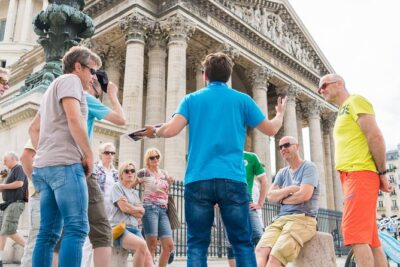 ★ 5.0Paris Bike Tour Hidden Secrets in the Latin Quarter & Le Marais neighborhoodsTickets from $54766 guest reviews
 ★ 4.3Latin Quarter Guided Pub Crawl to Bars and ClubsTickets from $14532 guest reviews
Old Town & Latin Quarter Guided Walking TourTickets from $41404 guest reviews
★ 4.3Latin Quarter Guided Pub Crawl to Bars and ClubsTickets from $14532 guest reviews
Old Town & Latin Quarter Guided Walking TourTickets from $41404 guest reviews
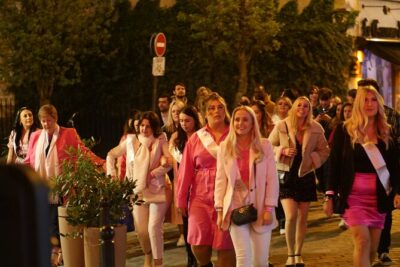 ★ 4.5Paris Latin Quarter Pub Crawl Bars and ClubsTickets from $30394 guest reviews
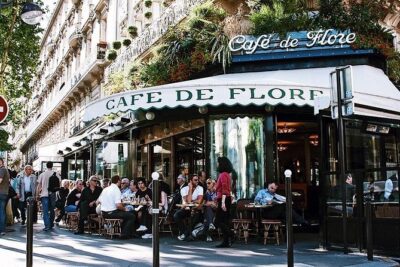 ★ 5.0Latin Quarter Paris Guided Walking Tour Semi-Private 12ppl MaxTickets from $59254 guest reviews
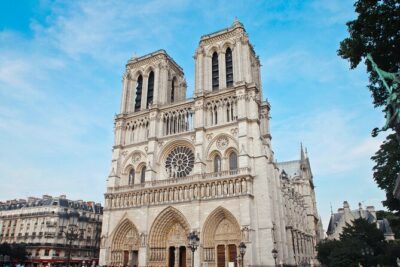 ★ 5.0Paris Latin Quarter Food Tour – Full French Meal by Do Eat BetterTickets from $95217 guest reviews
 ★ 5.0Paris Latin Quarter Walking Tour plus Seine River Cruise OptionTickets from $41203 guest reviews
 ★ 5.0Latin Quarter Paris – Exclusive Guided Walking TourTickets from $59190 guest reviews
This tour also belongs to