
Review · LATIN QUARTER TOURS
Latin Quarter Paris – Exclusive Guided Walking Tour
Paris has a calmer side in the Latin Quarter. This private guided walk is paced so you can actually look around, not just keep moving, and it layers storytelling onto major landmarks and lesser-known corners. I like that the route ties the Roman roots, medieval churches, and student Paris together into one smooth afternoon loop.
I also like the guide energy. Names like Alasdair and Hugo come up for a reason: animated narration, lots of room for questions, and practical help like where to grab coffee or pastries along the way. One consideration, though, is that two key stops involve extra tickets or exterior-only viewing, so you will not get everything inside.
Key Things I’d Emphasize Before You Go
- Private feel, slow enough to enjoy the Latin Quarter without feeling swept along.
- Big-picture history in short chunks, starting at Île de la Cité and ending near Luxembourg Gardens.
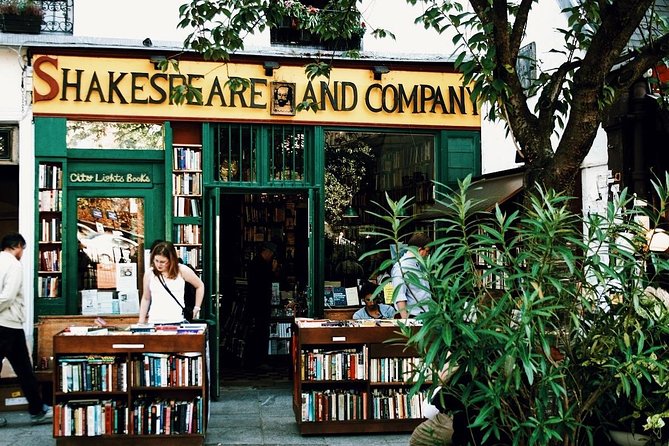
- Literature stop that breaks the tour mold, at Shakespeare and Company right by Notre-Dame.
- Old Paris churches on quieter streets, including Saint Julien le Pauvre and Saint Séverin.
- Museum and cathedral limits, with Notre-Dame and Musée de Cluny listed as not included, and several sites exterior-only or security-limited.
- Guide flexibility when needed, including pacing adjustments for comfort.
Why This Latin Quarter Walk Feels More Like One-on-One
This tour is sold as private, meaning you and your group do the walk together with your guide, not mixed into a large crowd. Even when street traffic is doing its thing, you still get the luxury of lingering at corners, taking a breath in small squares, and asking follow-up questions instead of shouting them over background noise.
The route also moves logically. You start at the oldest core of Paris, then gradually slide into the Middle Ages and the intellectual Left Bank, finishing with a proper pause in Luxembourg Gardens. That matters because it keeps you from treating Paris like a checklist. Instead, you start to see how neighborhoods grow, how ideas spread, and how stone and street names preserve memory.
You should also appreciate the practical mindset built into the tour. The operator notes that some sites cannot be entered from the inside due to security measures, and the route may shift during national celebrations. That means you are not guaranteed a museum badge or a cathedral interior, but you are guided to see the highlights.
You can also read our reviews of more walking tours in Paris



Entering Île de la Cité, Where Paris Started
Your walk begins at Cité75004 Paris, with Île de la Cité as the launch pad. This island is the oldest settled area in Paris, once known as Lutetia, with Roman roots that predate the city that most people picture.
Even though this stop is time-limited, it sets the frame for the entire afternoon. You are not starting in the middle of modern Paris, you are starting where the city first formed. If you pay attention here, the later stops make more sense, especially when you see how Paris built outward from this central point.
You will also get a quick reminder that Paris history is layered, not linear. Roman names turned into medieval spaces, and medieval life turned into the Paris we recognize today.
Notre-Dame Area Without the Full Inside Experience
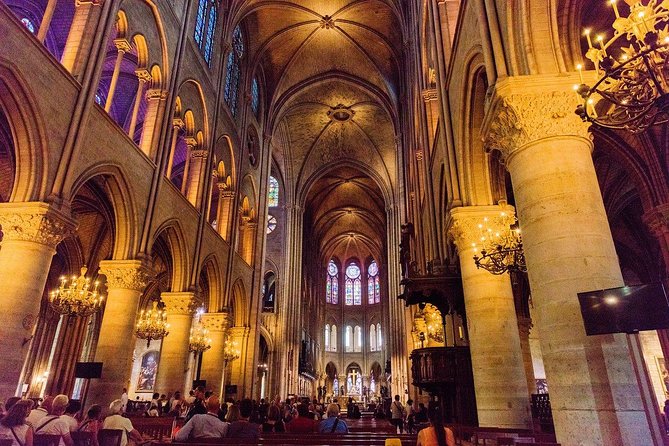
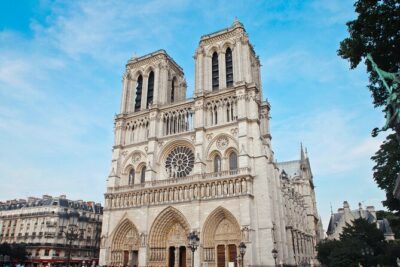
Next comes Notre-Dame de Paris, but plan on exterior viewing only. The tour is explicit about that, so you are not paying time expectations based on entering the cathedral.
What you do get is a structured way to appreciate why this Gothic landmark matters: its size, age, and architectural importance. In practice, this is a good setup for people who want context first, then decide whether to add extra time later for an inside visit on their own schedule.
If you care about photography, the exterior-only format can actually help. You spend your minutes looking at the façade and surroundings instead of spending them waiting for entry. Just remember that Notre-Dame is listed as not included for admission, so if you later choose to go inside, that is extra.
Saint-Michel Fountain, Haussmann, and a Myth With Teeth

After the big-name landmark area, you pass Fontaine Saint-Michel. It is a monumental fountain commissioned by Haussmann under Napoleon III, and it includes a strong symbolic scene: the archangel Michael vanquishing the Devil.
This stop is short, so think of it as a palate cleanser between the grand architecture and the literary culture ahead. It also gives you a chance to notice how 19th-century Paris shaped public space, even after earlier centuries defined the city’s skeleton.
If you are the type who likes to read street art and statuary like a text, you will enjoy noticing details here. It is more than a photo spot. It is a story carved into stone and cast into water.
Shakespeare and Company, Books, Beats, and Paris Mood
Right near Notre-Dame, the walk heads to Shakespeare and Company, one of the most famous bookstores in the world. This stop is pure Latin Quarter charm, but it is also a cultural time capsule.
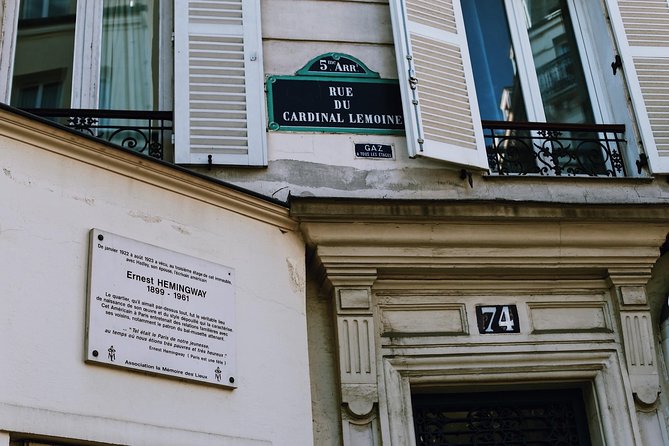
The tour framing highlights the shop’s role as a home for writers and readers, especially those connected with the Beat Generation through the 1950s and 60s. Even if you are not chasing literary history, you can still feel why it became a magnet. The setting is intimate, and the building sits in that sweet spot between tourist energy and neighborhood life.
If you want a low-pressure way to enjoy the Latin Quarter without speed-walking, this is one of the best moments of the tour. You get a mental reset, and it is an easy place to browse for a book you can actually bring home.
You can also read our reviews of more guided tours in Paris






Saint Julien le Pauvre and Saint Séverin, Quiet Old Stones
Two church stops follow, and together they create a contrast with the major cathedral area you just left. You see:
- Saint Julien le Pauvre, a Melkite Greek Catholic parish church, described as among the city’s oldest religious buildings.
- Saint Séverin, a Roman Catholic church that remains standing on the Left Bank and continues as a place of worship.
These are short stops, but they are valuable because they show a different side of Paris. Instead of grand and famous, you see older and still alive. That changes how you experience the neighborhood.
Also, you are walking through streets where daily life continues. You might catch the church doors open for prayer, or just feel the calmer rhythm compared with the main tourist lanes.
Musée de Cluny, Roman Baths Under a Museum Roof
Then you head toward Musée de Cluny, the National Museum of the Middle Ages. This is another stop that helps you understand how the Latin Quarter became a place for ideas, study, and serious thinking.
The tour notes something very specific: part of the museum is built on remnants of third-century Gallo-Roman baths, and the collections cover the 1st to the 15th centuries. That is the kind of detail you will remember because it turns the museum from a generic label into a layered location.
Admission is not included here, so this is best treated as a look-and-possibly-plan-a-return stop, not a guaranteed inside visit. If you love medieval art or archaeology, you may want to schedule additional time later. If not, you can still appreciate the historical premise, especially after the earlier Roman and medieval cues.
Sorbonne and the Pantheon, Student Ideas to French Icons
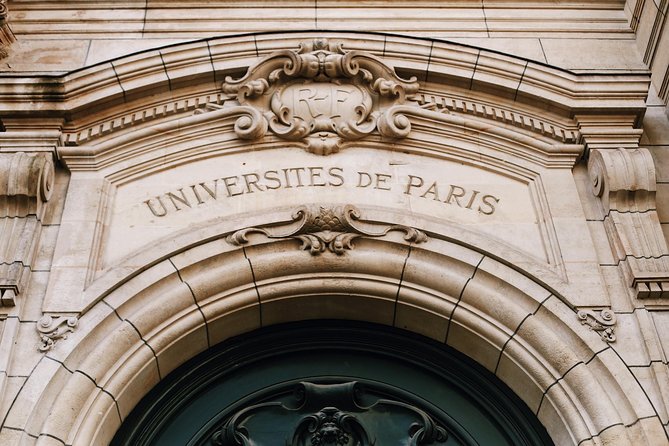
After the museum approach, you pass Sorbonne University, described as an epicenter of knowledge, with a history closely linked to the creation of the French university. Even just viewing the area gives you a sense of what the Left Bank represents: institutions, debate, and the long-term shaping of culture.
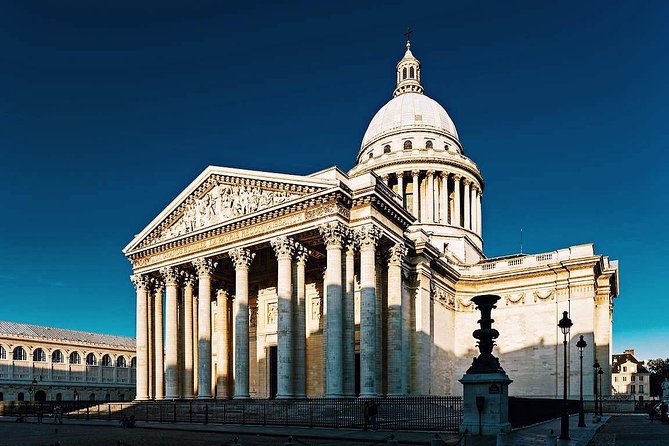
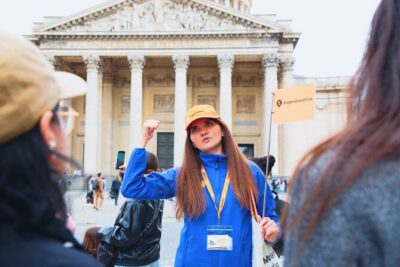
Then the route continues to the Pantheon (exterior only). Originally built as a church dedicated to St Genevieve, it now functions as a secular mausoleum. The tour highlights that it holds the remains of notable French citizens, including Voltaire and Rousseau.
Together, these two stops help you understand why the Latin Quarter is not just about monuments. It is about ideas. You start at Paris’s ancient center, then you move into the zone where education and philosophy became public forces.
If your brain likes connections, this section will satisfy it. You can feel the shift from medieval sacred space to modern civic memory.
Luxembourg Gardens, a Needed Pause Between Landmarks
You finish the main arc of the walk at Luxembourg Gardens, on the border between Saint-Germain-des-Prés and the Latin Quarter. This is where you trade stone and dates for shade and long sightlines.
The tour describes the gardens as inspired by the Boboli Gardens in Florence, created in 1612 on the initiative of Queen Marie de Medici. And the scale matters here, the gardens cover 25 hectares.
For many people, this is the best practical part of the tour because you can relax without feeling like you are wasting time. You can sit for a few minutes, digest what you just learned, and decide how you want to continue your afternoon or evening.
Optional Add-Ons When Timing Allows
If there is time, you may also see:
- Saint-Étienne du Mont, including the shrine of St Geneviève and the tomb of Jean Racine.
- Wall of Philip II Augustus, described as the oldest city wall in Paris.
These are the kind of stops that turn a good walk into a memorable one because they reward attention. The church connects you to French literary and religious anchors. The wall connects you to how Paris protected itself during medieval struggles involving Philipp II of France and the Anglo-Norman House of Plantagenet, with the king ordering a stone wall before leaving for the Third Crusade.
Even if you only glimpse these areas, it rounds out the day by showing that Paris history is not only in the famous façades. It is also in hidden edges and surviving boundaries.
What You’re Really Paying For, The Value Behind $59.69
At $59.69 per person for about 2 hours 30 minutes, this is not a bargain priced bus tour. But it can be strong value if you care about getting oriented and learning what you are looking at.
Here is what makes the price feel fair:
- You get a guide exclusively for your group under the private format, which usually justifies spending a bit more than a generic group walk.
- You cover a tight cluster of high-impact stops: Île de la Cité, Notre-Dame area, Saint-Michel, Shakespeare and Company, two major old churches, the Musée de Cluny vicinity, Sorbonne, the Pantheon exterior, and Luxembourg Gardens.
- The guides are praised for keeping people engaged and for being helpful with recommendations, including where to eat and what to explore next.
There is also a built-in trade-off. Since Notre-Dame and Musée de Cluny are listed as admission not included, you might spend a little extra if you decide to go inside on your own. Think of this tour as the orientation plus storytelling layer, then you choose your add-on based on interest.
Timing, Route Changes, and How to Keep It Easy
The tour operates in all weather conditions. That is good for planning, as long as you pack for it. The operator recommends:
- comfortable shoes
- a bottle of water
- an umbrella in case of rain
- a hat during summer
You should also plan around two practical constraints. First, no large bags or suitcases are allowed. Second, some attractions may have security measures that limit inside access, so your experience may lean more exterior-focused.
The route can also be affected by national celebrations. In that case, the operator provides an alternative route that still aims to see all highlights. The trade-off is that refunds or discounts are not offered when national celebrations change the route.
Finally, you will be asked to provide a mobile phone number, including country code. That is the kind of small requirement that helps the company coordinate day-of changes. It costs you nothing, but it can save stress later.
Which Guide Style Fits You Best?
A huge part of this experience is the guide. The names that show up repeatedly in the way people describe the tour include Alasdair, Hugo, Eden, Georgia, Tamari, and Emma, along with Jay, Agustina, and Francois V.
What you can take from that pattern is not just identity. It is style. People highlight engaging storytelling, humor, patience with questions, and the ability to tailor the pacing. One person even shared that a guide rearranged the tour on the spot because of a bad back, including checking whether they needed to sit.
So, if you want more than a script, this is a good match. If you only want quiet strolling with minimal commentary, you might still enjoy it, but you may need to set expectations that this walk is designed for active listening and interaction.
Should You Book This Latin Quarter Tour?
Book it if:
- You want a structured walk through the Latin Quarter that connects landmarks to themes: Roman beginnings, medieval faith, and Left Bank ideas.
- You prefer a private feel with a guide who can answer questions.
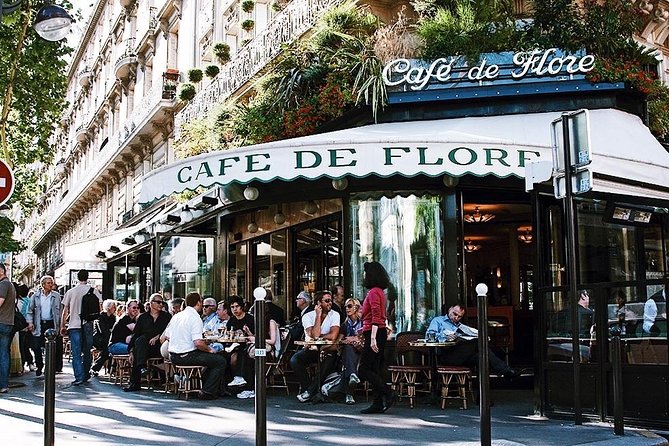
- You want a strong starting point for planning the rest of your day, especially around book culture and classic cafés near Notre-Dame.
Skip it or consider a different format if:
- You must have inside access to Notre-Dame or Musée de Cluny during this specific time window, because the tour format lists those admissions as not included and notes that inside visits may be restricted.
- You are traveling with a large bag or suitcase, since that is not allowed.
If you do book, go in with a simple mindset. Let the guide set the story, then you decide what deserves extra time after Luxembourg Gardens.
FAQ
What language is the tour offered in?
The tour is offered in English.
How long is the Latin Quarter walking tour?
It runs about 2 hours 30 minutes.
Is this tour private?
It is a private tour/activity, with only your group participating. The private walking tour and guide exclusively for you do not apply if you choose the small-group option.
What is included in the price?
A private walking tour and a guide exclusively for your group are included (for the private option). You also receive a mobile ticket.
Are Notre-Dame and Musée de Cluny entrances included?
No. Notre-Dame de Paris is exterior only, and admission tickets for Notre-Dame and Musée de Cluny are listed as not included.
What stops and highlights are covered?
You pass or visit Île de la Cité, Notre-Dame exterior, Fontaine Saint-Michel, Shakespeare and Company, Saint Julien le Pauvre, Saint Séverin, the Musée de Cluny area, Sorbonne, the Pantheon exterior, Luxembourg Gardens, and possibly Saint-Étienne du Mont and the Wall of Philip II Augustus.
What should I bring or wear?
Wear comfortable shoes. Bring water, and an umbrella if rain is possible. The operator also suggests a hat in summer.
Is free cancellation available?
Yes. You can cancel up to 24 hours in advance for a full refund.
More Walking Tours in Paris



More Tours in Paris




More Tour Reviews in Paris






Not for you? Here's more nearby things to do in Paris we have reviewed











Latin Quarter Tours, side by side.
 ★ 5.0Paris Bike Tour Hidden Secrets in the Latin Quarter & Le Marais neighborhoodsTickets from $54766 guest reviews
 ★ 4.3Latin Quarter Guided Pub Crawl to Bars and ClubsTickets from $14532 guest reviews
Old Town & Latin Quarter Guided Walking TourTickets from $41404 guest reviews
★ 4.3Latin Quarter Guided Pub Crawl to Bars and ClubsTickets from $14532 guest reviews
Old Town & Latin Quarter Guided Walking TourTickets from $41404 guest reviews
 ★ 4.5Paris Latin Quarter Pub Crawl Bars and ClubsTickets from $30394 guest reviews
 ★ 5.0Paris – Latin Quarter Free Tour in English (Tip-Based)Tickets from $3269 guest reviews
 ★ 5.0Latin Quarter Paris Guided Walking Tour Semi-Private 12ppl MaxTickets from $59254 guest reviews
 ★ 5.0Paris Latin Quarter Food Tour – Full French Meal by Do Eat BetterTickets from $95217 guest reviews
 ★ 5.0Paris Latin Quarter Walking Tour plus Seine River Cruise OptionTickets from $41203 guest reviews
This tour also belongs to