
Review · HISTORICAL TOURS
Unique Guided Walking Tour of Great Women in Parisian History
One walk through Paris and you start noticing names everywhere. This Great Women in Parisian History tour uses storytelling and a comfortable walking pace to connect iconic spots to the women behind them.
I love that it is built for real sightseeing, not museum marathons. You get a smooth route that includes major viewpoints and landmarks, plus hands-on context about what these places meant, including the role women played in public life across centuries.
One thing to consider is that a few stops involve optional sites with extra admission, like the Curie area and the Panthéon. If you are hoping for only free entrances, plan your expectations and budget accordingly.
Key points before you go

- Two start times help you match the walk to your day in Paris
- Small group size (max 20) keeps the pace conversational and question-friendly
- English mobile ticket means less waiting and easier check-in
- A stop-by-stop path takes you from Luxembourg Gardens to the Latin Quarter viewpoints
- Mix of free views and optional entry at the Curie area and the Panthéon
- All-weather operation means you should bring a rain layer and wear comfy shoes
A Two-Hour Walk Through Women Who Changed Paris
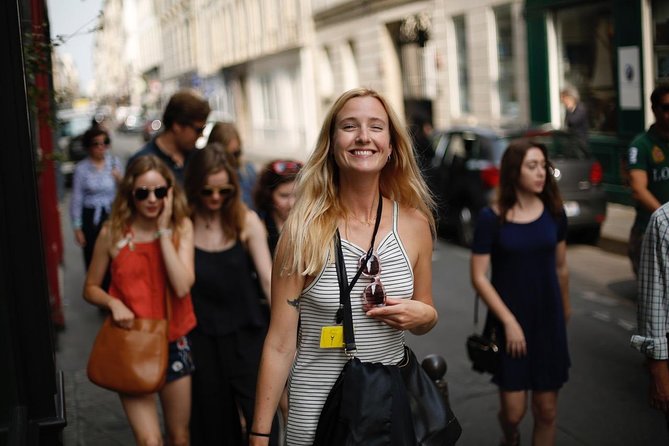
If you think Paris history is all kings, generals, and famous men, this tour nudges you the other direction fast. It is a guided walking route that links the city’s big-name locations to the women who influenced politics, culture, science, and public life.
The format is practical: about two hours, a route you can follow on foot, and a guide who keeps the stories moving. You spend most of your time outside in places where Paris looks like Paris, not like a lecture hall.
You also get flexibility. You can choose a morning or afternoon start, which matters because the light in Paris changes everything, and your energy levels do too. And since the tour is small, your guide can actually react to questions instead of rushing past them.
You can also read our reviews of more walking tours in Paris



Luxembourg Gardens, a Garden Built by a Woman’s Vision
You start in the 6th arrondissement at Treize au Jardin, near the Rue de Médicis, and your first real stop is Luxembourg Gardens. Expect a laid-back introduction, because the gardens set the tone for the whole theme: women’s impact felt in stone, layout, and power.
Here, you connect the space to the woman who commissioned the gardens, and you also learn about other famous women tied to the grounds, including the remembered French queens. It is not just name-dropping. The guide’s job is to show why these women mattered and what constraints they faced in their era.
Why I like this first stop: gardens are a gentle way to get your bearings. You ease into the walk, you get a visual sense of Parisian grandeur, and you can picture the past without needing special equipment. It is also a free stop, which helps your budget.
A small consideration: you are walking and listening at the same time. If you are the type who likes to linger and photograph constantly, set expectations. This is storytelling on the move, not a self-guided, unlimited roaming hour.
Quartier Latin, Where Early Paris Meets a Defiant Rescue Story
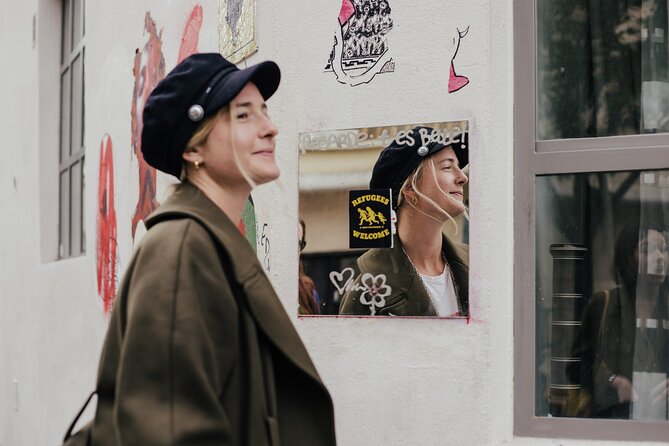
After Luxembourg Gardens, you move toward the Quartier Latin, often called the cradle of Paris. This is the part where the tour shifts from royal gardens to the older city core, and the vibe changes in a good way.
The guide shares what the neighborhood meant early on, and you hear a story about how a woman helped save the city when it faced an outside threat. That kind of account does more than add drama. It reframes who gets remembered when cities are under pressure, and it gives you a way to read the neighborhood streets with new eyes.
You get about 30 minutes here. That is long enough to walk through the feel of the area and short enough that you are not stuck in one single corner. Since it is also a free stop, it is a strong value piece of the itinerary.
If you want to get extra from this section, do this simple thing before you leave: look up while you walk. The Quartier Latin rewards casual attention. Balconies, facades, and street lines all help you picture the earlier Paris the guide is talking about.
Passing the Curie Institute, and What You Can Expect From Museum Time
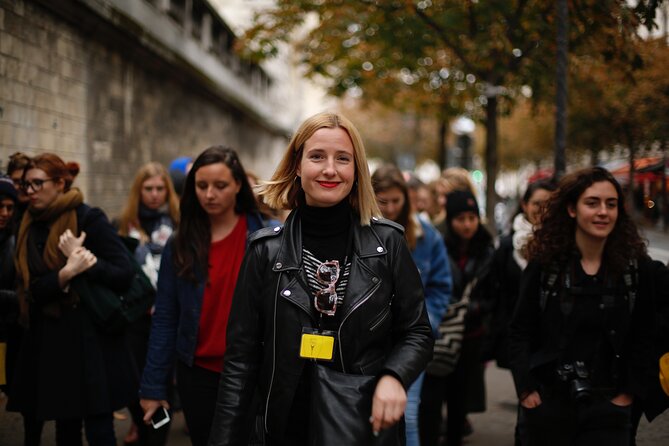
Next comes the Musee Curie area, where you stroll past the Curie Institute. The stop is brief, around 10 minutes, and it helps you place Marie Curie in the real geography of her legacy.
You learn that the institute opened in the early 20th century and that today it includes museum space connected to her life and work. But here is the key practical point: admission is not included for this portion.
So what does that mean for you in real terms? It means the tour experience gives you the context and orientation, then you decide whether you want to add museum time on your own. If you are a science fan or you want to linger, this is your cue to plan extra time after the walking portion ends.
If you are not into museums, you still get value. You learn who Marie Curie was and why the institute matters, without being forced into an indoor visit. It is a quick stop designed to keep momentum.
Notre-Dame Views From the Latin Quarter Hill, Short Stop, Big Payoff
One of the best things Paris does is make dramatic viewpoints feel effortless. After the Curie area, the tour heads to a viewpoint area on the Montagne de Sainte Geneviève, the hill associated with the Latin Quarter.
From there, you look down toward landmarks like Notre-Dame Cathedral and the Eiffel Tower. The stop is short, around 5 minutes, and that brevity is intentional. It gives you the visual hook for Paris’s scale without turning your whole tour into an extended photo session.
Admission is free for this viewpoint. You can treat it like a reward break, a chance to reset your legs and your focus before the final landmark.
Practical tip: bring your phone charger or save battery. If the weather is right, you will want a few photos, and the route puts you on street angles where your camera may work harder than you expect.
You can also read our reviews of more guided tours in Paris






The Panthéon, the First Woman Buried Here, and the Story Behind It
The final highlight is the Panthéon area, with about 10 minutes on site. This is where the theme gets very “Paris big moment.” You get to look at the landmark itself and then learn the story of the first woman to be buried inside.
Just as with the Curie portion, admission is not included. If you want to go inside, you can, but you should treat it as optional time after the guided walk or at the end depending on how the tour schedule and crowds feel.
You also finish near Place Sainte Geneviève, outside the Saint Étienne du Mont church, behind the Panthéon. That end point is useful because it places you right where you can branch out. You can head back toward the Latin Quarter or connect to transit without needing a long walk.
In other words, you are not just dropped at some random corner. The route ends in a logical spot for continuing your day.
Guide Style and Group Size, Why the Stories Land
The real secret sauce on this tour is the guide. The feedback you see again and again is not about reciting dates. It is about storytelling that makes the women feel real, and that does not talk down to you.
Different guides have been praised by name in the past, including Wassily, Pam, Pat, and Emily. The common thread is clear: they keep the energy up, answer questions, and work with the group instead of steamrolling through a script. When it rains, you can also expect flexibility, which matters because Paris weather has opinions.
The group size cap is 20 travelers, which is a sweet spot. You are not wandering with a crowd that turns each stop into a bottleneck. It is small enough that you can actually hear the guide even when you are standing in a busy public space.
Want a smooth experience? Ask one good question early. It is the easiest way to get your guide to focus in your direction for the rest of the walk.
Price and Value, What You Get for $54.42
At $54.42 per person for about two hours, this is not a “walk around and learn nothing” deal. You are paying for guidance, pacing, and the way someone organizes women’s stories into a route you can physically follow.
Here is why the value works:
- Most stops are free to enjoy from the guide’s route and timing, including Luxembourg Gardens, your Quartier Latin time, and the viewpoint portion.
- The parts that are not free (the Curie museum area and the Panthéon entry) are clearly marked as extra. So you can choose how much you want to add.
- With a small group and English instruction, you are getting live explanation, not just a map and a brochure.
Also, timing matters. This tour is often booked around a month in advance on average. That usually means it is popular, and it can sell out around your travel dates. If you have fixed plans, lock in your time slot sooner rather than later.
Timing, Shoes, and How to Plan Your Day Around the Route
Because this is a walking tour, your main job is simple: wear comfortable shoes and dress for the weather. The tour runs in all weather conditions, so if rain is in the forecast, bring a light rain layer and a plan for damp pavement.
The start location is at Treize au Jardin, near Rue de Médicis. The end is at Place Sainte Geneviève in front of Saint Étienne du Mont, behind the Panthéon. That means you can usually pair this with more Latin Quarter wandering afterward.
Pick your start time based on your style:
- If you like calmer streets, choose a morning slot when you want to walk before crowds fully pile up.
- If you like soft light and an easier rhythm, go afternoon and treat it as your history-meets-walk segment.
Finally, remember this is an on foot experience, so pace yourself. You will be listening and walking at the same time, which feels different from stand-still sightseeing.
Who This Tour Fits Best (and Who Might Prefer a Different Style)
This tour is a great fit if you want Paris history told through women and you like a guided route that connects stories to places. It is especially good for people who feel overwhelmed by museum schedules and want a focused outdoor experience instead.
It also fits families, as long as children have an adult with them, since the tour welcomes children under that condition. The theme can work well for younger minds because it is not abstract. It ties names to streets, buildings, and viewpoints you can actually see.
If you want only deep museum time, this may feel too light. The route includes short stops and then optional entry for certain sites. Think of it as an orientation walk with context, not a full-ticket day inside multiple institutions.
One more match point: if you really care about 20th century stories, you might want to plan extra time in whatever interests you most after the walk. The route includes the Curie area, which can help point you toward that era.
Should You Book the Great Women in Parisian History Walk?
Book it if you want a smart, human-scale way to learn how women shaped Paris. The route hits major iconic areas while keeping the focus on the people behind the influence, and the storytelling approach is clearly the strongest part.
Skip or reconsider if you are chasing long museum hours, or if you prefer purely free entrances and do not want any optional paid sites at the Curie area or the Panthéon. In that case, look for a more museum-centered plan.
If you do book, pick a time slot that matches your energy, bring rain protection, and wear shoes you trust. Then do one small thing during the walk: stop a few times just to look at what the guide points out. That pause turns the stories from facts into something you can actually remember.
FAQ
What is the duration of the Great Women in Parisian History walking tour?
The tour lasts about 2 hours (approximately).
Where does the tour start and end?
The tour starts at Treize au Jardin, 5 Rue de Médicis, 75006 Paris, France. It ends at Place Sainte Geneviève, in front of Église Saint-Étienne-du-Mont, 75005 Paris, behind the Panthéon.
What is the price per person?
The price is $54.42 per person.
Is the tour offered in English?
Yes, the tour is offered in English.
Is admission included for all stops?
Not all stops include admission. Luxembourg Gardens and the viewpoint portion are free. Admission is not included for the Musee Curie area and the Panthéon.
How long are the main stops?
Stop times are roughly: Luxembourg Gardens 40 minutes, Quartier Latin 30 minutes, Musee Curie 10 minutes, Notre-Dame viewpoint 5 minutes, and the Panthéon 10 minutes.
Do I need to worry about the weather?
The tour operates in all weather conditions, so dress appropriately. Comfortable shoes are recommended since it is a walking tour.
How big are the groups?
The tour has a maximum of 20 travelers.
Can children join the tour?
Children must be accompanied by an adult.
What if the tour does not meet the minimum number of guests?
If fewer than 3 guests book, the provider may cancel and offer another date/experience or a full refund. Free cancellation is available up to 24 hours in advance for a full refund.
More Walking Tours in Paris



More Tours in Paris




More Tour Reviews in Paris






Not for you? Here's more nearby things to do in Paris we have reviewed












Historical Tours, side by side.
 ★ 4.7Dark History and Ghostly Guided Walking TourTickets from $351,000 guest reviews
 ★ 5.0Le Marais/Paris – The Historic, Trendy, Jewish, LGBT districtTickets from $48341 guest reviews
 ★ 5.0Paris City of Fashion History Private Guided Walking TourTickets from $107221 guest reviews
 ★ 5.0History of Paris City Center w/ Notre Dame Semi-Private 12ppl MaxTickets from $59194 guest reviews
 ★ 4.8Le Marais & Montmartre Jewish History Walking TourTickets from $80170 guest reviews
 ★ 5.0Paris Walking Tour , Historical Sites .Tickets from $96150 guest reviews
 ★ 5.0Paris – Historic City Center Walking TourTickets from $156134 guest reviews
 ★ 4.6Explore the Marais: Culture, History & Hidden Gems of ParisTickets from $56100 guest reviews
This tour also belongs to