
Review · LE MARAIS TOURS
Small Group Marais/Place des Vosges Walking Tour -10 people max
Small-group history beats wandering alone. This 2-hour Marais/Place des Vosges walking tour is a tight loop through Paris details you would normally miss, with a guide who keeps things clear and fun. You’ll move through landmark streets and hôtel particulier exteriors, then end near the traditional kosher stop at La Boutique Jaune.
What I like most is the way the tour turns the neighborhood into a story you can follow, especially with quick hits like the old city wall of Philip II Augustus and the short, visual stops around Place des Vosges. I also really value the guide style, since Sébastien brings top-notch English and friendly conversation, plus practical recommendations for what else to do around town. The main tradeoff is time: most stops are brief look-and-learn moments, so if you want long museum-style visits at every location, this one may feel fast.
Key things to know before you go
- Maximum group size of 10 means more Q and more personal pacing than the big bus-style tours.
- Two hours, morning start keeps your afternoon open for extra sights or food time.
- Hôtel particuliers on the outside, with stories that connect the dots across centuries of the Marais.
- Major highlights in quick succession, from Place des Vosges to the Maison de Victor Hugo.
- The walk finishes at Rue des Rosiers and La Boutique Jaune, handy for a snack after the tour.
- English tour with a mobile ticket and a convenient start near public transit.
Why this Marais walk feels efficient, not rushed
The Marais can be a visual maze. Beautiful streets, big names, and tiny details compete for your attention. This tour’s strength is that it gives you a simple route through the neighborhood, then explains what you’re looking at as you walk.
You get to see a lot in about 2 hours, but the pacing is built for understanding. Instead of making you chase information on your own, the guide points out what matters at each stop, then moves you along before you get bored or stuck. If you’re trying to get your bearings on your first visit, this kind of structure is gold.
The small group matters too. With 10 people max, you’re less likely to feel like you’re part of a herd, and more likely to ask questions when something grabs your attention.
You can also read our reviews of more walking tours in Paris



Meeting point and how to plan your morning
The tour starts at Paroisse Saint-Paul Saint-Louis, 99 Rue Saint-Antoine (75004) at 10:00 am. You’ll finish at La Boutique Jaune, 27 Rue des Rosiers (75004), with the tour name tied to Sacha Finkelsztajn – La Boutique Jaune.
That start-to-finish plan is practical. You’re not retracing every step back to the beginning. And because this is a morning tour time, you keep the rest of the day free for museums, wandering, or just lingering with a coffee without feeling behind schedule.
A couple of practical notes based on the provided info:
- It’s offered in English and uses a mobile ticket.
- It runs with near public transportation, so you’re not dependent on a taxi to make it work.
- Service animals are allowed, and the tour says most travelers can participate.
The stop-by-stop route, and what each part gives you
Here’s how the walk plays out, and what to watch for at each stage. Most stops are short, so your success comes from paying attention to the guide’s prompts, not from expecting a long stay at every site.
Le Marais: start with context, not just streets
You begin in Le Marais with an introduction that sets up what you’re going to see. This first stop is there to help you read the neighborhood instead of just looking at it.
If you’ve ever walked around an old district and felt like everything looks equally “historic,” you’ll appreciate this part. It’s a quick primer that makes the next stops click: hôtel particuliers, medieval facades, and the way older Paris still shows through.
Possible consideration: since the intro is short, bring your curiosity from the start. If you’re tired or late to the meeting point, it’s harder to catch what you’re supposed to notice next.
Hôtel de Beauvais: the story behind a mansion
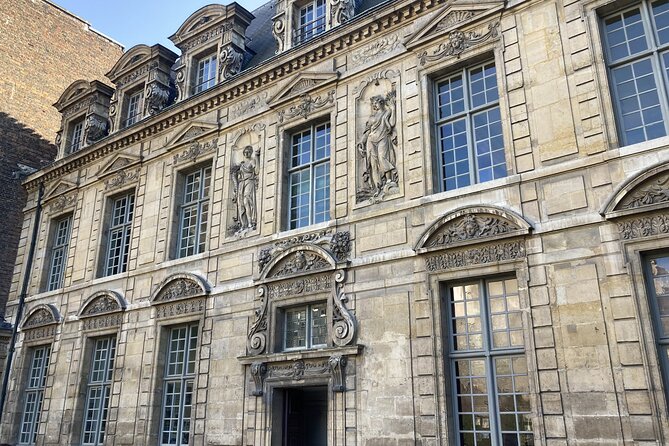
Next is Hôtel de Beauvais. You’ll walk to the hôtel particulier and hear its story. These private mansions can look similar if you only glance at them, but the guide’s job is to give each one a reason for being remembered.
What’s helpful here is learning how to recognize the “why” of the architecture, even when you’re viewing mainly from the outside. You’ll start understanding that the Marais isn’t just charming, it’s layered.
Good bet: look up as you pass, since the guide focuses on what’s notable about the building and its role over time.






Medieval house façades: Maisons A l’Enseigne du Mouton et du Faucheur
Then you’ll head to Maisons A l’Enseigne du Mouton et du Faucheur, where the emphasis is on medieval houses. This is one of the stops that tends to reward attention, because older streets often hide their significance in plain sight.
You’ll get quick explanation, which is perfect for a 2-hour tour. Without this framing, you might walk by and assume it’s just another pretty building. With it, you start seeing symbols and design choices as clues.
Tradeoff: the time here is limited, so don’t expect a full architectural lecture. Expect highlights.
Maison Européenne de la Photographie at Hénault de Cantobre
After that, you’ll walk to the Maison Européenne de la Photographie, connected with the hôtel particulier Hénault de Cantobre. The tour emphasizes the outside, then shares the story of the mansion.
This is a nice pivot point, because it shows how older buildings can gain new purpose. Even when you are not going deep inside during a short walk, you still get the satisfaction of understanding what you’re looking at and why it matters.
If you love photos: you’ll likely enjoy this stop more than you expect, because the location itself signals the museum theme.
Square Albert Schweitzer and the Hotel d’Aumont’s roofline
You then reach Square Albert Schweitzer, followed by a walk to Hotel d’Aumont where you’ll hear about mansard roofs. Rooflines are one of those details that are easy to ignore until someone points out what makes them special.
This stop also breaks up the “mansion after mansion” feel. A square gives you a breath in the itinerary rhythm, and the roof topic gives you something tangible to focus on.
Possible consideration: if you’re extremely sensitive to walking time, this portion can feel like “another quick stop.” The tour keeps things moving.
Hotel de Sens: another hôtel particulier, more story
Next up is Hotel de Sens. Again, you’ll walk to the private mansion and hear its story. This is the repetition that works in your favor. You see multiple hôtel particuliers, and each one becomes clearer because the guide keeps comparing what you’re seeing and why it’s different.
This is also where you start noticing how the Marais makes you practice looking. Not in an annoying way, more in a way that helps your brain build patterns.
The Wall of Philip II Augustus: oldest city wall in Paris
One of the biggest “wait, that’s real?” moments is the stop at the Wall of Philip II Augustus, described as the oldest city wall in Paris. You’ll walk to the vestiges of the old wall and get the context from the guide.
Even if you’re not a Roman-history or medieval-cities person, a surviving trace like this gives you a physical sense of time. It’s one thing to read about city walls, but another to stand near remnants and hear what they were protecting.
Possible consideration: the stop is brief, so don’t try to over-schedule photos. The value is in the explanation.
Cour et jardin of Hotel de Sully: pause in a private-feeling space
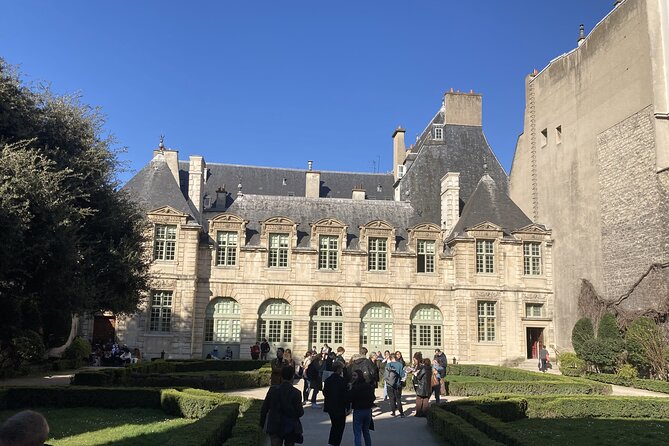
Then comes Cour et jardin de l’Hotel de Sully. You’ll walk to Hôtel de Sully and hear its story. Courtyards and gardens in these private areas often feel calm, even when you’re still in the center of a city.
This part helps the walk feel less like a checklist. It gives you a visual reset, so you can absorb Place des Vosges later without feeling like you’ve been rushing for 2 straight hours.
Place des Vosges: the centerpiece square
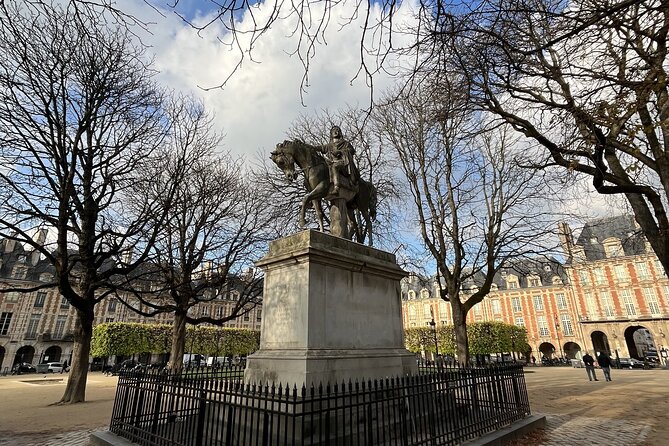
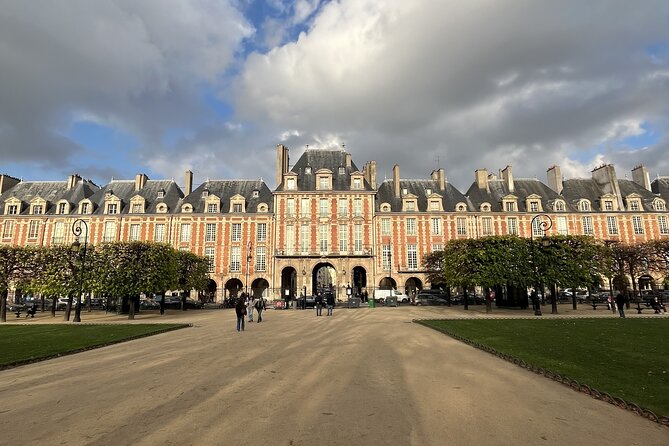
The itinerary’s longest highlight stretch is Place des Vosges, where you’ll spend about 20 minutes discovering the square. This is the moment you see why this area gets famous in guidebooks.
It’s big enough to feel satisfying in a short time. You can glance at the buildings, note the square layout, and settle your eyes after the narrower streets.
Practical note: squares can be busy. In the time you’re there, you might spend more effort finding viewpoints than you expected, but 20 minutes is usually enough to get the feel.
Maison de Victor Hugo: the home where he lived
Next is Maison de Victor Hugo. The tour specifically frames it as the home where Victor Hugo lived from 1832 to 1848, and you’ll actually visit the home during the stop.
This is one of the most clear-value parts of the route because it’s not just “see the outside.” You get an interior experience tied to a famous person and a concrete timeline.
If you like literature or you simply like how names become real when you see rooms, this is where the tour payoff grows.
Possible consideration: you only have about 20 minutes here. If you’re the type who reads every label, you might want to return later on your own for extra time.
Rue des Francs Bourgeois: walking the historic street
Then it’s a walk down Rue des Francs Bourgeois for about 10 minutes. This section helps bridge between the big square and the change in neighborhood tone as you approach Rue des Rosiers.
Think of it as a “connective tissue” stop. Not flashy on its own, but useful for making the route feel coherent.
La Rue des Rosiers: old Jewish quarter echoes and La Boutique Jaune
Finally, you reach La Rue des Rosiers. The tour describes it as the last vestige of the old Jewish quarter, and you’ll also discover La Boutique Jaune, a traditional Kosher deli and bakery.
This ending is smart. You finish your historical walk exactly where you can naturally continue the experience with food. If you want to try something simple after the tour, you’re already in the right place.
Practical consideration: ending near a food stop can tempt you to overdo it right after you’ve been walking. I’d plan to take it easy, then enjoy one treat instead of a whole meal.
Price and value: is $60.24 worth it
At $60.24 per person for about 2 hours, this tour is not a budget wander, but it also isn’t priced like a big-ticket attraction.
Here’s how I think about value for a tour like this:
- You’re paying for structure. The guide turns random street beauty into a guided story you can remember.
- You’re paying for access to interpretation, especially when you are mostly viewing exteriors and getting the details that guide the eye.
- You’re paying for small group size, which matters more in a walking tour than you might think. Fewer people means more attention.
The fact that the average booking time is about 43 days in advance suggests demand. When something is popular and capped at 10 travelers, it’s usually worth booking ahead rather than hoping you can fit it in at the last minute.
If you’re short on time and want to see the Marais in a way that sticks, I think the price is fair for what you get.
Why Sébastien’s guiding style is a big deal
The strongest theme in the experience is the guide. Sébastien shows up as friendly, organized, and very comfortable in English, and that combination matters for you as a visitor.
When the guide’s English is smooth, you don’t lose detail at every stop. When the guide is friendly, you’re more likely to ask a question instead of staying quiet. And when they are organized, the tour flows, which is half the battle on a walking route.
There’s also a bonus angle: Sébastien gives practical recommendations for food, restaurants, arts, and museums. That’s exactly the kind of advice that saves you time later, because you’ll have a short list of places that fit your interests.
If you like tours that feel like a conversation with someone who loves the neighborhood, this is that style.
Pace, walking comfort, and what to bring
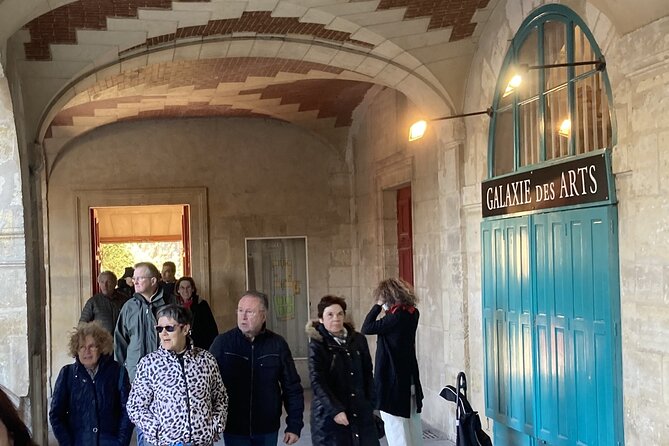
Because the tour is about 2 hours with around a dozen stops, it’s not a long hike, but it is still walking. I’d treat it like a “comfortable shoes” outing.
Bring:
- Comfortable walking shoes
- A light layer if you’re sensitive to temperature changes in the city
- A way to keep your phone charged if you’re using the mobile ticket
Also, show up a few minutes early at Paroisse Saint-Paul Saint-Louis so you get the full intro. If you’re late, the first context stop matters more than you think.
Who should book, and who might not love this format
This is a great fit for:
- First-timers who want a fast orientation to Le Marais
- People who like architecture and city details, but do not want to plan a complicated self-guided route
- Anyone who enjoys a guide who also helps with what to do next, not just what to see
It may be less ideal for:
- People who want long inside time at multiple major sites in one go
- Visitors who dislike walking between many short stops
In other words, it’s best when you want the big picture of the Marais, delivered efficiently.
Should you book this tour?
Yes, I’d book it if you value a clear route, a small group, and a guide who brings the neighborhood to life with Sébastien’s English and friendly, organized style. The itinerary hits meaningful places like Place des Vosges and the Maison de Victor Hugo, and it ends where you can keep the experience going with Kosher food at La Boutique Jaune.
If you have time to spare and you prefer slow museum days, you can still enjoy this, but consider pairing it with a return to your favorite stop later.
FAQ
What is the duration of the Small Group Marais/Place des Vosges Walking Tour?
The tour lasts about 2 hours.
How many people are in the group?
The tour has a maximum group size of 10 travelers.
What time does the tour start?
The start time is 10:00 am.
Where does the tour start and end?
It starts at Paroisse Saint-Paul Saint-Louis, 99 Rue Saint-Antoine, 75004 Paris and ends at Sacha Finkelsztajn – La Boutique Jaune, 27 Rue des Rosiers, 75004 Paris.
Is the tour offered in English?
Yes, it is offered in English.
Do I need a paper ticket?
No, you use a mobile ticket.
Are any admissions mentioned as free during the stops?
The itinerary lists free admission tickets for all the listed stops.
What major sights are included on the route?
You’ll see Le Marais, Hôtel de Beauvais, medieval houses at Maisons A l’Enseigne du Mouton et du Faucheur, the Maison Européenne de la Photographie area, Place des Vosges, the Maison de Victor Hugo, and the walk along La Rue des Rosiers ending at La Boutique Jaune, among other stops.
Can I cancel for a full refund?
Yes. Free cancellation is available if you cancel at least 24 hours before the experience’s start time.
More Walking Tours in Paris


More Tours in Paris





More Tour Reviews in Paris



Not for you? Here's more nearby things to do in Paris we have reviewed











Le Marais Tours, side by side.
 ★ 4.5Award-Winning Paris French Bakery Experience — Le Marais, 4th ArrTickets from $1141,186 guest reviews
 ★ 5.0Paris Le Marais Food Tour With 10+ Tastings, Cheese, Wine & MoreTickets from $102985 guest reviews
 ★ 4.5Paris Le Marais District Original Food and Wine Tasting TourTickets from $157880 guest reviews
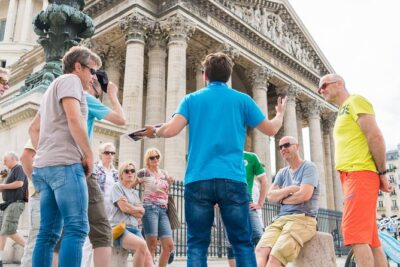 ★ 5.0Paris Bike Tour Hidden Secrets in the Latin Quarter & Le Marais neighborhoodsTickets from $54766 guest reviews
 ★ 4.9Food and Wine Tasting Walking Tour in Le MaraisTickets from $113446 guest reviews
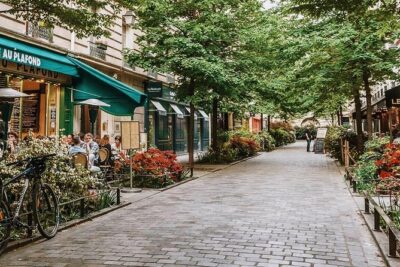 ★ 5.0Le Marais District & Jewish Quarter Guided Walking Tour 12ppl MaxTickets from $59361 guest reviews
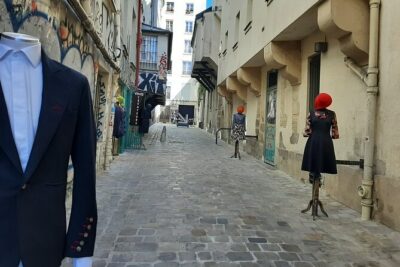 ★ 5.0Le Marais/Paris – The Historic, Trendy, Jewish, LGBT districtTickets from $48341 guest reviews
 ★ 5.0Paris Le Marais Food & Wine Tour with Eating EuropeTickets from $163297 guest reviews
This tour also belongs to