

Review · LE MARAIS TOURS
Paris Medieval Heart: Walking Tour in Ancient Marais
Medieval Paris feels real when you walk it. This 2.5-hour Marais tour strings together major landmarks and quieter side streets, with stops like the oldest synagogue in Paris, Victor Hugo, and Sully’s hidden garden. I especially like the small group size and the way the guide stitches details into a clear story, plus you get practical local recommendations for food and shopping after.
The main thing to watch is logistics: the meeting point at 3bis Pl. de la Bastille can be tricky to spot, and you are outside for the full walk.
Key points to know before you go
- Small group, max 15 people, so you get real conversation instead of standing in a crowd
- Mostly free stops on the route, so you spend money where you choose, not where you have to
- A tight loop through the Marais, built around medieval walls, Jewish Quarter landmarks, and religious architecture
- Hidden courtyards and gardens, including traces tied to Paris defensive walls
- Finish at Centre Pompidou, so you can keep your day moving right where the tour ends
- Guide-led orientation that helps you explore the neighborhood after you leave
Walking the medieval Marais in 2.5 hours
This is a morning walking tour starting at 10:00 am, with a total duration listed at about 2 hours 30 minutes. The route is designed to cover a meaningful chunk of the Marais without feeling like you are sprinting from stop to stop.
You start at 3bis Place de la Bastille area (specifically 3bis Pl. de la Bastille) and finish in the square in front of Centre Pompidou. That ending matters because it gives you an easy payoff, even if you just want a break and a landmark to navigate from afterward.
You can also read our reviews of more walking tours in Paris



Price and what you really get for $51.66
At $51.66 per person, you are paying mainly for the guided walking and interpretation. The big value is that the tour includes an experienced local guide and uses a sequence of stops where the admissions are listed as free for most locations.
A couple notes keep this fair and useful:
- Water is not included, so plan to bring your own or buy something small nearby.
- Place des Vosges is listed with admission not included, while the rest of the stops are listed as free admission tickets. In practice, you will likely spend more on a snack than on entry fees.
The tour also uses a mobile ticket, which is convenient on a day when you will be checking your phone for the next turn. And since the max group size is 15, you are less likely to feel swallowed up by the crowd energy that the Marais can create around the major sights.
Stop 1: Rue des Tournelles and the oldest synagogue in Paris
Your walk begins at 21bis Rue des Tournelles, where you visit the oldest synagogue in Paris. This is a smart first stop because it immediately sets the theme: the Marais is not only medieval stone and royalty, it is also living layers of faith and community.
The admission is listed as free, and the stop is short, about 10 minutes. That means the guide can frame what you are seeing quickly, then move you along before you lose momentum.
If you are the kind of traveler who likes architecture and context more than long museum time, this first segment is a good sign. You get a landmark, then you get the story that helps the next streets make sense.
Stop 2: Place des Vosges, the Marais square that started it all
Next comes Place des Vosges, about a 10-minute stop focused on its history and hidden details. This square is one of those places you can recognize from photos, yet you can still miss the side stories without a guide.
Admission is listed as not included here. Since the square itself is an outdoor public space, I would treat this as a reminder to confirm any related entry expectations before you arrive, but the tour time is short and you will still get the orientation and notable angles.
Stop 3: Maison de Victor Hugo in the middle of the story

You then move to Maison de Victor Hugo, with a 15-minute visit to the apartment connected to the iconic French writer. Even if you are not deep into French literature, this stop works because it brings a later layer of Paris into the same walking frame as medieval sites.
Admission is listed as free for this stop. The time here is enough to understand why Victor Hugo matters to Paris, without turning the tour into a museum day.






Stop 4: Cour et jardin de l’Hotel de Sully, a mansion garden you do not stumble on
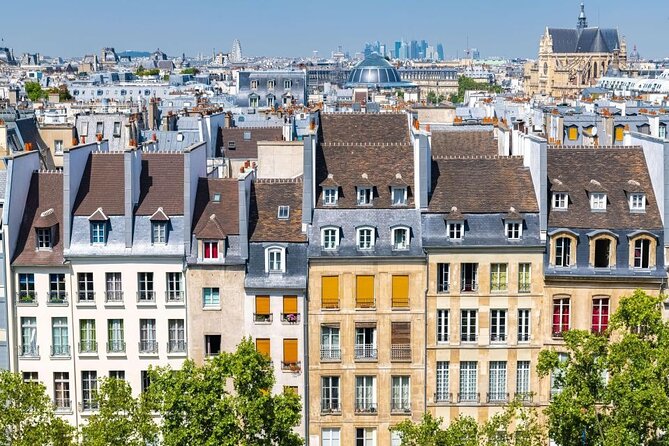
A standout moment is the Cour et jardin de l’Hotel de Sully, described as a hidden garden inside a magnificent mansion. The guide introduces it in about 10 minutes, and it stays focused on why this kind of private space shaped how power and daily life worked in older Paris.
Admission is listed as free. This is also one of those stops where small-group pacing helps, because you can look around, take photos, and hear the explanation without being elbowed out of the view.
Stop 5: Paroisse Saint-Paul Saint-Louis and the shift from Gothic to Jesuit Baroque
You will also stop at Paroisse Saint-Paul Saint-Louis, a church noted for being among the first that breaks completely from Gothic style and uses the newer Jesuit Baroque approach. That style shift is exactly the kind of detail that you can overlook when you just rush past church facades.
The stop is around 10 minutes and admission is listed as free. The value here is not only the building, it is the way the guide helps you notice the design language that signals change in taste, politics, and religion.
Stop 6: Rue des Rosiers and the Jewish Quarter through the food street lens
From the church, the tour heads to La Rue des Rosiers, in the heart of the ancient Jewish Quarter. This stop leans into everyday Paris, focusing on the gastronomical delicatessen atmosphere and giving you a feel for the neighborhood right where people actually shop and eat.
It is about 15 minutes, and admission is listed as free. I like this pacing because you move from architecture to street life, so your brain stays engaged and you get ideas for where to eat later that day.
Stop 7: Jardin des Rosiers, Joseph Migneret, and the medieval defensive wall traces
After the food street, you get a quieter payoff at Jardin des Rosiers, Joseph-Migneret. This is described as a hidden garden with traces tied to the Medieval defensive wall of Paris.
The stop is about 10 minutes and admission is listed as free. This is a great moment to pause, look for the physical hints of the wall, and understand how the city protected itself. It is also a useful reminder that medieval Paris is not only grand monuments, it is infrastructure.
If you are walking with kids or teens, this kind of stop often lands well because it turns history into something you can point to in real space.
Stop 8: Halles des Blancs Manteaux and the Templar fortress connection
Next is Halles des Blancs Manteaux, tied to a fortress used by the Templar Knights in the Middle Ages. The stop is about 10 minutes, and admission is listed as free.
This is a fun one because the name sounds like a market building, yet it carries a different identity in the medieval story. It also helps you see how the Marais reused spaces over time, with each era layering on its own meaning.
Stop 9: Rue des Francs Bourgeois and the factory of ashes
On Rue des Francs Bourgeois, you get a particularly unusual story: the factory of ashes, described as a unique institution that worked until the middle of the 19th century.
It is a 10-minute stop with free admission listed. I love this because it breaks the usual Paris pattern where every walk is only about palaces and cathedrals. Here you get a practical, industrial detail about how a city functioned.
If you like history that explains how people lived, this is one of the stops that keeps the tour from feeling like a highlight reel.
Stop 10: A front-of-the-building stop at Musee Picasso-Paris
You will have a stop in front of Musee Picasso-Paris, dedicated to the painter linked with inventing Cubism. This is listed as about 10 minutes, and admission is listed as free for the stop.
Even though you are not being pushed inside here, the guide uses the pause to connect art to place and time. It also gives you a visual break from pure medieval and religious stops.
Stop 11: Musee des Archives Nationales, hidden gardens behind the facade
Then comes Musee des Archives Nationales, where you can see hidden gardens behind the front side of the buildings. The stop is about 15 minutes, and admission is listed as free.
This segment is all about contrast: the archives buildings give you one kind of impression from the street, while the guide brings attention to what is tucked behind. It is a strong reminder that Paris often hides its most interesting spaces away from the obvious sightlines.
Stop 12: Hotel de la Bretonnerie and the modern Marais vibe
You also visit Hotel de la Bretonnerie, an area with many trendy fashion stores, food shops, and cafés around the LGBT community. This stop is about 10 minutes and admission is listed as free.
I like including this kind of stop because it helps you shift from history mode to practical exploration mode. The guide can point you toward places to keep browsing after the tour ends.
Stop 13: Centre Pompidou, postmodern Paris at the finish line
The tour ends at Centre Pompidou, and your last stop is about 15 minutes focusing on the building and what it represents. The tour description highlights it as a postmodern museum for contemporary art, plus a library and cinema.
Since the tour ends at the square in front of the museum, you get an easy next step. If you want to rest your feet, grab a snack, or add a museum visit later, this ending location makes it simple.
What makes this tour feel different (and why it is worth it)
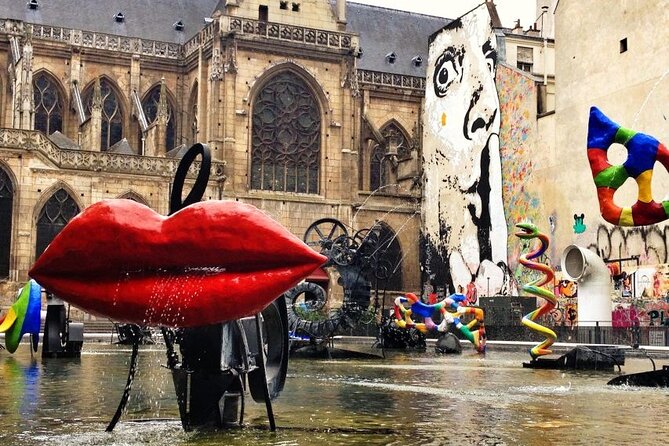
A lot of Marais tours hit the big names. This one spends time on the less obvious pieces that give you texture, including private courtyards, small gardens tied to the medieval wall, and the Templar-related space at Halles des Blancs Manteaux.
The other ingredient is the guide style. In the experience, guides have used tools like notebooks with illustrations to time the historical details at the right moments. That small technique helps you remember what you heard because it matches what you are seeing right in front of you.
You also get an added benefit that I really value on a first visit: local recommendations for boutiques and cafés so your afternoon does not feel like you are guessing.
Practical tips so the day goes smoothly
Come ready to walk. Comfortable shoes matter because you are covering many stops in about 2.5 hours.
Also, plan around the outdoors time. If weather is rough, the route still goes, so bring a light layer you can manage.
Finally, be early for the meeting point. One frustrating scenario that can happen is arriving and realizing you have trouble locating the exact 3bis Pl. de la Bastille spot. Arrive with enough buffer to confirm the pin on your map before your start time.
Who this tour suits best
This is ideal for you if you want a high-quality overview of the Marais without turning it into an all-day museum crawl. It is also a strong fit for travelers who enjoy religious architecture, neighborhood history, and street-level atmosphere in the same morning.
It can work well with teens too, especially if you like stories that mix real buildings with unusual historical details like the factory of ashes and the medieval defensive wall traces.
If you prefer deep museum time and long indoor visits, you might want a different format. This tour is paced for walking and orientation, not extended ticketed sightseeing.
Should you book the Paris Medieval Heart walking tour?
I think this is a solid choice if you want to understand the Marais in one go, with a small group and a guide who can connect the dots. At $51.66, the value improves because most stops are listed as free admission, and you are paying for interpretation rather than entry fees.
Book it if you like neighborhood history that you can see on the street, and if you want to end at Centre Pompidou so your day has momentum.
I would hesitate only if you hate finding meeting points in busy areas. If you can show up early and confirm your exact location at 3bis Pl. de la Bastille, you will set yourself up for a smooth start.
FAQ
How long is the Paris Medieval Heart walking tour?
The tour duration is approximately 2 hours 30 minutes.
What is the price per person?
The price is $51.66 per person.
What time does the tour start?
The start time is 10:00 am.
Where do you meet for the tour?
The meeting point is 3bis Pl. de la Bastille, 75004 Paris, France.
Where does the tour end?
The tour ends at Place Georges-Pompidou in front of the Centre Pompidou.
How large is the group?
The tour has a maximum of 15 travelers.
Is the tour offered in English?
Yes, it is offered in English.
Do I need to buy admission tickets during the tour?
Most stops are listed as free admission tickets. Place des Vosges is listed as admission ticket not included.
Is bottled water included?
No, bottled water is not included.
Are service animals allowed?
Yes, service animals are allowed.
Can I cancel for a full refund?
Free cancellation is available up to 24 hours in advance for a full refund.
More Walking Tours in Paris



More Tours in Paris





More Tour Reviews in Paris



Not for you? Here's more nearby things to do in Paris we have reviewed












Le Marais Tours, side by side.
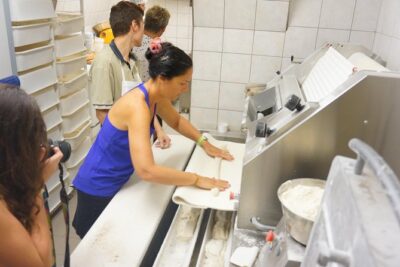 ★ 4.5Award-Winning Paris French Bakery Experience — Le Marais, 4th ArrTickets from $1141,186 guest reviews
 ★ 5.0Paris Le Marais Food Tour With 10+ Tastings, Cheese, Wine & MoreTickets from $102985 guest reviews
 ★ 4.5Paris Le Marais District Original Food and Wine Tasting TourTickets from $157880 guest reviews
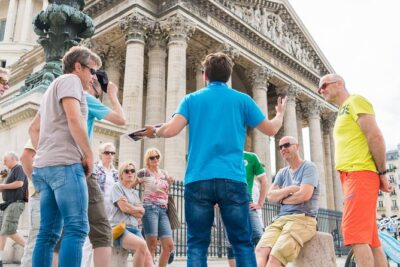 ★ 5.0Paris Bike Tour Hidden Secrets in the Latin Quarter & Le Marais neighborhoodsTickets from $54766 guest reviews
 ★ 4.9Food and Wine Tasting Walking Tour in Le MaraisTickets from $113446 guest reviews
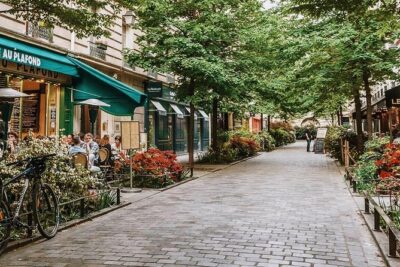 ★ 5.0Le Marais District & Jewish Quarter Guided Walking Tour 12ppl MaxTickets from $59361 guest reviews
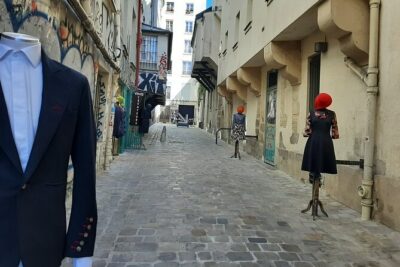 ★ 5.0Le Marais/Paris – The Historic, Trendy, Jewish, LGBT districtTickets from $48341 guest reviews
 ★ 5.0Paris Le Marais Food & Wine Tour with Eating EuropeTickets from $163297 guest reviews
This tour also belongs to