
Review · PARIS CITY TOURS
Paris City Tour by E-Scooter with Fun Guide (Small groups)
Want Paris highlights without the slog?
This 3-hour e-scooter city tour is built to move you fast between major sights, with smart timing for photo stops and story-rich commentary as you glide past landmarks that most people only see from a bus window. You get a short training session first, then a guide-led route that keeps things fun, focused, and easy to follow.
The main thing to consider is ride comfort. You are on a scooter for the full loop, and while the tour is designed for most people, a few riders are more comfortable after that initial practice. Also, key stops like the Louvre and Eiffel Tower are viewpoints and exterior/photo moments, not included admissions.
Key highlights worth your time
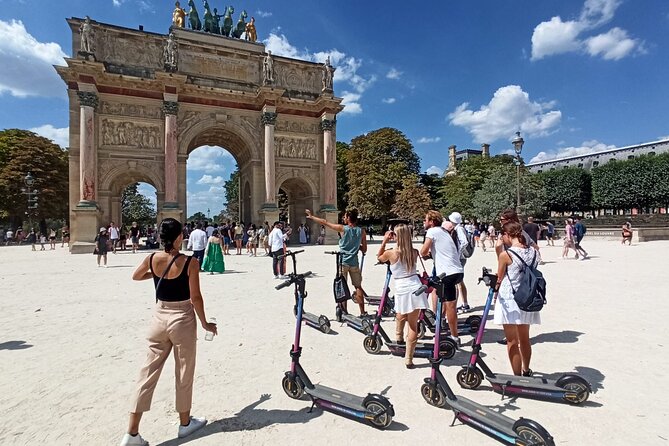
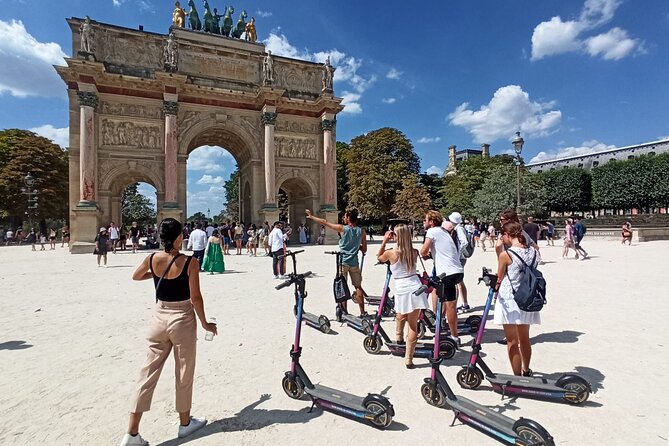
- Small groups up to 15 so you are not swallowed by a crowd.
- First-rate scooter orientation so even first-timers have a real start.
- A tight loop of Paris icons from Pont des Arts to the Seine bridges.
- Multiple timed photo moments, including a less-crowded Eiffel Tower viewpoint.
- Route choices that favor bike lanes and safer streets, with a guide watching the flow.
- A mix of famous and “see-it-from-here” stops, with brief history at each.
Getting your Paris bearings in 3 hours on a scooter
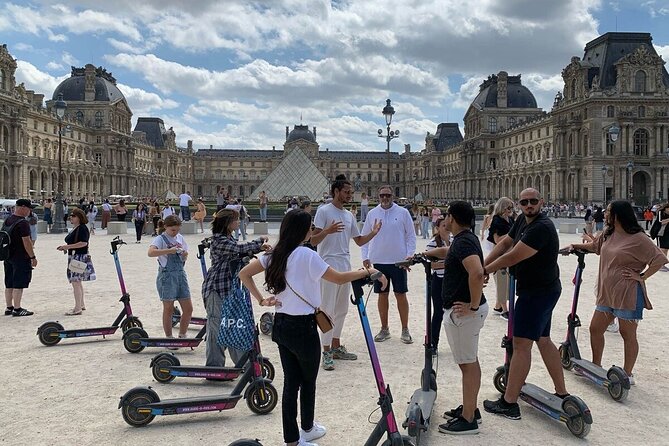
Paris is big. Even if you love walking, it is hard to connect the dots on day one. This tour is basically a rapid orientation, built around a single loop that hits the places you will keep seeing again later in your trip. The format matters: short stops, quick story bits, and steady motion so you feel like you are learning the city, not just checking items off a list.
I like that it is not only about big monuments. You also get the river-crossing perspective on the Seine and the bridge-to-bridge rhythm that defines Paris. And because it is small group style, your guide can keep an eye on pacing and where people are positioned, which helps a lot when you are navigating traffic and crossing busy areas.
One practical note: this is an active tour. You will want to manage layers, water, and your comfort on the scooter. If you are sensitive to cold, earlier reviewers have done the tour in winter temperatures around -4 degrees, so plan for real warmth.
You can also read our reviews of more guided tours in Paris



Where you start (and why the route feels well planned)
You meet at 10 Rue de Pontoise, 75005 Paris, and the tour ends back at the same place. That matters because you are not spending your trip commuting to multiple neighborhoods. In a city where transferring by metro can eat time, starting and ending together keeps your day simple.
Before you roll out, you get training on how to use the e-scooter and you start with guidance. Helmets are provided, and while a helmet is not mandatory, you should still treat it like part of your gear. The training step is not just a formality. It is where you learn how the scooter behaves, how to turn smoothly, and how to follow the guide without feeling panicked.
From there, the pacing is designed around regular stops. The schedule includes short “look, photo, and move” windows, often around 10 to 20 minutes each. That keeps the tour energetic and prevents the dead time that can happen when groups bunch up.
Scooter training and guide style: what actually makes it work
The difference between a fun scooter tour and a stressful one is the guide. This one is consistently run with an emphasis on safety and flow. Multiple guides are named in feedback, including Laurent and Idris. The common thread is that they help people get comfortable early and then keep the group moving along scooter-and-bike friendly routes.
If you have never ridden an e-scooter before, you can still do this. The tour is built for “learn it fast” moments. You also get real attention on where to ride and when to stop for photos. The result is that most people spend their energy on the sights, not on worrying about the mechanics.
One drawback to keep in mind: sometimes the road mix can slow things down. In at least one instance, a shared pace with other cyclists caused brief waiting. It is not constant, but it is the kind of thing that can happen when operators coordinate different touring groups.
Pont des Arts and Île de la Cité: the Paris origin story in two quick stops
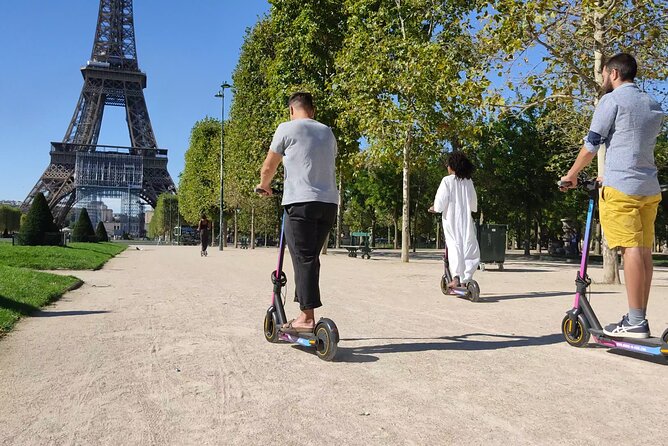
Stop 1 is Pont des Arts, the bridge most associated with the Lovers’ Bridge nickname. You get a first history thread here, including how the city started developing and why this stretch of river matters. You also get time for photos and a view that is classic Paris, with the river framing everything.
Stop 2 is Île de la Cité, the island where Paris begins. The focus is on “where it all began,” with a short stop that helps you understand the city’s geographic core. Even if you never go inside the major landmark on the island during this tour, the outside orientation helps you picture where major sights sit relative to one another.
Why these stops work for you: they set the map. After this, the rest of the tour feels less like random sightseeing and more like a single connected story moving along the center of Paris.
Louvre and Cour Carrée: major names, no ticket pressure
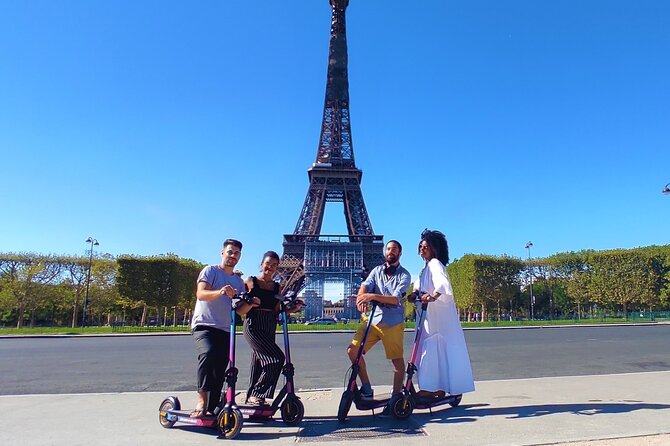
The tour includes a Louvre Museum stop (about 15 minutes), but entrance tickets are not included. You are meant to see it, absorb context, and move on. That is a big deal if you are building a day around multiple activities, because waiting in lines for a museum ticket can wreck your schedule.
Right after that, you pass through Cour Carrée, the Place Carré du Louvre area behind the Louvre. This is another “exterior and photo-friendly” stop, with a brief explanation of how the Louvre museum’s story connects to the space around it.
A quick caution: if your goal is to actually go inside and spend hours in the galleries, this tour alone will not do that for you. It is set up for orientation and viewpoints, not for full museum time. The upside is you still get the setting and the context, which can make a later museum visit more meaningful.
You can also read our reviews of more city tours in Paris






Champs-Élysées and Arc de Triomphe: a big boulevard moment, then photos at the arch
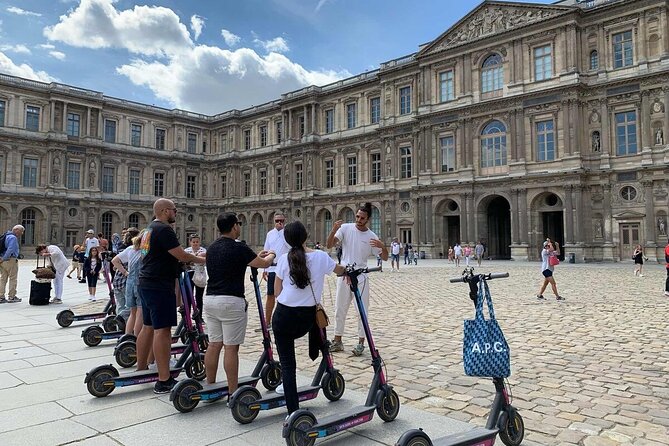
The tour crosses Champs-Élysées (about 15 minutes). Even if you have seen photos online, riding along it makes the scale real. The avenue also connects your mental map to the grand end-of-axis feel that Paris does so well.
Then you reach Arc de Triomphe with a stop of around 15 minutes. The tour focuses on the foot of the arch, photo time, and the history. The payoff here is perspective. Seeing the arch in the context of the streets around it helps you understand why it is such a central monument in how Parisians think about civic space.
One practical tip: bring your patience for traffic zones. Even with a route that favors smoother lanes, you will still deal with busy street energy. The guide’s job is to time crossings and keep the group aligned, and that is where having a competent leader really matters.
Eiffel Tower viewpoint: the “secret” angle that pays off
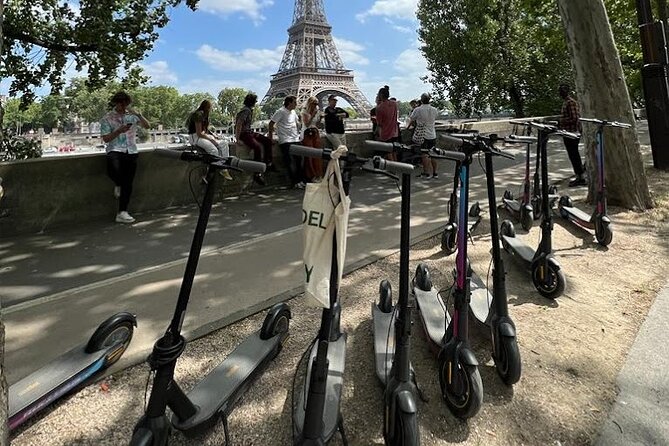
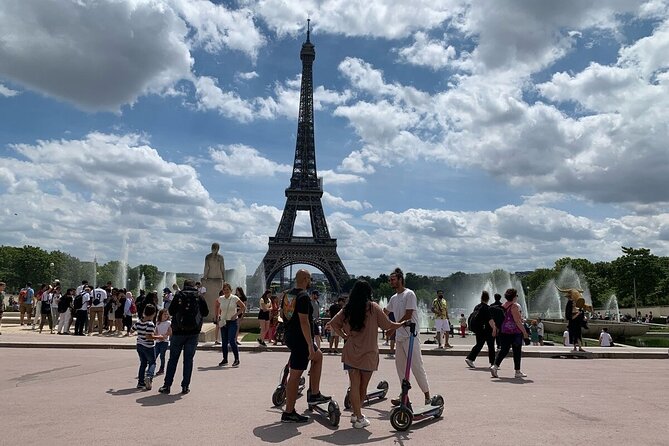
The Eiffel Tower stop is not about entering. It is about reaching a viewpoint described as a more secret photo spot. The tour gives about 15 minutes here, and the goal is simple: see the tower from a strong angle and take lots of photos.
This is one of the stops that stands out in feedback because the tour seems to manage crowds better than you might on your own. You are not just staring at the tower from wherever the street happens to allow. You are guided to a viewpoint that gives you a better composition and lets you enjoy the moment.
The main consideration is that you need to be ready to dismount, position for photos, and move quickly. This is not a slow scenic stroll. It is a “get the shot, soak it in briefly, then go” style.
Grand Palais, Invalides, and Place de la Concorde: connecting architecture to events
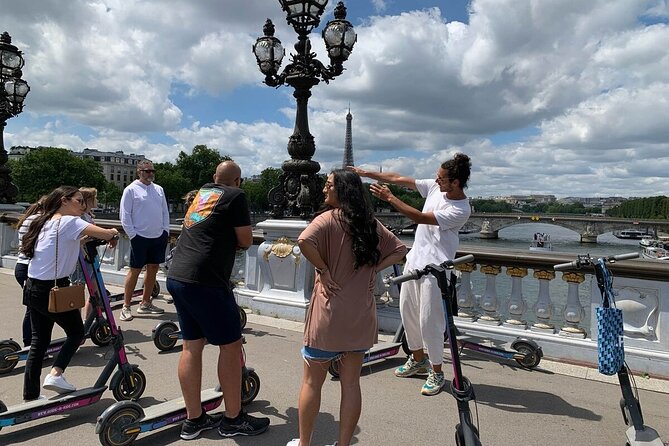
After the Eiffel Tower area, the tour passes by the Tuileries Garden and the Flame of Liberty, also known as the Lady D memorial. Then you roll past the Grand Palais, with a quick moment for its glass roof.
Next comes Invalides. The stop is around 5 minutes and focuses on the building between Place des Invalides and Quai d’Orsay, especially the north facade. This is a fast architectural hit, but it matters because it gives you a sense of where monumental Paris sits beyond the headline attractions.
Then there is Place de la Concorde (about 15 minutes). Here, the guide explains what happened during the French Revolution period connected to this square. You also get a look at one of the world’s famous avenues, which helps you connect this location to the Champs-Élysées axis you saw earlier.
This section is valuable because it links “pretty buildings” to how Paris evolved. You stop being a spectator and start feeling how the city’s geography and politics shaped what you see today.
Seine stroll and the National Assembly area: why the river part matters
On the return, you get about 20 minutes along the Seine, plus a crossing of the capital so you can admire monuments one more time. This is the part that helps the tour feel complete. Paris looks better when you see it reflected in water, and the river route naturally ties together locations you have already seen.
The tour also passes in front of the National Assembly building, with a reference to how laws are still voted on there. You get the “what it is” without turning it into a lecture.
If you are a first-timer, this river sequence is one of the easiest ways to understand Paris without getting lost. If you are returning, it can help you spot patterns you missed earlier, like how bridges and riverside streets repeat across neighborhoods.
Pont Alexandre III and Musée d’Orsay: bridge beauty plus a last museum glimpse
One of the nicer moments is Pont Alexandre III (around 10 minutes). It is an excellent bridge choice because it is showy, photogenic, and a strong transition point as you move toward the river’s next viewpoints.
Then you pass near the Musée d’Orsay area (no entrance ticket included). You are given context about the bridge connection, including how the Pont Alexandre III area connects Esplanade des Invalides and Avenue Winston-Churchill, where the Petit Palais and Grand Palais are located.
This part is not about buying tickets. It is about getting the layout. Once you understand how these areas connect, you can plan a future walk or metro ride more confidently, because you will recognize what you are seeing.
Notre-Dame from the outside: a quiet wrap-up to your loop
Near the end, the tour passes by Cathedrale Notre-Dame de Paris just before returning to the shop. Admission is shown as free for this stop, but the key point for your expectations is that this is an exterior pass-by moment, built to close out the route smoothly.
Even if you do not go inside during this tour, seeing Notre-Dame from the street reinforces everything you learned earlier around Île de la Cité. It ties the loop together: origin island, major civic landmarks, river axis, and then the familiar cathedral silhouette.
Price, timing, and real value for your day
At $67.75 per person for about 3 hours, you are paying for three things: speed, guidance, and setup. Speed is huge in Paris. A scooter loop can cover ground that would take you all day on foot. Guidance means you do not have to guess where the best photo angles are or how to route through the city.
The tour also includes practical extras. You get the helmet, training, and an interesting, fun guide, plus built-in photo opportunities. That combination often beats piecing together multiple self-guided stops, especially if your time is limited.
What is not included matters too. Entrance tickets are not included for the Louvre Museum, the Eiffel Tower viewpoint, and Musée d’Orsay. Several other stops are effectively free photo moments, so you are not paying extra at each stop, but you should still plan any interior museum time separately if that is your priority.
For weather, the tour requires good weather. If it is canceled due to poor conditions, you will be offered a different date or a full refund. This is worth factoring into your planning, especially in shoulder seasons.
Who should book this e-scooter city tour
I think this tour fits best if you want:
- A first-day orientation that helps you plan the rest of your trip.
- A fun option for teens and families, since many people highlight it as a strong activity for tweens, teens, and mixed ages.
- A way to see big sights without committing a half-day to museum tickets.
- Less walking fatigue, especially if you have sore feet or want to take in more on one day.
It may be less ideal if:
- You only want walking and cannot handle scooter riding for a full 3-hour loop.
- Your top priority is spending lots of time inside major museums, because this tour focuses on exterior views and short stops.
Should you book this Paris City Tour by E-Scooter with Fun Guide?
If you are trying to get your bearings, this is one of the smartest ways to do it. The route hits the biggest “Paris symbols” in a short time, and the guide-led photo stops, including the Eiffel Tower viewpoint angle, are built to give you memorable images without a long slog.
Book it if you like active sightseeing, want a guided city map in your head by the end of the day, and you are comfortable riding a scooter after the training. Skip it if you want deep museum time or you are not ready for steady riding even with safety-first guidance.
Bottom line: this is a high-energy orientation tour that trades museum depth for city coverage, and for many people, that trade feels like good value.
FAQ
How long is the Paris City Tour by E-Scooter?
It lasts about 3 hours.
Where is the meeting point, and does it end there too?
You start at 10 Rue de Pontoise, 75005 Paris, and the tour ends back at the same meeting point.
Is the tour offered in English?
Yes, it is offered in English.
What is included with the tour?
Included are a helmet (no mandatory), training on how to use the e-scooter, an interesting fun guide, and photo stops.
Are monument entrance tickets included?
No. Entrance tickets are not included for stops marked as not included, including the Louvre Museum, the Eiffel Tower viewpoint, and Musée d’Orsay.
How big are the groups?
The tour has a maximum of 15 travelers.
Do I need prior scooter experience?
Most travelers can participate, and you get training on how to use the e-scooter. If you are new to scooters, plan to take the first practice seriously.
What weather conditions are required?
The experience requires good weather. If it is canceled due to poor weather, you will be offered a different date or a full refund.
Can I cancel for a full refund?
Yes. You can cancel for a full refund if you cancel up to 24 hours in advance of the experience start time.
More Guided Tours in Paris



More Tours in Paris




More Tour Reviews in Paris






Not for you? Here's more nearby things to do in Paris we have reviewed












Paris City Tours, side by side.
 ★ 4.6Louvre Museum Timed-Entrance TicketTickets from $2671,977 guest reviews
 ★ 4.6Disneyland® Paris 1-Day TicketTickets from $6149,412 guest reviews
 ★ 4.6Versailles Palace and Gardens Full Access TicketTickets from $1741,579 guest reviews
 ★ 4.6Arc de Triomphe Rooftop TicketsTickets from $1834,264 guest reviews
 ★ 4.7Orsay Museum Entry TicketTickets from $1525,647 guest reviews
 ★ 4.4Evening River Cruise with MusicTickets from $2722,721 guest reviews
 ★ 4.4Eiffel Tower Entry Ticket with Optional Summit AccessTickets from $2920,035 guest reviews
 ★ 4.3Eiffel Tower Summit or Second Floor AccessTickets from $5917,248 guest reviews
This tour also belongs to