
Review · PARIS CITY TOURS
Paris City Center Free Walking Tour (Tip-Based)
Paris history walks in a straight line. This tip-based route from Fontaine Saint-Michel to the Tuileries covers the French Revolution, Napoleon, and the city’s classic landmarks, mostly from the outside. You also get practical guidance for where to eat, drink, and wander next.
I love the street-level storytelling, including real details like the WW2 bullet holes you’ll spot on Pont Saint-Michel. I also love that it stays outside Notre-Dame and the Louvre, so you can enjoy the major sights without committing to extra tickets or interior time.
The main drawback is simple: plan on being on your feet for about 2 hours 15 minutes, and if you want cathedral or museum entry, this tour will not satisfy that itch.
Quick takes on this Paris city-center walking tour
- Tip-based, group-sized format: a small-group experience capped at 50 people
- Seine bridges with strong visuals: you’ll pause for the WW2 bullet holes and other odd Paris facts
- Major landmarks, no inside entry: Notre-Dame and the Louvre are viewed from the outside
- History focus that moves fast: French Revolution and Napoleon show up repeatedly in the route
- Smart end point for the next stop: it finishes at the Tuileries Garden, ideal for continuing your day
Price and the tip-based deal you should understand
This is a tip-based walking tour, so the headline price you see is not the whole story. The tour is listed at a small amount per group, and then the real “pay what you think it’s worth” part happens through tips.
Two practical things matter. First, tips are accepted only via credit/debit cards and electronic payments. Second, VAT is added to contributions, so your total may be a bit higher than the base amount you first expect.
Is it good value? For a 2 hour 15 minute walk through central Paris, yes, if you want context and orientation. If you hate walking, hate standing, or want interior tickets for Notre-Dame or the Louvre, then pay-for-entry tours will likely feel more “worth it.”
You can also read our reviews of more walking tours in Paris



Starting at Fontaine Saint-Michel, the route that helps you orient fast
You begin at Fontaine Saint-Michel, in the lively 5th arrondissement area. This is a smart starting spot because it puts you near the Seine and the medieval core right away, so the first minutes already feel like Paris.
From the first stop, the guide frames Paris as a timeline you can actually walk through. You’re not just seeing famous locations, you’re learning why they sit where they do and how power and rebuilding changed the city’s look.
This matters when your days are short. One good walking intro can help you make better choices later, because the neighborhoods and streets start to feel readable instead of random.
Stop 1, Île de la Cité, where Paris becomes a story you can walk
The tour starts on Île de la Cité, the island described as the heart of Paris. You’ll hear the longer view, from early temple life tied to the Parisii tribe, to the shift under the Roman Empire.
Why this stop works: it gives you a “core” before you scatter outward. When the rest of the tour points you toward bridges, royal squares, and monumental architecture, you’ll understand the geography behind the drama.
You’ll also get one of the best early lessons for first-time visitors. Central Paris often looks like one era stacked on top of another, but the city is really layers of older decisions, not random decoration.
Stop 2, Notre-Dame from the outside, plus Revolution and Napoleon context
Next you’ll reach Cathedrale Notre-Dame de Paris, where the guide connects construction history to modern events, including the 2019 fires. Importantly, the tour does not enter the cathedral, so you’ll be observing and learning rather than doing a full interior visit.
What you do get is the historical thread the site stands for in French memory. The route highlights the French Revolution and Napoleon’s coronation, so this is not just about architecture admiration.
Tradeoff: you won’t see the inside during the tour. If that’s your top priority, you’ll need a separate plan for Notre-Dame entry. If you want the big-picture meaning and photo-friendly exterior viewing, this stop fits well.
Stop 3, Fontaine Saint-Michel, a quick pause with a rebuild story
At Fontaine Saint-Michel, you’re not just passing a landmark. You’ll hear that this fountain was built during the grand reconstruction of Paris, linking the spot to the idea that the city was rebuilt, not simply preserved.
That detail helps you read Paris in a practical way. When you notice changes in style or scale around different blocks, you’ll know to ask, who rebuilt this, and why then.
This stop is also a useful rhythm moment. It breaks up the walk and gives you time to reset your legs and your photos before you move toward the Seine crossings.
You can also read our reviews of more city tours in Paris






Stop 4, Pont Saint-Michel, WW2 bullet holes and the city’s survival
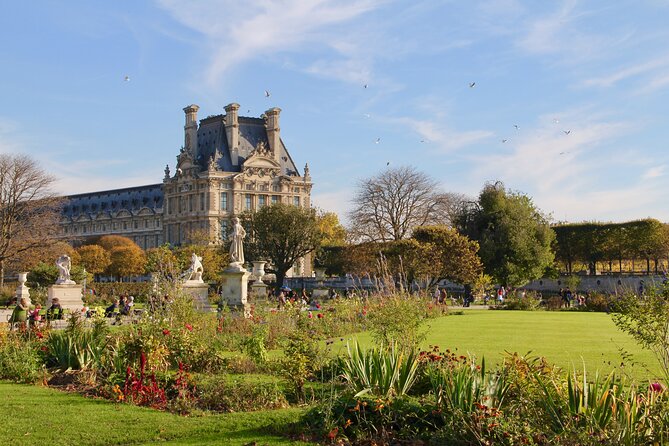
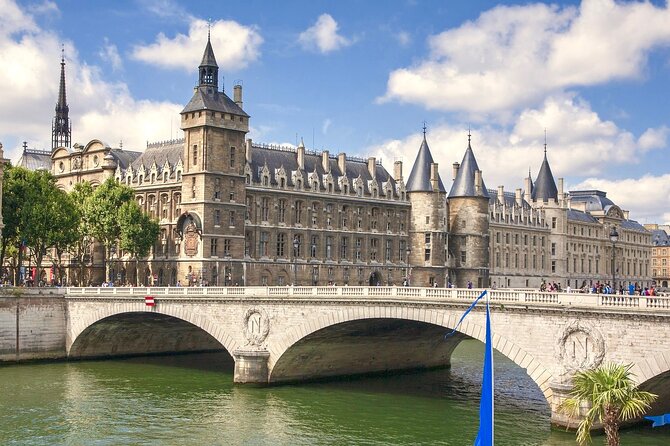
Pont Saint-Michel is one of those stops that makes Paris feel oddly personal. You’ll observe bullet holes from WW2, while your guide explains why Paris was not destroyed during the war.
That kind of story changes how you look at “pretty” bridges. Instead of treating them as background, you start to see them as infrastructure that endured real events.
It’s also a strong stop for questions. If you like hearing how a city’s identity survives trauma and rebuilding, you’ll probably lean in at this one.
Stop 5, Place Dauphine, a calm lunch-minded square
Place Dauphine is where the tour slows into something more human. You’ll walk past this charming square, tied to one of the first projects by Henri IV, and the guide points out why the location is so popular for food.
This stop is ideal if you’re thinking ahead. After roughly an hour of intense central sights, your energy will be better if you keep the idea of lunch in mind here.
Also, the vibe shifts. After medieval and monumental stops, this square feels more like everyday Paris, which makes the whole tour feel less like a checklist.
Stop 6, Equestrian Henri IV statue, river views that make the history “land”
You’ll stop at the equestrian statue of Henri IV, with views out toward the Seine. The guide shares context about Henri IV’s short reign and what it meant for France.
Why it’s useful: it’s history anchored to a viewpoint. A statue in an open area is easier to imagine in the real world than a timeline on a phone screen.
If you like photos that show both a monument and the city around it, this is the kind of pause that pays off. You can frame the Seine and the surrounding buildings instead of just shooting stone up close.
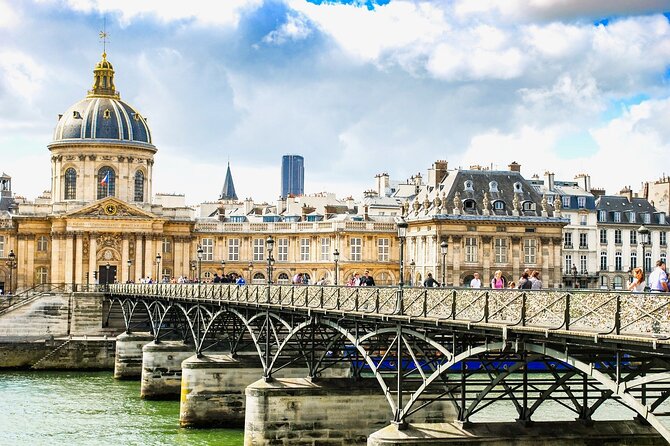
Stop 7, Pont Neuf, the oldest bridge and its quirky Paris stories
Pont Neuf comes next, and you’ll hear it’s the oldest bridge in Paris. Your guide will also bring entertaining local lore into the stop, including Henry IV’s role in completing the bridge in 1607 and stories like the tooth pullers of Paris.
This is one of the tour stops that feels like a “bonus” if you enjoy odd historical details. It turns a standard bridge view into something you’ll remember later.
Practical note: bridges mean wind. If it’s cold or raining, this part of the walk can be chilly, even when the rest of the tour feels manageable.
Stop 8, the Louvre area from the outside, Mona Lisa origin story and the glass pyramid view
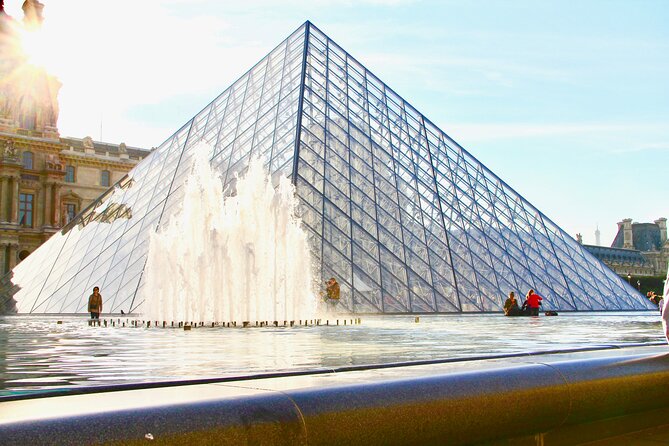
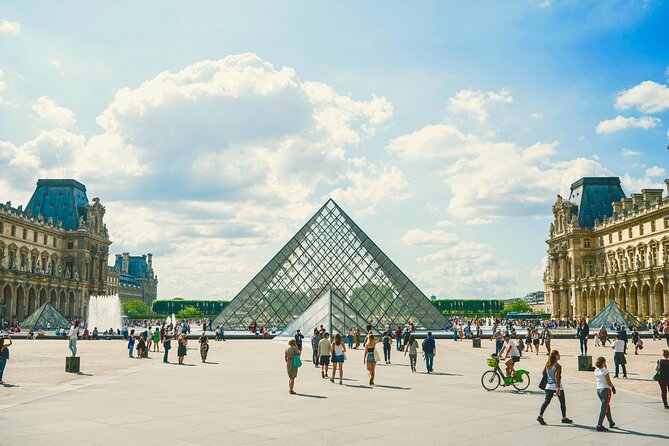
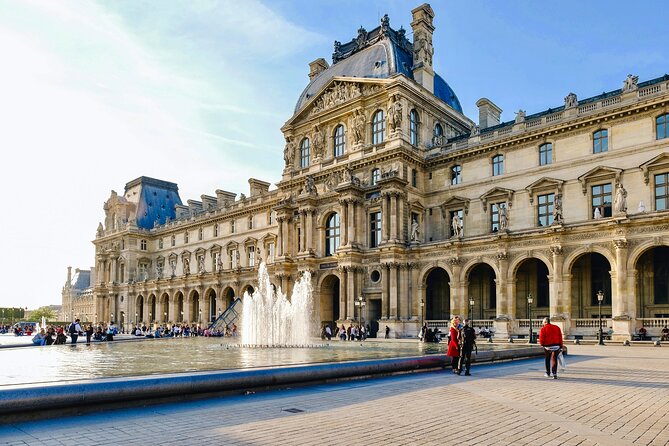
You’ll reach the Louvre Museum, but you do not enter. Instead, the tour focuses on what the guide calls the true story behind famous art, including Leonardo da Vinci and why the Mona Lisa became so well-known.
You’ll also hear how Francis I helped build the foundations of the Louvre, first as a fortress and then as a palace. Then you’ll look toward the glass pyramid for views and explanation, with the guide pointing out key mysteries of the space.
Why outside-only still works here: you still get the “what is this place?” answer. If you are museum-committed, you’ll likely want a separate Louvre ticket. But if you want cultural orientation and a strong first look, this stop is a good payoff.
Stop 9, Arc de Triomphe du Carrousel, Napoleon’s rise made stone
The tour includes the Arc de Triomphe du Carrousel, built by Napoleon. The guide uses it to reflect Napoleon’s ascension and the broader political energy of the era.
This stop helps connect the earlier Revolution talk to the Napoleonic world that follows. It’s one thing to hear about Napoleon in theory. It’s another to see a monument that visually performs power.
This also gives your walking pace a purpose. After big crowds and big architecture, smaller, more specific monuments can feel refreshing.
Stop 10, Jardin des Tuileries, from royal gardens to public calm
Then it’s to the Jardin des Tuileries, where you’ll hear how it evolved from a tile factory into royal gardens. You’ll see statues, sculptures, and fountains, with the guide tying the design to the same garden designer credited with Versailles-style mystique.
This stop is excellent for regrouping. It’s a chance to sit, reset your camera, and scan the grand views without feeling rushed.
If your feet are getting heavy, do what locals do. Slow down. Watch people. Take in the way the gardens soften the edges of the monumental buildings.
Stop 11, Eiffel Tower viewpoints, the finale with 1889 context
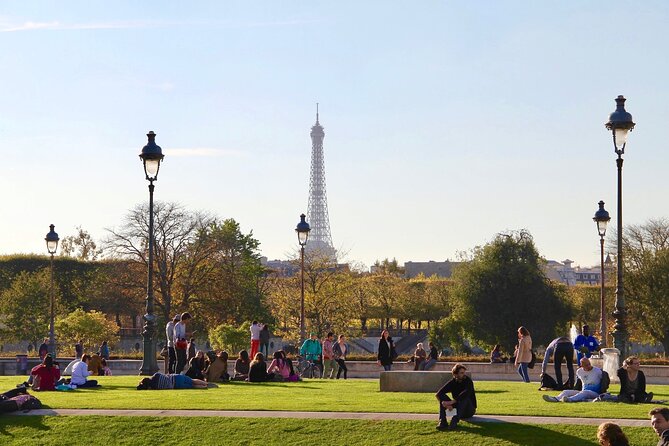
The final stop brings the unbeatable views of the Eiffel Tower from the Tuileries garden area. The guide shares how Gustave Eiffel pulled off the construction in 1889, turning the landmark from a postcard into a practical engineering story.
This finale is smart because it gives you a sense of closure. After walking through centuries, you end with a modern icon that still feels like the city’s “main character.”
If you want, you can keep going after the tour ends. Since you finish at the Tuileries Garden, you’ll be well positioned to continue toward the Seine, head to nearby museums, or just wander.
Pace, group size, and how it feels in real life
The tour lasts about 2 hours 15 minutes and is offered in English. The group cap is 50 people, which is big enough to have a lively feel but small enough to keep the route controlled.
The terrain is mostly flat central Paris, but you should still expect standing time at each stop. The pacing works best if you’re okay with pausing often and listening while you look.
One review detail I found especially useful for planning: some guides use a microphone and amplifier in busy areas, which makes it easier to hear the story even when the group is larger.
If you’re traveling with teens or adults who don’t want to sit through lectures, this format usually works. You’re moving, seeing, and learning in short bursts.
Where you can plan a bathroom break and a coffee
This tour is built around exterior viewing, so bathroom opportunities can be limited during the middle stretch. A practical move is to use the restroom before the start at Fontaine Saint-Michel.
By the time you reach the Louvre area, you may have more options nearby. Still, don’t count on a perfect stop every 30 minutes. Plan ahead and bring a little patience.
For food, the route is designed with lunch in mind, especially around Place Dauphine. Think of this as a morning or early afternoon history walk that can naturally lead into a sit-down meal.
Who this walking tour is best for
This works best for you if you want:
- A quick orientation to central Paris without spending hours in lines
- A guide-led storytelling experience focused on French Revolution and Napoleon
- A route that mixes big monuments with smaller, street-level details
It may not fit as well if:
- You specifically want to go inside Notre-Dame or the Louvre during this outing
- You strongly dislike standing, wind on bridges, or walking segments in winter rain
If you’re in Paris for a short stay, this is a solid “first days” choice. It helps you understand what you’re seeing before you plan more specialized stops.
Should you book this Paris city-center free walking tour?
Yes, if your goal is a smart intro to central Paris with memorable history beats and exterior views of top landmarks. The tip-based format can feel like a bargain, especially since the route covers everything from Île de la Cité to the Louvre area and ends at the Tuileries with an Eiffel Tower finale.
I’d book it if you like guides who can explain context in clear, entertaining ways. And I’d be cautious if you need inside access to Notre-Dame or the Louvre, because this one is built for seeing and learning from the outside.
FAQ
What is the price for the Paris City Center Free Walking Tour?
The tour is listed at about $3.62 per group (up to 9). Since it is tip-based, your final total depends on the tip amount you choose to contribute.
Is the tour free?
It is described as a free walking tour and is tip-based. Tips are part of the business model, and contributions are accepted by credit/debit card and electronic payments.
Where does the tour start and where does it end?
It starts at Fontaine Saint-Michel, Pl. Saint-Michel, 75005 Paris, and ends at the Tuileries Garden, 75001 Paris.
How long is the tour?
It runs for about 2 hours 15 minutes.
Is the tour in English?
Yes, it is offered in English.
Does the tour include entry into Notre-Dame and the Louvre?
No. The tour does not enter the cathedral or the museum, even though both are featured in the route.
What landmarks and areas are included on the route?
The tour covers Île de la Cité, Notre-Dame area (outside), Fontaine Saint-Michel, Pont Saint-Michel, Place Dauphine, the Henri IV equestrian statue, Pont Neuf, the Louvre area (outside), Arc de Triomphe du Carrousel, Jardin des Tuileries, and ends near Eiffel Tower viewpoints.
How many people are in a group?
The experience has a maximum of 50 travelers.
Are service animals allowed?
Yes, service animals are allowed.
Is weather a factor?
Yes. The tour requires good weather, and if it is canceled due to poor weather you will be offered a different date or a full refund.
What is the cancellation policy?
You can cancel for a full refund up to 24 hours in advance. If you cancel less than 24 hours before the start time, the amount you paid is not refunded.
More Walking Tours in Paris


More Tours in Paris






More Tour Reviews in Paris





Not for you? Here's more nearby things to do in Paris we have reviewed


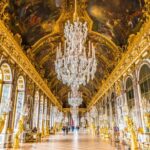





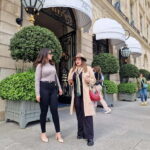



Paris City Tours, side by side.
 ★ 4.6Louvre Museum Timed-Entrance TicketTickets from $2671,977 guest reviews
 ★ 4.6Disneyland® Paris 1-Day TicketTickets from $6149,412 guest reviews
 ★ 4.6Versailles Palace and Gardens Full Access TicketTickets from $1741,579 guest reviews
 ★ 4.6Arc de Triomphe Rooftop TicketsTickets from $1834,264 guest reviews
 ★ 4.7Orsay Museum Entry TicketTickets from $1525,647 guest reviews
 ★ 4.4Evening River Cruise with MusicTickets from $2722,721 guest reviews
 ★ 4.4Eiffel Tower Entry Ticket with Optional Summit AccessTickets from $2920,035 guest reviews
 ★ 4.3Eiffel Tower Summit or Second Floor AccessTickets from $5917,248 guest reviews
This tour also belongs to