
Review · PARIS CITY TOURS
Paris City Sightseeing Half Day Guided Segway Tour with a Local Guide
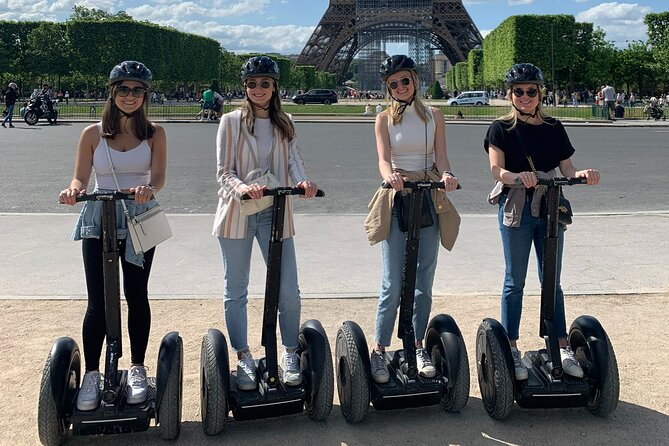
Segways make Paris feel quick. In about three hours, you roll through the city’s top highlights on a private ride with full instruction that works even if you’ve never balanced on one before.
I love the way this tour gets you comfortable fast, then turns a short outing into a real city overview.
I also love the fact that you cover major Paris sights without long walking loops. Just plan for short time at each landmark, so the Arc de Triomphe and Eiffel Tower stops can feel a bit tight if you want lots of lingering.
Key Things to Know Before You Go
- Beginner training is included, so you are not left figuring it out on your own
- Private group format with a local guide, plus helmet use for safety
- Icon-to-icon central route from Invalides and the Seine to the Louvre area, Orsay, Champs-Elysées, Arc de Triomphe, and Eiffel Tower
- Weather ready with raincoats and hats, plus warm clothes when it is cold
- Choose your pace with 45-minute, 90-minute, or 3-hour options
- Admission is not included at the stops, so you are mainly seeing sights from the outside
Why this 3-hour private Segway loop is a smart first look at Paris
If you only have one shot at Paris orientation, this kind of guided Segway loop is a practical way to get your bearings. You get a concentrated path across central Paris, so you can later decide what deserves your time and ticket money.
The biggest win is how quickly it turns into a “place, context, photo” rhythm. One minute you are learning why something matters, the next you are gliding into position for pictures.
You can also read our reviews of more guided tours in Paris



Segway training and safety gear for first timers
This tour is built for complete beginners, and you should feel that from the start. You get full instruction, and you also get a helmet, which makes the whole thing feel more serious and less “toy-like.”
I also like that raincoats and hats are included, because Paris weather can change fast. That means your day is less likely to stall because you are damp, cold, or distracted.
Meeting at 101 Av. de la Bourdonnais, and why location helps
The meeting point is 101 Av. de la Bourdonnais, 75007 Paris, and the tour ends back there. That area puts you close to the river and central sights, and it keeps your start from feeling like a long commute day.
You will likely find it convenient to reach via public transport, since it is described as near public transportation. If your schedule is tight, that matters more than people expect.
Invalides start: Napoleon’s world from street level
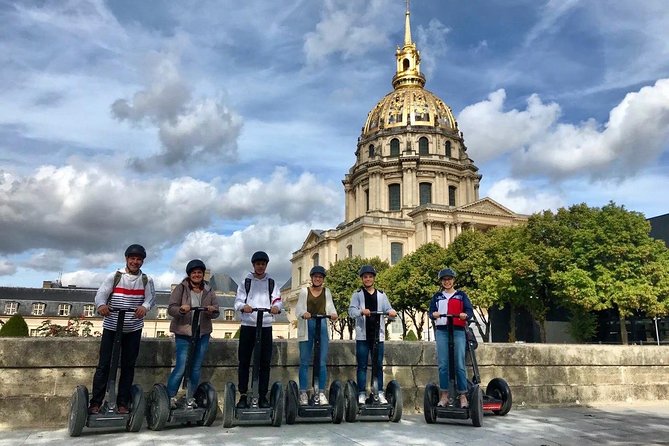
Your first stop is Musée de l’Armee des Invalides, also known for Les Invalides, the Military Museum, and Napoleon’s tomb. You get about 10 minutes here, mostly for pictures and a history primer.
What makes this a great opener is the contrast between grandeur and function. The Hôtel des Invalides was commissioned in 1670 by Louis XIV to house and care for wounded soldiers, so you get a sense of how Paris built institutions around real human needs, not just monuments.
Potential tradeoff: with only a short window, this is best for capturing context and photos. If you want to go inside and spend hours, you will need separate museum tickets.
Pont Alexandre III photo stop, and what to look for
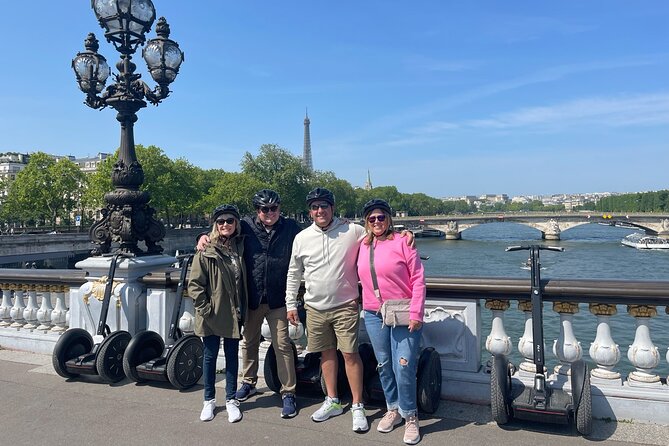
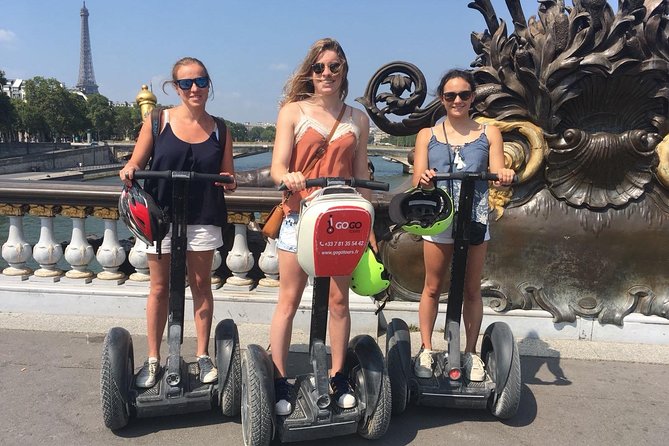
Next up, you glide to Pont Alexandre III for about 5 minutes. It is one of the Seine bridges, built for the World Fair in Paris, and it is widely considered one of the city’s most beautiful.
This stop works because it teaches you a key Paris skill: noticing how the city frames its views. From the bridge area, the river and architecture give you a mental map you will recognize later when you walk.
Quick practical note: five minutes is enough for photos, but not enough to “wander and still catch up.” Keep moving when your guide signals, and you will get the best shots without stress.
You can also read our reviews of more city tours in Paris






Grand Palais and Petit Palais: the 1900 exhibition duo
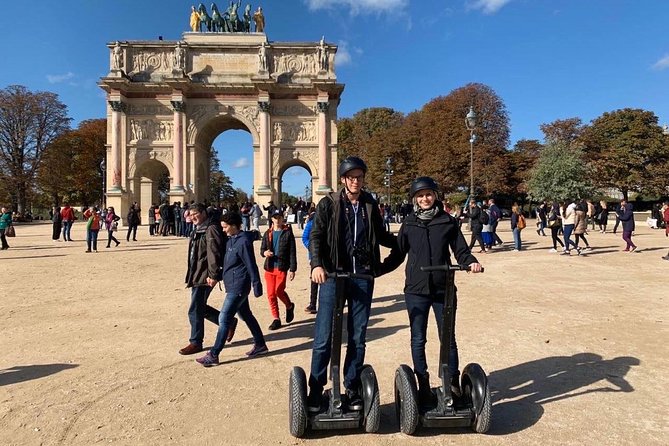
You then hit two neighbors with the same origin story. Grand Palais comes next (about 5 minutes), built for the Universal Exhibition in 1900 and dedicated to the glory of French art. After that, Petit Palais (another 5 minutes) continues the theme, also built for the 1900 exhibition and later becoming a museum in 1902.
Why I like this pair so much: it gives you a quick lesson in how Paris reuses major buildings. These sites were planned for a world event, and then they stayed relevant by becoming cultural spaces.
Tradeoff: since admission tickets are not included, you are mostly looking from the outside. Still, seeing the buildings up close is valuable, because the facades make more sense when you know what they were built to do.
Concorde to the Louvre area: a geography shortcut through Paris
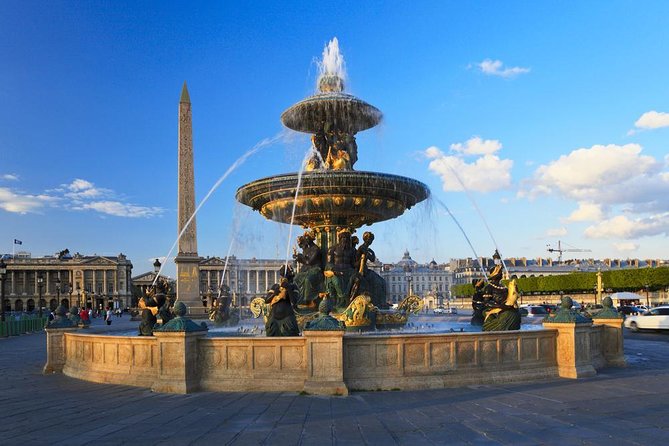
At Place de la Concorde, you get another 5-minute photo-and-facts stop. This square sits between the Champs-Élysées and the Tuileries Gardens, and it is described as one of Paris’ most evocative public spaces.
From a “first visit” perspective, Concorde is a crossroads. It anchors the feel of central Paris, so you can later connect the river, the grand avenues, and the museum district into one mental picture.
Then you roll past the Louvre area for about 5 minutes. The Louvre began as a fortress in 1190, then was reconstructed in the 16th century as a royal palace. That outside timeline makes the building feel less like a single object and more like layers of power and rebuilding.
If your dream is interior galleries, plan that as a separate day. This stop is about orientation and context, not admission.
Musée d’Orsay to Champs-Élysées: rail-station Paris and boulevard Paris
After the Louvre segment, you go to Musée d’Orsay for about 5 minutes. This museum began life as a train station for the 1900 World’s Fair, built with modern features by architect Victor Laloux.
This matters because it changes how you picture the building. It is not just “a museum that happens to be in an old structure.” It is a former transport hub, and that gives the place a particular atmosphere you might notice even from the outside.
Then you pass the Champs-Élysées for about 5 minutes. It was commissioned by Louis XIV, and Napoleon ordered construction of the avenue’s famous Arc de Triomphe after conquering Europe. In other words, this is not just a shopping street, it is a political project that grew into a boulevard.
Arc de Triomphe and Eiffel Tower in one smooth route
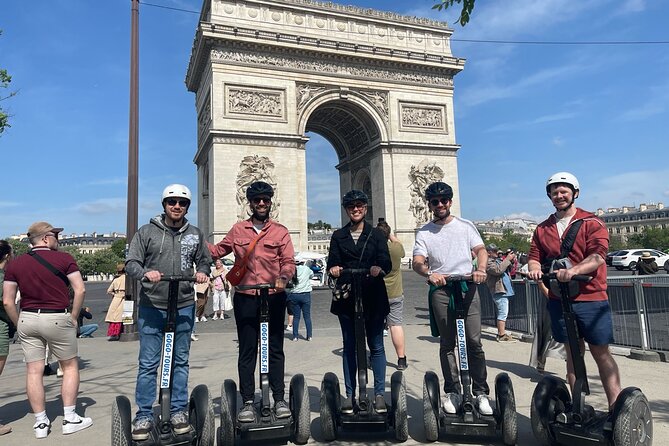
The next stop is Arc de Triomphe for about 5 minutes. The monument was meant to perpetuate the memory of French army victories, with the first stone laid on August 15, 1806, and the monument finished about 30 years later.
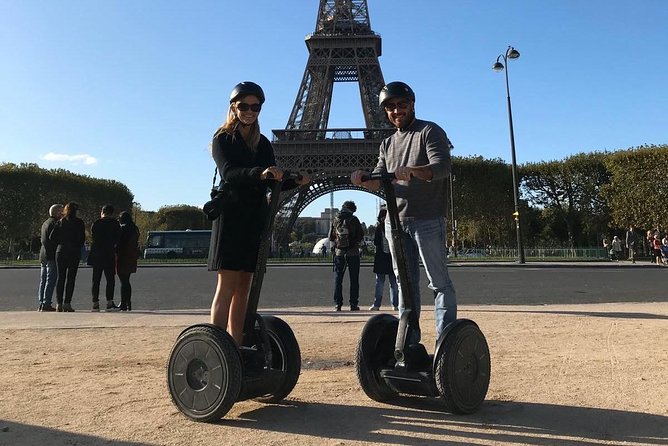
Finally, you reach the Eiffel Tower for about 5 minutes. You get a quick angle on its story, including that when Gustave Eiffel achieved its construction in 1889, it was meant to be temporary and was not an instant favorite among Parisians.
Here is the key practical takeaway: five minutes is enough for a classic viewpoint and photos, but not enough for the full “Eiffel Tower day” experience. If you want the tower climb, or you want long views from inside nearby buildings, you will need to treat this tour as your kickoff, then plan your separate add-ons.
How much time do you really get at each stop
The route is set up as short, guided segments, typically 5 minutes at most major stops, plus 10 minutes at Invalides. That structure is great for getting an overview without burning your day in transit.
It also explains the one thing to watch: if you care deeply about spending time at only one or two spots, you can end up feeling rushed at the end points. If Arc or Eiffel Tower are your top priority, tell your guide at the start what you want most, so they can manage your pacing within the allotted time.
One more practical safety tip: if you feel unsure on the Segway, your best move is to speak up early and go slower in training and practice. Confidence is great, but control comes first.
Price and value, at about $60 per person
At $60.49 per person for about three hours, the value comes from time and coverage. In a limited window, you see a string of major sights that would otherwise require lots of walking, extra planning, and multiple days of hopping between neighborhoods.
This price also buys you more than motion. You get a local guide, helmet use, and the training that lets beginners participate. For some people, that turns “I wish I could do that” into “I actually did it.”
That said, you are paying for a guided ride and outside viewpoints. Since museum admission tickets are not included, you should treat this as an orientation and photo tour, then budget for separate ticketed entries if you want them.
Who this Segway tour is best for
This fits especially well if you:
- want a first-day overview of central Paris
- prefer not to walk many kilometers in one go
- are traveling with teens or family members who can handle learning a new skill
- want someone to explain what you are seeing while you move between stops
It can also help if you want a low-stress “big sites” route with minimal effort.
Safety rules you should know before you book
Segway tours are fun, but the safety rules matter. The tour notes a rider weight limit: not less than 40 kg (88 pounds) and not more than 120 kg (260 pounds). Minimum age is 12, and minors must be accompanied by an adult.
Pregnant women are not allowed to participate for health risk reasons, and the tour requires appropriate conditions for riding. If you have any balance concerns, it is worth taking the initial practice seriously, because your guide will not benefit from you guessing.
Guides, style, and what makes the ride feel smooth
A big part of why this works well is the people running it. Names that show up in past outings include Fatwa, Kensa, Arthur, George, Eli, and Arturas, and the consistent theme is that guides make beginners comfortable and keep the route moving at a pace that feels manageable.
Many guides also help with photos and video, which is a small thing that makes a big difference. If you are visiting as a couple or family, that can save you from begging strangers to take one more picture.
If traffic or closures slow Paris down, the best version of this tour is the one where your guide stays flexible. There is at least one experience where the start was delayed due to road issues, yet the day was still handled without losing the booking. That is a good sign to look for in how you communicate during your time window.
Should you book this Segway tour?
Book it if you want an efficient, guided way to get your Paris bearings, especially if your time is short or your feet will complain after hours of walking. The beginner training, the private format, and the outside viewing of major icons make it a strong fit for first-time visits.
Skip or rethink it if your plan is mostly “I want long museum time and deep stops.” This is built for quick looks, photo stops, and context, not ticketed entry. Also, if you are very sensitive to rushing, manage expectations up front and prioritize your top one or two sights.
If you want Paris in one compact glide, this is a very reasonable way to start.
FAQ
How long is the Segway tour?
The tour runs for about 3 hours. It also offers shorter options of 45 minutes or 90 minutes.
Is the tour private?
Yes. It is private, meaning only your group participates.
Where does the tour meet?
You meet at 101 Av. de la Bourdonnais, 75007 Paris, France. The tour ends back at the same meeting point.
Is it offered in English?
Yes, the tour is offered in English.
What’s included with the tour?
Included items are a local guide (with driver/guide), helmet use, and raincoats and hats in bad weather.
Are admission tickets included for the attractions?
No. Admission tickets are not included at the stops listed, so you will mainly view sites from the outside during the short photo and history stops.
What age and weight limits apply?
Minimum age is 12, and minors must be accompanied by an adult. Riders must weigh at least 40 kg (88 pounds) and not more than 120 kg (260 pounds). Pregnant women are not allowed to participate.
What happens if it’s cold or rainy?
Warm clothes are used in all weather conditions, and raincoats and hats are provided.
What if I need to cancel?
Cancellation is free up to 24 hours in advance for a full refund. If you cancel less than 24 hours before the start time, the amount paid is not refunded.
More Guided Tours in Paris



More Tours in Paris




More Tour Reviews in Paris






Not for you? Here's more nearby things to do in Paris we have reviewed












Paris City Tours, side by side.
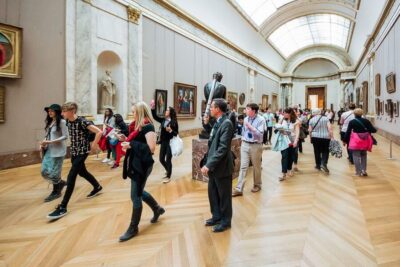 ★ 4.6Louvre Museum Timed-Entrance TicketTickets from $2671,977 guest reviews
 ★ 4.6Disneyland® Paris 1-Day TicketTickets from $6149,412 guest reviews
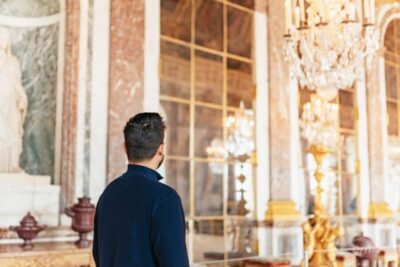 ★ 4.6Versailles Palace and Gardens Full Access TicketTickets from $1741,579 guest reviews
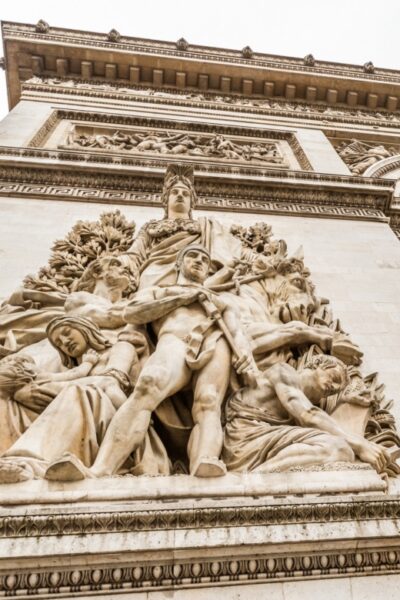 ★ 4.6Arc de Triomphe Rooftop TicketsTickets from $1834,264 guest reviews
 ★ 4.7Orsay Museum Entry TicketTickets from $1525,647 guest reviews
 ★ 4.4Evening River Cruise with MusicTickets from $2722,721 guest reviews
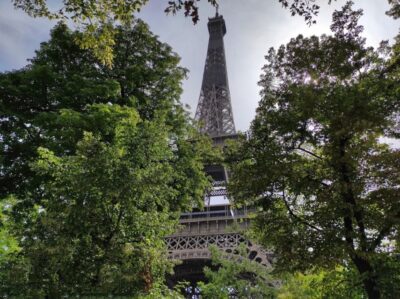 ★ 4.4Eiffel Tower Entry Ticket with Optional Summit AccessTickets from $2920,035 guest reviews
 ★ 4.3Eiffel Tower Summit or Second Floor AccessTickets from $5917,248 guest reviews
This tour also belongs to