
Review · PARIS CITY TOURS
Napoleon III’s Paris city tour
Haussmann’s makeover explains modern Paris in real street form. You get the storyline behind the Haussmann reconstruction, from medieval streets to a new industrial, consumer-focused capital. I especially like how the tour pairs major landmarks with the big idea of urban planning, and how you slow down long enough to notice the design choices that still shape your walk today.
One thing to consider: it is packed into about 2 hours, so if you want long photo stops or museum-style time, you might feel a bit rushed at a few locations. Still, it’s an efficient way to understand what you are actually looking at when you wander Paris on your own.
Key Highlights You Should Know Before You Go
- A private, professional art historian guide: tailored pacing and time for questions, not a crowded group blur.
- No entry required at the stops: viewpoints and exteriors focus most of the time.
- Opéra Garnier is outside only: you learn the symbolism without booking a separate visit.
- The money-and-shopping Paris angle: bank, grand department stores, and “wealth architecture.”
- Industry shows up in the streets and the buildings: including a steel-era church ending the walk.
- Small-group value: up to 6 people per group for a set price, not per person.
Haussmann’s Paris in Two Hours, What You Actually See
This tour is built around one of the most intense city transformations in European history: Napoleon III and George Haussmann reshaped Paris in roughly 17 years. The headline is dramatic, even if you already know the name. The overhaul destroyed more than 70% of the old city fabric, replacing a medieval town with a modern, industrialized layout.
What makes this format work is that you see the “why” in the streets. You will walk past squares, grand facades, and wide boulevards that were designed for movement, visibility, and prestige. This is not just architecture spotting. It’s the birth of modern life in compact form, including consumer culture, modern politics, and urban living.
The tour runs about 2 hours and uses a mobile ticket. Food and drinks are not included, so I’d plan to grab a pastry or sit-down meal either before or after, depending on your energy level.
You can also read our reviews of more city tours in Paris



Place Vendôme, the Royal Square Template for a New Paris
Your walk starts at Place Vendôme, one of the five royal squares of Paris. Even if you are not a design nerd, you can feel why this kind of space matters. Squares like this helped set an aesthetic and architectural model for later reconstruction.
What I like here is the anchor effect. It gives you a baseline for what Paris looked like before the big Haussmann-era street logic took over. You can also take a breather for about 10 minutes, which is a smart start before the route pushes into heavier landmark territory.
The practical angle: because this is a “marvel to behold” kind of stop, you can do a quick orientation shot for your day. Then you move on with a clearer sense of how later buildings will borrow and remix classical ideas.
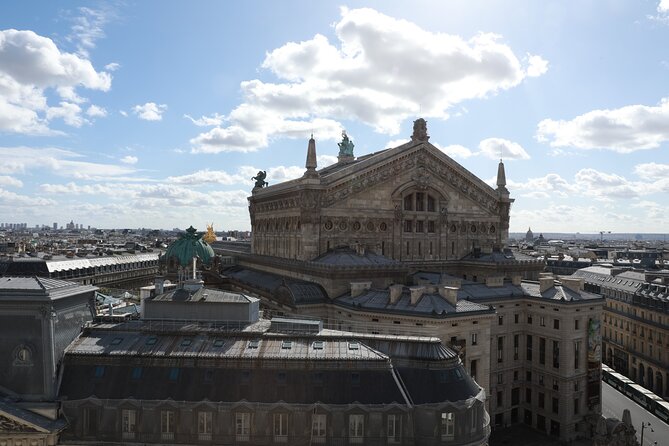
Palais Garnier Outside, When the Opera Became City Messaging
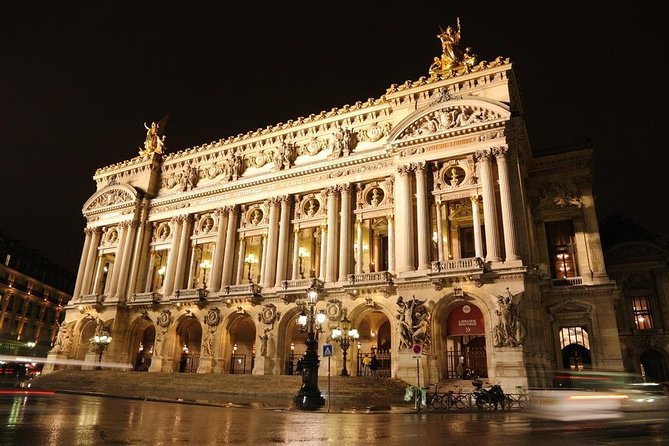
Next up is Palais Garnier, the famous Opéra Garnier. This tour uses it as a public statement in stone and style. The focus is on how the Opera was meant to substitute for the older symbolic center in the city, rather than simply being an entertainment venue.
You do not enter the opera house. You view it from outside, with about 20 minutes allocated. That sounds limiting on paper, but it actually fits the tour’s goal. You are learning the “urban power” function of landmarks, not trying to compress an entire cultural institution visit into a walking tour.
Look closely at how the building sits in the larger picture. Haussmann-era Paris often read like a stage set. The point was to make the city legible, impressive, and unmistakably modern. Palais Garnier is one of the clearest examples you’ll see on this route.
Société Générale, the Cathedral of Wealth Idea in Plain Sight
Then you shift from grand culture to grand finance with Société Générale. The description here is a bit tongue-in-cheek, but it is also dead serious: the bank is presented as a cathedral of wealth.
This stop is about transformation, turning an everyday errand into a spiritual experience. That’s exactly the kind of cultural shift Haussmann-era Paris helped enable. As the city modernized, institutions that managed money, commerce, and power became part of the visual world, not hidden behind older street patterns.
You get about 20 minutes. Since the admission is free for this stop, you can focus on facade details and the overall presence rather than queueing or buying tickets. It’s a good mid-tour change of pace because it makes you think about how “progress” can look like luxury and spectacle.
Galeries Lafayette and Printemps, Department Stores as Modern Power
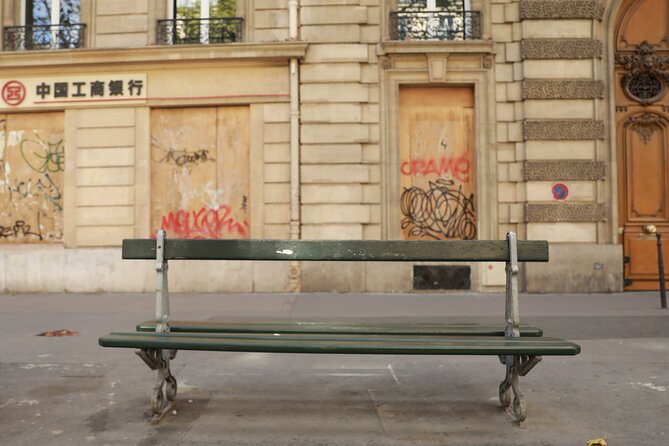
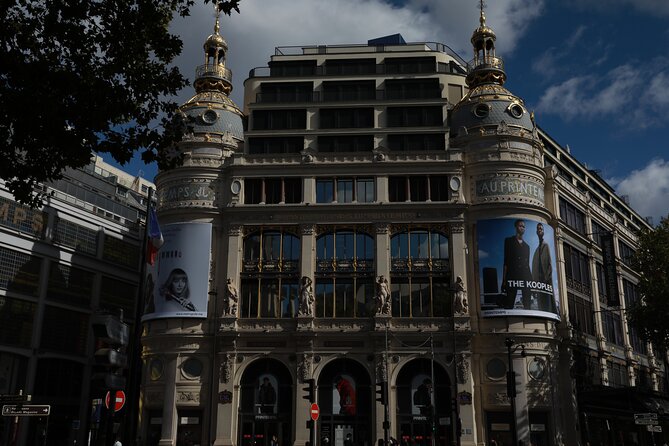
After the bank, the route jumps into consumer culture with two giants: Galeries Lafayette Paris Haussmann and Printemps. The theme is the same as with the bank, just with different choreography. Shopping becomes almost ritualistic.
You’ll spend about 20 minutes at Galeries Lafayette and about 10 minutes at Printemps. The comparison matters because these stores were designed as landmarks. Their scale and styling are meant to impress, not just sell. If you have ever wondered why Paris department stores feel like attractions, this is your answer.
A practical note: these stops can be tempting because you’ll likely want photos and maybe a browse. Keep an eye on time. The tour stays focused on the architecture and the meaning, so don’t let shopping instincts steal the show completely unless your group is good with it.


Havre-Caumartin and the Boulevard Haussmann Lesson
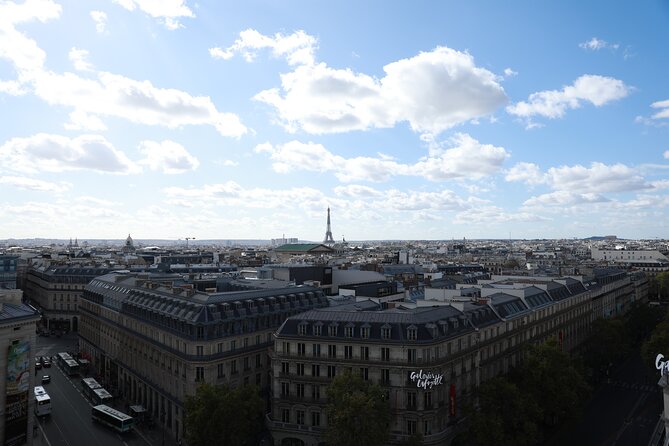
At Havre-Caumartin, you get the boulevard Haussmann explanation. This is where the “new Paris” becomes easy to understand in walking form. A boulevard is not just a road. It is a backbone for movement, visibility, and middle-class confidence in an industrial city.
You get about 15 minutes here, and the value is in how the route helps you read the street. The boulevards were central to Haussmann’s vision of a modern bourgeois Paris, and this area shows it in a very direct way.
If you only do one thing at this stop, do this: stand and look down the street line. Then imagine the contrast with a medieval maze. That mental comparison is what makes the Haussmann story click. You go from a general concept to an actual feeling for why city design influences daily life.
Chapelle Expiatoire, Politics Still Written into the City
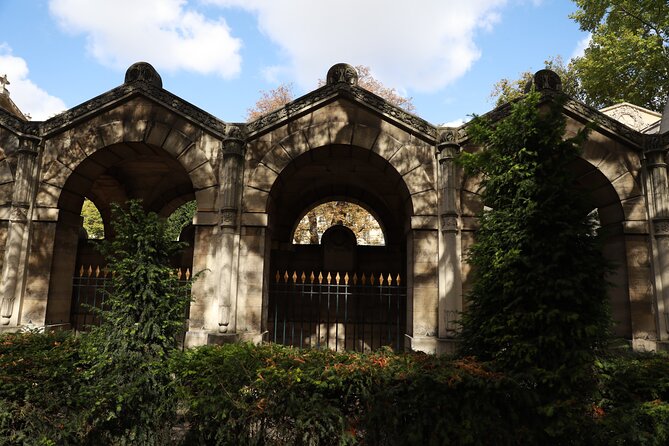
Then comes a more emotional stop: Chapelle Expiatoire. Here the tour shifts from physical reconstruction to political division and reconciliation efforts in the second half of the 19th century. It’s not a “random beautiful building” moment. It’s a chance to see how architecture can be used to respond to national conflict.
You spend about 10 minutes. The timing is short because this is a viewpoint and interpretive stop. The aim is to tie the street rebuild to the broader social struggle between monarchic aristocrats and republican bourgeois.
This is also a good moment to let the tour reset your mental model. So much of the Haussmann story gets reduced to width and aesthetics. Chapelle Expiatoire reminds you that these public works were tied to identity, power, and healing attempts after political trauma.
Saint-Augustin Church, Where Industry and Faith Meet
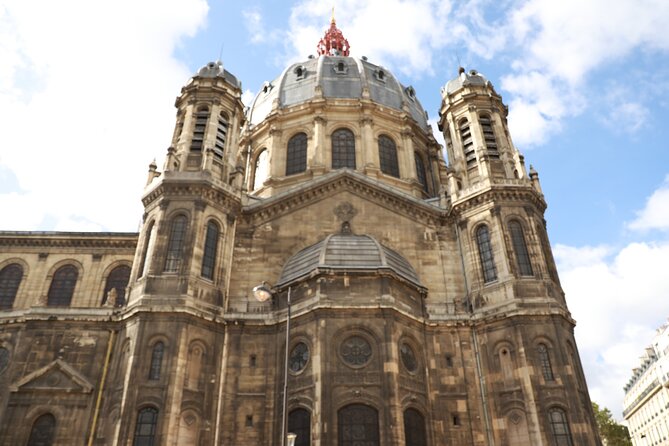
The final stop is Saint-Augustin Church. This is the tour’s concluding idea in building form: an understanding of the church and industrial forces forging a pact. The tour highlights that it is the first church in Paris to be made with extensive use of steel.
You’ll have about 10 minutes here. The ending matters because it connects the two big strands you’ve been given: modern urban planning and modern industrial materials. In other words, Haussmann-era Paris was not just new streets and new facades. It was also about how technology changed what buildings could be.
Where the tour ends is important for planning your next move. It finishes at the junction of boulevard Malesherbes and boulevard Haussmann, near Saint-Augustin. That makes it easy to continue on your own toward nearby neighborhoods without backtracking.
Price and Value for a Private, Up-Close Historic Walk
The price is $347.28 per group, up to 6 people. For a private tour with a professional art historian guide, that pricing can be very fair if you split it within a small group of friends or family. If you are traveling solo, it is more of a splurge.
The biggest value is the format. You are not just sightseeing. You are getting the story behind why Paris looks the way it does now, and you get to ask questions in real time. That part is often the difference between a generic “pretty buildings” walk and a truly useful education.
Also, the stops are admission ticket free, and the route leans on outside views. That means you can spend more of your time listening and observing instead of budgeting for entry fees or ticket lines.
If you want an efficient, high-impact orientation to 19th-century Paris, this is a solid candidate, especially because it focuses on the birth of modern life through architecture, finance, politics, and consumer culture.
How Far Ahead to Book and What to Expect Day-Of
On average, this tour gets booked about 72 days in advance. That suggests you should not wait until the last week if Haussmann-focused tours are your priority.
Duration is about 2 hours, and it is a walking tour, so wear comfortable shoes. The pace feels intentional rather than rushed, but it is still a compact itinerary. You are moving between major districts and landmarks, so keep your phone charged and your energy steady.
The tour uses a mobile ticket. So, you can keep everything in your phone without printing.
Who This Tour Fits Best
This is a great match if you like:
- Architecture that has a story behind it, not just a photo angle
- Big city design and how it affects daily life
- 19th-century Paris beyond famous museums and monuments
- Small-group learning with a guide who can answer questions
If you are traveling with a friend who loves history, or you want a smarter way to understand the Paris you see from your hotel window, this tour can make your self-guided exploring afterward feel more intentional.
If you hate walking, need lots of seated time, or want museum interiors, you might prefer a different style of tour. The route is concentrated on exterior sights and guided interpretation.
Should You Book Napoleon III and Haussmann Paris?
I’d book this if you want a quick, structured way to understand why Paris looks modern, wide, and polished in the places you most recognize. The combination of Napoleon III-era change and the focus on finance, department stores, and politics makes it more interesting than a basic architecture tour.
Skip it if you only care about entering iconic venues. The Opéra Garnier is outside only, and food is not included, so you will need to plan separately if you want a full day built around eating as well as sightseeing.
FAQ
How long is Napoleon III’s Paris city tour?
The tour runs for about 2 hours.
What does it cost, and how many people is it for?
It costs $347.28 per group for up to 6 people.
Is this tour private?
Yes. It is a private tour/activity, and only your group participates.
Where does the tour start and end?
It starts at 2013 Pl. Vendôme, 75001 Paris, France. It ends at the junction of boulevard Malesherbes and boulevard Haussmann, near Saint-Augustin.
Do you enter the Opéra Garnier during the tour?
No. The tour addresses Palais Garnier from the outside only, with no opera house entrance included.
Are there admission tickets needed for the stops?
The stops listed on the route are marked as admission ticket free.
What ticket format do I get?
You receive a mobile ticket.
Is there free cancellation?
Yes. You can cancel for a full refund up to 24 hours in advance of the experience start time.
More City Tours in Paris



More Tours in Paris


More Tour Reviews in Paris


Not for you? Here's more nearby things to do in Paris we have reviewed








Paris City Tours, side by side.
 ★ 4.6Louvre Museum Timed-Entrance TicketTickets from $2671,977 guest reviews
 ★ 4.6Disneyland® Paris 1-Day TicketTickets from $6149,412 guest reviews
 ★ 4.6Versailles Palace and Gardens Full Access TicketTickets from $1741,579 guest reviews
 ★ 4.6Arc de Triomphe Rooftop TicketsTickets from $1834,264 guest reviews
 ★ 4.7Orsay Museum Entry TicketTickets from $1525,647 guest reviews
 ★ 4.4Evening River Cruise with MusicTickets from $2722,721 guest reviews
 ★ 4.4Eiffel Tower Entry Ticket with Optional Summit AccessTickets from $2920,035 guest reviews
 ★ 4.3Eiffel Tower Summit or Second Floor AccessTickets from $5917,248 guest reviews
This tour also belongs to