
Review · LE MARAIS TOURS
Le Marais Guided Tour and Discover Paris’s Trendiest Areas
Two hours, five iconic stops. This Le Marais walk strings together Hôtel de Ville, Rue François Miron, Saint-Paul-Saint-Louis, and the Jewish Quarter, then finishes at Centre Pompidou. I like that you get an expert live guide in a small group, and I like that the sights are mostly quick, view-based stops that keep the energy moving for the price. The main catch is you’ll be walking, so bring comfortable shoes and expect a steady pace.
If you want Paris that feels both old and current, this route is a smart choice. You start in the city center’s official heart, slide into medieval street details, then jump to a Baroque church, Jewish-quarter food culture, and modern architecture all in one afternoon. The mobile ticket also makes it easier to focus on the streets instead of phone chaos.
This tour also ends in a practical spot for food and drinks near Pompidou, which helps if you do not want to schedule a meal too early. Group size is capped at 15, so you are less likely to feel lost in a big pack, and the guide can usually keep the story clear and on track.
Key things to know before you go
- Small group, big coverage: max 15 people for a 2-hour walking plan
- Most stops are view-focused: tickets are listed as free for each stop area
- One specific food moment: a Seine-side stop that points you toward a local restaurant
- Rue des Rosiers included: the Jewish Quarter street culture and classic bites
- Centre Pompidou is exterior-only: you finish with architecture photos, not entry
- Guide names matter: Mahi is specifically praised for thoughtful, detailed explanations
Le Marais in two hours: why this route works
Le Marais can feel like a beautiful maze. This tour helps you pin it down with a route that mixes landmark scale and street-level texture, so you get both the wow moments and the day-to-day Paris vibe.
I like that the tour builds in momentum. You start with Hôtel de Ville’s grand façade, then you move into narrow medieval streets, then you shift into church architecture, then you land in Rue des Rosiers for street energy and food culture, and finally you close with Pompidou’s industrial modern look. It is a clean path for anyone who wants variety without burning a whole day.
The best part for value is that you are not paying for a long museum day. For $17 and about two hours, you get a guided narrative that connects what you are seeing, and that is what makes the walk feel more than just sightseeing.
You can also read our reviews of more guided tours in Paris



Meeting at Bd de Sébastopol and what the 2-hour pacing feels like
The tour starts at 25 Bd de Sébastopol, 75001 Paris, and it ends at Place Georges-Pompidou, 75004 Paris. That start-to-finish difference matters. You are walking a loop through central Paris neighborhoods, so think of this as a planned route, not a round-trip.
Because the time is short, the tour leans into quick stops. You spend around 10 minutes at Hôtel de Ville and the Seine-side Quai stop, longer stretches for Rue François Miron and Rue des Rosiers, and then a final photo stop at Pompidou. The route is designed so you do not get stuck waiting for one big entry ticket.
A practical note: one review specifically calls out that the guide will make sure you get your steps in, so this is not a sit-and-stretch kind of walk. Wear shoes you trust. If you plan to do dinner right after, you will be glad you did.
Stop 1: Hôtel de Ville, City Hall that survived fire and revolution
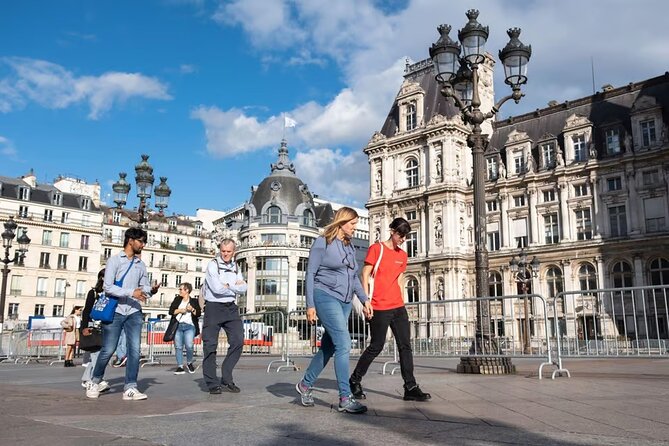
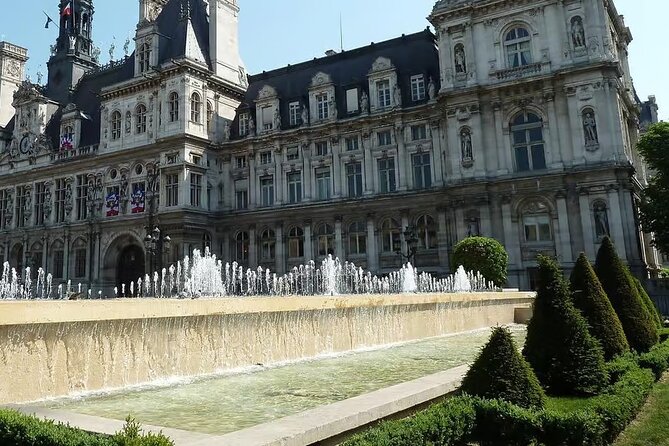
Your first anchor is Hôtel de Ville, Paris’s City Hall. It is not just an office building, it is a statement. You get a neo-Renaissance façade and a story that reaches back to the 14th century, then continues through the rebuilding after the devastating fire in 1871.
This matters because it sets the tone for the whole tour. Le Marais is often photographed for its streets, but Paris is also about institutions and identity. Hôtel de Ville is where civic history becomes visible in architecture, and you get the context for why this area matters beyond postcards.
You also learn how the building ties into key French history moments, including the French Revolution. Today, it is still active with cultural events and exhibitions, so you are not just looking at a relic. You get a sense of a neighborhood that still has jobs to do.
Stop 2: 66 Quai de l’Hôtel de Ville and the Seine-side local food clue
Next comes 66 Quai de l’Hôtel de Ville, a spot along the Seine where the scenery and the daily Paris rhythm mix. This is one of those stops that feels small on paper but useful in real life, because the guide introduces you to a well-regarded local restaurant nearby.
This is a smart way to handle food on a tight schedule. You are not stuck guessing where to eat after a walk. Instead, you get a direction toward French cuisine in Le Marais, plus a little “surprise” factor built into the stop.
One consideration: this is not a meal included stop. You are getting a pointer and context, then you continue. So if food is your priority, plan to treat this as your first lead, not the main course.
Stop 3: Rue François Miron, cobblestones and half-timbered 16th-century details
If Hôtel de Ville gives you the big picture, Rue François Miron gives you the tight texture. This is one of Paris’s oldest streets, and the vibe shifts quickly: narrow cobblestones, carefully preserved half-timbered houses, and the kind of street geometry that makes you slow down.
The focus here is on the medieval and early modern architecture. You get a sense of what these buildings were like when they were homes for merchants, and why the wooden façades and old-street layout still feel distinctly historic.
Why I think this stop is valuable: it teaches you how to look. A lot of visitors take a photo and move on. With a guide, you start noticing small features, like the rhythm of the timberwork and how the street narrows and channels the eye. That makes Le Marais feel more readable as you move to the next area.
The tradeoff is simple. It is a walk, so do not expect a slow museum-style pace. This is about outdoor viewing and short explanations, which is exactly why the whole tour stays about two hours.





Stop 4: Église Saint-Paul-Saint-Louis, Baroque drama in Le Marais
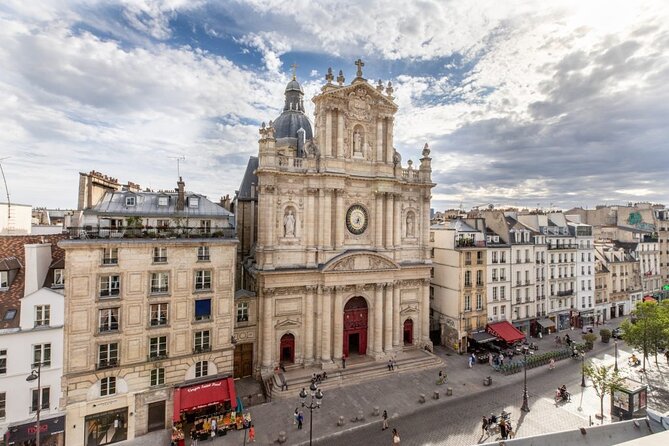
The tour’s church stop is Église Saint-Paul-Saint-Louis, a Baroque masterpiece in the heart of Le Marais. Construction dates given are 1627 to 1641, and you learn it was built at the request of Louis XIII. That royal connection helps, because Baroque church art often feels like it has a political message as much as a religious one.
From outside, the façade is detailed, and the dome is an obvious focal point. Inside, the atmosphere is calmer than the street, and the guide points you toward notable artwork and the high altar. You also hear that the church has witnessed royal ceremonies and important moments connected to Paris’s spiritual life.
This stop gives you a change of rhythm. After street culture and shop windows, the church asks you to look up, then slow down for a minute. It is a strong contrast that keeps the tour from feeling like one long “look at buildings” string.
Stop 5: Rue des Rosiers, Jewish Quarter street culture and classic bites
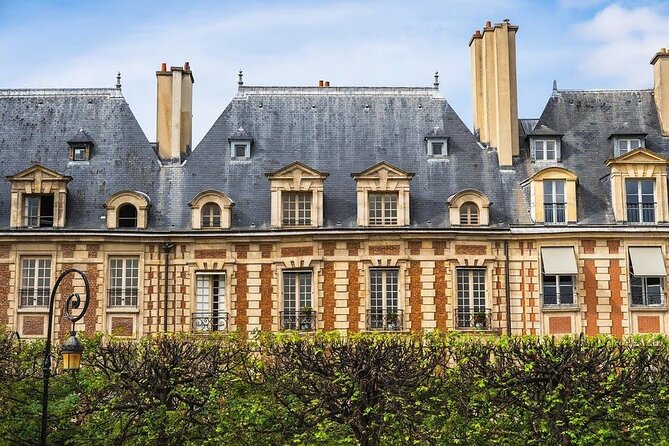
Then comes the tour’s most food-forward street: Rue des Rosiers, in the heart of Paris’s Jewish Quarter. This is where Le Marais becomes more than architecture. You get the story of a community with deep roots and real resilience, shaped by tradition and renewal over time.
The guide frames it as a mix of old and new. You walk past traditional Jewish bakeries and kosher delis, and you also see trendy boutiques and modern eateries. The street makes that blend visible with every storefront and smell in the air.
If you like food references, this stop is useful because you get classic names in context. Falafel and challah bread are specifically highlighted, and that gives you a quick way to connect what you see with what to try nearby after the tour.
One practical point: this part of Paris can feel busy, so keep your attention on where you are walking and do not get distracted by every menu board at once. If you want to eat right after, use the tour stop as a tasting menu shortlist for later, not as the time to figure everything out.
Final stop: Centre Pompidou exterior by Renzo Piano and Richard Rogers
Your tour finishes at Centre Pompidou at Place Georges-Pompidou. Here the emphasis is exterior architecture. The tour notes that entry is not part of the experience, which is good to know ahead of time.
Even without going inside, the exterior does a lot of storytelling. You see the bold, industrial design, with exposed pipes and colorful escalators, and you get the basic design credit: Renzo Piano and Richard Rogers. The building was completed in 1977, and it helped change how people talk about modern architecture in Paris.
This is a fun finish because it contrasts with the medieval and Baroque stops. It is also a good way to end a short tour. You get photos, you get a sense of scale, and you are positioned right where you can keep going with food and drinks.
Price and value: what $17 really buys on this walk
At $17 for about 2 hours, this is one of the more cost-effective ways to get guided interpretation in central Paris. You are paying for an expert live tour guide and a structured route with specific stops.
A big value factor is that many stops are listed with admission ticket as free for the stop areas, like Hôtel de Ville, Rue François Miron, and the church area. That means you are not stuck on timed tickets or expensive entry fees within the two-hour window. The tour is priced like a walking guide experience, not a museum package.
The small group cap of 15 travelers is also part of the value story. It is easier to hear explanations, and the guide can keep the group together on narrower streets like Rue François Miron.
If you are budget-minded, this tour fits well because you are not paying for meals. Meals are not included, so the $17 goes toward guidance and route efficiency. In practice, that means you get the “who-what-why am I seeing this” part, then you handle dinner on your terms.
Who this tour suits best, and who should consider alternatives
This tour is ideal for people who want a focused Le Marais intro without committing to a full day. If you like architecture but also care about neighborhood character, you will appreciate how the stops move between styles and street cultures.
It also suits solo travelers and couples, since the group is small and the route is straightforward. If your travel style is walk, look, learn, then eat nearby, this ends in a very practical zone.
If you hate walking or need very slow pacing, you might feel stressed. The tour is about covering multiple streets in limited time, and one review specifically notes a guide who keeps the pace and makes sure you get your steps in. In that case, you may prefer a slower neighborhood food tour or a private version where you can set the pace.
Tips to make the most of your Le Marais day
A walking tour is only as good as your preparation. Here’s what helps you get the most from these stops.
- Wear grippy shoes for cobblestones on Rue François Miron. Your feet will thank you later.
- Bring a snack mindset, even though meals are not included. Use the Seine-side restaurant lead and the Rue des Rosiers food cues to decide what you want after.
- Use the Pompidou finish well. Since the tour ends at Place Georges-Pompidou with options nearby, you can plan dinner without backtracking.
- Keep your phone ready, but not in control. The tour uses a mobile ticket, so you should have it handy, but do not spend the whole tour staring at screens.
One more practical detail: the tour is run by Visit in Pakistan Treks, Tours and Expeditions. That matters mostly for support context, but it also fits the way many guided walking tours operate in Paris, with local expertise delivered through the guide.
Should you book this Le Marais Guided Tour?
I would book it if your goal is Le Marais orientation in a short, structured walk. You get a sequence that makes sense, from Hôtel de Ville to medieval street textures, to a Baroque church, to Rue des Rosiers street culture, and finally to Pompidou’s modern architectural signature.
I would think twice if you want a long sit-down museum experience or you want to spend your time inside big ticket attractions. The Centre Pompidou stop is exterior-only, and meals are not included, so you will need to plan your own next step after the tour.
If you want a small-group guide who can explain what you are looking at, and you like the idea of ending in an easy food and drink area, this is a strong value pick at $17 for two hours.
FAQ
How long is the Le Marais Guided Tour?
The tour is approximately 2 hours.
How much does it cost?
The price is $17.
Do I need to buy tickets at each stop?
Admission ticket is listed as free for the stops included in the itinerary. The tour does not indicate paid admission as part of the experience.
Will we enter the Centre Pompidou?
No. The tour ends at Centre Pompidou for the exterior and photos, not entry.
Where does the tour start and end?
It starts at 25 Bd de Sébastopol, 75001 Paris, France and ends at Place Georges-Pompidou, 75004 Paris, at The Centre Pompidou.
Can I get a refund if my plans change?
Yes, free cancellation is available up to 24 hours in advance for a full refund.
More Guided Tours in Paris



More Tours in Paris




More Tour Reviews in Paris



Not for you? Here's more nearby things to do in Paris we have reviewed












Le Marais Tours, side by side.
 ★ 4.5Award-Winning Paris French Bakery Experience — Le Marais, 4th ArrTickets from $1141,186 guest reviews
 ★ 5.0Paris Le Marais Food Tour With 10+ Tastings, Cheese, Wine & MoreTickets from $102985 guest reviews
 ★ 4.5Paris Le Marais District Original Food and Wine Tasting TourTickets from $157880 guest reviews
 ★ 5.0Paris Bike Tour Hidden Secrets in the Latin Quarter & Le Marais neighborhoodsTickets from $54766 guest reviews
 ★ 4.9Food and Wine Tasting Walking Tour in Le MaraisTickets from $113446 guest reviews
 ★ 5.0Le Marais District & Jewish Quarter Guided Walking Tour 12ppl MaxTickets from $59361 guest reviews
 ★ 5.0Le Marais/Paris – The Historic, Trendy, Jewish, LGBT districtTickets from $48341 guest reviews
 ★ 5.0Paris Le Marais Food & Wine Tour with Eating EuropeTickets from $163297 guest reviews
This tour also belongs to