
Review · LE MARAIS TOURS
Hidden Paris: Explore Medieval Marais on a Walking Tour
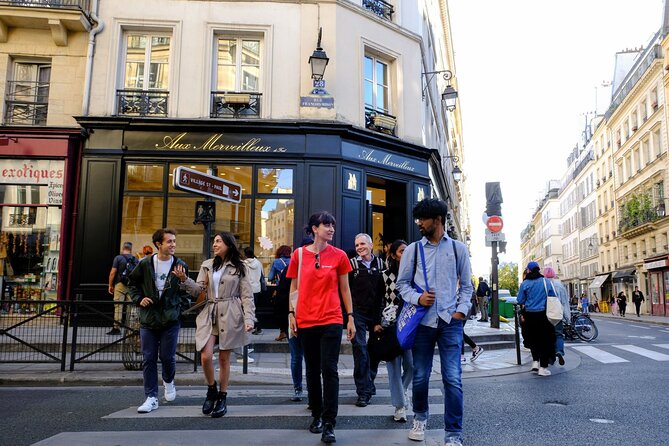
Three hours in the Marais, minus the crowds. This afternoon walk is my favorite kind of Paris outing because you get Medieval Marais streets without the usual tourist crush, plus a real gouter sweet treat at the right moment in the day. I also like how the guide threads daily life, art, and politics into simple, easy stories. The main drawback to keep in mind is pacing, you hit many stops in about two hours, so if you want to linger, you may feel a bit rushed.
What makes it work is the timing and the small group. You start at 3:00 pm, walk about 2 km, and move through corners of Le Marais that you can miss on your own. Several guides, including Celine, Benoit, Paloma, and Linda, are praised for balancing history with practical local recommendations, so you leave with a clearer idea of where to eat and what to see next.
Key highlights worth your attention
- A true afternoon gouter with a French sweet treat, including the famous merveilleux
- Small group size (max 12), which helps you ask questions and not just shuffle along
- Medieval Paris in Le Marais, plus photo stops like the Stravinsky Fountain
- Rue des Rosiers and the Jewish Quarter energy, with classic food streets nearby
- Place des Vosges and Victor Hugo, one of Paris’s oldest and most beautiful squares
- Revolution history near Place de la Bastille, with a built-in evening hangout zone
3:00 pm in the Marais is when the neighborhood feels like a neighborhood
Timing is the secret sauce here. A late-afternoon start means you are walking as shop fronts open up, streets loosen their grip, and the Marais feels lived in rather than staged. It also sets you up for the finish at Place de la Bastille, where the evening food and bar options are close, not a long walk away.
This tour leans into that afternoon rhythm. You see major landmarks, but you also spend time on the quieter connective streets that make Le Marais feel like its own world. And with the group capped at 12, you are not constantly playing leapfrog with strangers.
You can also read our reviews of more walking tours in Paris



How the tour route builds from modern Paris to medieval lanes
The stroll is designed like a story with chapters. You begin at the Centre Pompidou area, then transition into Le Marais and keep walking deeper into older Paris. That flow matters because it prevents the usual problem of “I saw cool things, but I do not know how they connect.”
If you start your trip in Paris by reading street signs and museum plaques, this kind of route helps you build context fast. It is also a practical way to learn the neighborhood layout so your next walk feels easier. You end at Place de la Bastille, so you also get a natural bridge to dinner plans.
Centre Pompidou start: a useful jump-off point, even if you do not go inside
You meet at 123 Rue Saint-Martin, then the tour begins near Centre Pompidou. The big modern art museum is a memorable first marker, and it works as a mental reset. You see a bold side of Paris first, then trade it for stone lanes and older squares.
The stop is short, and that is a good thing. You are not being dragged through a museum. Instead, you get orientation and a bit of framing before you head toward the medieval heart of Le Marais.
Practical tip: if you are coming straight from another neighborhood, use the start point as your cue to grab water and quick snacks. You will have a sweet treat later, but you may not want to do the whole afternoon on an empty stomach.
Le Marais: the best-preserved medieval part of Paris, without the museum crowds
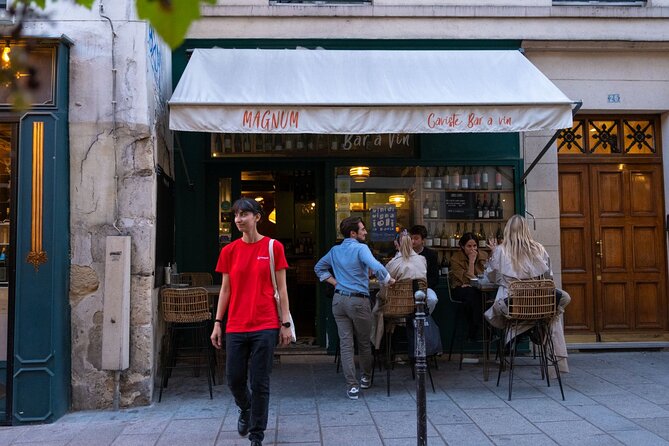
Once you move into Le Marais, the atmosphere changes. This is widely known as one of the best-preserved medieval areas in Paris, and the tour spends real time here rather than treating it like a photo backdrop.
What I like about this approach is that the guide is not just reciting dates. You learn how the neighborhood evolved and how today’s streets reflect that past. That turns the “pretty buildings” into something you can actually read with your eyes.
You also get a chance to notice the small details most people miss while walking fast. Think hidden squares, church facades, and the way the street plan funnels you through micro-neighborhoods.
Stravinsky Fountain: the photo stop that also helps you spot street art and design
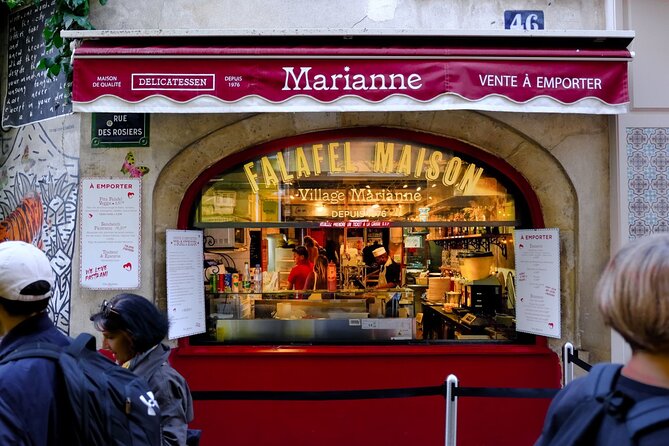
The Stravinsky Fountain is quick but fun. It is famous for a reason, and the tour makes space for photos, plus a short explanation of what you are looking at.
This is one of those stops that works even if you are not a design nerd. You will leave with a clearer eye for how Paris mixes playful modern art into everyday pedestrian spaces. And it is a good break after the longer stretches through older streets.
If you are photographing, do it in a small burst. The fountain itself draws attention, but you will want your camera free for the stonework and doorways around Le Marais too.





Hôtel de Ville and the dark edges of Paris justice
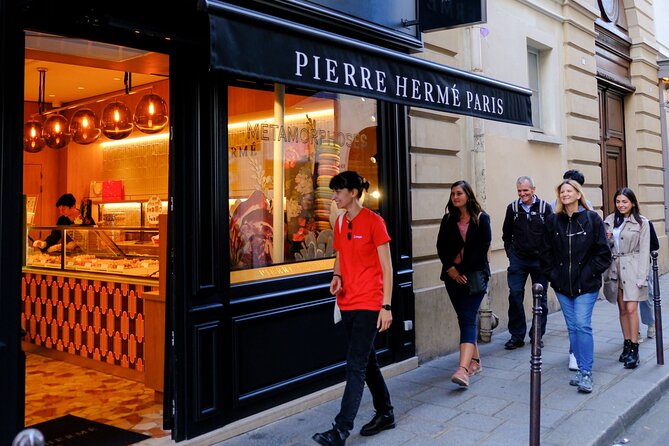
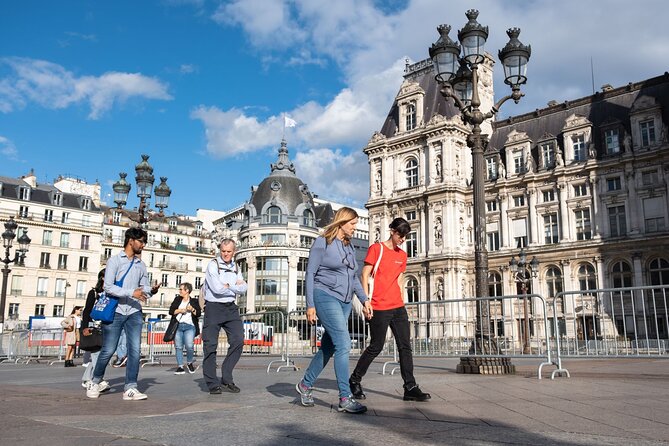
At Hôtel de Ville, you learn that the street outside a landmark can carry heavy stories. The tour highlights the esplanade in front of the town hall and connects it to medieval executions, including the first beheading with the guillotine.
This is not the kind of “edgy trivia” that feels random. It gives you historical weight for why the city’s power centers matter. Paris is not only romance and architecture. It also has sharp corners, and this stop helps you understand that part of the city.
One consideration: if you are traveling with kids, this is typically still manageable because it is spoken as part of a broader history tour. Still, if your family is sensitive to grim topics, you might want to prepare them that today’s stories include justice and punishment.
Saint-Gervais: church interiors, then the sweet hit of gouter time
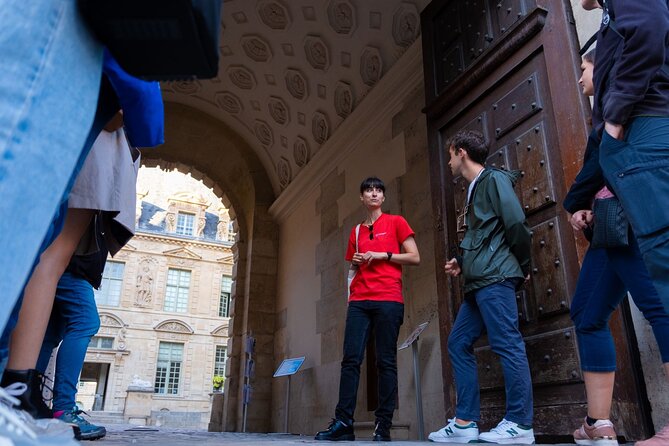
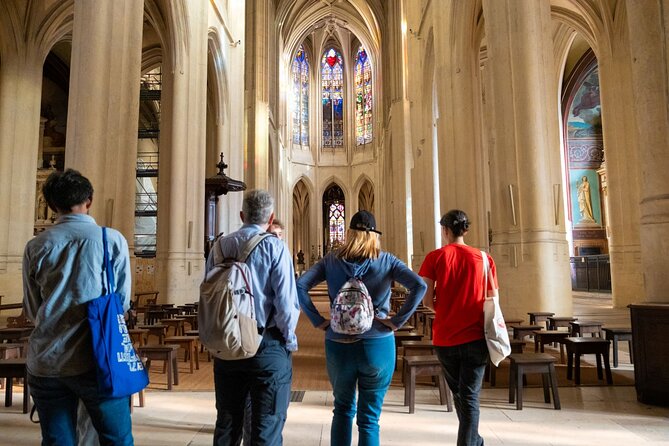
The Church of Saint-Gervais stop is meaningful for two reasons: you get a look inside, and the tour then turns the mood toward food. The inside visit is a highlight because churches in Paris are where craftsmanship becomes obvious fast.
Then it is time for the gouter, the late-afternoon sweet treat. You are treated to a French meringue known as a merveilleux. That is the kind of detail you would likely miss if you were only booking a generic walking tour.
I like that the tour places food right after a major cultural stop. It keeps the pacing comfortable. You are not eating too early in the day, and you are not eating only after you are exhausted.
Vegetarian note: vegetarian dietary requirements can be catered for on this experience, which is helpful if you avoid meat but still want to try the local sweets.
Rue des Rosiers: where Jewish life shapes the street-level food culture
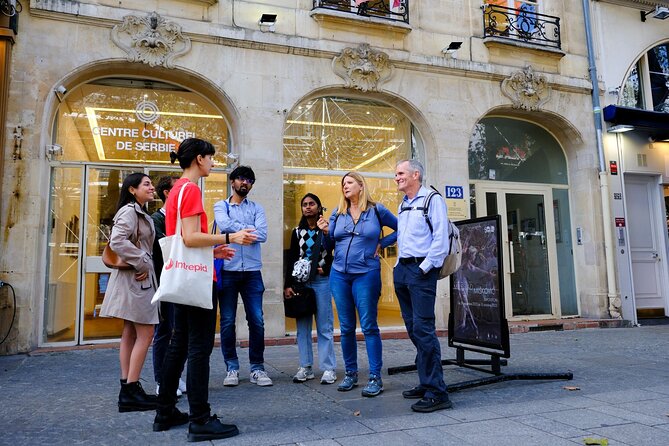
Next comes La Rue des Rosiers, the heart of the Jewish community in Paris. This is where the tour becomes lively in a practical way. You walk a pedestrian-focused food street and get context for why it feels the way it does today.
Even if you do not stop for a full meal, the area gives you immediate payoff. You see the restaurant scene, the deli culture, and you get a sense of how neighborhoods evolve through food habits and community ties.
Practical tip: if you want to eat on this street after the tour, take note of where you would actually want to sit. That kind of decision is easier while you are already in the flow of the neighborhood.
Place des Vosges and Victor Hugo: Paris’s oldest, most photogenic pause point
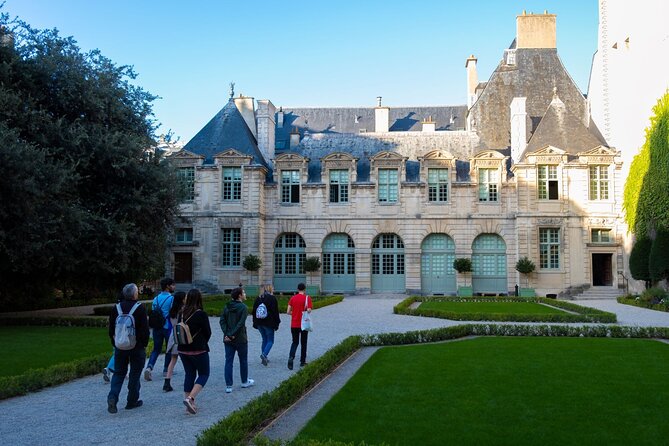
The tour heads to Place des Vosges, described as Paris’s oldest and one of its most beautiful squares. This is a real breather in the route. The geometry of the square slows you down, and the history sticks better when you can stand still and look around.
You also learn that Victor Hugo is tied to this place. That matters because it connects a major literary figure to the physical city you are walking.
If you are tempted to wander into side passages, do it for a minute, not ten. This tour is intentionally timed to keep the full route together, and you will want to finish with Place de la Bastille in your sights.
Place de la Bastille: revolution ground with an easy evening plan
The final destination is Place de la Bastille, a powerful ending point. You learn it was a former prison captured on July 14, 1789, and that event helped trigger the French Revolution. After hearing that, it feels different to look at the open public space.
Then the tour gives you a practical gift. The nearby area is packed with bars and restaurants, so you can roll straight into dinner without a complicated plan.
This is also a smart way to end a walking tour. You finish somewhere central and energetic for the rest of the night, instead of getting dropped far from everything.
What you really eat, and what you should not assume
Here is how I would set expectations. The tour includes a sweet local pastry as part of the gouter. You will hear about and get the French treat at Saint-Gervais time, with merveilleux named as the sweet example.
If your idea is a full food crawl with multiple savory meals, this is not that. The core theme is history and neighborhood walking, with sweet tasting as the focus. Some people also mention enjoying additional items like wine and cheese in their own experiences, but the only clearly guaranteed food inclusion is the sweet pastry.
So if you want lunch covered, you should eat before or plan a proper dinner afterward. Bring your appetite for culture, but do not count on the tour to feed you like a sit-down meal.
Walking distance, pacing, and how to keep it fun, not frantic
You cover about 2 km over roughly two hours. That is a reasonable distance for most visitors, and it is spread across many short stops, not one long hike.
Still, the pacing can feel tight because there are many notable sites in a small time window. Some guides and some groups may slow down more when people ask questions, but you should assume you will move from stop to stop fairly efficiently.
My advice: if you have a short attention span, you will probably enjoy it. If you prefer long time at one single church or square, you may want to pick one or two “favorite” stops to revisit afterward on your own.
And if it is raining, be ready for fewer photo moments and more time under cover. In that case, focus on the moments you can control, like looking closely at architecture and listening to the stories.
Price and value: why $55.87 can make sense in Paris
At $55.87 per person for about two hours, this is not the cheapest activity in Paris, but it is also not overpriced for what you get. The big value is the combo of:
- A local English-speaking guide
- A structured route that strings together modern Paris cues and medieval Marais streets
- A sweet pastry stop as part of the afternoon gouter
- A small group size (max 12), so you are not lost in a crowd
Also, many landmarks are listed as free to view, so you are paying mostly for guide interpretation and route design, not museum ticket costs.
If you like to travel with a plan but hate rigid schedules, this kind of tour gives you that balance. You leave with the ability to explore the Marais on your own because you understand where you are and why it matters.
Who should book this Hidden Paris Medieval Marais tour
This tour fits best if you want:
- A walkable afternoon plan that does not require museum stamina
- A guided tour through Le Marais beyond the usual hotspots
- A taste of French street culture via gouter time
- A small-group experience that leaves room for questions
It is also family-friendly in general, with children under 6 able to join for free. Service animals are allowed, and the meeting point is near public transportation, which helps if you are juggling multiple parts of your day.
If you are a foodie who wants lots of tastings, you might leave wanting more. Think sweet pastry and context, then let dinner be your big meal.
Should you book it or skip it?
I would book it if this is your first or second time in Paris and you want to understand Le Marais quickly, without spending half a day in museums. The blend of medieval street time, photo-worthy stops like the Stravinsky Fountain, and an ending that lands you near a great dinner zone is a strong use of an afternoon.
I would hesitate if you hate being on a schedule and prefer one slow, long wander. Because there are many stops, you get less time per site than an all-day self-guided walk. And if you want a full-on food tour, this is better thought of as a history and neighborhood walk with a French sweet centerpiece.
If you like guided storytelling with practical local tips, and you are excited to try a merveilleux, this is a smart way to spend 2 hours in Paris.
FAQ
How long is the Hidden Paris Medieval Marais walking tour?
It runs for about 2 hours.
What is the walking distance?
The tour covers about 2 km (1.2 mile).
What time does the tour start?
The start time is 3:00 pm.
Where do I meet the guide?
You meet at 123 Rue Saint-Martin, 75004 Paris, France.
Where does the tour end?
It ends at Place des Vosges (Pl. des Vosges), near Bastille.
What food is included?
The tour includes a sweet local pastry as part of a French gouter.
Is the tour vegetarian-friendly?
Yes, the tour can cater for vegetarian dietary requirements.
Is free cancellation available?
Yes. You can cancel up to 24 hours in advance for a full refund.
More Walking Tours in Paris


More Tours in Paris





More Tour Reviews in Paris


Not for you? Here's more nearby things to do in Paris we have reviewed











Le Marais Tours, side by side.
 ★ 4.5Award-Winning Paris French Bakery Experience — Le Marais, 4th ArrTickets from $1141,186 guest reviews
 ★ 5.0Paris Le Marais Food Tour With 10+ Tastings, Cheese, Wine & MoreTickets from $102985 guest reviews
 ★ 4.5Paris Le Marais District Original Food and Wine Tasting TourTickets from $157880 guest reviews
 ★ 5.0Paris Bike Tour Hidden Secrets in the Latin Quarter & Le Marais neighborhoodsTickets from $54766 guest reviews
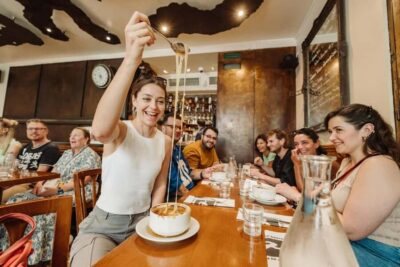 ★ 4.9Food and Wine Tasting Walking Tour in Le MaraisTickets from $113446 guest reviews
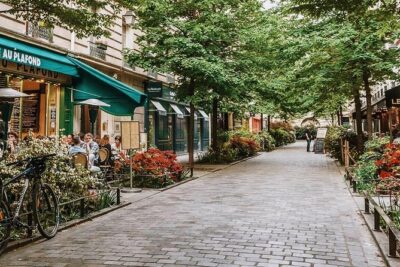 ★ 5.0Le Marais District & Jewish Quarter Guided Walking Tour 12ppl MaxTickets from $59361 guest reviews
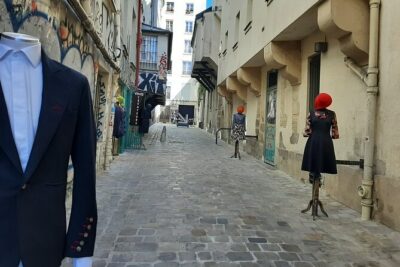 ★ 5.0Le Marais/Paris – The Historic, Trendy, Jewish, LGBT districtTickets from $48341 guest reviews
 ★ 5.0Paris Le Marais Food & Wine Tour with Eating EuropeTickets from $163297 guest reviews
This tour also belongs to