
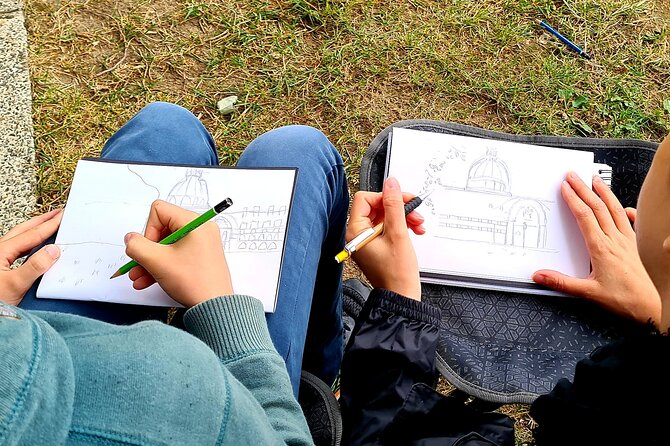
Review · WALKING TOURS
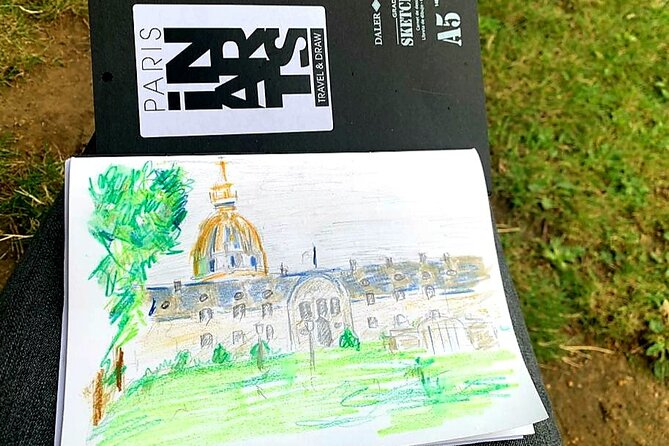
Drawing workshop/creative notebook during a walk from the Invalides to the Petit Palais
A sketchbook walk turns big sights into personal lines. This 3-hour Paris workshop takes you from the Invalides area to Petit Palais and beyond, then gives you guided drawing techniques you can actually use while you’re surrounded by famous landmarks.
I especially like the small-group feel and the way the instructor, Evelyne, stays patient and practical, even when you are nervous about drawing something as ornate as the Petit Palais setting. You will also try new mediums, including sanguine and watercolor pencils, while learning how to “see” forms and space better. One consideration: it’s partly outdoors and you do need comfortable shoes, because you’ll be walking while working.
Quick take: what makes this drawing workshop work
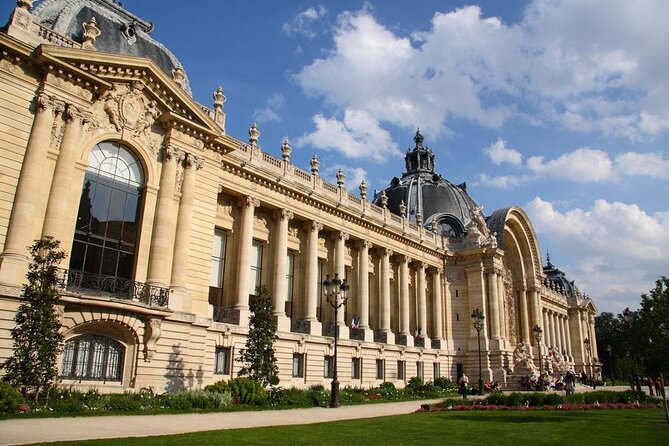
- A real city route, from the Invalides area to Petit Palais, then across Pont Alexandre III, and back
- Small group size, up to 10 people, which means more attention and feedback
- Technique-focused practice, including perspective, mixed media, and composition
- You make a sketchbook during the walk, so it’s not just watching from the sidelines
- Evelyne’s teaching style, attentive and encouraging, including help drawing the Invalides Dome
From Invalides to Petit Palais: why this route is smart for artists
This is the kind of Paris activity I like because it stays focused. You are not bouncing between a dozen places and hoping you remember what you saw. Instead, you walk a short distance, stop often, and spend time translating what you see into a usable sketchbook page.
The start point is in the Invalides (75007) area, and the tour loops back to the meeting spot when it ends. That matters because you keep your energy. Even though it’s partly outdoors and you’ll be walking, the route is described as not long, under 1 km, with breaks built in for drawing.
Time-wise, it starts at 2:00 pm and runs about 3 hours. That’s a good window for a creative workshop, because you’re not rushed like you might be on a half-day sightseeing sprint. It also gives you enough daylight to work on tone and structure, which is where good drawing starts.
Finally, the whole thing is offered in English, with mobile ticket access and confirmation at booking. If you’re trying to fit art into a trip without adding extra planning stress, this format is a clean fit.
You can also read our reviews of more walking tours in Paris



Petit Palais stop: drawing the art, without getting intimidated
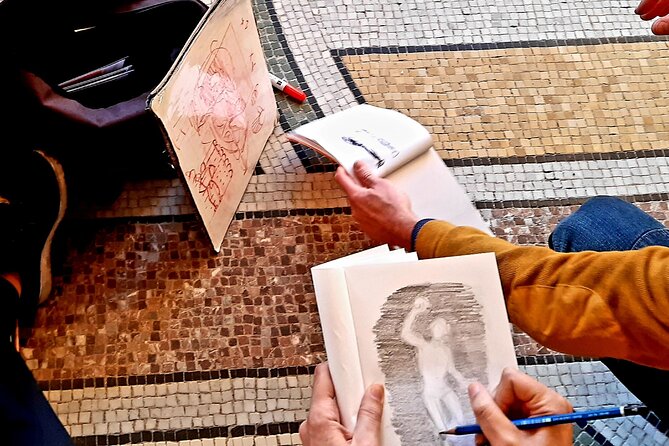
Petit Palais sets the tone fast. This is a place with strong visual personality, and if you worry that ornate buildings are too hard to draw, you are exactly the person this workshop is designed for.
A standout detail from participant feedback is how Evelyne teaches you to approach the subject step by step. One person specifically praised her help drawing the Invalides Dome, noting that she made the process feel doable even in a setting that could easily feel intimidating. That kind of coaching is more than “how to hold a pencil.” It’s about helping you see structure first, then details later.
Here’s what this stop is likely to do for you as a learner. It puts you in front of grand architecture and forces the right questions:
- Where do lines converge, and how do you keep them from wobbling?
- How do you build an object with forms instead of copying surface decoration?
- How do you frame what you see so your page feels balanced?
The workshop approach includes perspective and composition as part of its creative notebook method. In plain terms, you’re learning how to place buildings and edges on paper so the image looks stable, not accidental.
One practical consideration: Petit Palais can be a visually busy environment. You will likely want to focus on what the instructor assigns as your drawing target, instead of trying to include everything you notice. That is how you end up with a page you are actually proud of.
Pont Alexandre III: turning a famous bridge into usable lines
After Petit Palais, you head toward the Pont Alexandre III, described as majestic. Even if you’ve photographed it a hundred times, there’s something different about drawing it.
Bridges are great drawing teachers because they force you to deal with rhythm. You’re looking at repeating sculptural elements, rail lines, arches or spans, and the geometry that stretches across the scene. That’s why the workshop’s emphasis on techniques is useful here. Perspective and composition stop being abstract terms and become tools you use in real time.
Also, Pont Alexandre III is a better choice than a random Paris street for a drawing workshop. It gives you clear structure, and it’s recognizable even if you simplify your sketch. In a short 3-hour format, that’s a big deal. You get satisfying results faster.
What I’d suggest as you sketch: keep your first pass simple. Block in the large shapes first, then add one or two signature details instead of trying to reproduce every ornament. The goal is a strong sketchbook page, not a perfect museum reproduction.
And because you’re moving with the group, you get a natural pacing. The walk is not long, so you’re not burning time and energy just to get somewhere. That makes it easier to stay focused on the drawing tasks.
Esplanade des Invalides: using the outdoors without losing your focus
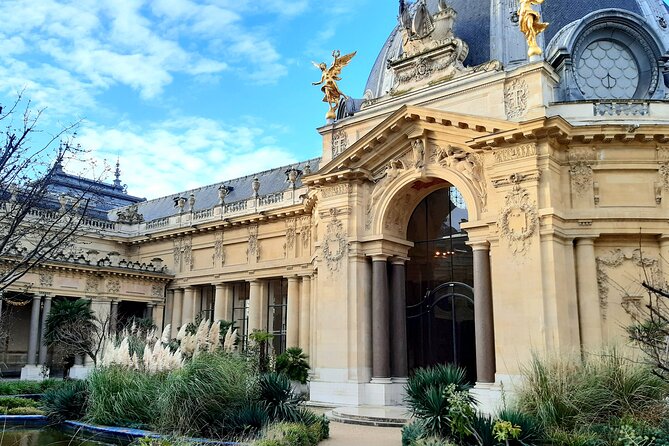
The workshop doesn’t only stay in grand indoor settings. You also spend time outdoors around the Esplanade des Invalides, which is one of the most practical ways to learn in Paris.
Outdoor drawing has one advantage: your eyes adjust quickly to changes in light and spacing. If you’re learning perspective, outdoor viewpoints help you notice how verticals and horizontals behave when you are standing at street level.
It’s also where the workshop’s weather plan matters. The activity is maintained whatever the weather, and the course can be adapted for comfort. That is important because sketching gets harder when you are uncomfortable, cold, or trying to protect materials from sudden conditions. Knowing the session can adjust helps you relax and just draw.
Given it’s partly outdoors, bring the basics that make your hands happier. Comfortable shoes are a must. If the weather is cool or rainy, dress in layers so you can stay steady. You’re walking while drawing, so anything that slows you down or makes you tense will show up on the page.
The drawing methods you practice, and why they help right away
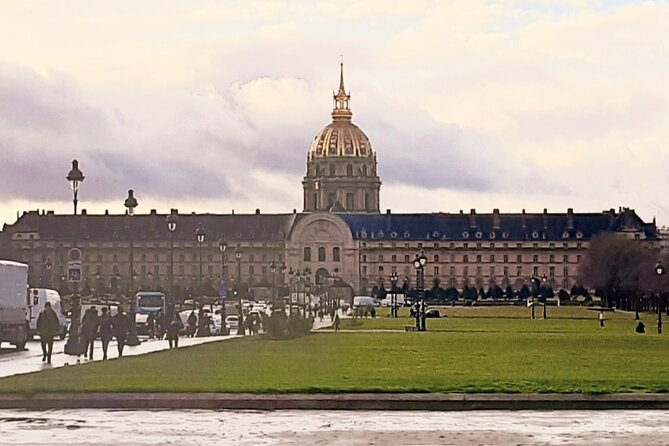
This workshop is built around a creative notebook format, and it doesn’t treat drawing like a single skill. It treats it like a set of techniques that you can apply to different scenes.
You can expect practice with:
- Perspective, so buildings and bridges look grounded instead of floating
- Mixed media, so you can combine drawing and color without needing a full art studio setup
- Composition, so your page feels intentional, even if you simplify your subject
- Creative activities that keep you moving from observation to execution
Two mediums were specifically called out by participants. One new medium mentioned is sanguine, which can feel different from standard pencil drawing because it pushes you toward warmer tones and confident mark-making. Another technique people were excited to try again is watercolor pencils.
Here’s the value of learning these in a guided setting: you don’t waste time figuring out technique basics mid-tour. Evelyne’s role is to keep you progressing, especially if you have a beginner level or if you just haven’t practiced lately.
You’ll also get local context while you work. That part matters more than people think. When you understand what you’re looking at, you sketch with more intention. You might still simplify, but you simplify with a reason.
And the pace is built for results. This is a short format with stops, meaning you’ll likely create a notebook page or two rather than only starting something you never finish.
More Paris tours and experiences for the shortlist





What the instructor adds: Evelyne’s calm, specific feedback
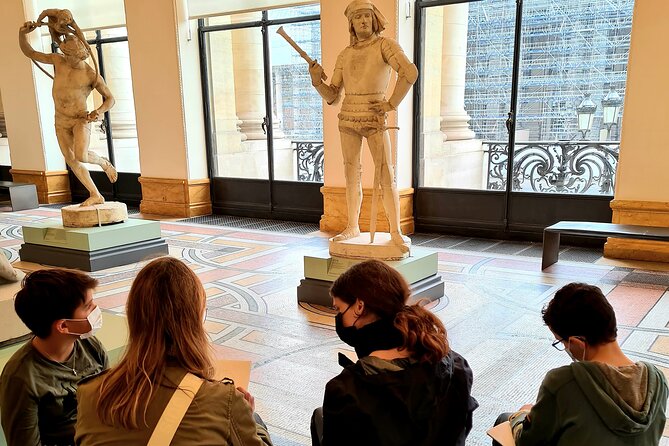
A big theme in feedback is that the instructor is both knowledgeable and attentive, with a patient approach. Evelyne is mentioned by name, and participants highlighted how she:
- Encouraged people who felt intimidated by the subject
- Offered concrete advice while teaching drawing techniques
- Stayed accommodating and responsive, rather than running a one-size-fits-all class
That teaching style is ideal for a workshop. It means you are not stuck with generic tips like “try harder.” Instead, you get help that matches what you are doing at that moment: line placement, proportion, how to approach shading, or how to keep a sketch from turning into a messy draft.
If you are worried about being the slowest drawer in the group, this kind of instruction helps. A maximum group size of 10 people also supports that. You’re more likely to get direct attention when you hit a snag.
Group size, pace, and what 3 hours feels like
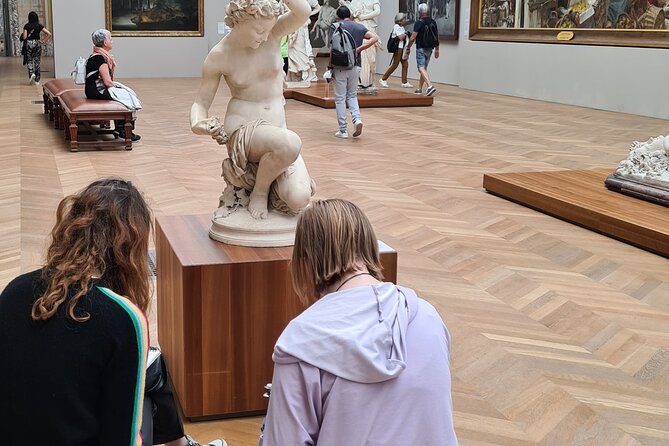
This is a small-group workshop with a maximum of 10 travelers. In practice, that tends to make the experience feel less like a lecture and more like a moving studio session.
You should expect:
- Short walking stretches between stops
- Drawing time at each location
- Cultural anecdotes layered into the route
The overall walking distance is noted as under 1 km, but don’t interpret that as “sit down the whole time.” You’ll still be on your feet, stopping and starting. Moderate fitness is the guidance, and it’s best to plan for comfort.
The tour also adapts to the weather. Still, if it’s hot, you’ll want water. If it’s cold, you’ll want layers. If it’s wet, bring clothing you don’t mind getting a bit splashed. Drawing needs steady hands, and comfort helps your focus.
Value for $94.93: is it worth it?
At $94.93 per person for about 3 hours, the price might feel steep at first glance. But you’re not paying only for access to landmarks. You’re paying for structured art instruction in a real setting, plus a guided route that turns sightseeing into output.
Here’s why it can feel like good value:
- You learn multiple techniques (perspective, mixed media, composition) instead of doing one quick activity
- You leave with a sketchbook/creative notebook you made during the tour
- Small group size means more individual attention
- You get cultural storytelling while you draw, which keeps the walk from feeling like a chore
If what you want from Paris is photo stops and fast facts, a self-guided museum day might suit you better. If what you want is a creative souvenir that actually reflects what you did and what you learned, this workshop is a strong fit.
Who should book this drawing walk
This workshop works best if you:
- Want to learn drawing techniques you can use again later
- Like the idea of creating a personal notebook page in front of major landmarks
- Prefer an instructor who is patient and encouraging, especially if you feel intimidated by art
It also suits people who enjoy walking with a purpose. The route isn’t long, but it keeps you moving through a classic Paris zone: Invalides, Petit Palais, Pont Alexandre III, and back toward the Esplanade.
If you are a complete beginner, you’re still in the right place. The workshop is designed for different skill levels, and the feedback you have indicates that the instruction is supportive, not judgmental.
Should you book this tour?
Yes, I’d book it if you want a different kind of Paris memory. The combination of a short, manageable route, hands-on sketching, and a teaching style that helps you feel confident makes this more than a casual activity.
Skip it only if you strongly dislike walking, even short distances, or if you are hoping for a pure museum visit where you can linger quietly on your own. This is a guided creative workshop first, sightseeing second.
If you want a practical way to turn major Paris sights into real drawings, this is a very solid choice.
FAQ
How long is the drawing workshop?
It runs for about 3 hours.
What is the workshop like if I have never drawn before?
It is designed for all levels. You’ll be taught techniques and guided activities, so you are not required to already know how to draw.
Is this experience indoors or outdoors?
It takes place partly outdoors, with some parts where you work in and around the visited sites. You should dress for the temperature.
Where does the tour start and where does it end?
The tour starts at Invalides 75007 Paris, France, and it ends back at the same meeting point.
How big is the group?
The workshop has a maximum of 10 travelers.
What language is the workshop offered in?
It is offered in English.
What is the cancellation window?
You can cancel for a full refund up to 24 hours before the experience start time.
More Workshops & Classes in Paris



More Walking Tours in Paris
More Tour Reviews in Paris


Not for you? Here's more nearby things to do in Paris we have reviewed









Walking Tours, side by side.
 ★ 5.0Paris Top Sights Half Day Walking Tour with a Fun GuideTickets from $762,893 guest reviews
 ★ 5.0Montmartre Hidden Gems and Scenic Highlights Walking TourTickets from $382,684 guest reviews
 ★ 5.0Montmartre Hill French Gourmet Food and Wine Tasting Walking TourTickets from $1452,588 guest reviews
 ★ 5.0Paris Île de la Cité and Notre-Dame Walking Tour With CryptTickets from $482,272 guest reviews
 ★ 4.8Montmartre Cheese, Wine & Pastry Guided Walking TourTickets from $1272,255 guest reviews
 ★ 5.0Paris in a Day: Louvre or Orsay, Eiffel Tower, City Walk & CruiseTickets from $1571,956 guest reviews
 ★ 4.9Montmartre Highlights Walking Tour with a Local GuideTickets from $341,668 guest reviews
 ★ 5.0Paris City Center Free Walking Tour (Tip-Based)Tickets from $31,340 guest reviews
This tour also belongs to