
Review · PARIS CITY TOURS
City Walking Tour: See the Top 5 Paris Highlights in a Day
Five Paris icons, in one day. This walking tour stitches together top 5 landmarks across different Paris neighborhoods, so you leave with a clear sense of how the city fits together, not just a pile of photos. I also like the small group size (max 6), because the guide can keep things moving while sharing insider stories. The main catch: you won’t go inside any monument or museum, so if interior time matters to you, you’ll need a separate plan.
The tour starts in Pigalle and ends at the Eiffel Tower, with public transportation by metro and a restaurant reservation included (lunch itself is not). Guides like Clara, Hugo, and Walid get praised for tailoring the day to what you want and keeping the walk fun and easy to follow.
It’s a big “city museum” approach, with exteriors at Sacré-Cœur, Notre-Dame (currently under renovation), the Louvre, the Arc de Triomphe, and finally the Eiffel Tower. You also get a moment of calmer Paris energy in Montmartre, with Place Dauphine and nearby streets as a good spot for a coffee or pastry if you want to linger.
Key things to know before you go
- Top 5 Paris landmarks in one route, linking Montmartre to the Seine to the grand avenues
- No monument or museum entry, so expect exterior views and great context
- Small group of up to 6, which usually makes it feel more personal and less hectic
- Guided metro transport plus a restaurant reservation, built in to reduce planning stress
- Neighborhood variety across districts 1st, 4th, 8th, and 18th, so you see multiple “faces” of Paris fast
A 7-hour hit list of Paris, without going inside
This is the kind of day you book when you want Paris orientation fast. In about 7 hours, you’ll cover five headline landmarks without the time cost of queues and ticket checks inside. That tradeoff matters. You’ll get the bigger “map in your head” payoff, but you won’t get the Louvre galleries, the Notre-Dame interior, or Eiffel Tower access.
For me, the value is the way the stops are arranged like a story. You start on the hill in Montmartre, then move toward the Seine for Notre-Dame, cross into the Louvre area, shift to the imperial scale of the Arc de Triomphe, and cap it with the Eiffel Tower at the end. That sequence helps you understand why Paris looks the way it does, from medieval forms to Renaissance-era grandeur to the Napoleonic symbol at the heart of modern boulevards.
One practical note: since everything is exterior, your day depends a lot on timing and light. If your schedule is flexible, plan to do this on a day with decent visibility, because exterior landmarks are what you’re working with.
You can also read our reviews of more walking tours in Paris



Where you start in Pigalle and end by the Eiffel Tower
You meet in Pigalle (75018) and you finish at the bottom of the Eiffel Tower on Av. Gustave Eiffel (75007). The route is built for one-day flow rather than backtracking, so you’re not trying to get yourself across the city at the last minute.
Start time is 9:30 am, which is great. Early starts usually mean easier movement through busy areas, especially when you’re also using the metro. The tour is described as near public transportation, so you’re not relying on a far-flung meeting point.
If you like to extend your day, that ending spot is convenient. After the tour, you can go up on your own to enjoy views or cross the river for photo angles and a fresh perspective. Just remember, your tour itself ends at street level, since there’s no monument admission included.
Montmartre to Sacré-Cœur: the village feel in Paris 18th
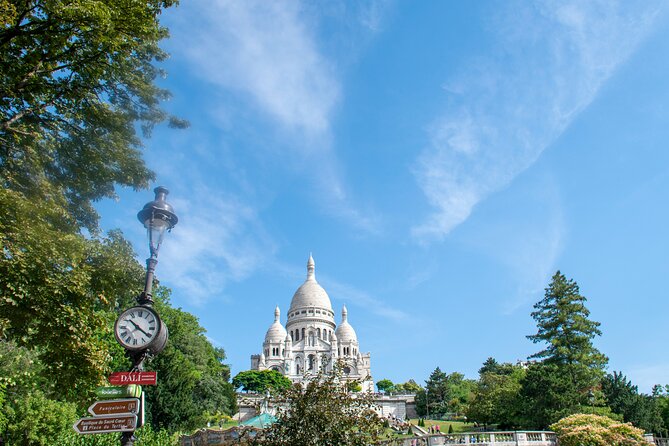
Stop 1 is Montmartre, with about 2 hours devoted to the area around Sacré-Cœur. This neighborhood is famous because it still feels like a separate world inside the city. You’ll see the hillside atmosphere, including references to vineyards and windmills, before arriving at the landmark most people picture when they think of Montmartre.
What I like here is how the tour uses Montmartre as a warm-up. Sacré-Cœur is easy to recognize, but the neighborhood context is what makes it stick. You get the sense that Paris wasn’t always a flat grid of boulevards. It had a patchwork of villages, and Montmartre still shows that old character.
Since the tour gives you exterior views and doesn’t require monument entry, this stop is also a smart energy saver. You can enjoy the views, take photos, and learn the stories without getting stuck in a ticket line.
One small consideration: Montmartre is a hill. You’ll be walking, and it’s not the kind of area where everyone wants to linger forever. If you’re sensitive to stairs or steep grades, pace yourself and plan water.
Notre-Dame neighborhood walk, with renovation in the background
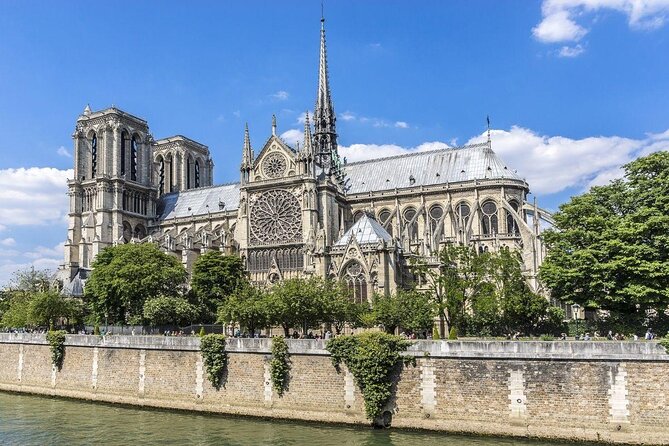
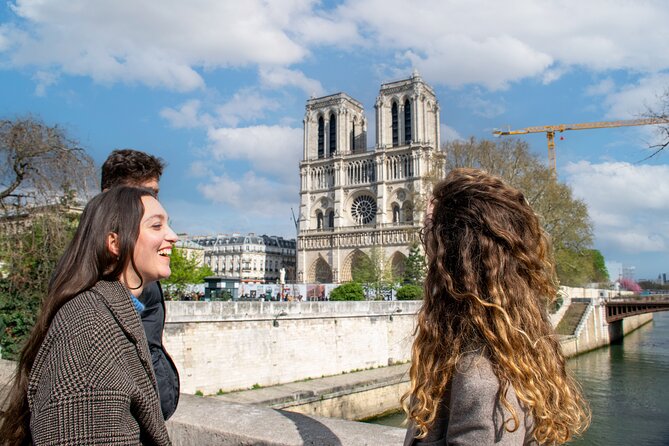
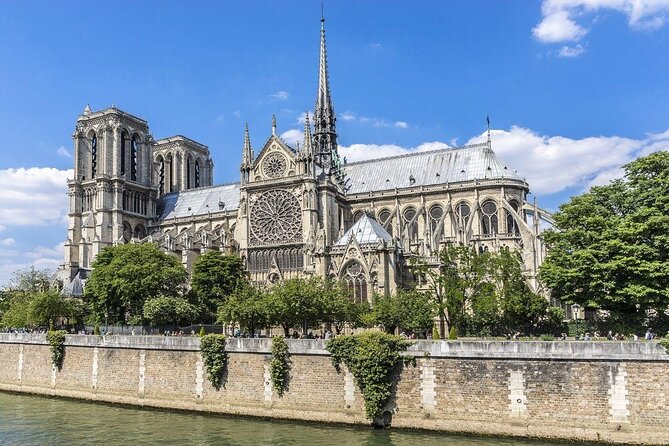
Stop 2 takes you to Notre-Dame de Paris, with another 2 hours in the area. The tour focuses on architecture and history from the outside, and the neighborhood context is a big part of the experience. It’s also tied to a river walk along the Seine, which helps you connect the cathedral to the city around it.
The tour notes that Notre-Dame is under renovation for now. That means your experience may feel slightly different than the one from older photos, especially around views and access. Since you are not going inside, renovation mainly affects what you can see and how open the surrounding area feels.
This is a strong stop for first-timers because it shows a key Paris theme: how the city layers different eras. You’re moving from Montmartre’s village-like feel into a core medieval anchor tied to the Seine. Even without entry, the guide’s stories help you notice details most people miss when they’re rushing past.
Practical tip: the Seine area can be busy, so keep your attention on the guide’s pacing. This stop is long enough that you’ll want comfortable walking shoes and a quick snack plan if you tend to get hungry mid-tour.
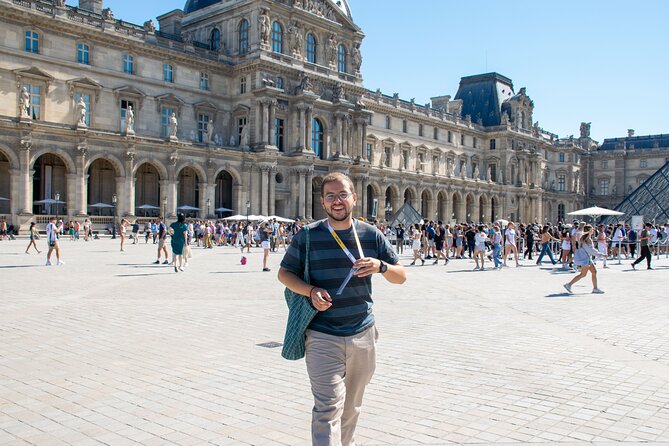
Louvre exterior views: why seeing the outside still matters
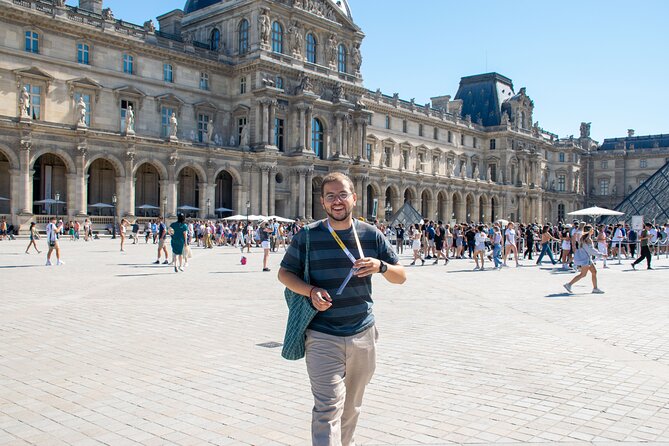
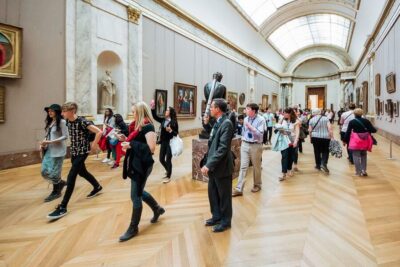
Stop 3 is the Louvre Museum, about 1 hour. Here the tour is very clear: you’ll see the Louvre from the outside, where the museum is home to famous works like the Mona Lisa, but you won’t enter the galleries.
That might sound limiting at first, but it’s actually useful. When you see the Louvre’s scale and setting up close, the museum stops feeling like a list of paintings and starts feeling like a real place in the center of Paris power and art. You also get a fast orientation for the neighborhoods around it, including the general feel of the 1st and 4th districts.
This approach makes the tour work for people who want a “greatest hits” day rather than a museum day. If your priority is ticketed interior time, you’ll want to plan a second Louvre visit later with an itinerary built for the art you care about most.
If you’re short on time in Paris, though, this exterior stop is a good compromise. You get the landmark impact, you avoid the museum-only fatigue, and you still learn why it matters in the city story.
You can also read our reviews of more city tours in Paris






Arc de Triomphe near the Champs-Élysées: Napoleon’s marker and your orientation tool
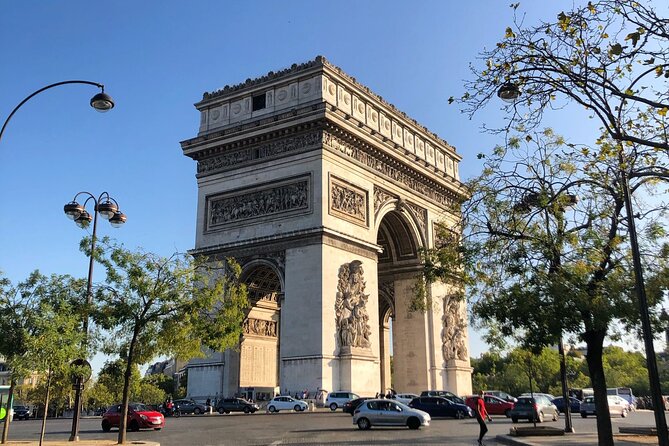
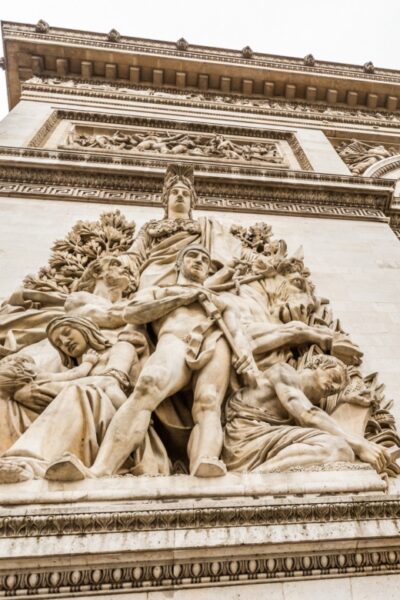
Stop 4 is the Arc de Triomphe, about 1 hour. The tour frames it as the big monument left by Napoleon, and it’s placed near Les Champs-Élysées, one of Paris’s most famous avenues.
This stop works because it’s a scale shift. After earlier stops that feel more “city and heritage,” the Arc area feels more like state and ceremony. You start noticing how Paris was designed to move people and attention along major axes. It’s not just pretty, it’s structural. The Arc helps you understand why so many other sights line up the way they do.
Since you’re not going inside, you’ll focus on the monument’s exterior presence and the big-picture city viewpoint. Even then, it’s still a major photo magnet, and the guide’s explanations help you see more than just the famous silhouette.
Consideration: this part of the day can include a lot of street atmosphere and crowd pressure. The best strategy is to listen for the guide’s timing cues, then grab your photos quickly and stay with the group for the next connection.
Eiffel Tower finish: what street-level time can still give you
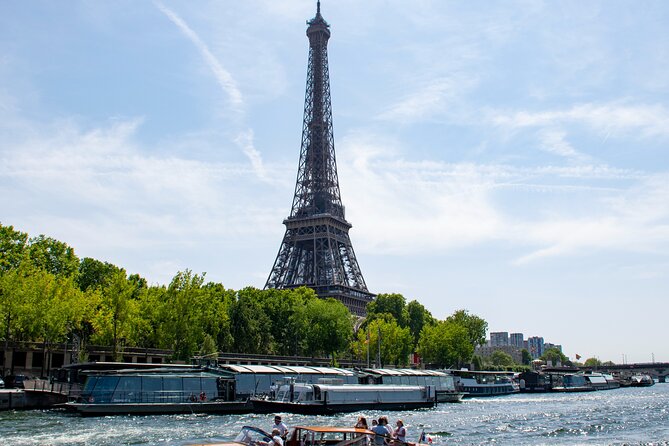
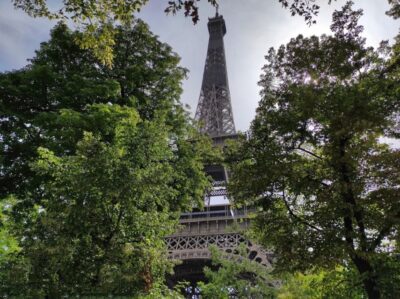
Stop 5 ends your tour at the foot of the Eiffel Tower, around 1 hour. No admission is included, so you’re experiencing it from ground level. Still, that’s not a letdown for most people, especially because it’s the perfect ending.
Finishing at the Eiffel Tower instead of trying to fit it earlier makes sense. It gives you a clear “finale landmark” payoff after a long day of walking and metro rides. It also leaves you flexible. If you want to go up later, you can do it on your own when you’re ready, and you can build in a light plan for photos and timing.
The tour notes a useful option: you can go up on your own or cross the river for stunning views and photos. That’s smart because it encourages you to turn the ending moment into a personalized experience rather than a strict tour schedule.
Also, since you finish at street level, you’re not locked into a specific entry time window. That can matter if your energy is high at the start and lower at the end.
Price and value: is $370.18 worth a no-entry day?
At $370.18 per person, this isn’t a budget walking tour. The value depends on what you want from a Paris day.
What you get for that price:
- A local guide and insider stories
- Public transportation by metro included
- A restaurant reservation included, though lunch is not
- A format that hits five major landmarks in one day
- A small group with a maximum of 6 travelers
- A mobile ticket
What you do not get:
- Any entrance to the Louvre, Notre-Dame, Arc de Triomphe, or Eiffel Tower
- Lunch included
So the key question is whether you’re paying for time savings and context, not for inside access. If you want to skip logistics and get a guided, story-based route that reduces decision fatigue, this can feel like a good deal. If you’re mainly buying for museum tickets or interior views, the price will feel steep because the biggest venues are not included.
One more value factor: you’re booked in advance on average about 22 days out. That often signals demand, and it’s a reminder to plan ahead if your travel dates are tight. Since the group is small, earlier booking can help you get the slot you want.
The guides make or break a day like this
The reviews all point to the same theme: the guide quality is a big part of what you’re buying. I like that this tour includes the chance for a more personal tone because the group size is capped at 6. You’re not swallowed by a crowd, so questions and pacing feel more natural.
You’ll also see guide names pop up in feedback, including Clara, Hugo, and Walid. The common thread is that they keep the day fun, explain what you’re seeing in plain language, and tailor the flow to what the group wants. Clara is specifically mentioned as listening to what the group wanted ahead of time, then planning a day around those preferences.
That matters because this itinerary is full of landmarks, but your experience can still be either mechanical or meaningful. With a strong guide, you’ll remember the why, not just the what.
What to pack and how to pace a long landmark day
Even without specific gear recommendations, this kind of route is a reality check. It’s a full morning to early evening format, with multiple stops and walking between metro points.
My practical advice:
- Wear shoes you can stand in for hours. You’ll be outside and moving between areas.
- Bring water, especially if you plan to linger in Montmartre for coffee or a pastry before the next leg.
- Expect that not entering monuments changes how you should schedule snacks. Since lunch is not included, have a plan for a meal around the included restaurant reservation time.
Since Place Dauphine and the Montmartre streets are highlighted as calmer spots for coffee or pastries, you might want to leave a little buffer for that. The tour itself says those treats are not included, so treat it as a choose-your-moment bonus.
Who this tour suits best, and who should skip it
This tour suits you if:
- You’re in Paris for a short stay and want a clear first-day map
- You enjoy landmark exteriors and prefer context over ticketed museum time
- You like small groups and an actual guide voice in your ear, not just a bus broadcast
- You want to cover multiple districts in one go, without spending your day figuring out metro transfers
You might want to look elsewhere if:
- You specifically want entrance time for the Louvre or Notre-Dame
- You’re a museum-first traveler, where interior masterpieces are the whole point
- You dislike a packed route and would rather slow down neighborhood by neighborhood
A good middle ground: use this tour for orientation, then book separate time for the one or two places you want to explore deeply with tickets.
Should you book this City Walking Tour of Paris highlights?
I’d book this if your goal is fast clarity. It’s a well-structured day that links Montmartre, the Seine area, the Louvre zone, the Arc de Triomphe, and ends at the Eiffel Tower, with metro included and a guide who can tell the city like a story. The small group format and the way guides like Clara, Hugo, and Walid are described make it especially appealing if you want personal attention.
I would not book it if you’re expecting museum access or you want to spend hours inside major sites. Since no monument entry is included and Notre-Dame is currently under renovation, this is best treated as a guided exterior highlights route with context, not a substitute for the big ticket experiences.
If you’re asking me for a one-line verdict: it’s a smart orientation day for first-timers, as long as you’re happy to see the icons from the outside and save the interiors for later.
FAQ
What is the duration of the City Walking Tour?
The tour lasts about 7 hours.
How much does the tour cost?
The price is $370.18 per person.
What is included in the tour price?
Included features are a restaurant reservation, public transportation (metro), a local guide, and insider stories shared by locals. It also includes a mobile ticket.
Are entrance tickets to monuments included?
No. The tour does not include entrance to the monuments or museums. You won’t go inside any of the sights on the itinerary.
Which stops are included in the itinerary?
You’ll visit Sacré-Cœur in Montmartre, the Notre-Dame de Paris area, the Louvre Museum exterior, the Arc de Triomphe exterior, and you finish at the foot of the Eiffel Tower.
Where do you meet and where does the tour end?
You start at Pigalle, 75018 Paris, France. You end at the bottom of the Eiffel Tower at Av. Gustave Eiffel, 75007 Paris, France.
How large is the group?
The tour has a maximum of 6 travelers.
Can I cancel for a full refund?
Yes, you can cancel for a full refund up to 24 hours before the experience’s start time. If you cancel less than 24 hours before, the amount you paid is not refunded.
More Walking Tours in Paris


More Tours in Paris






More Tour Reviews in Paris






Not for you? Here's more nearby things to do in Paris we have reviewed












Paris City Tours, side by side.
 ★ 4.6Louvre Museum Timed-Entrance TicketTickets from $2671,977 guest reviews
 ★ 4.6Disneyland® Paris 1-Day TicketTickets from $6149,412 guest reviews
 ★ 4.6Versailles Palace and Gardens Full Access TicketTickets from $1741,579 guest reviews
 ★ 4.6Arc de Triomphe Rooftop TicketsTickets from $1834,264 guest reviews
 ★ 4.7Orsay Museum Entry TicketTickets from $1525,647 guest reviews
 ★ 4.4Evening River Cruise with MusicTickets from $2722,721 guest reviews
 ★ 4.4Eiffel Tower Entry Ticket with Optional Summit AccessTickets from $2920,035 guest reviews
 ★ 4.3Eiffel Tower Summit or Second Floor AccessTickets from $5917,248 guest reviews
This tour also belongs to