
Review · PARIS CITY TOURS
Paris: 2-Hour Passages Private City Tour in German
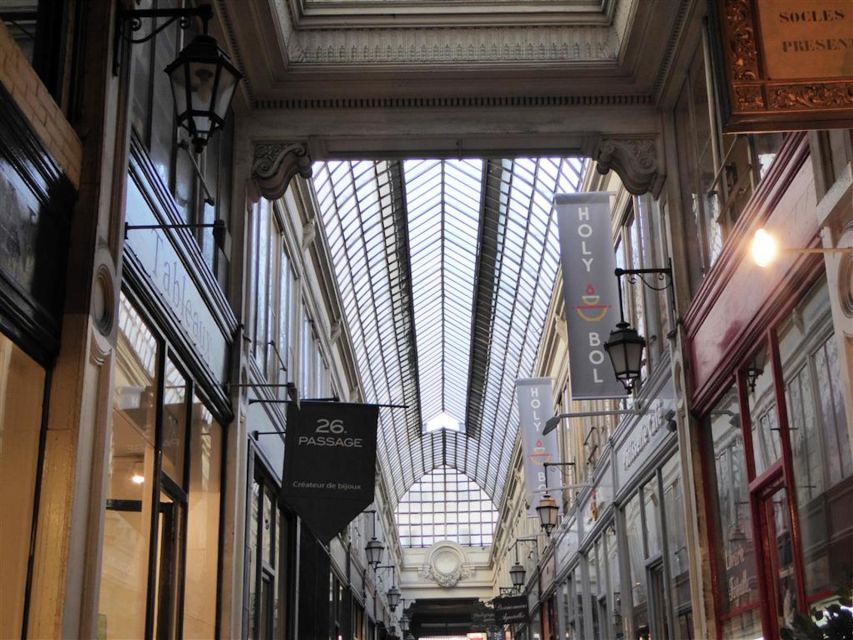
Paris has a second set of streets, quietly hidden. This 2-hour private tour sends you through the city’s famed passages and the grittier, older Paris that made them make sense. I especially love how the guide connects the spaces to how people lived and shopped before modern storefronts, and you get a rare, close-up look at places many visitors never think to search for.
Two other things stand out. First, it is a private group in German, so the pace feels human and you can ask questions. Second, the route is compact, so in a short time you cover multiple passages and end in a lively central area. The only real consideration: it runs Monday to Saturday, so if you are in Paris on Sunday, you will need another plan.
Key highlights you will actually care about
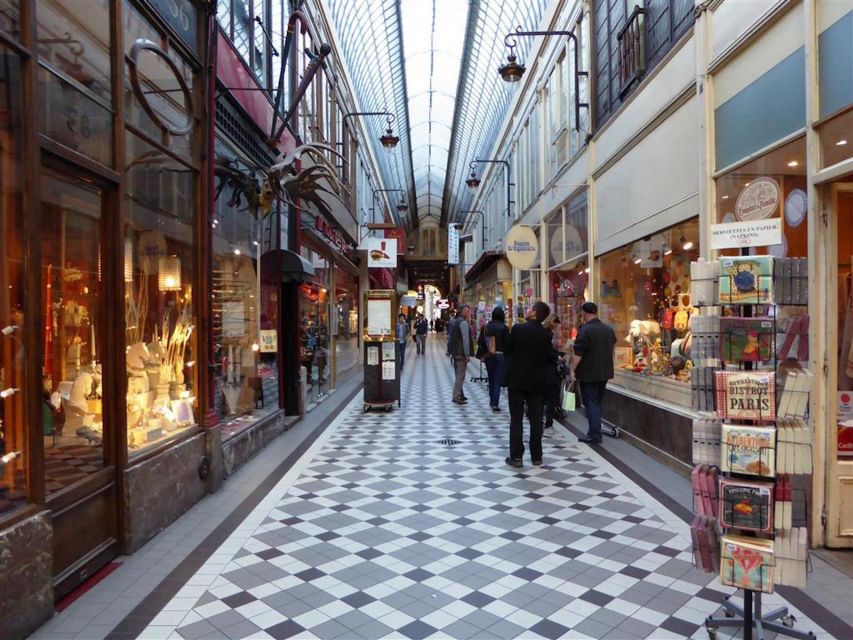
- Hidden passages, not shopping malls: you will hear why these corridors were created in the first place.
- 19th-century atmosphere, explained: the guide sets the scene of early Paris, including how dirty the city could feel.
- A German guide who knows the city inside out: you get clear context, not just where to stand.
- A tight 2-hour route: Passage Verdeau to Passage Jouffroy to Passage des Panoramas, then out toward the Grands Boulevards area.
- Finish at Palais-Royal: you end where you can easily keep exploring on your own.
Paris passages as a time machine, not a novelty
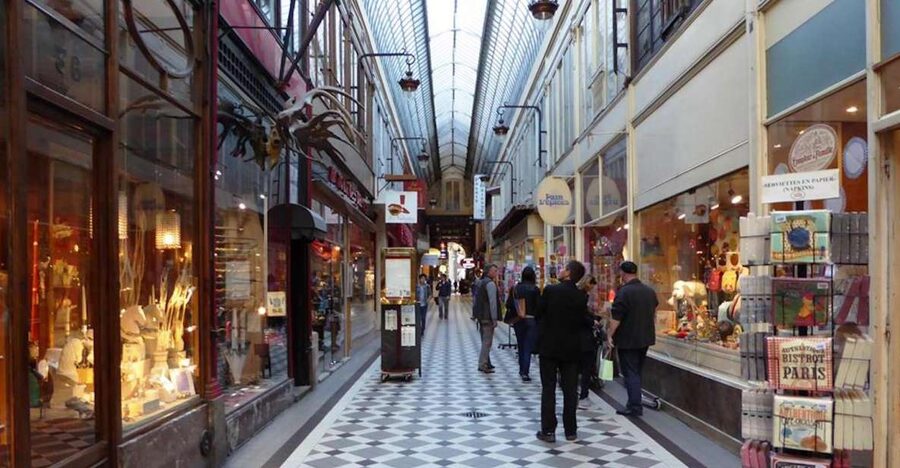
The reason these passages work so well is simple: they feel like Paris found a workaround. In early 19th-century Paris, the city was described as dirty, and everyday streets did not always feel pleasant to move through. The passages offered a different kind of walk, sheltered and closer to what people wanted from a commercial area, before the modern idea of shopping centers took over.
That is why I like this tour. You are not just ticking off names like Passage Verdeau or Passage Jouffroy. You are getting the story behind why the passages existed at all, and why their popularity was shorter than you might expect. The tour frames them as forerunners of what later became large department-store style shopping, so you can see how tastes and needs changed over time.
And the vibe is often what people remember most. You walk into narrow lanes and begin to feel like you have shifted decades, even if the streets outside are doing their usual Paris thing. The guide also makes sure the experience is not stuck in a museum mindset. You come away thinking in a practical way about how cities respond to crowding, weather, and daily discomfort.
One more plus: the passages are not easy to find on your own on a random day. The name says it, they are tucked away and usually discovered by chance. With a guide leading the way, you actually get the full benefit of being shown “our Paris” side.
You can also read our reviews of more city tours in Paris


Private, German-language guiding, and why it matters
This is a 2-hour private city tour in German with a German-speaking guide. That matters more than it sounds, especially in Paris, where quick questions can turn into missed context. With a private format, you can ask for clarifications and keep the pace comfortable. You are also not stuck hearing a single set script meant for a mixed group.
The quality goal here is straightforward: sympathetic German guides who know Paris inside out. One guide named Solene was praised for being friendly and for explaining not just what you see, but also connections and background details. That kind of “why” is exactly what makes short tours feel longer in the best way.
Also, the duration is right for this style of experience. If you try to do multiple passages on your own, you often waste time searching, backtracking, and then rushing the fun part. A structured route keeps you in the passages long enough to feel the atmosphere, but still lets you get back into the rest of your day.
The only drawback to watch for is language. If you do not feel comfortable in German, this tour will probably feel like a slideshow. The tour is clearly labeled as German, so plan accordingly.
Starting at Le Peletier, and how to actually meet your guide
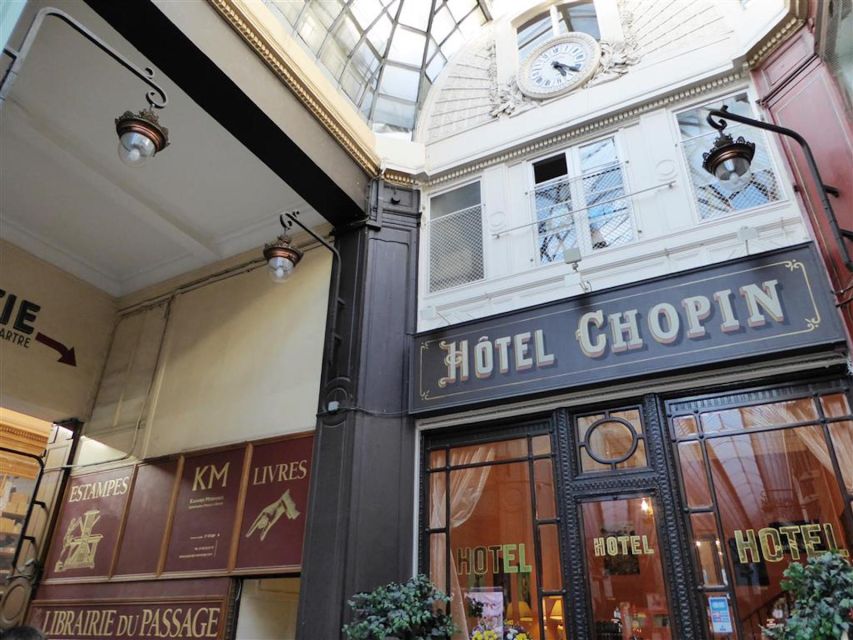
You begin at Metro station Le Peletier (Line 7). Look for your guide with a HelpTourists bag. That is useful because metro stations are busy and the entrances can feel like a maze when you arrive slightly early or slightly late.
I recommend arriving a few minutes before your start time, not because anything is dramatic, but because you will want a calm moment to orient yourself. The best strategy is simple: pick the exact metro entrance you used to get there, then meet your guide at the same area.
From there, the tour flows stop by stop, moving through several passages and then onward toward the Palais-Royal area. Since the tour is 2 hours, it is built for walking time plus explanation time. If you come in exhausted or stuffed from a long meal, you might feel it more than you should, so plan a lighter start.
Passage Verdeau: the feel of an older Paris commercial world
Your first major stop is Passage Verdeau. Think of this as your entry point into the passages mindset. You are not yet comparing every detail, you are learning how to “read” the place. A good guide will point out what you are looking at and why it was built, and that is where this tour becomes more than a stroll.
The tour sets up the big idea that these passages were not exactly what people picture today when they hear “shopping arcades.” In the early 19th century, they were a response to conditions on the streets. You will hear the idea that Paris at the time was dirty, and the passages offered an alternate way to move through the city while still engaging with commercial life.
This is also where you start to understand the tour’s tone. It is meant to carry you away, to make you feel like you are in the early 1800s for a short time. It is charm-heavy, but not vague. You get context, and you learn why the passages are special, not just where they are.
A small practical note: since you are doing a passage-heavy route, wear shoes you can trust. Passages are great, but you are still walking, and you will likely spend time on foot between stops.
Passage Jouffroy and the 19th-century logic of the passages
Next comes Passage Jouffroy, and this is where the tour usually clicks for people. Once you are inside the passage world, you can start noticing the patterns that make passages feel different from open streets.
The guide’s job here is to connect “how it looks” to “how it worked.” Since the tour describes the passages as forerunners of later big shopping formats, you can frame Passage Jouffroy as part of a bigger shift. People wanted commercial spaces that were more comfortable and more predictable than wandering street by street. The passages served that need at the time.
If you like Paris more when it feels specific and slightly unexpected, this stop is a strong reason to book. You see a space designed for a particular kind of city life, in a way that is hard to replicate without guidance. The passages are not always obvious to locate or understand just by wandering.
The only caution is expectation. If you go in thinking it will feel like modern retail galleries, you may have to adjust. That is not a negative, it is the point. The tour is designed to show you what these spaces were before modern shopping became the default.
You can also read our reviews of more private tours in Paris






Passage des Panoramas and the shift toward the Grands Boulevards
After Passage Jouffroy, you move on to Passage des Panoramas. By now, you have enough context to notice how different passages still share a common purpose, even if they feel distinct in style and mood.
This stop is where you often start thinking about how Paris changes around you. The passages sit in the heart of the city, but they create their own pocket. When you come out, the street energy feels louder and more modern. That contrast is useful. It helps you understand what the passages replaced, and why they were such a practical answer at the time.
Then the tour includes Grands Boulevards sightseeing. This is a smart move because you do not end the experience stuck indoors. You reconnect to wider Paris streets and get a sense of how the “hidden” world fits into the bigger city plan.
You will not be rushed here. The entire tour is only 2 hours, so the guide keeps it moving, while still giving enough time at each location to actually appreciate the atmosphere.
Palais-Royal quarter finish: setting yourself up for the rest of the day
The tour concludes in the Palais-Royal quarter, finishing at Palais-Royal. That is a strong choice because Palais-Royal is central. Even after a passage tour, you still want a place where you can walk, linger, and keep exploring.
What I like about ending here is how it changes your mental map. During the tour, you learn the passages as hidden connections. By the end, you stand in a major Parisian zone, so the city feels less like a set of unrelated sights. You can then continue on your own without feeling lost.
One more value point: you get to do the thing most people miss. The passages are usually discovered by chance. With this route, you get a planned version of that discovery, plus context that makes the experience make sense.
If you want to squeeze in more walking after the tour, Palais-Royal is a good launchpad. You are already in the right part of town to keep going.
Price and value: is $94 for 2 hours worth it?
At $94 per person for a 2-hour private tour in German, the price can look steep at first. But the value is in the format, not in adding more stops.
You are paying for:
- A private experience, not a large group shuffle
- A German-speaking guide who can explain connections, not just point
- Efficient time use, since you cover several passages in one run
- Access to places that are hard to locate and understand without local guidance
If you were to try this alone, you would likely spend time searching, get partially lucky, and miss the “why” that makes the passages interesting. This tour is basically buying back your time and your understanding.
Also, the duration is short enough that it rarely crowds out other plans. Two hours is a sweet spot for something atmospheric. You leave with stories, not fatigue.
So, is it worth $94? For me, yes if you care about context and you want the passages done properly. If you only want quick photo stops and you do not care about explanations, you might prefer a self-guided approach.
Who this tour fits best, and who should skip it
This tour is best for:
- You want Paris that goes beyond the usual postcard list
- You like the feeling of older city life, especially the early 19th-century angle
- You want a private format so you can ask questions and set the pace
- You speak or read German enough to enjoy a full German guided experience
I would skip it if:
- German is a struggle, and you would spend the tour waiting to catch up
- You prefer long, slow museum-style sightseeing and want more than 2 hours
- You are only interested in modern shopping or current storefronts, because the tour focuses on the passages as they were built to respond to conditions of their time
The sweet spot is curiosity. If you like learning how cities solve problems, this route will feel like more than sightseeing.
Should you book this Paris passages tour?
I think you should book it if you want a rare, guided look at Paris passages that most people miss, and you care about the explanation behind why these spaces exist. The route is short, the format is private, and the guide experience is clearly a core part of the appeal, including guides like Solene who are noted for friendly, detailed connections.
Book it with one expectation in mind: the passages are the star, but the story is what makes them memorable. If that sounds like your style, this is a strong choice.
FAQ
What language is the tour guided in?
The tour is guided in German.
How long is the Paris passages private tour?
It lasts 2 hours.
Is this tour private or group-based?
It is a private group tour.
Where do I meet the guide?
You meet at Metro station Le Peletier (Line 7). Look for your guide with a HelpTourists bag.
Does the price include entrance fees or food?
No. Entrance fees and food are not included.
Do they offer hotel pickup?
Hotel pick-up is not included.
How far in advance can I cancel?
You can cancel up to 24 hours in advance for a full refund.
More City Tours in Paris



More Tours in Paris




More Tour Reviews in Paris



Not for you? Here's more nearby things to do in Paris we have reviewed










Paris City Tours, side by side.
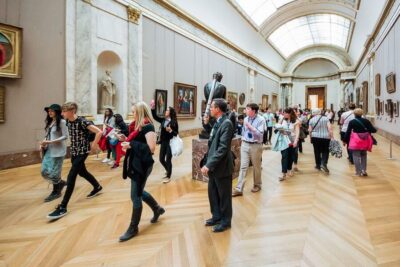 ★ 4.6Louvre Museum Timed-Entrance TicketTickets from $2671,977 guest reviews
 ★ 4.6Disneyland® Paris 1-Day TicketTickets from $6149,412 guest reviews
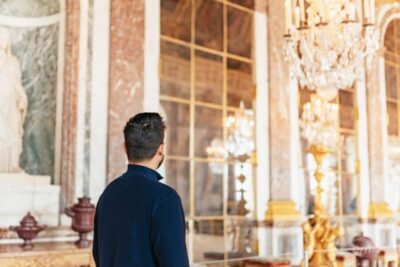 ★ 4.6Versailles Palace and Gardens Full Access TicketTickets from $1741,579 guest reviews
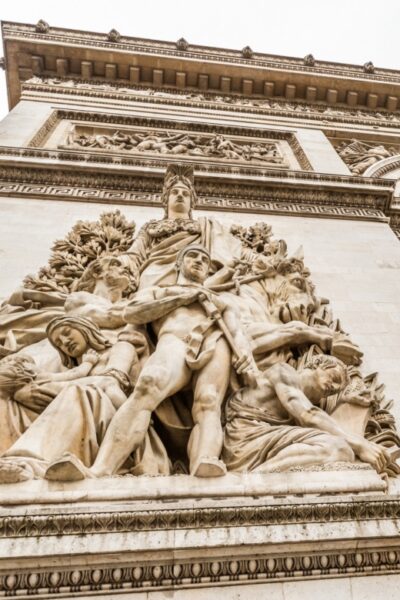 ★ 4.6Arc de Triomphe Rooftop TicketsTickets from $1834,264 guest reviews
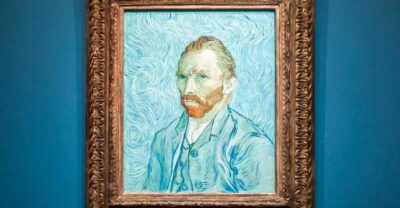 ★ 4.7Orsay Museum Entry TicketTickets from $1525,647 guest reviews
 ★ 4.4Evening River Cruise with MusicTickets from $2722,721 guest reviews
 ★ 4.4Eiffel Tower Entry Ticket with Optional Summit AccessTickets from $2920,035 guest reviews
 ★ 4.3Eiffel Tower Summit or Second Floor AccessTickets from $5917,248 guest reviews
This tour also belongs to