
Review · PARIS CITY TOURS
Paris – Historic City Center Walking Tour
Big Paris facts fit in 2.5 hours. This Paris Historic City Center Walking Tour ties together the sites you keep seeing on postcards with the stories behind them, starting on Île de la Cité and moving through Notre-Dame and the Seine bridges. I especially like the way the tour frames Notre-Dame Cathedral from its 1163 beginnings through the 2019 fire, and I also like how the guide shares practical restaurant and activity ideas so you can keep going after the walk. One drawback to plan for: you get views at the Louvre, but you do not enter the museum on this tour.
The format works well if you want your first Paris day to feel organized. You cover a lot of ground in about 2 hours 30 minutes, and the pace stays comfortable because the stops are short and focused.
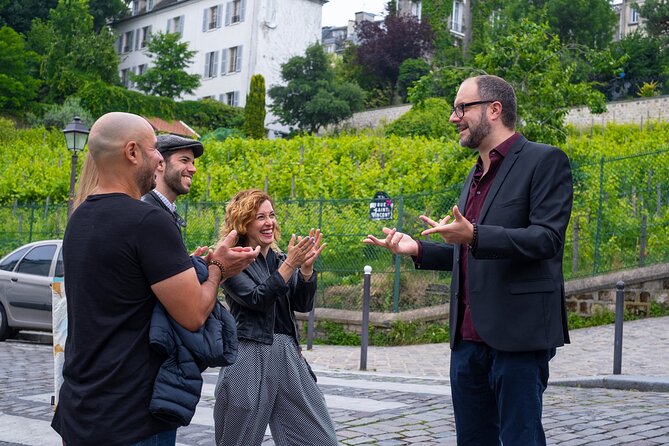
The guides are a big part of the value. Names that come up often are Michael, Daniel, and Alberto, and the common thread is clear, easy-to-follow English plus stories that explain why these places matter.
Key highlights worth getting excited about
- Île de la Cité as the starting point where Paris took shape long before the modern city
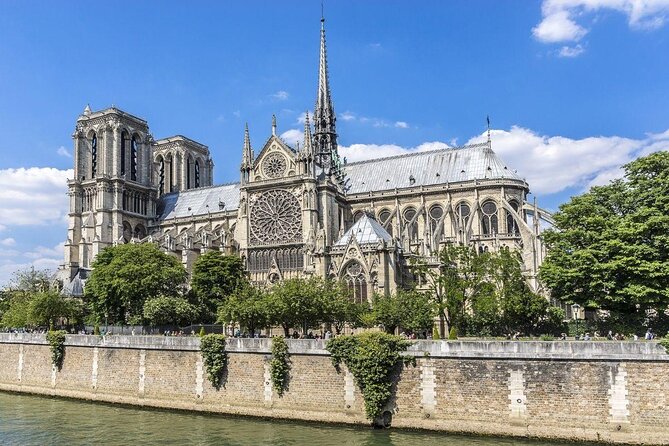
- Notre-Dame’s full timeline, including what happened in 2019 and what came before
- WW2 details on Pont Saint-Michel, including bullet holes and why Paris was spared
- Place Dauphine for a calmer pause, a good spot to aim for lunch after the walk
- Louvre views without museum time, plus context behind the Mona Lisa and Francis I
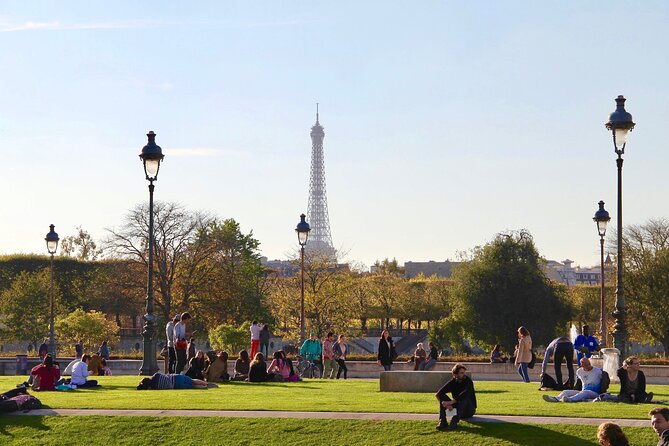
- Eiffel Tower finale from the Tuileries area, with construction context for 1889
Walking the Historic Core From Île de la Cité to Tuileries
This is a classic “center of Paris” route, designed for people who want orientation fast. The tour begins at Cité 75004 and ends near Tuileries Garden 75001, close to public transport, so you are not stuck thinking about how to get home afterward.
The best part is that the route is built around meaning, not just famous buildings. You start on the island that served as an early core, then you move outward across bridges and squares that show how the city grew. By the time you hit the Eiffel Tower area, you have already learned the key threads that connect the monuments.
Also note the practical size of your experience. It is a private walking tour, so only your group participates. If you like asking questions and hearing explanations tailored to your pace, this setup tends to work better than open-ended group tours.
You can also read our reviews of more walking tours in Paris



How long it really takes, and how the pace stays manageable
The tour runs about 2 hours 30 minutes. The walking segments are broken up with frequent short stops, with several listed at roughly 12 to 14 minutes each, which helps you keep your footing and your attention.
This matters because Paris sights are not short. Even if you know exactly what you want to photograph, lines, crowds, and detours can slow you down. Here, the schedule is built around quick, high-value stops, so you still finish with a view of the Eiffel Tower area instead of getting trapped in one long line.
You should still wear comfortable shoes. This is a walking tour in central Paris, so expect uneven sidewalks and lots of curb cuts, especially around older areas near the Seine.
Stop 1 and stop 2: Île de la Cité and Notre-Dame Cathedral in one story
The tour starts on Île de la Cité, the island often treated as the heart of old Paris. You are told how the Parisii tribe set up temples there more than 2,000 years ago, then the island later fell under Roman rule. It is a neat first lesson because it reminds you that Paris was not born all at once. It formed in layers, and this island is where those layers are easiest to feel.
From there, you move into the Cathedrale Notre-Dame de Paris area for a stop timed at about 14 minutes. The focus is on the cathedral’s construction in 1163, and the story runs forward all the way through the 2019 fire. You also hear about major turning points tied to the French Revolution and Napoleon’s coronation.
I like this approach because it changes how you look at the cathedral. Instead of seeing it as just a single image, you start seeing it as a survivor through centuries of political change, repairs, and public emotion.
One thing to consider: this is a walk-and-listen stop, not a full cathedral visit experience. If you want lengthy interior time, you may still want to plan a separate timed ticket visit on another day.
Stop 3: Fontaine Saint-Michel, and why the rebuild mattered
Next comes Fontaine Saint-Michel, about a 12-minute stop. You are shown the fountain as part of the grand reconstruction of Paris, which gives it more weight than just being a pretty photo spot.
This is the kind of stop that helps you understand the city’s “then and now” rhythm. Paris frequently reworks older neighborhoods, but it does not erase them completely. Instead, it overlays new designs on top of older bones. A fountain like this becomes a marker of when the city chose to rebrand itself.
If fountains are your thing, you will probably enjoy this pause. If you want nonstop talking about medieval Paris, you might find it briefly shifts gears.
Stop 4: Pont Saint-Michel and WW2 scars you can actually see
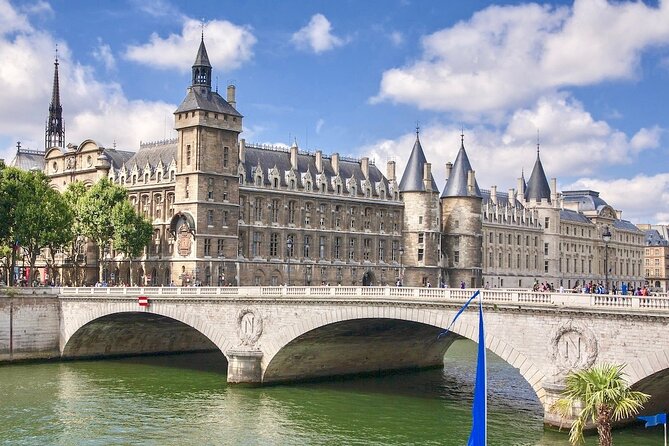
The tour then shifts to Pont Saint-Michel (about 12 minutes). Here you watch the Seine from a bridge position that makes it easy to connect the water to the city’s defenses and history.
The highlight is the visible WW2 detail: your guide points out bullet holes and explains why Paris was not destroyed during the war. That kind of information tends to stick, because it is physical. You are not just learning abstract dates, you are seeing the remnants.
Practical tip: bridges are windy, and you may have better luck with photos when you pause and adjust your angle rather than shooting straight into the wind. Also watch your footing, especially near the edges where crowds may stop suddenly.
You can also read our reviews of more city tours in Paris






Stop in the square: Place Dauphine for a calmer reset
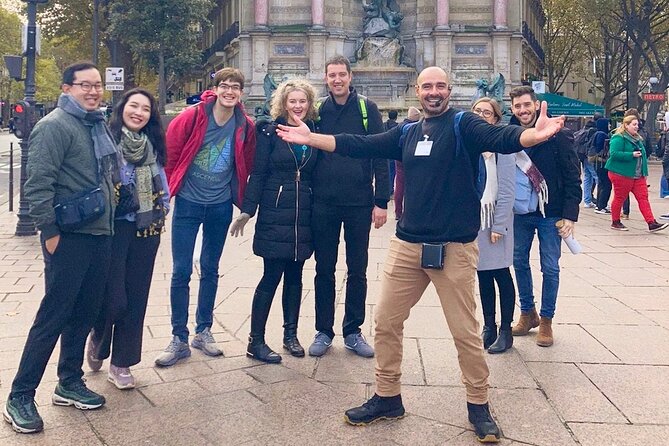
After the bridges, the walk includes time to go inside Place Dauphine. This is a charming, quieter-feeling square and it is known for restaurants, which makes it a smart lunch-target after your tour.
Why it works: you just saw heavy historical themes on cathedrals and wartime stories. Placing a calmer square right after gives your brain a breather. It is also an easy place to choose something simple without having to hunt for a lunch spot from scratch.
If you are planning your day tightly, you can even use this stop to decide where you want to sit for the next hour. Ask your guide for a nearby option that fits your taste and budget, since recommendations are part of the experience.
Stop 5 and stop 6: Henri IV statue and Pont Neuf secrets
The tour continues to the Statue équestre d’Henri IV for about 13 minutes. You get views toward the Seine, and your guide shares what mattered about Henri IV, including that his reign was short but meaningful.
This statue stop is a good example of how the tour links politics to place. Paris monuments are never just decorative. They mark alliances, memories, and power, and they help you recognize why certain people are honored in particular locations.
Then it moves to Pont Neuf for about 12 minutes. This is the oldest bridge in Paris, and your guide brings it to life with stories tied to Henry IV and details like the tooth pullers of Paris. That particular detail is odd in the best way, because it reminds you the city’s history is full of everyday survival, not just coronations and battles.
Pont Neuf is also one of those places where you will naturally slow down. Even if you only remember one fact from the stop, the views will probably keep pulling you back for one more look.
Stop 7: Louvre area context, Leonardo, and the Mona Lisa story without entry
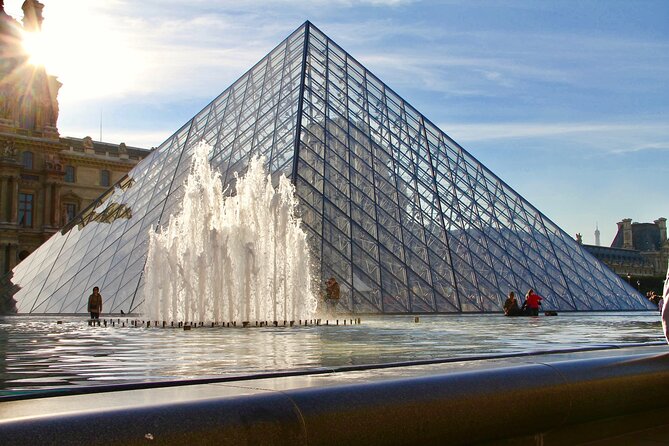
The route reaches the Louvre Museum area for about 25 minutes, and this is a big “worth it” segment even though you do not enter the museum. Your guide covers the true story behind Leonardo Da Vinci and explains why the Mona Lisa became so famous.
You also hear context tied to Francis I and how the Louvre began as a fortress and palace. Finally, you get views around the glass pyramid area, with the guide pointing out mysteries and meaning you might otherwise miss.
This is the right move for people who want the Louvre as part of a day, not as a full-day commitment. The Louvre can swallow an entire day quickly once you factor in tickets, lines, and decision fatigue. Here, you get an overview that makes a future museum visit make more sense.
If you already have Louvre tickets and a must-see list, you may feel this stop is a warmup rather than the main event. In that case, treat the Louvre stop here as inspiration, then plan an entry-focused day later.
Stop 8 and Stop 9: Arc de Triomphe du Carrousel and the shift into the Napoleon era
A short stop follows at Arc de Triomphe du Carrousel for about 5 minutes. It is built by Napoleon, and you learn how it reflects his rise and ambitions across Europe.
This is brief on purpose. The idea is not to stage a full Napoleon lecture, but to give you enough context that you notice details later on. When you walk past another imperial landmark elsewhere in Paris, you will probably recognize the pattern in how power was displayed through architecture.
After that quick burst, you move toward the calmer green space next.
Tuileries Gardens and the Eiffel Tower finale
The tour then includes time in the Tuileries Gardens, described with statues, sculptures, and fountains. The design is linked to the same garden designer association as Versailles, with an aim to create a sense of mystique and majesty.
This is where the walking tour changes from “dense history” to “reset and refocus.” Gardens give you a visual pause, and fountains create a softer soundscape than streets full of traffic.
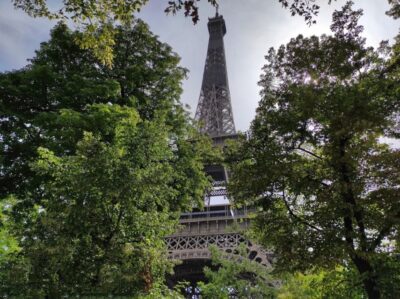
The grand finish is the Eiffel Tower area, with about a 15-minute stop and unbeatable views. Your guide explains how Gustave Eiffel pulled off the construction in 1889, which helps you appreciate the structure as engineering, not just scenery.
A practical note: if you want photos, aim to step slightly back from the densest crowd spots. The view tends to look best when you have a bit of depth, not when you are squeezed right up against the busiest foot traffic.
Price and value: what $156.01 buys you in Paris
At $156.01 per person, you are paying for a short, well-guided route through central Paris with a certified expert guide. The total duration is about 2 hours 30 minutes, which is important because Paris days vanish quickly. Spending time planning, navigating, and figuring out what to prioritize often costs you the same amount in lost sightseeing hours.
Here is where the value shows up:
- Free-entry stops are listed for every sight along the route, so you are not paying extra just to stand nearby and learn.
- You do get a private tour feel, since only your group participates.
- Your guide adds on-the-ground recommendations for restaurants and activities, which can save you time later that you would otherwise spend searching.
Where the price might not feel like a win is if you expected full museum entry as part of the package. The Louvre is shown but not entered on this tour, so you will likely need a separate ticket if you want full galleries.
In other words, this is a great value for a guided orientation of Paris core. It is less of a value if your main goal is museum hours.
Who this tour suits best, and who might want a different format
This works best if you:
- Want an organized first pass at Île de la Cité, Notre-Dame area, and the Seine bridges
- Like learning the “why” behind monuments, including wartime details and shifting political eras
- Prefer a guided route with practical suggestions, so your afternoon and evening plan becomes easier
It might be less ideal if you:
- Need long interior time inside big-ticket sights
- Want a deep museum day focused on Louvre galleries
- Have very limited mobility and find even short walks exhausting, since it is still an active city-center walk
If your group includes first-timers, this tour is also a good way to agree on what to do next. A few stops here can make the rest of your Paris day feel less random.
Should you book this Paris Historic City Center Walking Tour?
I would book it if you want a concentrated Paris core experience with a guide who explains details instead of just pointing. The route is built for first-time orientation, and the balance between Notre-Dame storytelling, Seine bridge details like Pont Saint-Michel, and the calmer reset of Place Dauphine plus the Tuileries makes the day feel rounded.
Skip it or plan around it if you want Louvre entry as a priority. You can still get real value from the views and background, but you will need an extra plan for full museum time.
If you are price-sensitive, treat this as a “buy back your time” option. The guide work plus the short, free-entry sightseeing stops help you turn 2.5 hours into something you can build on for the rest of your trip.
FAQ
How long is the Paris Historic City Center Walking Tour?
The tour lasts about 2 hours 30 minutes.
Is this tour private?
Yes. It is a private tour/activity, so only your group participates.
Where do we meet, and where does the tour end?
You start at Cité 75004 Paris and end very close to public transportation near Tuileries Garden 75001 Paris.
Does the tour include entry to the Louvre Museum?
No. The tour does not include entry into the Louvre Museum.
Do you provide pick-up or drop-off?
No pick-up or drop-off is included.
What language is the tour offered in?
The tour is offered in English.
Are service animals allowed?
Yes, service animals are allowed.
Can I get a full refund if I cancel?
Yes. You can cancel up to 24 hours in advance for a full refund. If you cancel less than 24 hours before the start time, the amount you paid will not be refunded.
More Walking Tours in Paris


More Tours in Paris






More Tour Reviews in Paris





Not for you? Here's more nearby things to do in Paris we have reviewed










Paris City Tours, side by side.
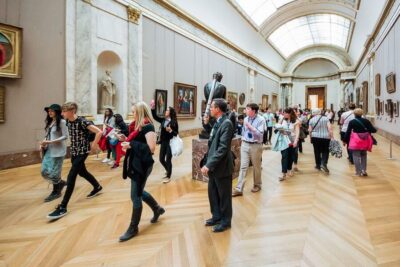 ★ 4.6Louvre Museum Timed-Entrance TicketTickets from $2671,977 guest reviews
 ★ 4.6Disneyland® Paris 1-Day TicketTickets from $6149,412 guest reviews
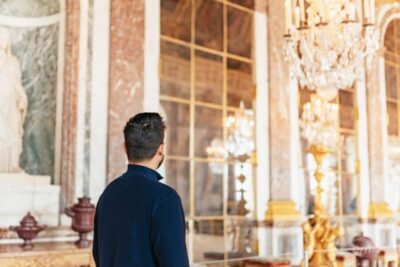 ★ 4.6Versailles Palace and Gardens Full Access TicketTickets from $1741,579 guest reviews
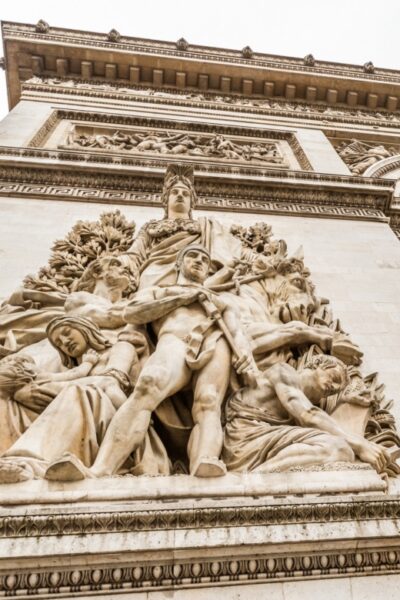 ★ 4.6Arc de Triomphe Rooftop TicketsTickets from $1834,264 guest reviews
 ★ 4.7Orsay Museum Entry TicketTickets from $1525,647 guest reviews
 ★ 4.4Evening River Cruise with MusicTickets from $2722,721 guest reviews
 ★ 4.4Eiffel Tower Entry Ticket with Optional Summit AccessTickets from $2920,035 guest reviews
 ★ 4.3Eiffel Tower Summit or Second Floor AccessTickets from $5917,248 guest reviews
This tour also belongs to