
Review · LE MARAIS TOURS
Paris Marais Quarter 2-Hour Private Walking Tour
Marais streets pack centuries into two hours, and a good guide keeps it readable. This private walking tour takes you from old-market Paris at Les Halles to the drama of the Hôtel de Ville, then into the Pletzl and Place des Vosges. The best part is how your guide ties the neighborhood’s Middle Ages story to the modern ideas behind the Centre Pompidou.
I especially like the way the route forces you to see the Marais as a living timeline, not just a postcard loop. I also love the Jewish history stops around the Pletzl area and the synagogue at Rue Pavée, where you get context for why this part of Paris matters. The one potential drawback: the 2-hour format is quick, so you will want comfortable shoes and the mindset to keep moving.
Key things that make this Marais tour worth it
- Les Halles to Fontaine des Innocents, where the city’s commercial past shows up in the streets
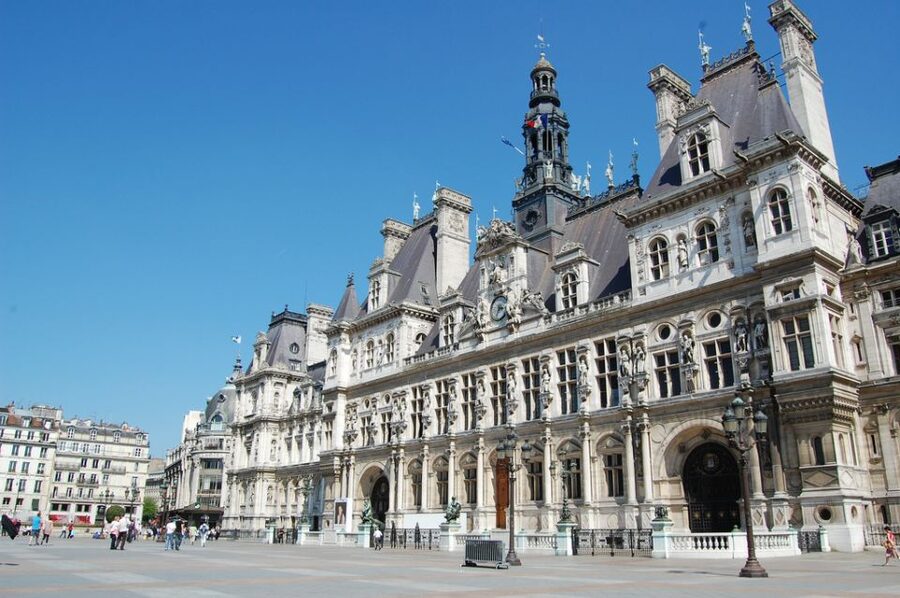
- Hôtel de Ville, a Renaissance City Hall that feels made for big-city drama
- Pletzl and Rue Pavée synagogue, Jewish Paris told through the actual neighborhood layout
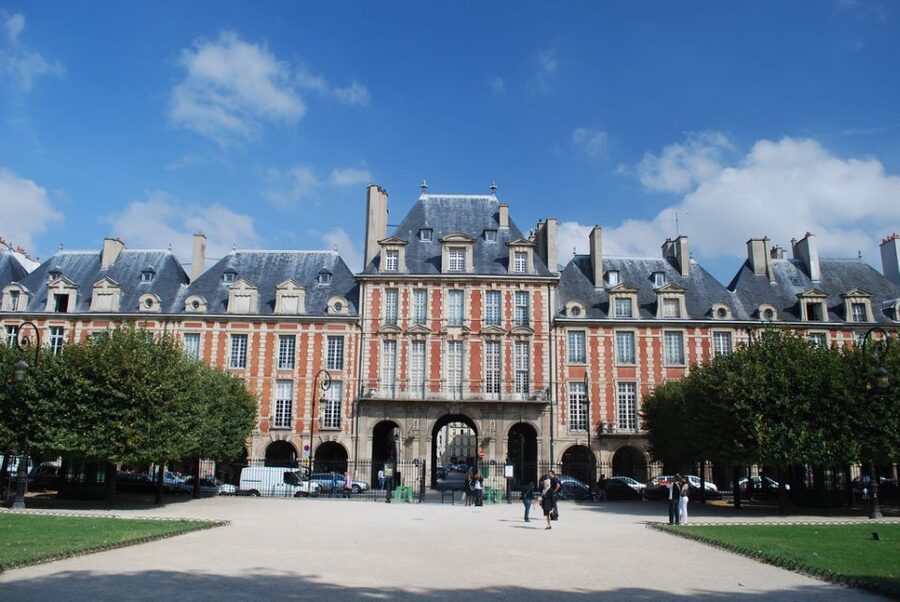
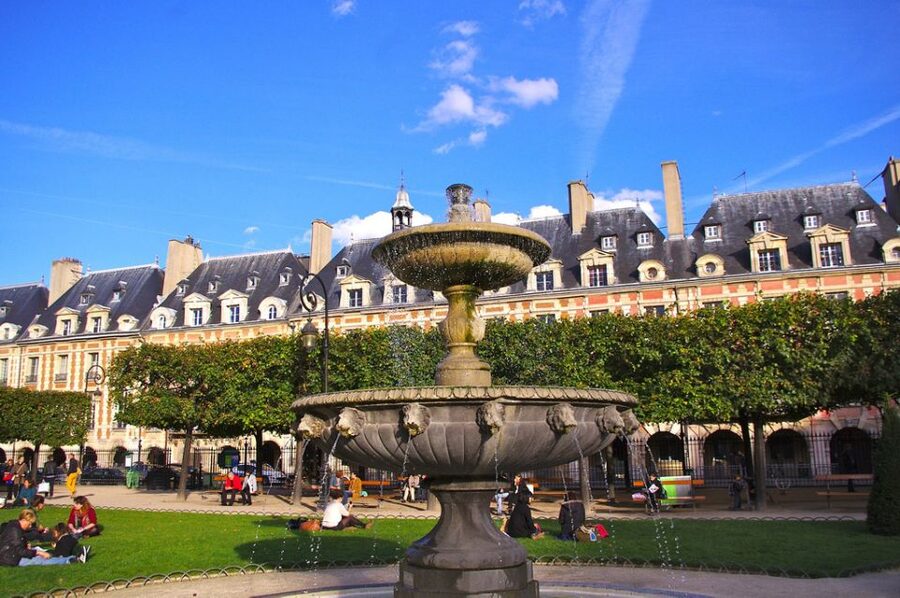
- Place des Vosges, one of the world’s most beautiful squares you can stand in, not just view
- Centre Pompidou’s Middle Ages connection, guided meaning for a modern landmark
- Private pace, with guides who can tailor explanations to the group, from ages 6 to 75 in real tours
The big idea: why the Marais feels different on foot
The Marais is one of those rare Paris neighborhoods where the past is not locked behind museum glass. It started as swamp land, then was drained and made livable, which is why the street pattern and settlement history feel so layered. Over time, the area swung between periods of status and decline, from aristocrats and a royal court to a rougher slum era.
That roller-coaster is exactly what makes this Paris Marais private walking tour work. Your guide turns the “wow, buildings” moments into cause and effect: who lived here, what the area was used for, and how that shaped the Paris you see today. You will finish with a clearer sense of why locals still talk about the Marais with real emotional investment.
You can also read our reviews of more walking tours in Paris



Start at Metro Étienne Marcel, and plan on moving
The meeting point is at Metro Étienne Marcel. Your guide will be carrying a red canvas tote bag, which makes it easier to spot the start even when the station feels busy.
Because the tour is only 2 hours, logistics matter more than usual. This is not the kind of walking tour where you drift into side streets at your own pace for a long time. Think of it as a focused, guided circuit that prioritizes big historical beats and a few signature “look up” moments.
Good news: the tour runs rain or shine, so you are not stuck waiting for perfect weather. Bring a small umbrella or a light rain layer if the forecast looks questionable, then concentrate on what your guide is doing rather than the weather.
Les Halles: Paris’s old-market core and the story behind it
You begin with Les Halles, once the biggest open market in Paris. Even if the modern feel of the area has changed, the concept still matters: this was a place where food, daily life, and commerce collided in a concentrated zone.
What I like about this stop is that it gives you an anchor for everything that comes later. Markets pull people into a neighborhood. They create constant movement, jobs, and local networks. That means the Marais is not just “old buildings,” it is also a neighborhood shaped by work and daily needs.
From here, the tour sets up the transition from commerce to civic power and then into community history. You are walking the kind of path that makes Paris geography make sense.
Fontaine des Innocents: small stop, strong payoff
Next comes the Fontaine des Innocents. This is the kind of landmark that can be easy to miss if you are speeding through the city with your phone out. On a guided walk, it becomes a pause point where your guide can connect architecture and public space to the neighborhood’s older identity.
In practical terms, this is a nice moment to reset. The walking pace is steady, so a short stop like this gives you time to actually look: the setting, the surrounding street feel, and how the fountain fits into a dense urban area.
Centre Pompidou, but with a historical lens
Then you head toward the Centre Pompidou, and here is the key twist: your guide explains the connection between the Middle Ages and this modern institution.
You might be wondering how that bridge works. The tour’s value is that you are not learning Pompidou as a stand-alone “cool building” in the contemporary Paris skyline. Instead, you get a guided explanation that places the modern landmark in the context of the neighborhood’s older patterns, growth, and transformation over time.
If you like architecture and urban planning, this stop can feel extra satisfying because it answers a question many people carry: why do the old and new coexist so naturally in places like the Marais? With this tour, you are given a reasoning thread, not just facts.
You can also read our reviews of more private tours in Paris






Hôtel de Ville: opulent Renaissance power in plain sight
The route includes the Hôtel de Ville, described as an opulent Renaissance City Hall. This is one of those Paris buildings where “big” and “specific” both hit. It is civic power made visible.
For me, the value here is how it ties back to the Marais story you are hearing all along. A market neighborhood grows, changes, and gains importance. Eventually, you get major institutions, and the city’s political identity becomes visible in stone.
Also, because this is a walking tour, you see the way the building relates to the surrounding streets. It is harder to fully understand that relationship from a bus or a quick glance.
Pletzl: the historic Jewish center, explained where it happened
Then comes the emotional core of the tour: the Pletzl area, the historic center of the Jewish community. This is not presented as a separate “special topic.” It is integrated into the Marais timeline you have been building since the market and civic stops.
You also visit the synagogue at Rue Pavée. Standing in these spaces with a guide can shift your understanding quickly, because you are linking community history to real streets and landmarks rather than relying on abstract descriptions.
Based on the tour’s strong guide reputation, this is often where the explanations land best. In past tours led by guides like Caroline and Alexander, the teaching style is described as clear, organized, and tailored to the group. In other words, you are not just getting dates, you are getting meaning.
Hôtel de Sully and Place des Vosges: slow down, then look again
The itinerary continues with Hôtel de Sully and ends in the open-air beauty of Place des Vosges.
Place des Vosges deserves a little patience. This is one of the most beautiful squares in the world, and on a guided walk you get a chance to really appreciate proportion, symmetry, and the way people move through a space. It is a square that rewards standing still for a minute, even if you are normally a “keep walking” person.
Then Hôtel de Sully adds another layer. You get a taste of the Marais’s residential and elite past, when the neighborhood was home to aristocrats and even a royal court. That aristocratic identity matters because it explains why the Marais later became so culturally loaded, and why it regained momentum again in its modern renaissance.
Place de la Bastille: the last stop that adds political context
Your walk also includes Place de la Bastille. This is a good closing point because it broadens your mental map of Paris. By the time you reach Bastille, you have already covered commerce, civic power, and community life. Adding this location gives you extra context for how Paris neighborhoods connect to national events and shifting power.
Even if you spend only part of your time here on foot, you leave with a sense that the Marais is not an isolated bubble. It is part of a larger story about Paris evolution and change.
Price and value: $176 per person for a 2-hour private walk
At $176 per person, this is not a budget group tour. The value case is that you are buying a private, guided experience for a very tight 2-hour window, and you are getting more than one “big photo stop.” You are getting a storyline that links multiple eras and themes: market life at Les Halles, civic identity at Hôtel de Ville, community history in the Pletzl, and the Middle Ages to modern meaning at Pompidou.
So who does it make financial sense for?
- If you want a private guide and you are traveling with 2 to a small group who prefers conversation over rushing
- If your trip time is short and you want the highlights plus guided interpretation, not just sightseeing
- If you care about history and architecture, but you want it organized into a clean arc
If you are a solo traveler on a tight budget, you might choose a cheaper group option. But if you value time, clarity, and a guide who can answer questions, the price can feel fair for what you get: concentrated attention in one of Paris’s most complex neighborhoods.
What the guide experience is like in real life
The tour is led by a live guide, with language options including English, French, and Serbo-Croatian. And while the itinerary is set, guides are doing real work to match the explanation style to the group.
From the guide feedback, I’m seeing consistent strengths:
- Alexander is praised for tying the history of Paris and the Marais together in a way that feels connected, not like a list.
- Caroline is noted for being well-informed and for pointing out hidden gems you might not find on your own.
- Boris is repeatedly described as pleasant and extremely knowledgeable.
- Fabienne is singled out for adapting explanations clearly to the audience.
- Yvana gets credit for making the tour feel playful and enlightened, with stops people would not otherwise choose.
- Anja is praised for being personable and strong on history, architecture, and culture.
If you are the type who gets more out of a tour when the guide can read the room, this is one reason the rating sits high.
Getting the most out of your 2 hours
Here is how you make the most of a compact 2-hour private walking tour:
- Wear shoes you can handle for continuous street walking. The experience is built on moving between several major stops.
- Have one question ready. Something like how the Marais changed from elite to troubled and then back again. A good guide will latch onto that.
- Bring a “look up and notice” mindset. Places like Hôtel de Ville and Place des Vosges reward attention to details you will miss when you rush.
- If weather is bad, dress for it. The tour operates rain or shine, so your comfort affects your focus.
Also, plan on not relying on snacks during the walk. Food, snacks, and beverages are not included, so if you need energy, eat before you start. If you are taking this early or midday, a quick bite before meeting can keep the tour enjoyable.
Who this tour is best for
This Marais private walking tour is ideal if:
- You want a history-focused walk without the confusion of trying to piece together neighborhoods on your own
- You like seeing how civic, commercial, and community stories overlap in the same streets
- You prefer a private group format where you can ask questions and get explanations that match your pace
It is also a smart pick if you are traveling with mixed ages. Past groups described the tour as working well for participants from young ages up to seniors, which suggests the guide approach can scale.
Should you book the Paris Marais 2-hour private walking tour?
I would book this tour if you want a guided “story route” through the Marais rather than a wandering photo walk. The combination of Les Halles, Pletzl and Rue Pavée, Hôtel de Ville, and Place des Vosges, plus the guided link between the Middle Ages and Centre Pompidou, is exactly the kind of packed cultural education that saves you time on a short Paris trip.
Skip it if your goal is purely casual sightseeing and you do not care much about historical context. Also consider choosing something else if you strongly dislike walking on uneven streets, because the whole point here is to learn by moving.
If you want one solid, well-taught Marais experience in a short window, this is a strong choice.
More Walking Tours in Paris



More Tours in Paris






More Tour Reviews in Paris






Not for you? Here's more nearby things to do in Paris we have reviewed












Le Marais Tours, side by side.
 ★ 4.5Award-Winning Paris French Bakery Experience — Le Marais, 4th ArrTickets from $1141,186 guest reviews
 ★ 5.0Paris Le Marais Food Tour With 10+ Tastings, Cheese, Wine & MoreTickets from $102985 guest reviews
 ★ 4.5Paris Le Marais District Original Food and Wine Tasting TourTickets from $157880 guest reviews
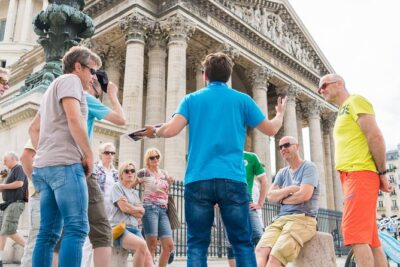 ★ 5.0Paris Bike Tour Hidden Secrets in the Latin Quarter & Le Marais neighborhoodsTickets from $54766 guest reviews
 ★ 4.9Food and Wine Tasting Walking Tour in Le MaraisTickets from $113446 guest reviews
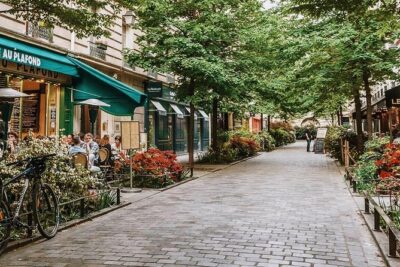 ★ 5.0Le Marais District & Jewish Quarter Guided Walking Tour 12ppl MaxTickets from $59361 guest reviews
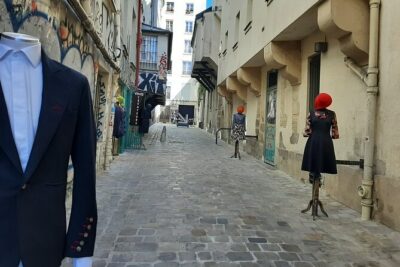 ★ 5.0Le Marais/Paris – The Historic, Trendy, Jewish, LGBT districtTickets from $48341 guest reviews
 ★ 5.0Paris Le Marais Food & Wine Tour with Eating EuropeTickets from $163297 guest reviews
This tour also belongs to