
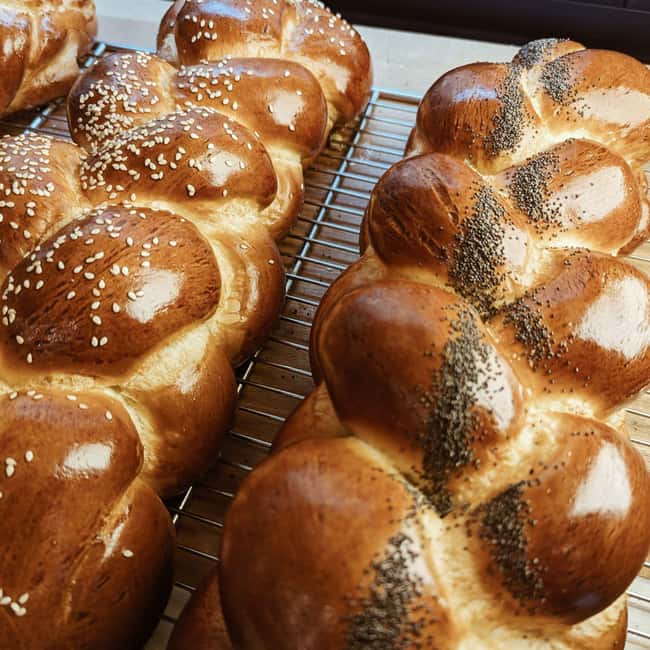
Review · LE MARAIS TOURS
Jewish Marais – Yiddish world : Walking tour and pastries
Paris has one neighborhood that speaks Yiddish. This small-group walk in Le Marais turns street corners into real, lived Jewish stories, with stops tied to the Pletzl and the Mémorial de la Shoah.
I like the way the guide connects facts to what you can see, from the Muraille de Philippe Auguste to the lanes around Rue des Rosiers. I also like the food part, because the Yiddish-world theme ends with a pastry tasting at Florence Kahn (strudel, babka, cheesecake).
One note: it is a 90-minute route, so the timing is tight and some stops are short photo or courtyard visits. If you prefer long, slow hangs in one place, plan to come back on your own.
Key points I’d prioritize before you go
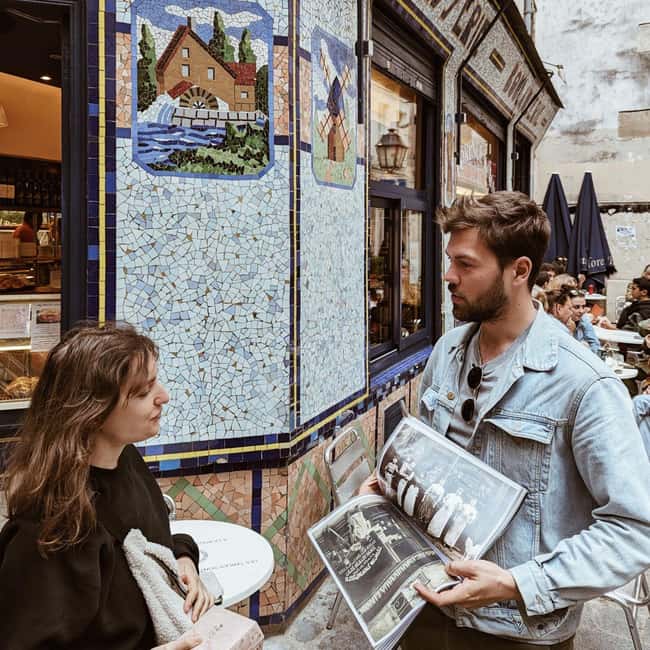
- Small group size (up to 10) keeps the questions flowing without feeling like a crowd-control exercise.
- Courtyard access at the Museum of Jewish Art and History and the Shoah Memorial makes the learning fit the time.
- Rue des Rosiers and the Pletzl give you the modern street-level context, not just monuments.
- Synagogue Agoudas Hakehilos (Rav Rottenberg) is handled with care, and you get a photo stop to mark it on your mental map.
- Florence Kahn tasting is the most concrete Yiddish-food payoff, with strudel, babka, and cheesecake in the mix.
Le Marais and the Yiddish world: why this 90 minutes feels focused
Le Marais is one of those parts of Paris where history is not trapped behind glass. You look up, and you keep noticing clues, old stone, street names, and the way Jewish community life is still present along the same streets today.
This tour works because it’s built around contrast. You start with medieval bones of the neighborhood, you move through the heart of the Pletzl area, you pause at recognizable religious landmarks, then you end at the Mémorial de la Shoah courtyard. That arc matters. It keeps the story human, from everyday culture to remembrance.
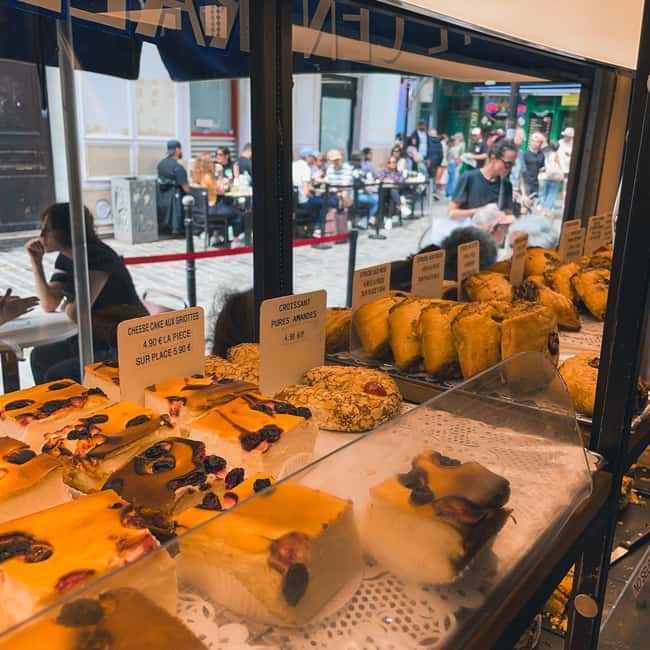
And yes, you eat. Not a vague snack. You get an organized tasting at Florence Kahn with strudel, babka, and cheesecake. Food helps you remember, because it gives your brain a pleasant anchor to link with the places you just learned about.
You can also read our reviews of more walking tours in Paris



Meeting point at 69 Rue du Temple: quick way to find your guide
You’ll meet at 69 Rue du Temple, between the LCL bank and a little wooden door. The guide is easy to spot, wearing a white shirt and carrying a leather satchel.
I like this setup for one reason: it reduces waiting. With a short tour length, every minute counts, and a clear meeting point helps you start on time without stress.
If you’re a few minutes early, hang close to the meeting area and look for that white shirt and leather satchel. Once you see them, double-check the group size and you’ll be ready to go.
Rue du Temple to the old wall: Paris street life meets medieval leftovers
Right after you start on Rue du Temple, you begin the Le Marais orientation part of the walk. This is where the neighborhood stops being just a name and starts becoming a map in your head.
A major highlight here is the Muraille de Philippe Auguste. You’re not just passing by a wall, you’re learning what that structure represents in the layered timeline of Paris. Even if you don’t consider yourself a “history person,” old fortification lines do something practical. They help you understand where people once could move and where they had to funnel through. That makes the rest of the route feel more logical.
Practical tip: bring your phone camera for the stone details, but keep it ready low during traffic-heavy segments. Rue du Temple and nearby streets can be busy, and you’ll want both eyes on your footing on cobblestones.
Rue des Rosiers and the Pletzl: where Jewish life shows up in plain sight
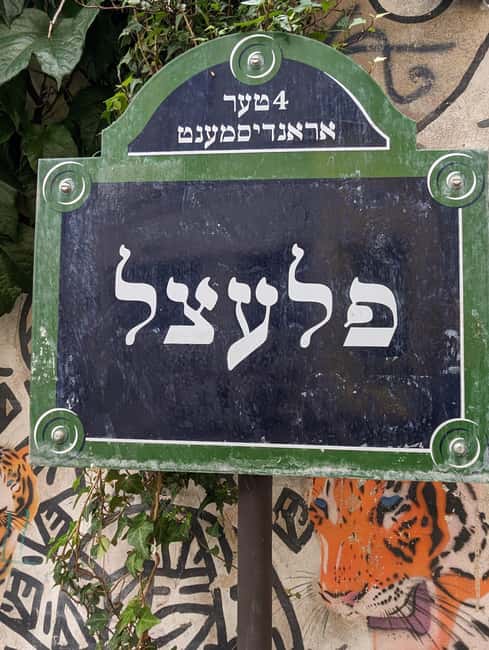
The middle section is the most “you are here” part. You spend time around the Rue des Rosiers area, and you also tour the Pletzl, the neighborhood heart that people often associate with Jewish Paris.
Why this matters: you’re getting the lived-in feeling of Jewish community life, not only the sightseeing version. You can sense it in the street pattern, the shops, and the way landmarks cluster. Even with a short walk, this part helps you connect the story to daily rhythms.
Rue des Rosiers is also a useful anchor because it’s so specific. After you leave, you can still picture it. You’ll remember which direction the street runs, and that makes future exploring easier on your own.
A small consideration: this portion includes both walking and stops, so if you want lots of lingering photos, keep your expectations realistic. The tour is designed for movement and story pacing, not one-hour photo sessions.
Synagogue Agoudas Hakehilos (Rav Rottenberg): respectful, clear, and photo-focused
One of the signature stops is the Synagogue Agoudas Hakehilos, connected here with Rav Rottenberg. You’ll have a photo stop, which is a smart compromise in a neighborhood tour. It gives you the visual reference without turning a religious space into a sightseeing free-for-all.
What I like about this kind of stop is the framing. Instead of treating the synagogue like a backdrop, the tour approach gives it context as an active marker of community identity and continuity.
Keep your behavior low-key. During synagogue-area moments, it’s best to move quietly, dress appropriately, and follow your guide’s cues about where to stand for photos. Even if you’re just shooting a few frames, you’ll get more out of it if you keep the tone respectful.
More Paris tours and experiences for the shortlist





Museum of Jewish Art and History courtyard: learning without overload
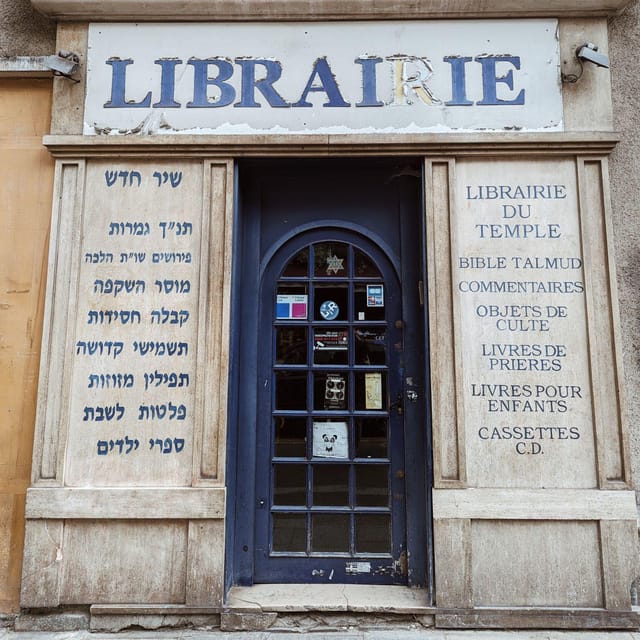
The tour includes access and a tour of the courtyard of the Museum of Jewish Art and History. Courtyards are useful on a timed tour because you can learn in a concentrated area without losing the group to long indoor wandering.
This stop also complements the street-based scenes. Street walking gives you the “texture” of the neighborhood, while a museum courtyard stop can give you tighter context, names, and themes to organize what you’ve already seen.
If you’re someone who gets tired by too many stops, this is a good middle ground. Courtyards are calmer than most museum interiors, and you still get a sense of place and purpose.
Mémorial de la Shoah courtyard: the last stop hits with gravity
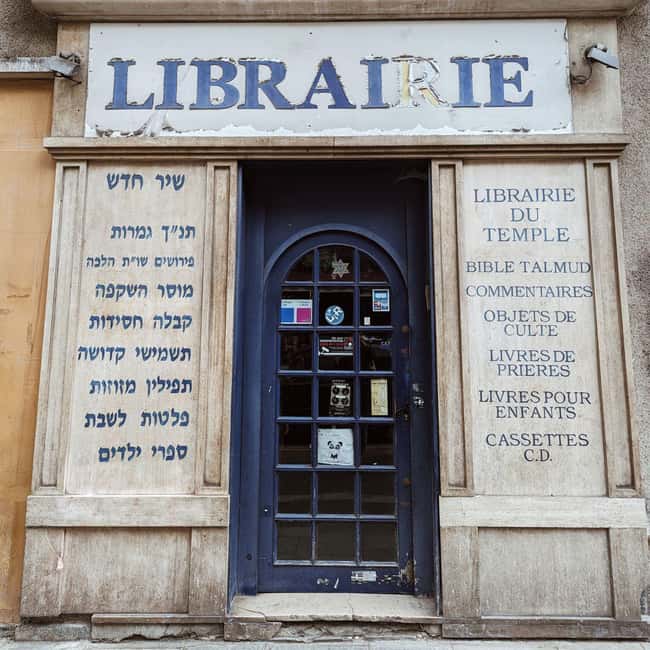
You finish at the Mémorial de la Shoah, with access and a tour of the courtyard. Ending here changes the emotional weight of the whole walk.
That courtyard stop is not a casual sightseeing ending. It’s the kind of location where the information you absorbed earlier takes on a different meaning. It also makes the entire route feel anchored to remembrance, not just a cultural stroll.
If you want a practical tip: keep a little time in your mental schedule for this final moment. Even though it’s included as part of a 90-minute experience, it benefits from your attention. A few minutes of stillness at the end can make the rest of the tour click.
Florence Kahn pastry tasting: strudel, babka, cheesecake, and why it works
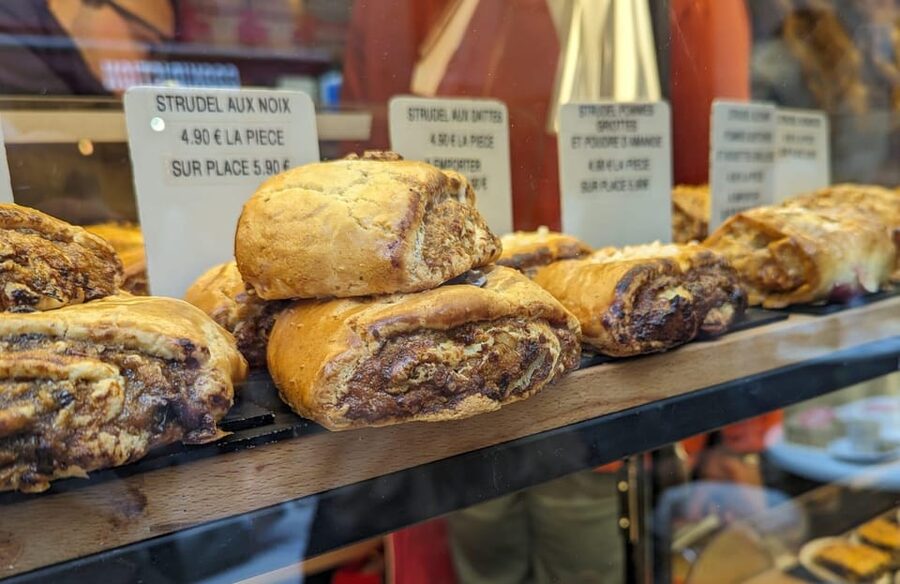
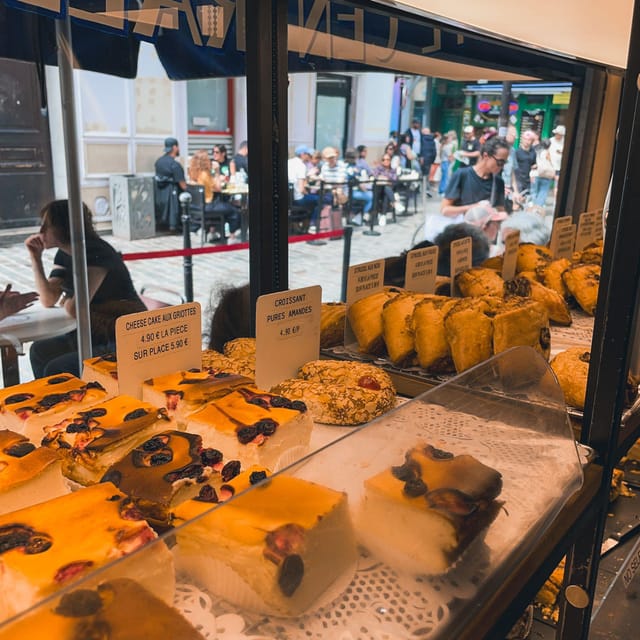
The food stop is at Florence Kahn, and the tasting is an assortment of pastries: strudel, babka, and cheesecake.
I like this because it’s tightly matched to the theme. Yiddish culture in Paris isn’t only about language or history books. It’s also about food, family patterns, and the sweet comfort that shows up in many Jewish traditions. The tour doesn’t treat pastries as a random add-on. It’s positioned as part of the cultural narrative.
Here’s what to consider: you’ll have a dessert-focused tasting, so go in hungry but not stuffed. Also, the tasting is scheduled inside the flow of the walk. That means it’s not a slow, sit-down café meal, it’s a designed stop with time built in.
If you’re watching what you eat, you can still enjoy the experience. Pastry tastes are comparative, and your brain will track differences between fillings and textures. Strudel often gives you that flaky, fruit-forward feel, while babka brings richer, spiced layers. Cheesecake lands more creamy and dense. Together, they cover a nice range of “comfort baked goods” rather than one single pastry type.
Guide impact and the small group size up to 10
This is a small-group tour, limited to 10 participants. That is a real value point. With a group this size, you can ask questions without your guide having to do constant crowd management.
The guide experience also matters here. In the feedback you’re drawing on, people consistently highlight a passionate, expert feel. One name shows up repeatedly: Robin, described as knowledgeable and even noted as a Sorbonne professor-style presence by multiple guests. Another consistent theme is that the guide is happy to answer questions and adjust pace to your group’s curiosity, including for a 13-year-old who had plenty of questions.
What you should expect from a guide like this: story clarity. Instead of listing dates, the guide links landmarks to why they mattered. That’s what makes the stops stick.
Also, the tour runs with guides who speak French, English, and German, so you can choose the language that matches your comfort level without losing nuance.
Price and value: what $41 gives you beyond a casual snack
At $41 per person for 90 minutes, this is not a “grab and go” deal, but it’s also not overpriced for what you get.
You’re paying for three things:
- Site access and guided explanation, including courtyards connected to the Museum of Jewish Art and History and the Mémorial de la Shoah.
- A themed route that stitches Rue du Temple, the Pletzl area, Rue des Rosiers, and the synagogue stop into one coherent walk.
- A structured pastry tasting at Florence Kahn with a named assortment.
If you were to do this on your own, you’d still need to figure out what matters at each stop. A guide saves you time and, more importantly, helps you notice what you’d likely miss. The courtyards are a key part of the value. You’re not just walking past big-name spots, you’re getting a guided experience tied to them.
And because the group is small, that explanation is more personal. You get to ask questions, which often improves your enjoyment more than adding another stop.
Practical tips so you enjoy every stop
This tour is a walking experience in a central Paris neighborhood, so comfort matters.
- Wear comfortable shoes. Le Marais cobbles look pretty, but they can be tiring in a short timeline.
- Bring a phone camera, especially for the synagogue photo stop, but keep your attention on your footing.
- If you’re interested in Yiddish language and everyday cultural references, tell your guide early. A good guide will steer the story toward what you care about.
- For the final courtyard at the Mémorial de la Shoah, plan for a more reflective tone. It helps to keep the mind open and not treat it like another quick photo point.
Who this Jewish Marais tour suits best
This fits best if you want:
- A short, guided way to orient yourself in Le Marais without getting lost.
- A Jewish Paris experience that mixes community life and remembrance, not only one side of the story.
- A food add-on that’s actually connected to the theme, not random dessert tourism.
It’s especially good for first-timers to Paris who want a neighborhood-and-story approach, and for families who can handle a respectful walking pace plus a pastry break. People who like guided history but don’t want a full-day schedule also tend to do well here.
Should you book Jewish Marais – Yiddish World?
I’d book it if you want a compact Le Marais plan that connects street names, major Jewish landmarks, and the emotional end point at the Mémorial de la Shoah, all wrapped up with a real pastry tasting at Florence Kahn.
Skip it only if your style is strictly slow and detailed, with long museum time and lots of unstructured wandering. This tour is designed for focused movement, and it gives you short, purposeful stops rather than hour-long hangs.
If you can handle a brisk 90 minutes and you like learning while you walk, this is a strong, good-value way to experience the Jewish Marais and the Yiddish-world flavor of Paris.
FAQ
How long is the Jewish Marais – Yiddish World walking tour?
It lasts 90 minutes.
Where does the tour start?
The meeting point is at 69 Rue du Temple, between the LCL bank and the little wood door.
What is the price per person?
The price is $41 per person.
How big is the group?
It is a small group limited to 10 participants.
What languages are offered?
The live tour guide speaks French, English, and German.
What are the main stops on the tour?
You’ll cover Rue du Temple, the Muraille de Philippe Auguste area, Rue des Rosiers, the Synagogue Agoudas Hakehilos (Rav Rottenberg photo stop), and you finish at the Mémorial de la Shoah.
What food is included?
The tour includes a tasting of pastries from Florence Kahn, including strudel, babka, and cheesecake.
Is access to any courtyards included?
Yes. You get access and a tour of the courtyard of the Museum of Jewish Art and History, and access and a tour of the courtyard of the Shoah Memorial.
Who do I look for at the meeting point?
Look for the guide wearing a white shirt and carrying a leather satchel.
Can I cancel for a refund?
Yes, you can cancel up to 24 hours in advance for a full refund.
More Walking Tours in Paris
More Tours in Paris



More Tour Reviews in Paris

Not for you? Here's more nearby things to do in Paris we have reviewed








Le Marais Tours, side by side.
 ★ 4.5Award-Winning Paris French Bakery Experience — Le Marais, 4th ArrTickets from $1141,186 guest reviews
 ★ 5.0Paris Le Marais Food Tour With 10+ Tastings, Cheese, Wine & MoreTickets from $102985 guest reviews
 ★ 4.5Paris Le Marais District Original Food and Wine Tasting TourTickets from $157880 guest reviews
 ★ 5.0Paris Bike Tour Hidden Secrets in the Latin Quarter & Le Marais neighborhoodsTickets from $54766 guest reviews
 ★ 4.9Food and Wine Tasting Walking Tour in Le MaraisTickets from $113446 guest reviews
 ★ 5.0Le Marais District & Jewish Quarter Guided Walking Tour 12ppl MaxTickets from $59361 guest reviews
 ★ 5.0Le Marais/Paris – The Historic, Trendy, Jewish, LGBT districtTickets from $48341 guest reviews
 ★ 5.0Paris Le Marais Food & Wine Tour with Eating EuropeTickets from $163297 guest reviews
This tour also belongs to