
Review · LE MARAIS TOURS
Paris Le Marais Hidden Gems Small Group Tour with Cruise Option
Le Marais has stories in every doorway. This 1.5-hour walk pairs small-group energy with a late-morning rhythm, so you get neighborhood context without eating up your whole day. You start near the edge of the Marais and move through a chain of architecture, courtyards, and side streets that feel lived-in, not staged.
I especially like the hands-on food and shopping guidance from the guide, with real recommendations and practical suggestions you can use right after the tour. Guides such as Sophia, Katie, Paula, Sag, and Zac have been praised for making the area click through clear English and strong storytelling. One watch-out: if the group spreads out, it can get harder to hear and you may lose some of the details during the brief stops.
Key highlights to know before you go
- 1.5 hours that are timed to end in time for lunch in the Marais
- Up to 15 people so you can keep close to the guide
- Pompidou exterior architecture plus an optional top-view choice
- Medieval lanes and cloister views you would probably miss on your own
- Jewish quarter walking time on Rue des Rosiers with room for a snack
- Optional Seine cruise ticket usable anytime within one year
Late-Morning Le Marais: Exactly the Right Pace
This tour works because it respects your schedule. It runs about 1.5 hours, and it is set up as a late-morning experience, which means you should finish while lunch is still in reach. That matters in Paris, where a half-day plan can turn into a whole-day plan if you are not careful.
The route also keeps things moving. You are not stuck waiting outside one big ticket line for an hour. Instead, the focus is on short stops that change the scenery quickly: a major landmark exterior, then cloistered corners, then dead-end medieval streets, then classic Marais squares and courtyards. By the time you hit Place des Vosges, you feel like you understand the neighborhood, not just that you walked through it.
Price and Value for $43.55: What You Get, What You Don’t
At $43.55 per person, you are paying for three main things: a local guide, time saved by having a planned route, and the chance to get into the neighborhood’s meaning fast. You are also getting a small-group format with a maximum of 15 travelers, which is huge for a walking tour. In a big crowd, you lose the point of guided storytelling.
What is included is straightforward:
- An experienced local guide
- A Paris shuttle for convenient transportation
- Mobile ticket access
- An optional narrated Seine river cruise upgrade
What is not included:
- Lunch
- Admission tickets at some stops, including Centre Pompidou and the historical library
In other words, this tour is strong if you want guidance and context more than you want to spend your day buying museum tickets. If you do plan to go inside certain places later, that is easy to build in. The tour even points you in the direction of what might be worth a return visit.
You can also read our reviews of more boat tours in Paris


Small Group Dynamics: Earshot, Pace, and Guide Quality
The tour is capped at 15 travelers. That cap is where the value really shows up. It gives you a better chance to stay near the guide and hear the story at each stop, especially since most stops are only 5 to 15 minutes long.
I like that the tour has an interactive feel, not a lecture. The guide is there to explain why a place feels the way it does, not just to name buildings. In the feedback for this experience, you will see repeat praise for guides who tell the story well and speak excellent English, including Sophia, Katie, Paula, Sag, and Zac.
One practical consideration: one criticism mentions that when the group felt too large for the pace, people spent time waiting for others, and anyone not close to the guide could miss details. So here is my advice. Stay close at every stop. If you need to step back for photos, do it after the guide finishes the main point, not in the middle of it.
Centre Pompidou: The Inside-Out Look and the Quick View Choice
The tour starts with a stop at Centre Pompidou, where you get a guided take on the building’s famous inside-out design. It is a controversial landmark, and that is exactly why it is useful. The guide shares what it means to Parisians, including the love-hate relationship people have with this colorful icon.
From a visitor standpoint, this is a smart first stop because it sets expectations for what the rest of the Marais walk will do. You are not just collecting sights, you are learning how Parisians debate their own city.
Two useful options come up right at this moment:
- You can return later to pay for the museum exhibits
- You can also take a free ride up to the top for views over Paris
Either way, you are building perspective early. Even if you skip the museum visit today, you leave with a better sense of how Pompidou fits into the wider Paris story.
Cloister of Billettes: A Medieval Time Capsule

Next, you get Cloister of Billettes, described as one of the last remaining cloisters in Paris. The key here is the feel of stepping into a different era. The guide helps you notice what is left behind, and what that survival means in a city that has changed a lot.
This is one of those stops where the time is short but the payoff can be big. Because it is behind a door, you cannot easily stumble on it by accident. Having a guide point you to the significance turns a quick peek into something you remember.
If you like atmosphere, keep your camera ready, but also give your eyes a moment before you shoot. Cloister spaces have a way of making your brain slow down, even for a minute.
Impasse des Arbaletriers: Medieval Dead-End Streets and Street Art Contrast
Then comes Impasse des Arbaletriers, a medieval dead-end street tied to a crossbow shooting range. The guide connects the street name to its older purpose and talks about buildings that date back to the 13th century.
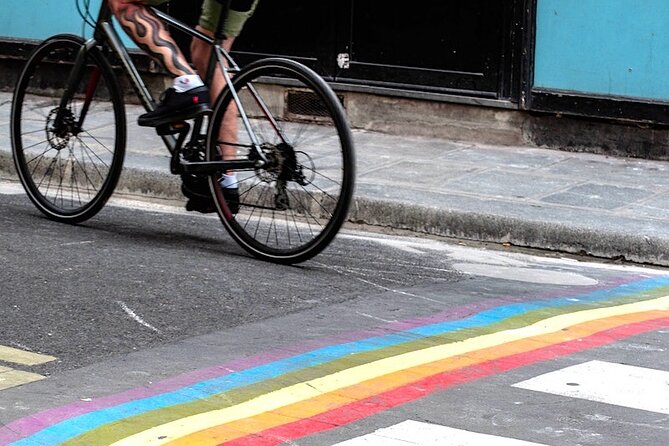
A detail I love from the tour description is the contrast you will notice as you walk: the street can look shiny and new on one side and gritty on the other. There is also street art and graffiti. That mix matters because it shows how the Marais stays the Marais. It is not frozen in time.
Practical tip: this is a great street for photos, but it is also narrow. Try not to block the sidewalk when you stop. If you are traveling with someone, agree on a quick photo strategy so you do not slow down the rest of the group.




La Rue des Rosiers: Jewish Quarter Classics and Snack-Stop Flexibility
At La Rue des Rosiers, you shift from medieval corners to a classic Marais street in the Jewish quarter. The tour calls it photo-worthy, and it is also a street where you can feel community life through food and everyday business.
The guide also shares how the culture has withstood gentrification in recent times. That context helps you see the storefronts as more than backdrops. You learn why certain kinds of shops and delis matter here.
You even get time to pop in and treat yourself to a snack. That small freedom is underrated. It is the difference between a tour that ends and a tour that feeds you.
If you want an easy strategy, listen to what the guide recommends, then choose one simple thing to eat right then. You avoid the common problem of saving everything for later and ending up too tired to act.
Bibliothèque Historique de la Ville de Paris: Hôtel de Lamoignon and the Books You Will Want to See
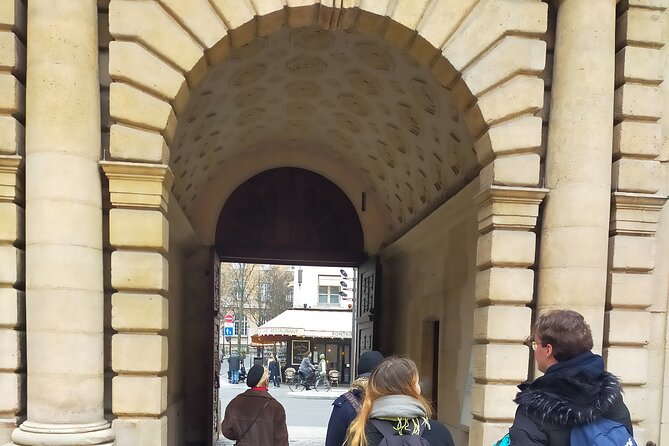
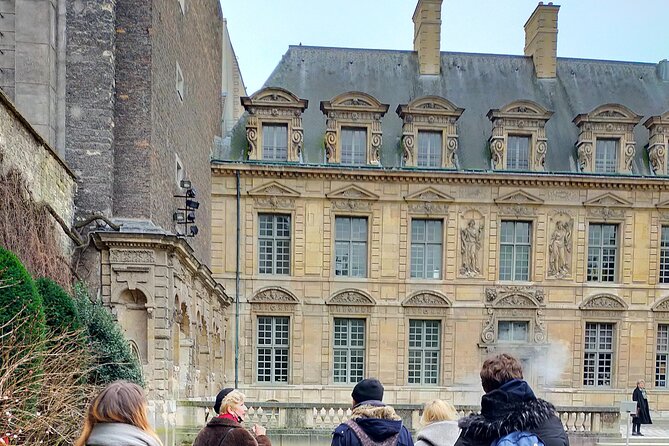
The tour makes a stop at the Bibliothèque historique de la ville de Paris, housed in the Hôtel de Lamoignon. You get a peek inside, with a guide explaining why the building and the collection matter.
The collection detail is eye-opening: the library holds over 1 million books, documents, and maps covering Paris from the 16th century to the present day. Even if you do not plan to read a map that day, this gives you a reason to come back when you want to research or simply browse.
Admission is not included here, so you are not meant to spend the whole visit inside. Think of this stop as a planning spark. You leave with a strong idea of what type of Paris materials exist, and you can decide later if you want a deeper visit.
Musée Carnavalet and Place des Vosges: History Museums, Gardens, and Victor Hugo
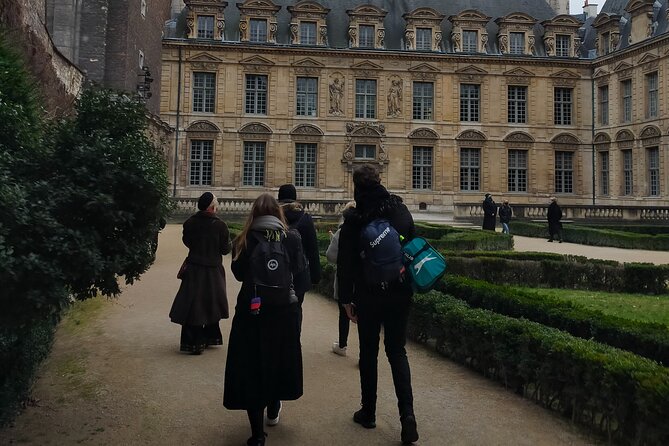
Then you head toward Musée Carnavalet – Histoire de Paris, framed as the city’s top history museum. This stop also gets extra style points because it is one of the rare examples of Renaissance architecture in the area. You also stroll along the gardens, which helps break up the walking rhythm and gives you a softer landing before the bigger square moments.
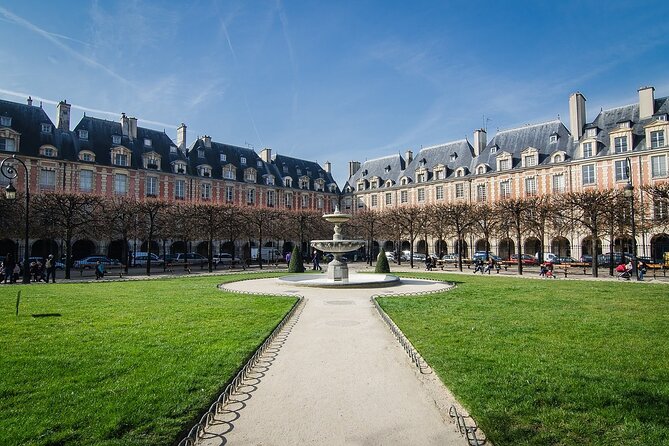
Next is Fontaines de la Place des Vosges. This is one of the Marais places you recognize fast once you are there, because it looks like a postcard of Old Paris. The tour notes that Place des Vosges was once home to Victor Hugo, and you and the guide can pause and sit briefly while you hear stories tied to the square.
My take: these two stops are valuable because they balance emotion with explanation. Museum gardens give you a place to reset your attention. Then the square stories give you a sense of how people lived, wrote, and gathered here.
Also, many parts of this section are free, including the Musée Carnavalet and the Place des Vosges time. That makes the pricing feel fair. You are not constantly wondering what costs extra.
Cour et Jardin de l’Hôtel de Sully: Private Courtyard Vibes Without the Big Detour
The tour finishes with Cour et jardin de l’Hotel de Sully, a courtyard of a private mansion built in the early 17th century. The guide connects it to the Marais when it was known for royal and upper-class residents and visitors.
What I like about this stop is that it feels quieter than the streets. You get a glimpse of how the Marais can shift from public life to private grounds in minutes.
The tour notes that the courtyard space is tied to management of historic buildings and monuments today. Even if you only spend a few minutes there, it gives you a sense of why this neighborhood still contains intact structures. Paris does not keep everything perfect by accident.
Optional Seine River Cruise: How to Add It Without Stressing Your Day
If you add the upgrade, you get a narrated one-hour Seine river cruise that begins and ends at the Eiffel Tower. You pass major landmarks such as Notre Dame, the Petit Palais, the Musée d’Orsay, the Conciergerie, and more.
The best practical part is flexibility. Your ticket is valid for one-hour cruise sailing anytime within one year of your tour date. That means you can:
- take the cruise on a different day when the sky looks right
- avoid stacking too many timed activities in the same afternoon
- pick a slot that works with your overall Paris plan
I find this pairing makes sense because your walking tour covers the Marais on land, while the cruise gives you Paris from the river perspective. It is the same city, different angles.
Who Should Book This Marais Walking Tour
This is a strong match if you want:
- a quick neighborhood orientation in 1.5 hours
- architecture and street-level history that you can actually see and photograph
- a guide who gives where to eat, drink, and shop tips right after the tour
It also fits well for first-timers who do not want to juggle multiple ticketed museum stops. The itinerary mixes free access moments with a couple of spots where you can choose to pay if you want more.
One more practical note: service animals are allowed, and it is described as suitable for most travelers. If you are someone who prefers a slower pace, keep in mind that many stops are only 5 to 15 minutes, and the group is expected to move between them.
Should You Book? My Decision Guide
Book this tour if you want a guided Marais walk that ends around lunchtime, gives you quick context at landmarks like Centre Pompidou, and then drills down into medieval streets, Jewish quarter life, and classic Marais squares and courtyards. The small group format is the part you will feel most during those short stops.
Consider other options if you know you struggle to hear in larger groups, or if you prefer long museum time inside major attractions. Also, check the language you are booking for, since there has been confusion in at least one case.
If you do book, show up ready to walk close to your guide. That small choice is what turns a good 1.5-hour tour into a memorable one.
FAQ
How long is the Paris Le Marais tour?
The walking tour lasts about 1 hour 30 minutes.
What is the meeting point and where does the tour end?
The tour starts at 2 Rue Brisemiche, 75004 Paris, France. It ends in front of Saint-Paul metro station at Rue Saint-Antoine, 75004 Paris.
Is the tour in English?
Yes, the tour is offered in English, and you receive a mobile ticket.
Are museum and library admission tickets included?
Not always. Admission tickets are not included for Centre Pompidou and the Bibliothèque historique de la ville de Paris, while other stops in the route are listed as free.
Is lunch included?
No, lunch is not included.
Is the Seine river cruise included or optional?
It is an optional upgrade. The cruise is one hour long and your ticket is valid for one year, usable anytime within that period.
How big is the group?
The experience has a maximum of 15 travelers.
More Boat Tours & Cruises in Paris



More Tours in Paris




More Tour Reviews in Paris



Not for you? Here's more nearby things to do in Paris we have reviewed












Le Marais Tours, side by side.
 ★ 4.5Award-Winning Paris French Bakery Experience — Le Marais, 4th ArrTickets from $1141,186 guest reviews
 ★ 5.0Paris Le Marais Food Tour With 10+ Tastings, Cheese, Wine & MoreTickets from $102985 guest reviews
 ★ 4.5Paris Le Marais District Original Food and Wine Tasting TourTickets from $157880 guest reviews
 ★ 5.0Paris Bike Tour Hidden Secrets in the Latin Quarter & Le Marais neighborhoodsTickets from $54766 guest reviews
 ★ 4.9Food and Wine Tasting Walking Tour in Le MaraisTickets from $113446 guest reviews
 ★ 5.0Le Marais District & Jewish Quarter Guided Walking Tour 12ppl MaxTickets from $59361 guest reviews
 ★ 5.0Le Marais/Paris – The Historic, Trendy, Jewish, LGBT districtTickets from $48341 guest reviews
 ★ 5.0Paris Le Marais Food & Wine Tour with Eating EuropeTickets from $163297 guest reviews
This tour also belongs to