
Review · PARIS CITY TOURS
Historic Paris Walking Tour in English
Paris history walks faster than you expect. On this 150-minute English walking tour, you connect big monuments to big ideas, from Paris at its earliest start to the eras that shaped modern France, and guides like Tom and Yazid keep it lively with story-driven stops. I especially like how the Louvre gets explained as both palace and museum, and how Notre-Dame is framed in the medieval world that created it.
The main drawback is simple: it’s real walking time. The meeting point at Hotel de Ville is easy to miss if you rush, so you’ll want to arrive 10 minutes early and wear shoes you trust.
Key highlights to look for
- A story-led route that links major Paris eras, not just sightseeing
- Louvre explained clearly from palace history to museum meaning
- Notre-Dame context that helps you read the building instead of just staring
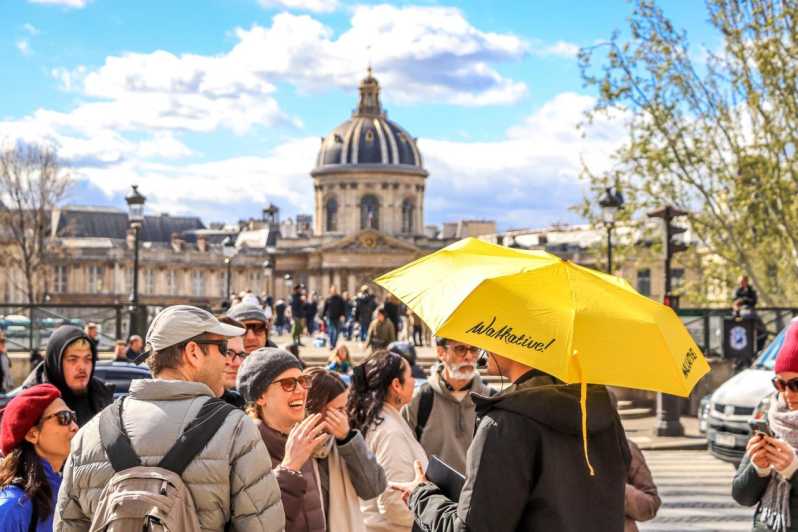
- Pont des Arts viewpoints across the Seine for classic Paris photos and perspective
- Tuileries Gardens time to slow down after the monuments
- Guides who stay engaging and keep the group moving at a good pace
Why this historic Paris route works in 150 minutes
Paris can overwhelm you fast. This tour works because it gives you a backbone story while still hitting the sights most people come for. In 150 minutes, you get the sense of how Paris became Paris, with its mix of power, religion, art, and political drama.
What I like most is that the tour doesn’t treat monuments like isolated postcards. You learn how each place fits a larger timeline, so the Louvre is not just art, Notre-Dame is not just a photo, and the Seine bridges are not just bridges.
You can also read our reviews of more walking tours in Paris



Meeting at Hotel de Ville: the one spot you must nail
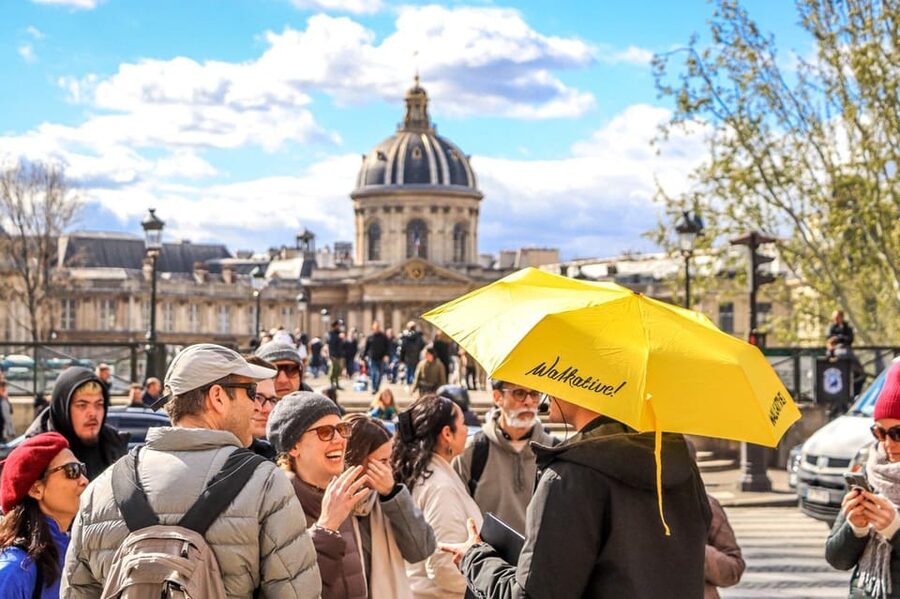
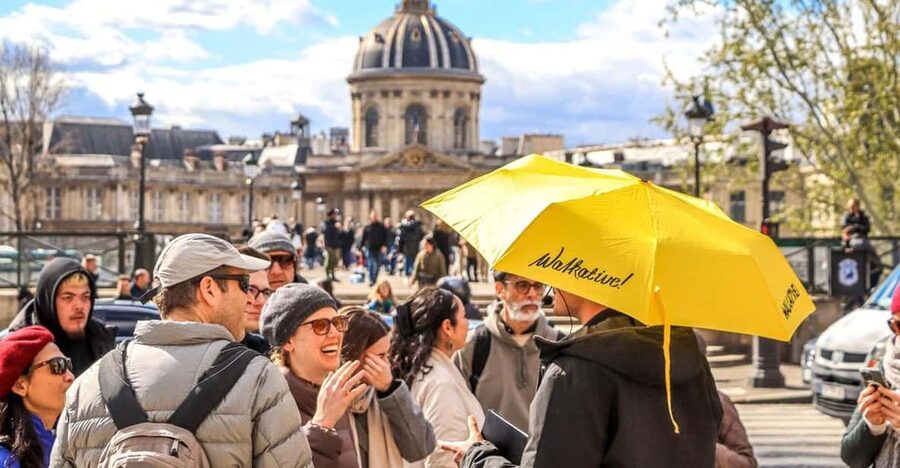
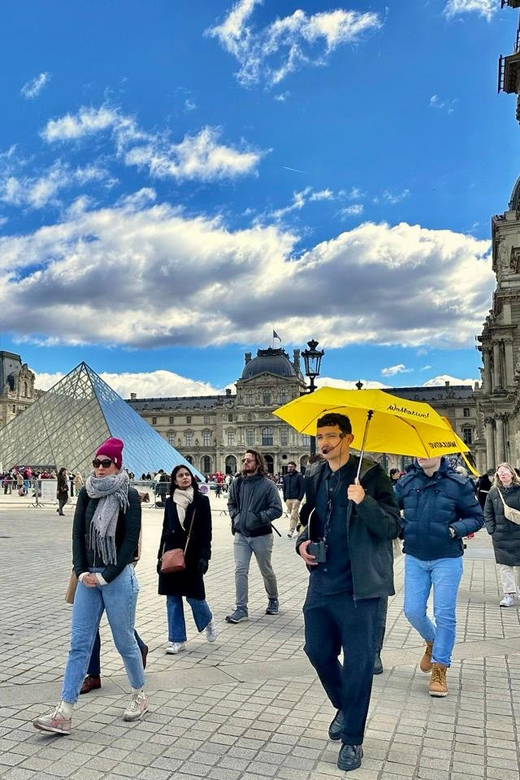
You meet at Hotel de Ville, outside the metro at exit 5. Look for a yellow umbrella, and plan to arrive 10 minutes before the start.
Practical tip: Hotel de Ville is a busy area. If you’re even a little late, you can lose the start time and make the rest of the walk harder than it needs to be.
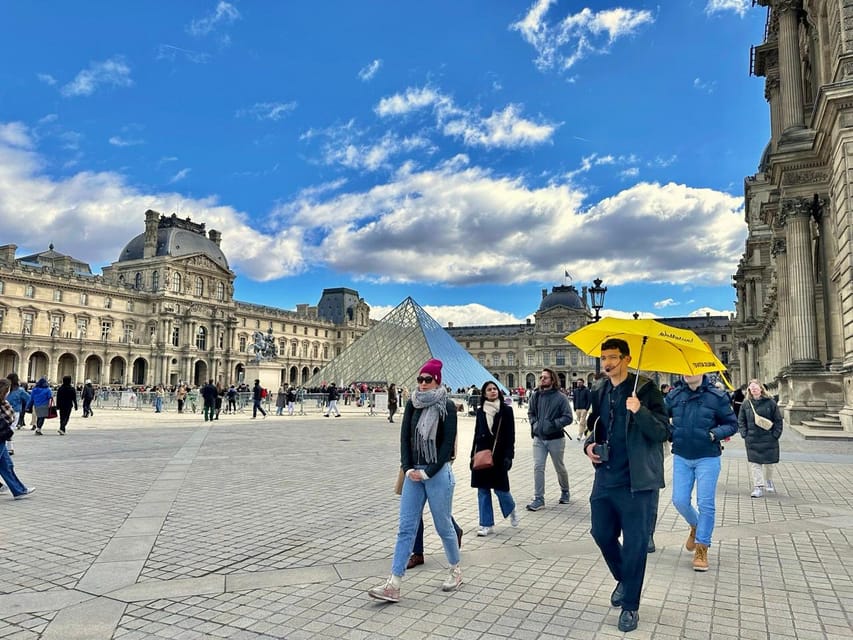
Louvre: palace power and why the museum matters
The Louvre is the kind of place where your first instinct is to say, wow. Your second instinct should be to ask why it looks and feels the way it does.
This tour helps you understand the Louvre’s shift from a historic palace space into the museum world you recognize today. I like that this stops short of turning into a textbook. Instead, you get the story beats that make the architecture and collections feel connected.
You’ll also get art-world talking points that make the museum feel less distant. For example, you’ll hear about high-stakes art events tied to Paris, including the legendary Mona Lisa story. Even if you already know the headline, the guide’s framing helps you understand why art theft became such a dramatic Paris moment, not just a crime story.
What to watch for at the Louvre stop
- If you love photos, aim for angles that show the building’s scale, not just close-ups.
- If you’re an art fan, listen for how the guide connects masterpieces to power, politics, and taste in different eras.
Possible drawback
Because it’s a walking tour, you won’t get a full museum visit. The payoff is context, not hours inside galleries.
You can also read our reviews of more historical tours in Paris





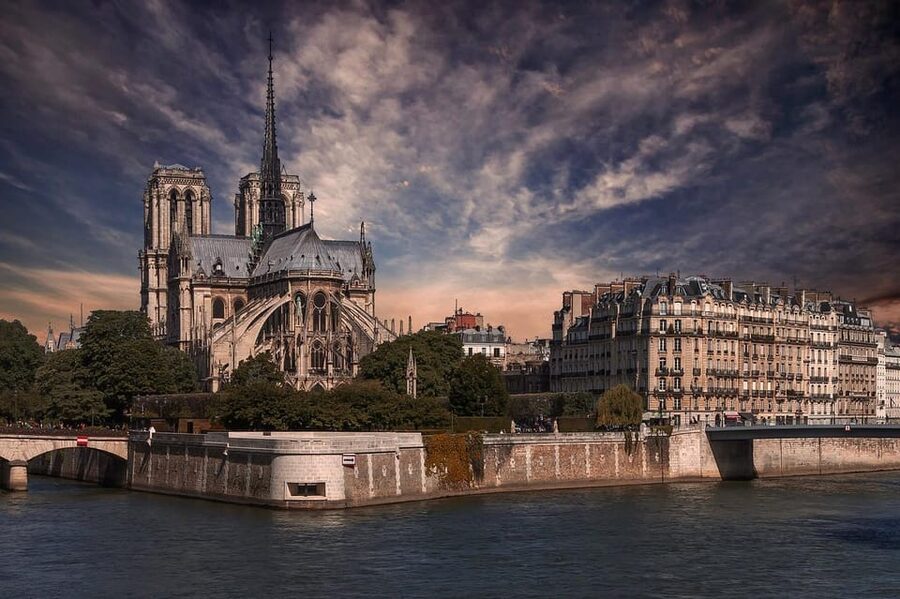
Notre-Dame: reading the cathedral like a storybook
Notre-Dame Cathedral is the kind of landmark that looks famous even before you see it up close. The tour’s value is learning how to place it in the medieval Paris world that shaped it.
This is where the walking tour really earns its name. You don’t just hear facts. You hear stories that make the cathedral feel like part of the city’s life, including cultural references that people associate with Parisian imagination. You may also hear how characters like Quasimodo connect to Notre-Dame in the way Paris culture remembers its own landmarks.
If you’ve ever felt like older churches are just stone with stained glass, this stop can fix that. You learn what makes Notre-Dame monumental, and you start noticing details you’d otherwise glide past.
What to watch for at Notre-Dame
- Look at how the cathedral sits in the urban setting. It’s not an island.
- Pay attention to how the guide talks about time periods, because that’s what makes the building feel layered rather than static.
Possible drawback
It can be crowded around major churches. If you’re the type who needs slow, quiet viewing, you’ll want to plan a little extra independent time afterward.
Pont des Arts: a Seine bridge for city-wide perspective
The route’s stop at Pont des Arts is more than a scenic break. It’s one of those Paris moments where you get a city-wide perspective in a minute.
Standing by the Seine changes how you interpret the rest of the tour. You start seeing Paris as a set of connected neighborhoods, not separate attractions. The bridge also gives you a sense of why Paris power and culture have always been tied to movement, trade, and public space.
This is also a good place to reset your attention. After cathedrals and museums, it helps to look out instead of up.
Why Pont des Arts is a smart pause
- It gives you a visual “breather” without losing the historic thread.
- It’s easy to connect the stories you heard earlier to the geography in front of you.
Possible drawback
If the day is busy, you may have limited space for photos at peak moments. The guide’s pacing helps, but you should still be ready for tight viewing.
Tuileries Gardens: where the walk turns calmer
When you reach the Tuileries Gardens, the mood shifts. After monument viewing, the gardens are a place to breathe and absorb the idea of Paris as a city that designs public life as well as art and buildings.
You’ll learn how this area fits into the bigger modernization story. Paris didn’t just build beautiful things, it reorganized itself to manage crowds and unrest. The tour ties that theme to 19th-century urban changes, including a look at how the city’s planners widened boulevards and reshaped space.
This matters for you because it changes how you read what you see next. You stop treating 19th-century Paris as one style and start seeing it as a strategy for living together.
A good stop for photos and calm
- Gardens are easier on the feet than stone monuments.
- You get a “Paris in real life” feeling, not just sightseeing.
Possible drawback
It’s still a walking tour. If you prefer lots of sitting time, you’ll want to extend your own garden break after the tour ends.
The extra Paris stories you’ll hear, from Napoleon to Mona Lisa
Part of what makes this tour work is that it uses storytelling to connect distant events to specific places. You’ll hear about figures like Napoleon, and you’ll also hear references that include Hitler and how Paris history gets reframed through different eras.
You’ll also hear how Paris culture turns people and events into lasting symbols. Quasimodo is a great example of that, because it shows how Paris can remember itself through story, even when the real world is more complex than the legend.
Art theft is another thread. The guide brings up the daring Mona Lisa story as a way to explain why Paris art, fame, and power are tangled together. That makes the Louvre stop feel less like trivia and more like a window into how art became part of national identity.
And yes, the tour covers big political and social themes too, including the city’s repeated revolts. You get the idea that Paris built much of its modern face partly to manage the realities of its own people.
If you’re not a history superfan, this still works
The stories have a human hook. Even if you only care about buildings, the guide uses history to help you understand why a place exists.
What else you’ll see besides Louvre, Notre-Dame, Pont des Arts, and Tuileries
The tour’s description also points to additional major stops and viewpoints tied to classic Paris landmarks. You may see Sainte-Chapelle, and you’ll get in the mix with the kinds of streets and bridges that lead you toward views of the Eiffel Tower.
There’s also a strong emphasis on the feeling of Paris itself: the elegant streets, the contrast between medieval and monumental architecture, and the modern spirit that grew out of conflict, poverty, and ideas. That’s the “class, elegance, fashion, love, art, and food” side of Paris that you can’t fully get from guidebooks alone.
This is why the tour is a strong first-day choice. It gives you a mental map and a sense of what to notice as you wander.
Price and value: why $31 can be a bargain
At $31 per person for a 150-minute English tour, this is priced like a practical, budget-friendly introduction to central Paris history. The big value is time and direction. Without a guide, you can wander from one monument to another, but you won’t naturally get the connections between palace history, cathedral context, Seine geography, and 19th-century modernization.
One interesting detail: the booking is part of a general pay-as-you-wish format. The amount you pay covers the reservation fee and the guide’s payment. In real terms, that means you should think of your booking as the baseline, and then reward the quality of the guiding you receive.
Based on the guide feedback, the strongest moments tend to be the ones where the guide can explain complex art and history clearly while keeping the group engaged. Guides like Tom, Yazid, Harry, Francesca, Victoria, and Toto are repeatedly described as entertaining, animated, and good at making connections across art, buildings, and political eras.
Pace, group size, and comfort tips that matter
A lot of walking tours fail on comfort. This one has a duration that’s long enough to feel worthwhile, but you still need to plan for movement.
One review noted a group size that felt under control, estimated fewer than 20. That matters because it keeps you from feeling swallowed by a crowd, and it makes it easier to hear the guide’s voice.
Practical advice:
- Wear comfortable shoes you can stand in for a long stretch.
- Bring layers if you’re touring in cooler months. One February morning was mentioned as crisp, which is exactly when good layers save the day.
- If you’re traveling solo, this type of tour format can be a quick way to feel included, because it’s guided, paced, and structured.
Who should book this tour, and who might skip it
This is a great fit if you want:
- A first-time in Paris orientation with major landmarks
- A story-led walk that explains why places matter
- A mix of art history and city history, with strong guide energy
- A route that balances big monuments with breathing space like the gardens
You might skip it if:
- You want a deep, inside-the-museum experience at a slower tempo
- You dislike walking for 150 minutes, even at a moderate pace
- You prefer only one theme, like pure art or pure medieval history, with no broader political threads
Should you book this historic Paris walking tour?
Yes, if you want a smart, high-impact way to understand central Paris fast. I’d book it as your early stop, because the tour gives you context you’ll feel all week as you revisit the city on your own.
If you’re on a tight schedule, this tour’s value is the connections it creates. If you’re more relaxed and want to linger, treat it as a strong foundation, then add extra time where you personally want more quiet or more photos.
When you book, plan to show up on time at Hotel de Ville and bring shoes for a true walk. Do that, and you’ll finish with a clearer sense of Paris, and a better eye for what you’re seeing.
FAQ
How long is the Historic Paris Walking Tour?
It lasts 150 minutes.
What is the price of the tour?
The price is $31 per person.
Is the tour in English?
Yes, the tour is in English with a live guide.
Where do I meet the tour?
You meet at Hotel de Ville, outside the metro at exit 5. Look for a yellow umbrella.
What time should I arrive at the meeting point?
Please arrive 10 minutes before the activity starts.
Is hotel pickup or drop-off included?
No. Hotel pickup and drop-off are not included.
What major sights are included?
The tour covers the Louvre, Notre-Dame Cathedral, Pont des Arts, and the Tuileries Gardens, and it also references stops such as Sainte-Chapelle and the Eiffel Tower.
Does the tour offer free cancellation?
Yes. You can cancel up to 24 hours in advance for a full refund.
Is there a pay-later option?
Yes. You can reserve now and pay later.
How does the pay-as-you-wish format work?
Booking this tour joins a general pay-as-you-wish format. The amount you pay covers the reservation fee and the guide’s payment.
More Walking Tours in Paris



More Tours in Paris






More Tour Reviews in Paris





Not for you? Here's more nearby things to do in Paris we have reviewed











Paris City Tours, side by side.
 ★ 4.6Louvre Museum Timed-Entrance TicketTickets from $2671,977 guest reviews
 ★ 4.6Disneyland® Paris 1-Day TicketTickets from $6149,412 guest reviews
 ★ 4.6Versailles Palace and Gardens Full Access TicketTickets from $1741,579 guest reviews
 ★ 4.6Arc de Triomphe Rooftop TicketsTickets from $1834,264 guest reviews
 ★ 4.7Orsay Museum Entry TicketTickets from $1525,647 guest reviews
 ★ 4.4Evening River Cruise with MusicTickets from $2722,721 guest reviews
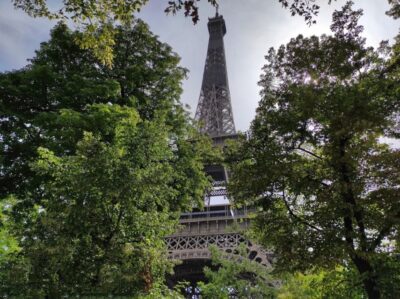 ★ 4.4Eiffel Tower Entry Ticket with Optional Summit AccessTickets from $2920,035 guest reviews
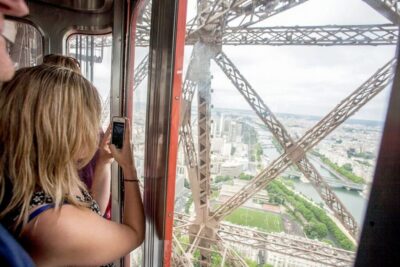 ★ 4.3Eiffel Tower Summit or Second Floor AccessTickets from $5917,248 guest reviews
This tour also belongs to