
Review · PARIS CITY TOURS
Paris: Private Guided City Tour in a Traction Avant or DS 21
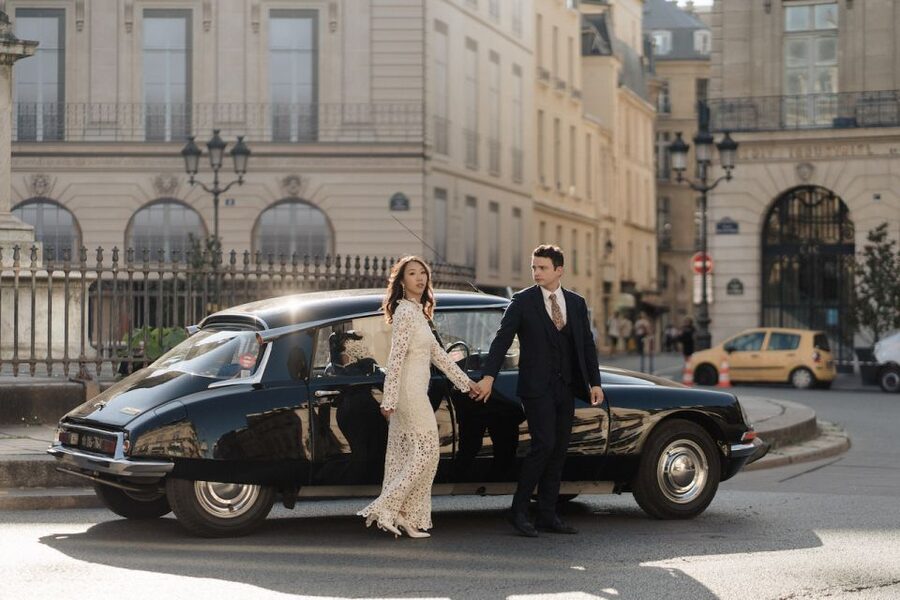
A vintage Citroën turns Paris into cinema. This private tour lets you glide through the city in a 1955 Traction Avant 11B or a 1971 DS 21 with a driver who brings the sights to life. Two things I really like: the convenience of hotel pickup and drop-off, and the way the route mixes major monuments with street-level views you miss from bigger buses. One drawback to plan for, no large bags or luggage are allowed, and the stops are mostly photo and short viewpoints, not a long walking tour.
On top of the car itself, the best part is how your guide times stops for photos and angles, including quick pulls at places like the Eiffel Tower and Arc de Triomphe. You also get choices, a 1-hour, 2-hour, or 3-hour private ride, so you can match it to your energy and jet lag. Just keep in mind that hearing the guide can be tougher in the back seat if traffic noise is loud, and language clarity can vary with accents.
Key Things You’ll Notice on This Vintage Paris Ride
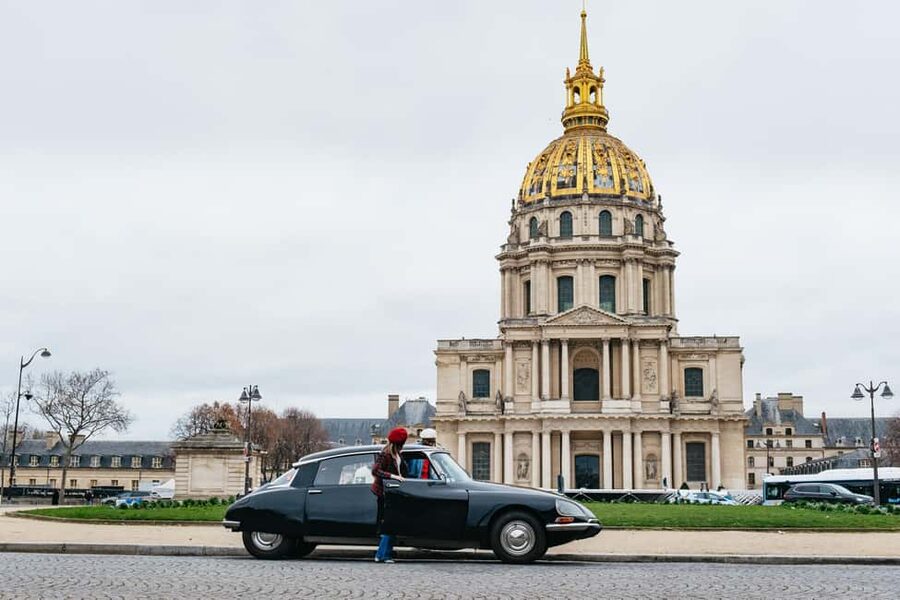
- A real vintage car experience: either a Traction Avant 11B or a DS 21 with historic engineering vibes
- Photo-stop planning: frequent, well-timed stops at landmark best angles
- Door-to-door convenience: hotel pickup and drop-off included, no transit puzzles
- Major sights plus flexible detours: you can tailor what you prioritize, like Saint-Germain or Sacré-Cœur
- Architecture from the street: buildings linked to Haussmann, Lavirotte, and Guimard show up along the route
- Small-group feel, private control: you set the pace with your driver and guide
Vintage Citroën Comfort: Traction Avant or DS 21 in Paris Traffic
Paris traffic can be chaotic. That is exactly why this tour format works. You are not fighting the city on foot, and you are not trapped in a huge vehicle that cannot comfortably reach tight streets.
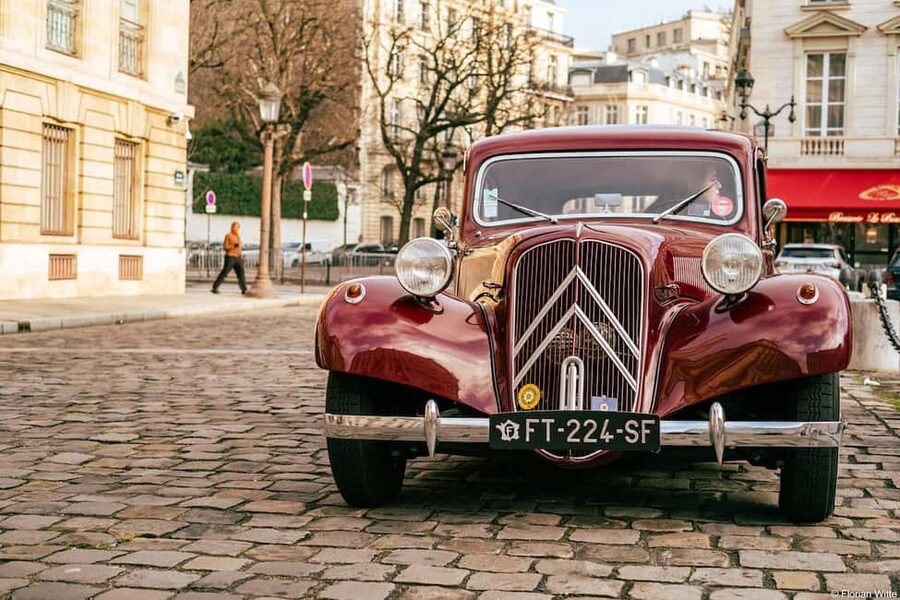
The vehicles are the star. You may ride in a Citroën Traction Avant 11B (1955), famous for early unibody front-wheel drive design. Or you may ride in a Citroën DS 21 (1971), known for early hydraulic suspension tech that gives a smooth, floating feel compared with modern cars. Either way, it feels like stepping into a time capsule, and yes, you will get attention as you roll by.
Comfort is practical here: you get a private seat, a personal guide, and a chance to see a lot in a short time. The catch is also practical. You should go light and skip luggage, because large bags are not allowed. If you are traveling with bulky items, you may end up needing storage elsewhere before you do this tour.
You can also read our reviews of more guided tours in Paris


Private Hotel Pickup, Then Fast Stops Done Right
The tour is set up for ease. You start with pickup from your hotel in one of the listed Paris area postal codes, then you get dropped back off later in another listed area. This saves you time, and it also means you are not burning your sightseeing energy trying to find a meeting point.
Because it is private, you can also steer it. You can pick a route flavor: iconic monuments, classic boulevards, or more neighborhood mood like Sacré-Cœur or Saint-Germain. And you can choose the time block, 1 to 3 hours, so you decide how much you want to see without turning the tour into a sprint.
The structure is built around quick stops. Some are guided viewpoints, and some are brief photo stops where you step out for a few minutes, then get back in before the streets get harder. For first-timers, this is ideal. You get the landmarks, plus context about what you are looking at. For people who hate rushed experiences, it helps to choose the longer option, because you will want more time for positioning and photos.
One more note: the tour is not set up for people using wheelchairs or for hearing-impaired visitors, and mobility limitations may make it difficult.
Concorde to Champs-Élysées: Your First Hour of Paris in One Sweep
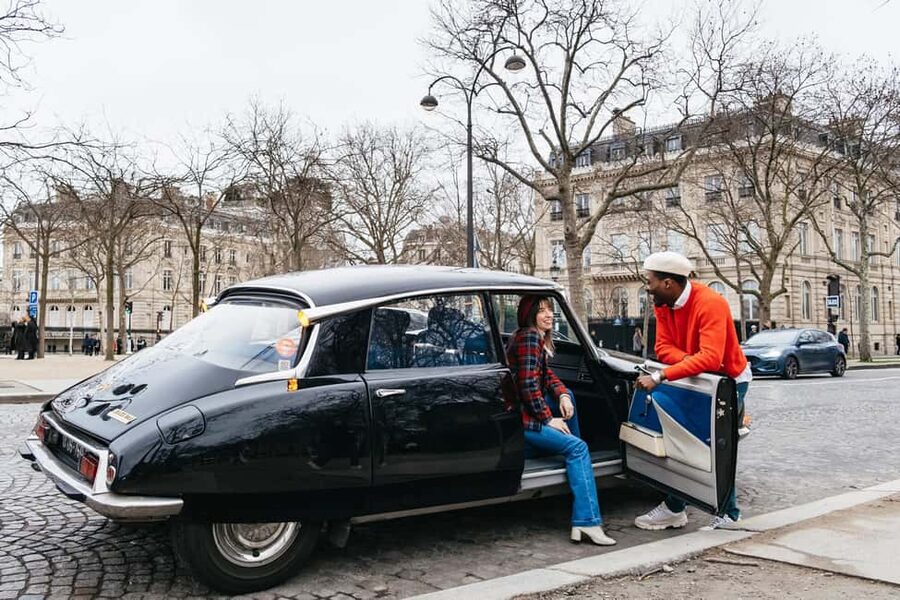
You start near Place de la Concorde, which is a smart opener. It gives you an instant sense of axis and scale, the way Paris was designed to pull your eyes from one grand space to the next. Your guide shows you what to look for while you move, so even without a long walk, you understand the city layout.
From there you head toward the Champs-Élysées. This stretch is famous, yes, but it is also a great place to spot the mix of grand architecture and street life. The payoff on a car tour is perspective. You can take in long building lines and the streetscape as a whole, instead of getting stuck on one sidewalk and missing everything behind you.
If you are doing this early in your trip, the Champs-Élysées segment helps you “map” Paris in your head. If you are doing it later, it still works because you can compare what you have already seen to what you are seeing now from a different angle.
A small consideration: even though you are cruising, you will still be in real traffic. Your guide should handle it well, but you should expect some slowdowns, especially in popular zones and at peak times.
Arc de Triomphe and Eiffel Tower Photo Strategy, Without the Crowds

The two big photo moments are Arc de Triomphe and the Eiffel Tower. These are iconic, but they are also where time disappears fast if you have to fight for the best vantage points.
Arc de Triomphe is built for viewpoints and symmetry. On this tour, you get a brief photo stop, about 5 minutes, so you can position yourself and capture the classic framing. You are not waiting in a long line, and you are not spending half your time just finding a spot.
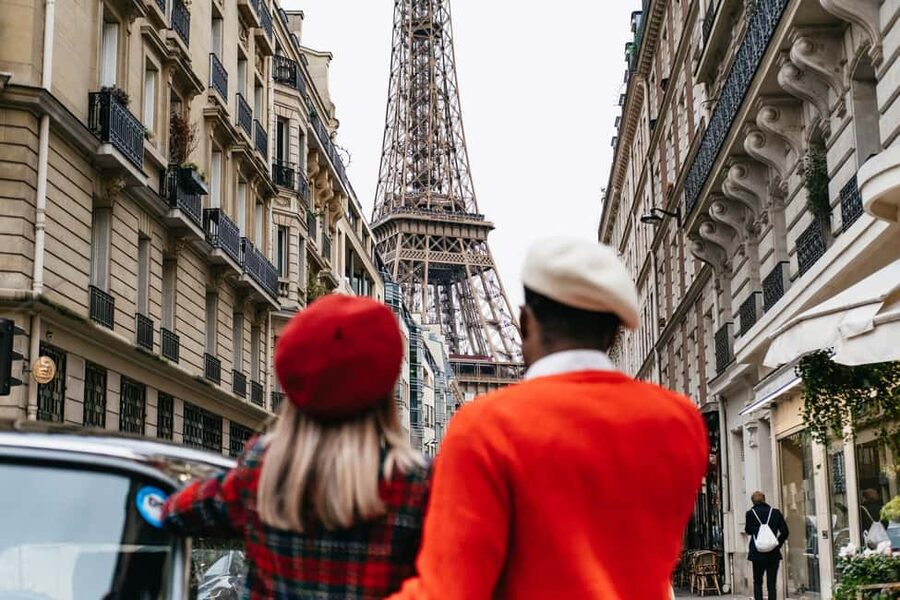
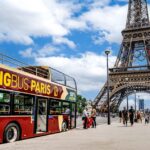
Then comes the Eiffel Tower, another short photo stop, again about 5 minutes. The value here is timing and angles. A good guide helps you choose where to stand so you get the tower in proportion instead of swallowed by surrounding buildings. Some guides are also very hands-on with phone camera framing, which matters if you want more than one decent shot.
If the weather is bad, this tour is still worth considering. You get covered time in the car, and your photo steps are short. If the weather is great, you also get that mix of daylight and dusk that makes the landmarks look extra dramatic.
Les Invalides, Pont Alexandre III, Petit Palais, and Grand Palais
Once you leave the big boulevard energy behind, the route turns more elegant and cinematic. You pass through the area around Les Invalides, a major military and architectural landmark cluster. Even if you do not go inside, it is still a strong sense-of-place stop, because the buildings and courtyards have presence.
Next, you head to Pont Alexandre III, one of Paris’s most photogenic bridges. This spot is useful in a car tour because you get to take in both sides quickly and understand how the river connects into the city’s grand spaces.
Then you pass Petit Palais and Grand Palais. These are the kinds of buildings you can spend a full day thinking about, but a car tour gives you the fast, visual version. You see the facade scale and the architectural intentions without committing to museum time.
A drawback to accept up front: entry tickets are not included, and your stops here are mainly for seeing from the outside or brief viewing time. If you want deep interior time, you will need a separate plan.
You can also read our reviews of more city tours in Paris






Palais de l’Élysée and Place Vendôme: Where Power Meets Elegance
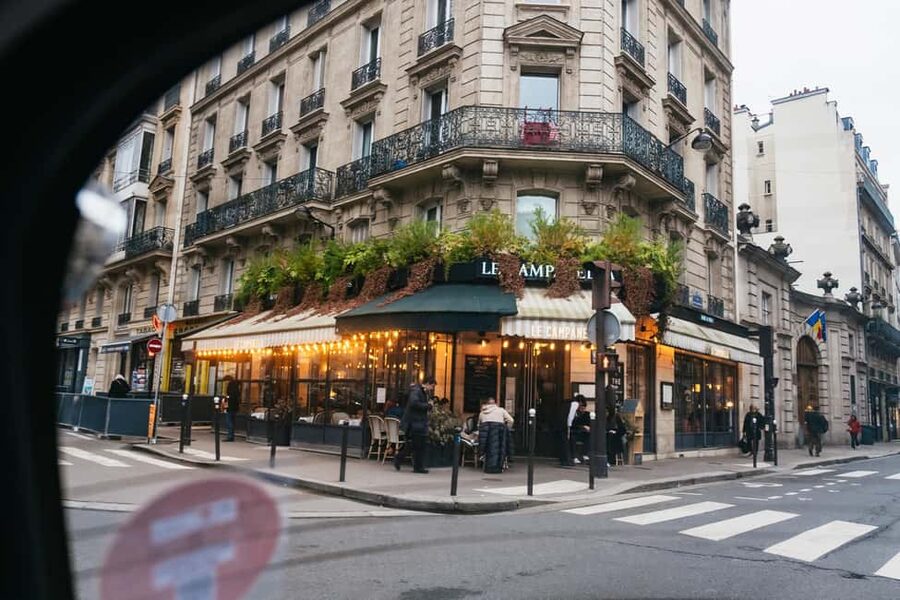
As you glide toward Palais de l’Élysée and Place Vendôme, Paris gets more polished. These areas have less tourist chaos than the tower zone, but they still feel important. The street-level views from a car help because you are not just staring at one angle, you are seeing the way the streets open and close around the architecture.
Place Vendôme is especially good for people who like symmetry and refined streetscapes. It is one of those places where a short viewpoint can spark a bigger interest later, like why this style shows up where it does in Paris.
The practical benefit here is pacing. Your car driver can often position you better than a walking plan would, especially when streets get crowded. You are saving time and conserving your feet, which is a big deal in Paris.
Palais Garnier, Moulin Rouge, and the Sacré-Cœur Mood Shift
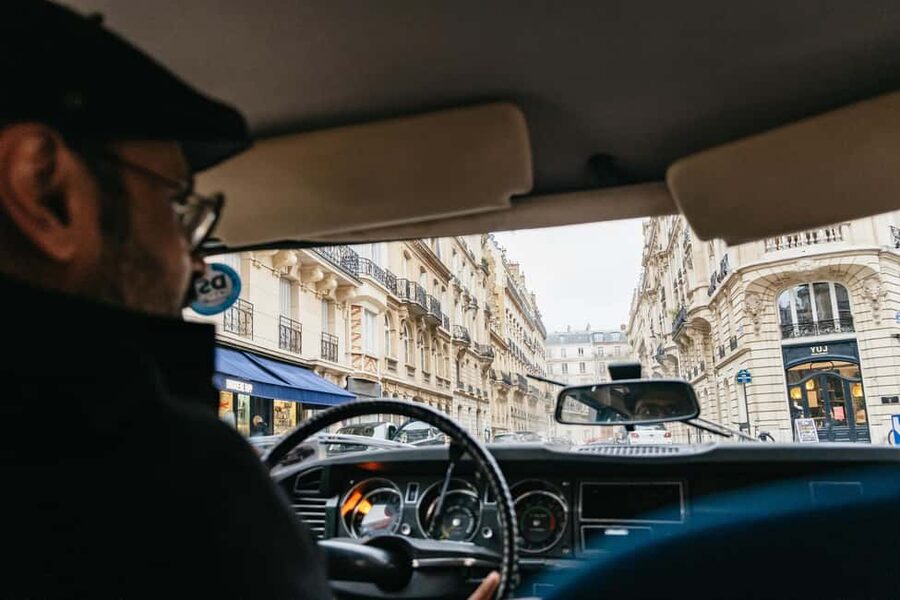
Paris changes mood fast. The route continues past Palais Garnier, the Opera House area. Even if you do not go inside, you get to experience the grandeur from the outside, and the building’s presence helps you understand why this corner is such a magnet.
Then you head toward Moulin Rouge for a photo stop. This is a fun, slightly theatrical moment. The value on a private tour is that you can stop briefly and move on, instead of spending your time waiting for the perfect shot in a place that can feel like a stampede.
From there, you reach Sacré-Cœur Basilica. You get another short photo stop and quick guided context. This is a great counterpoint to the grand boulevards. It adds the “up on the hill” feeling and shifts the vibe to something more local and cinematic.
If you prefer, you can also ask to lean into neighborhoods like Saint-Germain. It is that kind of flexibility that makes the private format feel worth it, instead of being just a generic highlight circuit.
Louvre Area, Notre-Dame Area, and the Pantheon as a Grand Finale
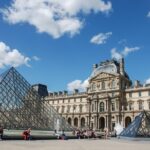
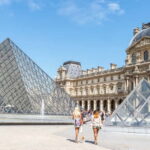
The tour includes the Louvre Museum and the Louvre Pyramid area. Even without entry, this is a powerful stop because you are seeing modern museum design sitting inside an older monumental district. The pyramid is one of those things that is easy to photograph, but it also teaches you how Paris layers eras.
Then you move to Notre-Dame Cathedral for a guided viewing. This area can be complicated with road closures at times, so your guide should work with what is passable and still help you get the views you planned for. The key point is flexibility: if a street is blocked, your driver can usually reroute while keeping the landmark experience intact.
Finally, you end near the Pantheon. The Pantheon is a fitting last major stop because it wraps the day in a different kind of monumentality, more civic and historical than spectacle. It is the kind of finale that makes the whole route feel like a storyline, not a list of photos.
Why Architecture Names Like Haussmann, Lavirotte, and Guimard Matter

This tour is not just about famous monuments. It also helps you see Paris as a designed city.
Highlights mention architecture tied to Haussmann, Lavirotte, and Guimard. Even from the car window, that can change how you look. Haussmann’s influence shows up in the boulevard logic and the city’s wide, grand lines. Lavirotte is linked to specific decorative facade energy that you can spot when you know to look for it. Guimard is associated with Art Nouveau touches that can pop out in the right street corners.
Your guide’s job is to point these out at the right moment, when you can actually see them. That is what turns a sightseeing drive into real learning you can use later, like noticing style differences as you walk on your own afterward.
How Long Should You Book? 1 Hour vs 2 Hours vs 3 Hours
Your time choice is the real lever here.
A 1-hour tour is best if you want the highlights fast. You’ll likely see the core monuments and get some guided context, but there is less room for detours or extra photo positioning.
A 2-hour tour is a sweet spot for most people doing this as an overview. You can cover the major landmarks and still have enough stops to feel satisfied, instead of just collecting quick photos and rushing back.
A 3-hour tour is where the experience gets looser and more personal. You can slow down at the places you care about, add a neighborhood like Sacré-Cœur, and spend a bit more time getting the photos right. This matters because Paris is not just about seeing, it is about seeing well.
If you are doing this on day one or as your first full exposure to Paris, I lean toward 2 to 3 hours. It gives you enough of a backbone to plan the rest of your trip with confidence.
Value Check: Why $164 for Up to 4 Can Be a Smart Move
Price is $164 per group up to 4, for 1 to 3 hours. That grouping detail matters, because you are not paying per person like you would for separate tours.
You are getting:
- private guide/driver time
- hotel pickup and drop-off
- transport in a classic Traction Avant or DS 21
For many groups, that can work out well versus piecing together taxis plus a standard group tour plus extra transport to reach photo spots.
Where the value shows up most is in the time you save. A car tour lets you cover multiple landmarks in one block of time. It also helps you avoid the “where do we stand” problem at the big monuments because your guide handles positioning.
If you are traveling solo or as a couple and you want a lot of walking, another format might be cheaper. But if you want maximum highlights with less foot fatigue, this is one of the most practical splurges.
Who This Tour Fits Best, and Who Might Want Another Option
This tour is a strong match if you:
- want a private overview of Paris without relying on transit
- care about photos and want help choosing where to stop
- enjoy vintage cars and like that classic-car attention factor
- have limited time and want major landmarks plus street-level sights
It is less ideal if you:
- need wheelchair access or have mobility impairments (the tour is not suitable for wheelchair users)
- have hearing limitations (it is not suitable for hearing-impaired people)
- need to bring large luggage (it is not allowed)
- hate short photo stops, because some landmarks are brief by design
Also, if you are sensitive to noise, plan for that. In a moving car in busy streets, hearing everything can be tough, especially if you are seated toward the back.
Practical Tips Before You Go
A few things will make your tour smoother:
- Go light on luggage, because large bags are not allowed
- Pick the right duration for your style. If you want real photo time, choose longer
- Ask for what you care about most, like Eiffel Tower angles or a specific neighborhood vibe
- Bring a charged phone for photos and video, because quick stops are built for capturing the moment
If you want add-ons, some people have mentioned choices like champagne or macaroon style treats. Those are not described as part of the base inclusions, so ask what is available when you book.
Should You Book This Paris Vintage Car Tour?
I think this is an excellent first- or second-day Paris experience when you want a guided overview with style. The combination of hotel pickup, a private guide, and quick photo positioning at landmarks like the Eiffel Tower and Arc de Triomphe is hard to beat.
If you want deep museum time, do that separately. This is about seeing the city, learning what you are looking at, and getting the pictures without spending your day stuck in transit.
If you love vintage engineering, enjoy street-level views, and want your feet to stay happy, book it. Just pick the 2 to 3 hour window if you want it to feel unhurried.
FAQ
What vintage cars are used on this Paris private tour?
You may ride in a Citroën Traction Avant 11B from 1955 or a Citroën DS 21 Bhv from 1971.
How long is the tour?
Choose from 1-hour, 2-hour, or 3-hour options.
Is this a private tour?
Yes. It is a private group experience.
Are hotel pickup and drop-off included?
Yes. Hotel pickup and drop-off are included.
What landmarks are typically visited?
The tour includes stops around Place de la Concorde, Champs-Élysées, Arc de Triomphe, Eiffel Tower, Les Invalides, Pont Alexandre III, Petit Palais, Grand Palais, Palais de l’Élysée, Place Vendôme, Palais Garnier, Moulin Rouge, Sacré-Cœur Basilica, the Louvre area including the pyramid, Notre-Dame Cathedral, and the Pantheon.
Are site entry fees included?
No. Entry fees to any sites are not included.
Is food and drinks included?
No. Food and drinks are not included.
What guide languages are available?
The live guide is available in English, French, and Japanese.
Are large bags or luggage allowed?
No. Luggage or large bags are not allowed.
What is the cancellation policy?
You can cancel up to 24 hours in advance for a full refund, and there is a reserve now and pay later option.
More Guided Tours in Paris

More Tours in Paris

More Tour Reviews in Paris





Not for you? Here's more nearby things to do in Paris we have reviewed








Paris City Tours, side by side.
 ★ 4.6Louvre Museum Timed-Entrance TicketTickets from $2671,977 guest reviews
 ★ 4.6Disneyland® Paris 1-Day TicketTickets from $6149,412 guest reviews
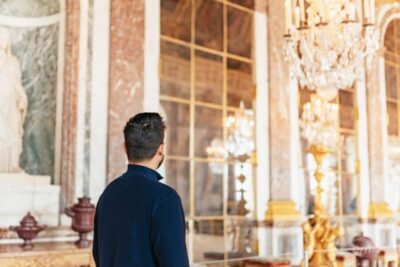 ★ 4.6Versailles Palace and Gardens Full Access TicketTickets from $1741,579 guest reviews
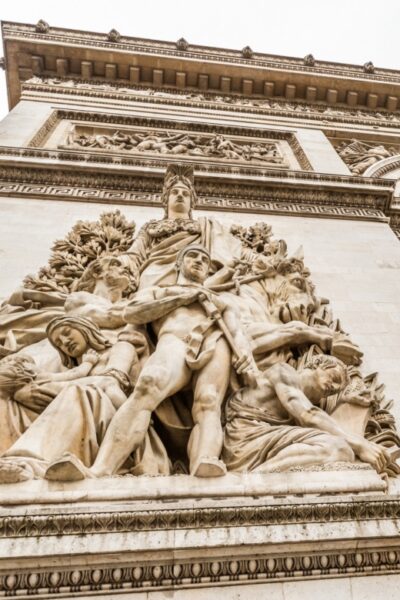 ★ 4.6Arc de Triomphe Rooftop TicketsTickets from $1834,264 guest reviews
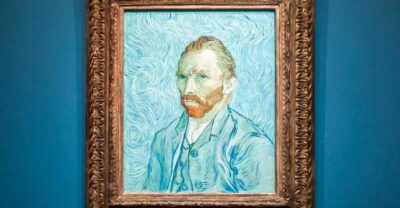 ★ 4.7Orsay Museum Entry TicketTickets from $1525,647 guest reviews
 ★ 4.4Evening River Cruise with MusicTickets from $2722,721 guest reviews
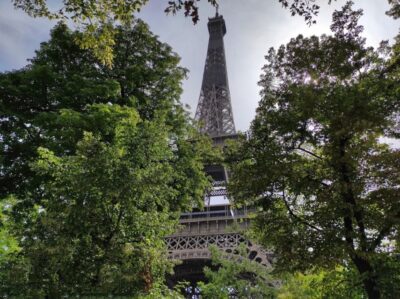 ★ 4.4Eiffel Tower Entry Ticket with Optional Summit AccessTickets from $2920,035 guest reviews
 ★ 4.3Eiffel Tower Summit or Second Floor AccessTickets from $5917,248 guest reviews
This tour also belongs to