
Review · LE MARAIS TOURS
Paris: Jewish Marais District Walking Tour
Paris turns personal in the Jewish Marais. I love how the route connects everyday Marais streets to the larger story of Jewish life in France, and I especially like the way the walk lands at solemn remembrance spots like Shoah Memorial. One heads-up: this is a moderate walking tour, and it is not suitable for wheelchair users or people with mobility impairments.
The experience is led by a live English or French guide, and the tone can vary by guide. I like that the best matches, including guides such as Simón and Camille (from past outings), tend to be patient with questions and willing to slow down when needed.
You start at the Synagogue des Tournelles and end at the Mémorial des martyrs de la Déportation, with stops that include historic synagogues (viewed from outside), kosher shops, and key memorial sites. It runs about 2 hours, so you get depth without turning into a full day commitment.
Key things to know before you go
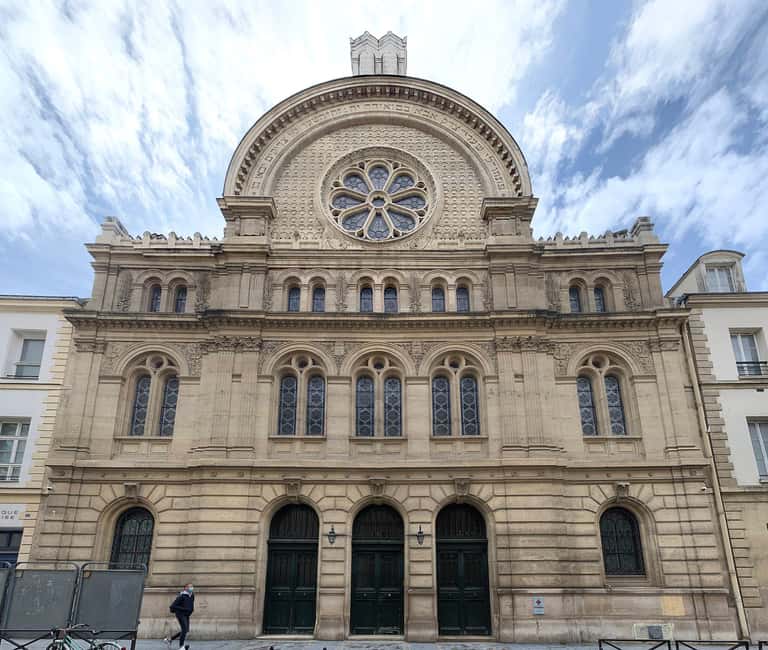
- Meet at Synagogue des Tournelles, then walk straight through the Jewish Marais area at an easy-to-follow pace
- Historic synagogues and Jewish sites are viewed from outside, so you can focus on stories, context, and street-level meaning
- Kosher shops and neighborhood details are part of the walk, not just monuments and plaques
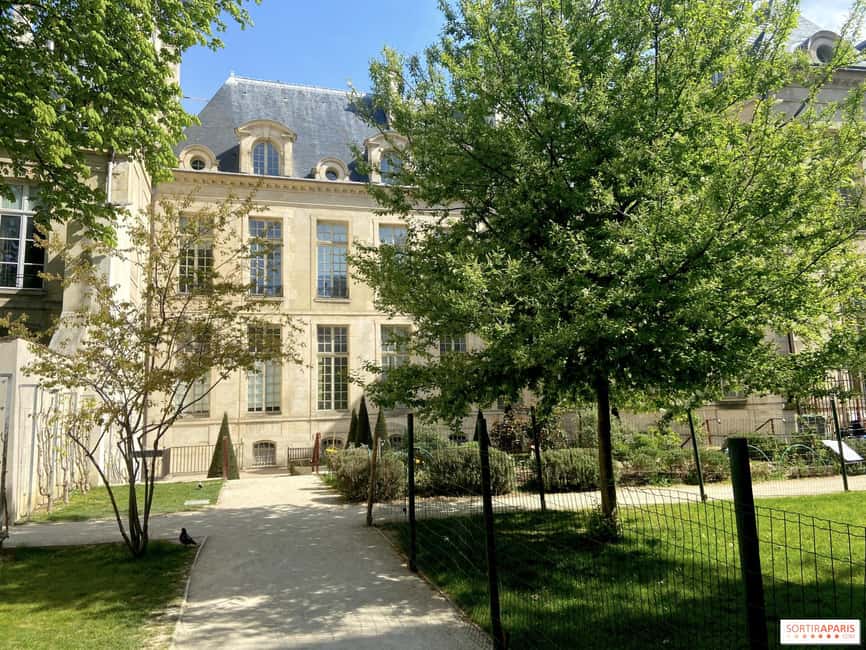
- Anne Frank Garden and the Museum of Jewish History are included from the outside, which keeps the pace moving
- You finish at the deportation memorial area, pairing local neighborhood history with 20th-century remembrance
Why the Jewish Marais hits differently than museum-only Paris
The Jewish Marais is not just a scenic slice of Paris. It is a neighborhood where you can still read how communities lived, worshiped, shopped, and coped through change and upheaval.
On this kind of walking tour, what matters is how the guide turns corners into context. You do not just see buildings. You learn why these places matter in the long timeline of Jewish presence in France, from ancient roots to modern community life in the Paris region.
I also like that the tour includes both the neighborhood and the heavy memorial sites. That pairing keeps the story grounded. You leave understanding how history lives in streets and how remembrance lives in public space.
You can also read our reviews of more walking tours in Paris



From Synagogue des Tournelles to the Marais streets: how the tour flows
You begin at Synagogue des Tournelles, which gives you a clear starting point right away. From there, the walk centers on the Jewish quarter in the Marais and the way the community shaped daily life there.
Expect a steady 2-hour walk with a moderate level of effort. Comfortable shoes matter because you are moving through city streets, and you will likely pause often to take in signage, architectural cues, and the guide’s explanation.
Since this is a private group, the experience generally feels more personal than a big group shuffle. If your guide is Simón, for example, you can be glad for a patient, Q and A friendly style, especially if timing gets messy due to Paris traffic. If you connect with Camille, the approach can be more packed with specific stops and names, including gardens and school sites impacted by deportations.
Historic synagogues from the outside, and why that still works
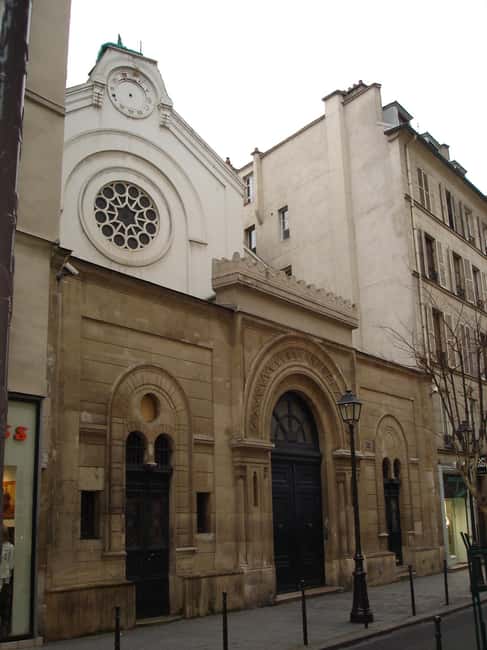
One detail that may surprise you at first: several synagogues are visited from the outside. That can sound limiting, but it is actually smart for a 2-hour walk.
Seeing synagogues externally lets you study the setting. The guide can point out what you would otherwise miss, like how worship spaces sit in the fabric of the Marais and how community institutions were positioned within a changing city.
It also helps the pacing stay respectful. Instead of rushing indoors, you focus on the street, the architecture you can actually reach, and the stories attached to each place. You get the sense of place without turning the tour into a sprint.
Kosher shops and the small clues of community life
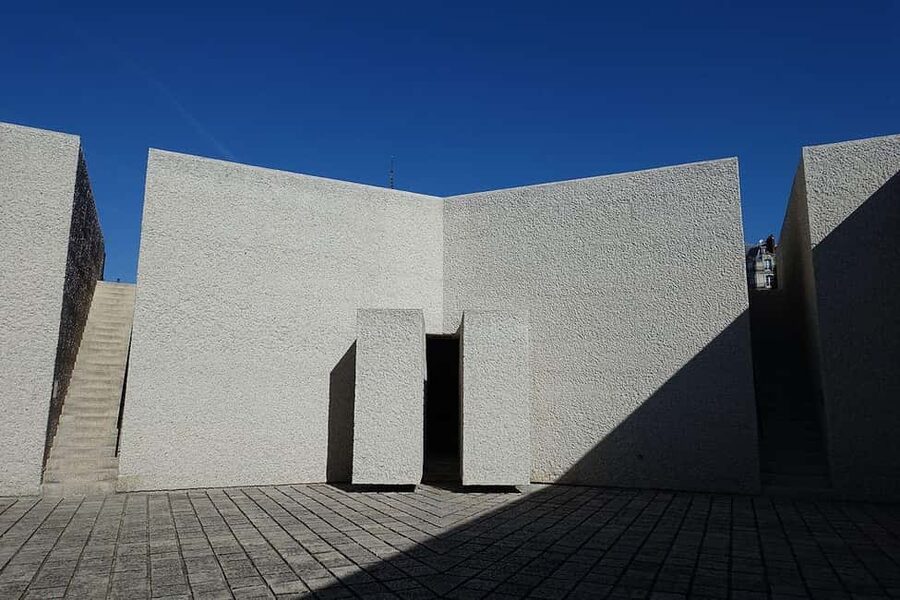
A big part of the experience is stopping around kosher shops and sites that reflect how people lived. These are not just decorative stops for photos. They help you understand that Jewish life in Paris was never only about landmarks, it was also about regular needs and regular routines.
These neighborhood details can make the larger timeline feel real. When the guide talks about laws, expulsions, and re-settling, it lands differently after you have physically seen the commerce and the everyday rhythm of the area.
If you like tours that blend history with the living city, this section is where the Marais feels most tangible. Just keep expectations realistic: you are walking, so you will see shopfronts and local points of interest more than you will do a long shopping detour.
The long arc of Jewish life in France, told through locations
The guide weaves a big story that runs across centuries, and the streets are the thread that keeps it from feeling like a lecture.
You get an outline that starts with very early Jewish presence in France, described as dating back to around the first century. The story then moves through periods of stability and prosperity (including the Roman era and the time of the Carolingians), and into the darker middle ages when pressure on Jewish communities sharply increases.
Key turning points are part of what you hear as you walk:
- The work of Rashi in the 11th century, a major rabbi and Talmudist connected to Jewish intellectual life
- The deterioration after the crusades, including trials of the Talmud and waves of expulsions
- Specific expulsion edicts, including one attributed to Philippe le Bel in 1304 and another attributed to Charles VI in 1394
A striking takeaway is how, a millennium after an establishment, the kingdom of France is described as effectively without Jews left, aside from neighboring regions and communities outside the kingdom’s borders.
Later, you also learn how Portuguese Crypto-Jews were part of re-settlement stories connected to Bordeaux and Bayonne after expulsions from the Iberian Peninsula. Then, after the 17th century, Jewish communities from Alsace and Lorraine of the Three Bishoprics become part of French jurisdiction through treaties.
By the time you reach the modern period, the story includes:
- French nationality during the French Revolution
- Rising antisemitism, described as becoming sharper during the Dreyfus affair, then again in the 1930s
- Institutionalized persecution under the Vichy regime and the tragedy of mass death during the occupation, described as 75,000 Jews
Finally, you get an explanation of how France becomes a destination again for Jews forced to leave Egypt and North Africa in the 1950s and 1960s. The tour frames the modern community as increasingly Sephardic, and it notes that today France has Europe’s largest Jewish community, estimated between 450,000 and 550,000, with a major share linked to the Arab world and concentrated mainly in Paris and the Paris region.
What you should take from this section is not every date. It is the way the guide uses the neighborhood as proof that history is continuous. Even when communities are pushed out and later return, the impact shows up in institutions, architecture, and public memory.






Anne Frank Garden and the Museum of Jewish History, viewed from outside
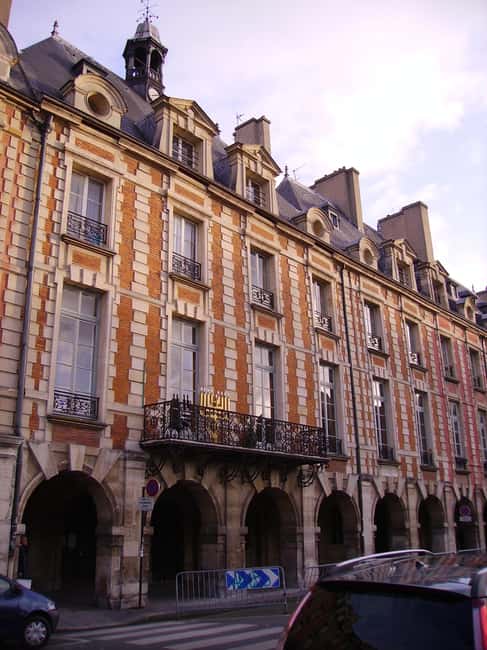
You are guided past the Anne Frank Garden and the Museum of Jewish History, but from the outside. This matters because you are not spending your whole 2 hours inside a single building. Instead, you get a sequence of emotional and historical stops in an order that keeps moving forward.
The garden connection is powerful because it anchors the story in youth, hiding, and the way persecution touched ordinary lives. Even when you are only viewing from outside, the surrounding atmosphere and the guide’s framing do a lot of work.
The museum sightline does something similar. It signals that the Marais is not only about survival and tragedy. It is also about preservation, interpretation, and the effort to document community life and heritage.
If you prefer tours that keep momentum while still covering the most important landmarks, this outside approach makes sense. It is also helpful if you want a single guided walk rather than splitting your day into multiple tickets.
Shoah Memorial and the Martyrs of the Deportation: respect plus context
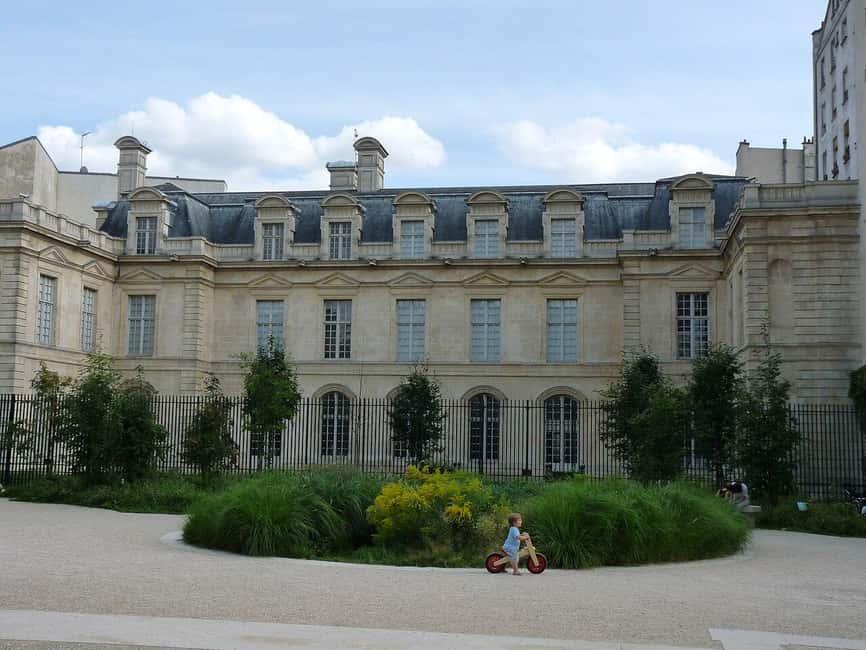
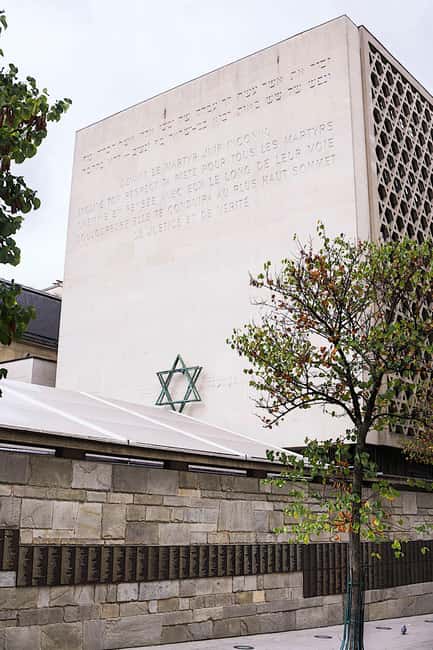
The tour includes the Shoah Memorial and the Memorial of the Martyrs of the Deportation. Ending here is not random. It is the culmination of everything you have learned about how antisemitism escalated, how persecution became institutional, and how deportation shaped lives.
These memorial spaces are designed for reflection. The practical tip is to plan to slow down emotionally and physically, even if your feet keep moving. The guide’s job is to provide context so you understand what the sites commemorate, while you take in the meaning of the setting.
One more reason this ending lands: it connects the Marais neighborhood story to the 20th century. You are no longer just learning about a community over time. You are standing in places dedicated to the victims of the Shoah and the martyrs of deportation.
If you are sensitive to heavy subject matter, it helps to know that the tour does not treat the topic lightly. It is structured so you arrive with context rather than being thrown directly into memorial gravity.
Price, walking time, and real value for a private group
At $160 per person for a 2-hour (about 160-minute) walking tour, you are paying for a few specific things:
- A live English or French guide who provides historical context, not just pointing at plaques
- A focused route through a compact area of the Marais
- Stops tied to both community heritage and Holocaust-era remembrance
- A private group format, which can make the experience feel smoother and more adjustable to questions
If you like guided history but hate long museum lines or sprawling itineraries, this can be a good fit. You cover a lot of key places quickly, and the guide stitches them together into one story you can remember.
Where value can depend on your own needs is walking tolerance. This is not a slow stroll with no effort. If you have trouble with walking, you will not enjoy the experience as much, since it is not suitable for wheelchair users or people with mobility impairments.
Also note that the tour is not built around meals. Plan for water and plan for a break before or after so you do not feel rushed at the end.
Practical tips that make the 2-hour walk easier
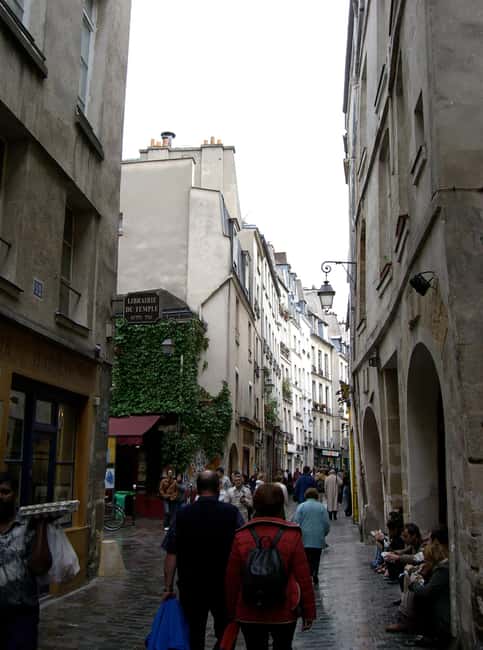
Because this is a neighborhood walk with outdoor stops, pack like you are walking around Paris for a morning or afternoon.
Bring:
- Comfortable shoes
- A hat and a head covering or kippah, since some sites may require modest dress
- Sunscreen and water
Keep in mind a couple of rules:
- Smoking is not allowed
- Flash photography is not allowed
Photography can be restricted in certain areas. So I recommend using your phone camera carefully and watching for posted signs. When the memorial focus kicks in, your best photos might be the ones you do not take.
And since the guide meets you at Synagogue des Tournelles and ends at the deportation memorial, dress for a walk the whole way. Do not count on being able to pause long or change plans mid-route.
Who this Paris Jewish Marais walking tour is best for
This is a strong choice if you want:
- A guided walk that connects neighborhood life with major historical turning points
- Jewish Marais context without hopping between multiple ticketed attractions
- A route that includes both heritage sites and solemn remembrance spots
It is less ideal if:
- You need wheelchair access or have significant mobility limits
- You want lots of indoor time in multiple museums and synagogues, since much of the key viewing is from outside
If you are traveling with curiosity and you like an organized narrative, the tour’s structure works well. You end with a clearer sense of the whole arc, not just a handful of landmarks.
Should you book it?
Yes, I would book this Paris Jewish Marais walking tour if you want a focused 2-hour guide-led story you can walk through. The combination of kosher shop stops, outside views of synagogue and heritage sites, and the finish at the Shoah and deportation memorials is a rare mix of neighborhood and remembrance.
If you have mobility constraints, double-check your needs first. And if head coverings are an issue for you, plan ahead so you are not stressed during the modest-dress moments.
FAQ
Where is the meeting point?
The tour meets at Synagogue des Tournelles.
Where does the tour end?
The tour ends at Mémorial des martyrs de la Déportation.
How long is the walking tour?
It lasts about 2 hours, or 160 minutes.
What languages are the guides available in?
Guides are available in English and French.
Are synagogues and Jewish-history sites visited inside?
Historic synagogues are viewed from outside, and both the Anne-Frank Garden and the Museum of Jewish History are also visited from outside.
What’s included in the price?
A guided walking tour is included, along with visits to kosher shops and sites.
What should I bring?
Bring comfortable shoes, a hat, a head covering or kippah, sunscreen, and water.
Is the tour suitable for wheelchair users or limited mobility?
No. The tour is not suitable for people with mobility impairments or wheelchair users.
More Walking Tours in Paris



More Tours in Paris





More Tour Reviews in Paris



Not for you? Here's more nearby things to do in Paris we have reviewed












Le Marais Tours, side by side.
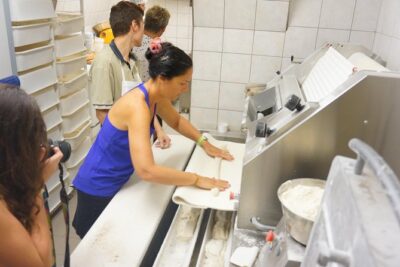 ★ 4.5Award-Winning Paris French Bakery Experience — Le Marais, 4th ArrTickets from $1141,186 guest reviews
 ★ 5.0Paris Le Marais Food Tour With 10+ Tastings, Cheese, Wine & MoreTickets from $102985 guest reviews
 ★ 4.5Paris Le Marais District Original Food and Wine Tasting TourTickets from $157880 guest reviews
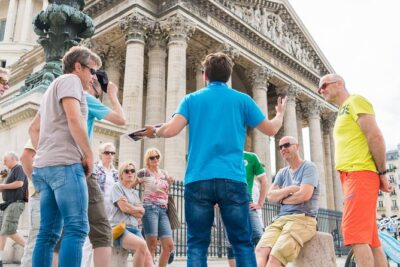 ★ 5.0Paris Bike Tour Hidden Secrets in the Latin Quarter & Le Marais neighborhoodsTickets from $54766 guest reviews
 ★ 4.9Food and Wine Tasting Walking Tour in Le MaraisTickets from $113446 guest reviews
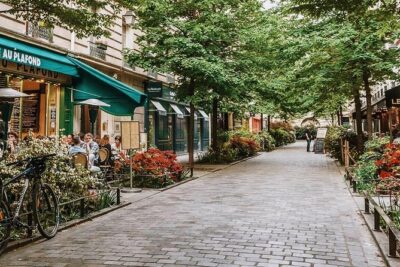 ★ 5.0Le Marais District & Jewish Quarter Guided Walking Tour 12ppl MaxTickets from $59361 guest reviews
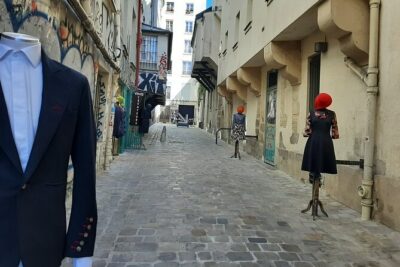 ★ 5.0Le Marais/Paris – The Historic, Trendy, Jewish, LGBT districtTickets from $48341 guest reviews
 ★ 5.0Paris Le Marais Food & Wine Tour with Eating EuropeTickets from $163297 guest reviews
This tour also belongs to