
Review · COOKING CLASSES
Croissant Baking Class, Mastering the Art with a Pastry Chef
Croissants have a way of looking fancy. This hands-on class in Paris turns that mystique into a doable, step-by-step baking lesson with a real pastry chef. You’ll work the dough, practice the technique, and leave with pastries that taste like you actually earned them.
I especially love the small group size (max eight), because it feels more like coaching than a show-and-tell. I also love that you get hands-on laminating and shaping guidance, so the dough process makes sense instead of feeling like a guessing game.
One drawback to plan for: this is true knead-the-dough work. You need enough strength and stamina for rolling, folding, and shaping, and the class is 17+.
Key moments worth knowing
- Max eight people means the chef can correct your fold and shaping while you’re still holding the dough
- English instruction keeps the technique clear, even if your French is rusty
- Laminating practice focuses on balance, folding rhythm, and butter control for flaky layers
- Relaxed, hands-on pace with questions welcome, not rushed
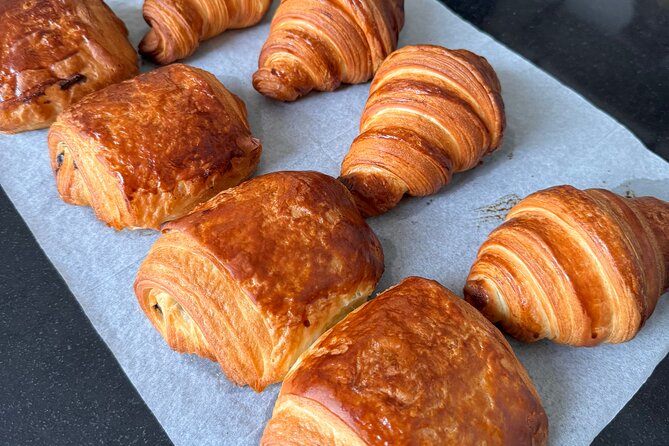
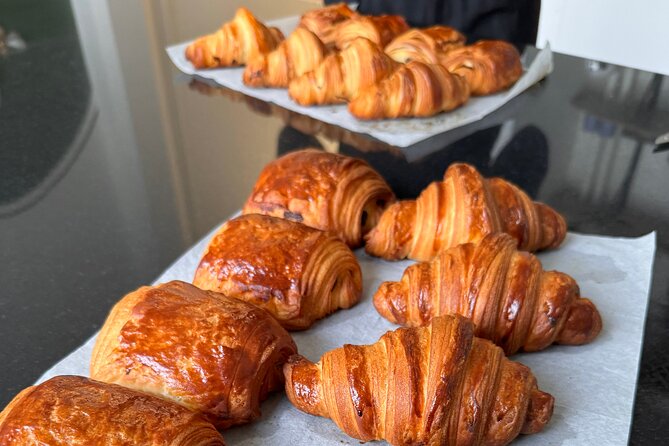
- You carry the payoff home, with batches like croissants plus pain au chocolat reported by participants
- Chef energy matters, with sessions led by instructors like Chef Leo and Chef Maria noted for fun, patience, and good humor
Where You Start at Studio Pâtisserie on Rue de Rome
Your class begins at Studio Pâtisserie, 85 Rue de Rome, 75017 Paris. It’s in the Paris 17th area, and it’s near public transportation, which helps if you are squeezing this between museums and long café breaks.
When you arrive, expect the vibe to be practical and kitchen-first. You are not waiting around for long explanations. Instead, you get set up so you can start working dough pretty quickly. That matters because croissant success is partly timing, not just technique.
Also, come hungry for skills, not for shortcuts. Croissant dough has a personality: it can be cooperative, or it can fight you if the butter gets too warm or the folds get sloppy. The good news is the chef approach here focuses on making the process understandable, not mysterious.
Finally, you end back at the meeting point, so you are not building a second half of your day around logistics. You can plan to return to your hotel or keep exploring while your brain is still full of butter facts.
You can also read our reviews of more cooking classes in Paris


Why the Small Group Size Makes This Class Feel Personal
With a maximum of eight travelers, this class avoids the common problem of big cooking workshops: one instructor, multiple people, and nobody quite sure if they are doing it right. Here, the one-on-one attention is the whole point. You’re not just observing. You are shaping, cutting, and troubleshooting in real time.
This is especially helpful for croissants, because small differences snowball. If your dough is too warm, your lamination can smear. If you cut triangles sloppily, your final shape can go lopsided. If your fold count or spacing feels inconsistent, your layers may not behave the way you want.
The reviews back this up with a consistent theme: instructors are patient and fun, and they explain in a way that makes the steps feel doable. Chef Leo and Chef Maria come up often, with people mentioning humor, calm guidance, and a supportive style that puts you at ease when your first attempt is, let’s say, a work in progress.
Another subtle value here: small groups reduce stress. You can ask questions without feeling like you’re slowing down a line of people. You can also take a second to watch how the chef handles the dough, then copy it immediately.
The Dough Lesson, Butter Folding, and Those All-Important Ratios
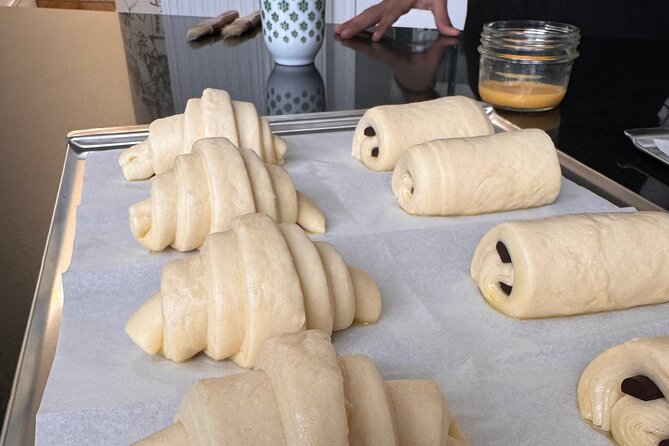
Croissants are built on layers, and layers are built on control. In this class, you start with a friendly introduction to French pastry technique, including why quality ingredients and precise measurement matter. That sounds basic, but it’s the difference between homemade croissants that taste great and croissants that turn out flat or greasy.
You’ll learn how to handle the dough and why the folding and rolling process is so specific. The key concept is simple: keep the dough and butter at compatible temperatures, then fold in a way that traps butter evenly. Too much heat, and butter melts into the dough. Too much force, and the dough fights back.
One tip that pops up from real participants: you may end up making and cutting multiple rectangles and triangles, with specific dimensions to guide lamination and shaping. If you want to recreate this at home, write the sizes down. Also, if you’re coming from the US, have your phone ready for metric-to-English conversions for length, weight, and volume. Croissant math is not optional, but your phone can do the translation fast.
A review also mentioned learning about butter and flour leading to a 16-layer pastry. Even if your exact result depends on how you execute, the big takeaway is the same: the layers come from disciplined folding and even butter placement, not from luck.
Hands-On Laminating and Shaping That Actually Makes Sense
This is the part you came for: rolling, laminating, and shaping into those crescent forms. You’ll work at your station with guidance from the pastry chef, so you can focus on muscle memory instead of just memorizing instructions.
The class structure is designed to keep you moving through the workflow in a logical order. You start with dough and butter prep, then progress to rolling out, forming rectangles, and cutting the shapes needed for croissants. You’ll then roll and shape each piece carefully.
This is where the small group matters again. If your dough tears, the chef can show you how to fix the problem without panic. If your triangle fold feels off, you can adjust before it becomes a whole batch of crooked croissants.
What I like about this approach is that it treats technique like a set of habits. Good croissants aren’t one dramatic moment. They are many small correct choices made consistently.
You also get a built-in feedback loop. As you shape, you can see what good dough tension looks like, how the roll should sit, and how shaping affects the final form. That’s the fastest way to learn, and it’s hard to get from books.
And yes, you also learn about shaping pain au chocolat along the way, so you’re not only chasing croissant crescents. You get that whole classic Paris breakfast duo.
Proofing, Baking, and Why the Class Feels Laidback
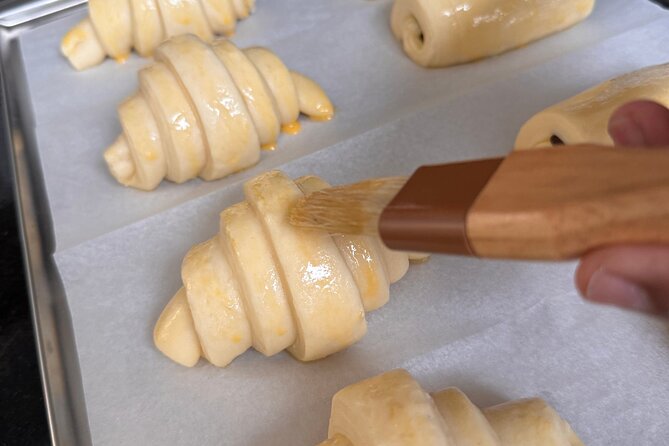
Croissants depend on proofing, and proofing depends on patience. The class is often described as laidback, but don’t confuse that with casual. The calm pace comes from preparation and a chef-led flow that avoids rushing the dough.
One interesting operational detail from a review: the dough used in class may come from a previous day’s work to ensure proper proofing, and your dough can feed into the next day’s batches. That means the process is managed like a real bakery system, not like a one-off demo.
During baking, you’ll get a breather, and you’ll likely have time to chat with other baking fans. That camaraderie is not fluff. If you’re new to laminated dough, it helps to hear how others are thinking. You might swap troubleshooting ideas, or you might just laugh when your first shape looks like modern art.
Also, the class naturally builds a sense of accomplishment. When you see the dough rise and turn golden, you understand what those folding lessons were really about. It’s one thing to learn theory. It’s another to watch it happen in front of you.
Finally, you’ll have a clear end point: the activity finishes back at the meeting point, and you can leave with pastries ready to eat or share.
More Paris tours and experiences for the shortlist




What You Take Home, and How to Use This Skill Later
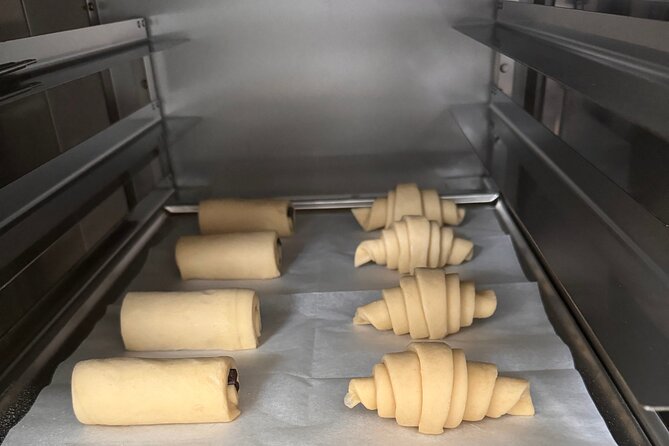
The best part of any cooking class is the proof, literally. Many participants report leaving with a batch that includes croissants and pain au chocolat, with one report stating 4 croissants and 4 pain au chocolat each. Even if your exact count can vary, the core idea stays the same: you leave with what you baked.
But the bigger value is what you learn to repeat. Croissant-making is not a one-time novelty. If you leave with technique you understand, you can turn baking at home from guesswork into a method.
Here’s what you should do right after class, while it’s fresh:
- Write down any rectangle and triangle dimensions your chef uses for rolling and cutting
- Note the key folding rhythm and how you handled dough temperature
- Save the steps you followed so you don’t rebuild from memory later
Also, some participants mention receiving recipes by email. That can help you compare your home bake to the class method, especially if you want to recreate the exact feeling of those layers.
One last practical note: laminated dough is slow by nature, so plan for the time at home. The class compresses the experience into a guided session, but your kitchen will still need patience when you try again.
Price and Timing, and Whether It Feels Like Good Value
The price is $143.92 per person for about 3 hours in a small class up to eight people. On paper, that might sound like a splurge, but the value comes from two things you don’t usually get in cheaper group classes: real technique coaching and an instructor who can watch your fold and fix mistakes fast.
You’re paying for:
- Expert pastry chef instruction in English
- Hands-on practice with laminated dough, not just passive viewing
- Small group dynamics that make correction possible
- A finished result you can take home
Timing-wise, it’s often booked around 47 days in advance on average, so it’s smart to reserve early. Croissant classes are popular for a reason: they are a memorable Paris experience that also teaches you something you can carry home.
If you like learning skills you can repeat, this class tends to feel worth it. If you only want a quick snack with minimal effort, you might feel the price is heavy for the time you’ll spend kneading and shaping.
Who Should Book This Croissant Class in Paris
This is a great fit if you want:
- A hands-on Paris food experience beyond eating
- Clear step-by-step instruction that makes laminated dough approachable
- Small group attention, especially if you learn best by doing
It also suits couples and parent-and-child groups depending on the 17+ age requirement, and you’ll want to plan for strength to knead and shape dough. If you have mobility concerns, you’ll want to think carefully because this is not just rolling pastry dough lightly. You are working.
It’s also a strong choice if you care about flavor quality. Multiple reviews mention that the croissants were among the best they had in Paris, and the class emphasizes quality ingredients and technique.
If you’re an experienced baker, you might still appreciate the structured method. If you’re a total beginner, you’ll probably value how the chef breaks down each step into something you can follow.
Should You Book It or Skip It
Book it if you want a true skills-based food experience. The combination of small group size, hands-on laminating and shaping, and instructors like Chef Leo or Chef Maria described as fun and patient makes it a standout way to spend a morning or afternoon in Paris.
Skip it if you hate working with dough or you expect zero physical effort. This class is kneading and shaping, and croissants punish sloppy handling. Also, if you’re mostly chasing a quick meal, you might prefer a simpler cooking or pastry tasting.
My take: if you can handle the arm work and you like learning by doing, this is one of those Paris activities that pays you back twice. First with flaky croissants that taste like you earned them. Then later when you replicate the process at home and finally understand why lamination works.
FAQ
How long is the croissant baking class in Paris?
It runs for about 3 hours.
What is the group size like?
The class has a maximum of 8 travelers, which helps with more individual attention.
Is the class offered in English?
Yes. The experience is offered in English.
Where does the class start?
The meeting point is Studio Pâtisserie, 85 Rue de Rome, 75017 Paris, France.
Is there an age requirement?
Yes. Participants need to be 17 years of age and above.
Do you make croissants and pain au chocolat?
You learn the process for croissants, and the experience includes pain au chocolat as well.
What happens after the class ends?
The activity ends back at the meeting point.
When do I get confirmation after booking?
You receive confirmation at the time of booking.
What is the cancellation policy?
You can cancel for a full refund if you cancel at least 24 hours before the experience’s start time.
More Workshops & Classes in Paris
More Cooking Classes in Paris
More Tour Reviews in Paris






Not for you? Here's more nearby things to do in Paris we have reviewed












Cooking Classes, side by side.
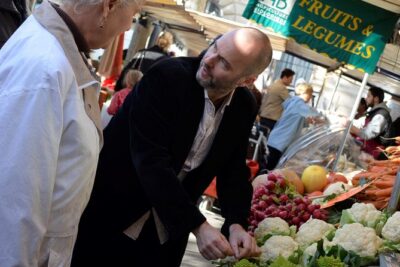 ★ 5.0Paris Cooking Class and Lunch with Wine plus Market Visit OptionTickets from $2401,024 guest reviews
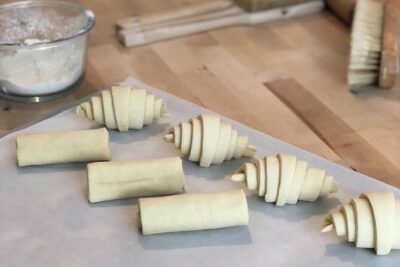 ★ 5.0Paris Croissant Small-Group Baking Class with a ChefTickets from $157910 guest reviews
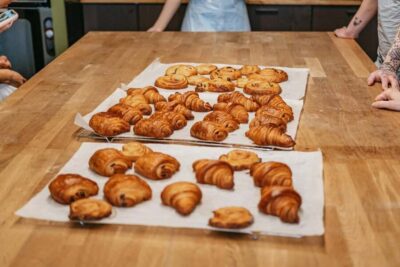 ★ 4.9French Croissant Baking Class with a ChefTickets from $159712 guest reviews
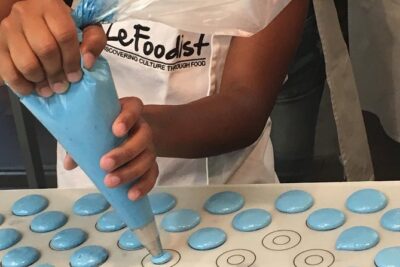 ★ 5.0Paris Cooking Class: Learn How to Make MacaronsTickets from $156634 guest reviews
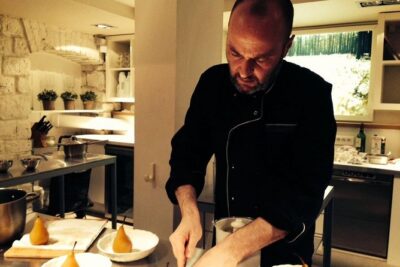 ★ 5.0Paris Evening Cooking Class French Dinner and Market Visit OptionTickets from $252430 guest reviews
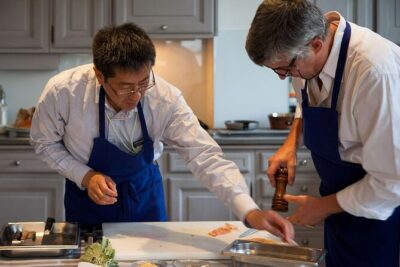 ★ 4.5Paris French Cuisine Small Group Cooking Class with LunchTickets from $217418 guest reviews
 ★ 5.0Paris Macarons Small-Group Baking Class with a ChefTickets from $157316 guest reviews
 ★ 4.7Macaron Baking Class for Families and KidsTickets from $112270 guest reviews
This tour also belongs to