

Review · PARIS CITY TOURS
Paris City Center Self-Guided Walking Tour
Paris is better when you set the pace. This self-guided walk strings together big icons and everyday street life from Bastille to the Eiffel Tower, using a practical native-language booklet and a marked route map.
Two things I really like: first, you can decide how long to linger at each stop instead of being herded along. Second, the booklet gives you the basics you need to plan on the spot, including addresses, opening times, and admission info for each attraction.
One drawback to keep in mind: the tour is designed for walking and orientation, not deep “read-a-book” history. If you want a lot of background for places like the Louvre or Notre-Dame, you may still want extra notes on your phone.
Key points to know before you go
- 12 km, about 2 to 3 hours, with 12 sights laid out from Place de la Bastille to the Eiffel Tower
- Booklet-first exploring: each stop includes short descriptions, addresses, opening times, and admission guidance
- Map is simple and route-marked, so you spend less time guessing and more time walking
- No tickets included, so you control what you enter and what you just see from outside
- Le Marais and Île de la Cité get real street-time, not just landmark photo stops
Paris at your pace, 12 km from Bastille to the Eiffel Tower
This tour is built for a very doable goal: see a wide slice of Paris city center while still keeping control of your schedule. The route is about 12 km and usually takes around 2 to 3 hours, though you can stretch it longer if you stop for snacks, shopping, or photos.
The walking arc is straightforward. You start at Place de la Bastille and finish at the Eiffel Tower. Along the way, the route strings together different neighborhoods and “Paris moods,” from the trendy energy of Le Marais to the more postcard-like feeling around Île de la Cité and the major viewpoints near the Seine.
Because it is self-guided, the day becomes yours. You can pick up speed when you are eager to reach the next icon, or slow down when a street looks worth investigating. That is also the tradeoff. You are not buying a guided lecture. You are buying a map, a plan, and a handy explanation so you are not wandering blind.
You can also read our reviews of more walking tours in Paris



Using the booklet and map like a smart local
The core of this experience is a booklet created by a Paris Expert-Guide and delivered to your inbox. You get it by email about 24 hours before your departure, and it is written in your native language. That matters more than it sounds. Paris signage can be manageable, but the details about addresses, opening times, and ticket guidance are what keep a self-guided day running smoothly.
The booklet also helps with the two biggest time-wasters in a big city. One is “What am I looking at?” The other is “Is this open, and do I need tickets?” Here, each of the 12 attractions comes with:
- a short description
- why you should visit
- address and practical info
- admission and ticket guidance (so you can plan ahead for what you might enter)
You also receive a simple map with the route clearly marked. It is not a vague suggestion. It is meant to get you moving in the right direction without turning your phone into a full-time job.
Stop 1: Place de la Bastille, where your walk starts with energy
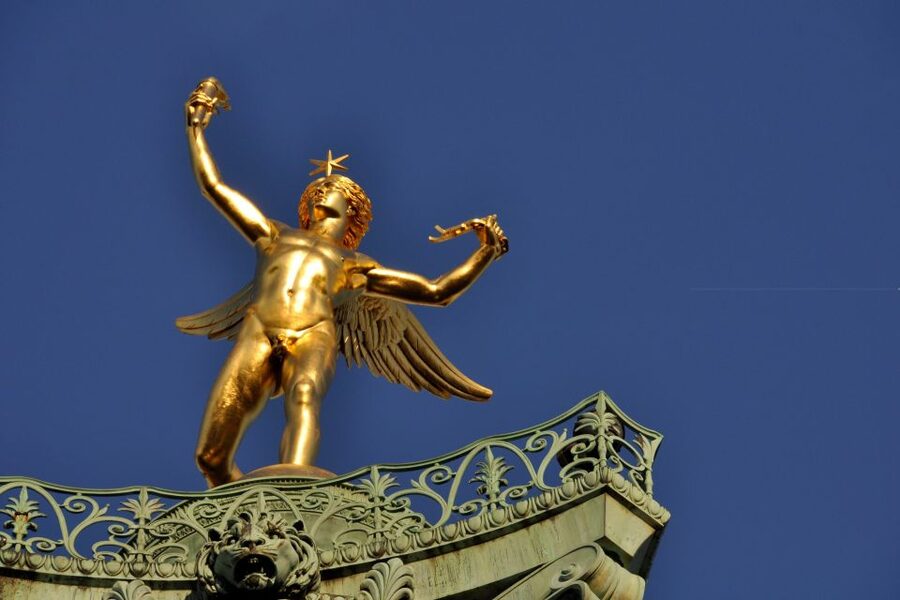
Your route begins at Place de la Bastille. It is a good starting point for a self-guided loop because it feels central, and it naturally sets you up to move through the city rather than only circling tourist blocks.
Your meeting point is flexible in a practical way. You start from your own accommodation and then reach the first place on the route, which is Place de la Bastille. That is helpful if you are staying somewhere off the usual tour circuits. You are not locked into a specific hotel rendezvous, and you can choose your own morning rhythm.
If you are the type who likes to have a “home base” for the day, Bastille gives you that. You start with orientation, then the walking brings you into neighborhoods that feel very different from each other.
Le Marais and City Hall area: history, cafes, and shopping streets

After Bastille, the route heads toward Le Marais, a neighborhood known in the tour plan for its historical architecture, cafes, and shopping. This is one of the best sections to slow down. Le Marais is the kind of place where your feet can wander a little and still feel like you are doing something valuable.
This part of the route also includes Hotel de Ville and the Circular Pavilion. Even if you do not plan to go inside anything, seeing the architecture and the street layout helps you understand how Paris “connects” city life to major landmarks.
For a self-guided walk, this section serves a smart purpose. It is not only about icons. It is about transitioning from the big-city look to the human-scale streets. You can snack here, browse, or simply enjoy the feel of walking through a district that looks like it belongs to different eras at once.
Île de la Cité stroll: small streets around Notre Dame and Pont Neuf
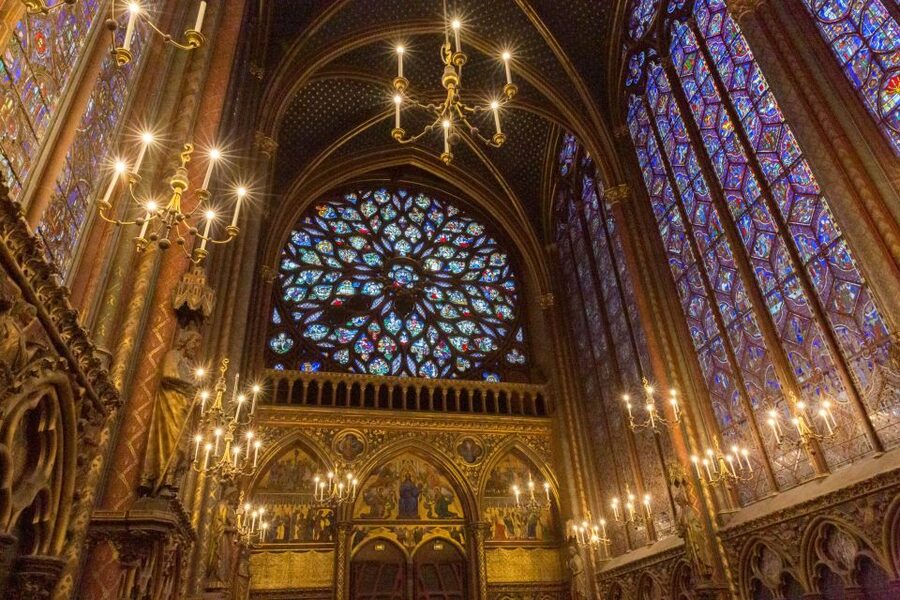
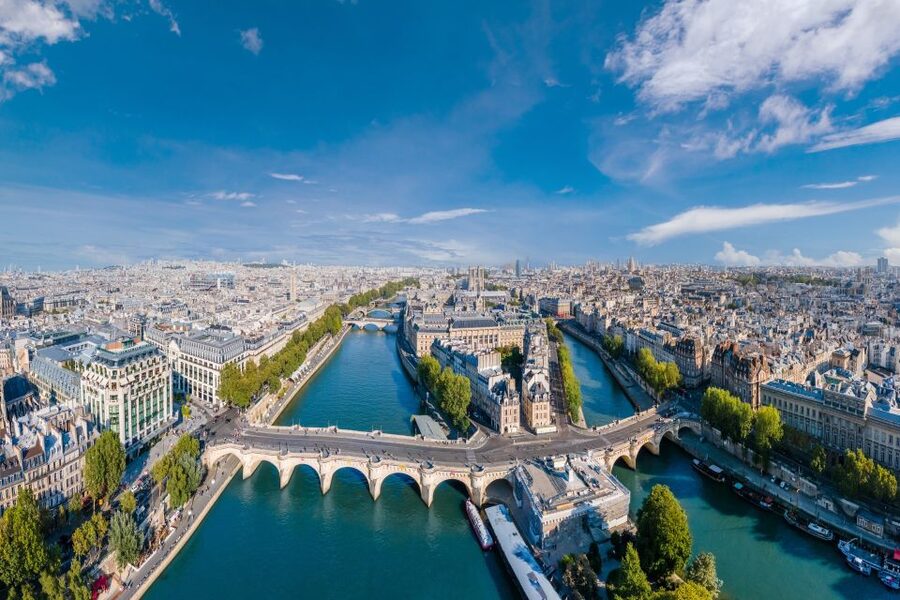
Next, you get a different kind of Paris. The route includes Notre Dame and Pont Neuf, and it is framed by the idea of small streets of Île de la Cité.
This is where your pacing choice matters. If you walk fast, you will mostly collect photos. If you slow down, you get the real point of this stop: narrow streets, river-adjacent views, and that sense of being in the older core of the city.
Notre Dame and Pont Neuf are major names, but the value here is not just the postcard moment. It is the path between them. A self-guided walking tour makes you notice the way streets bend, how people flow, and how the area looks different from block to block.
If you are the kind of person who wants construction details or a deeper explanation for why certain places were built, the booklet may feel more “practical” than exhaustive. One critique I took seriously is that some sections can feel short on foundational background. So if that matters to you, plan to use your own notes app or do a quick extra read before you get there.
You can also read our reviews of more guided tours in Paris






Louvre Palace, pyramid, and Tuileries Garden: plan for outside views
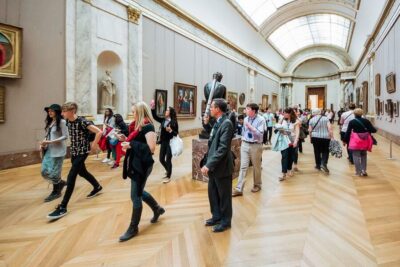
The route includes Louvre Palace & Pyramid plus the Tuileries Garden. This is another classic “big name plus surrounding context” combination. You are not only aiming at one structure. You are moving through the broader area that shapes the way visitors experience this part of Paris.
The tour does not include entry inside attractions. That affects how you should think about this segment. If you want to go inside the Louvre, you will need to arrange tickets on your own. The booklet can help by listing admission and ticket guidance, but you still control the decision.
That same “outside-first” approach can still be satisfying. The Louvre area is made for walking. You will likely spend time looking up, taking in the scale, and using the garden space as a reset between major city stops.
The drawback is informational depth. If you are hungry for specific construction reasons or detailed backstories for places like the Louvre and Notre-Dame, you may find yourself Googling a few items while you go. That is not a dealbreaker, but it changes the experience from guided-history to guided-navigation.
Place de la Concorde to Champs-Elysées: major sights with real strolling energy
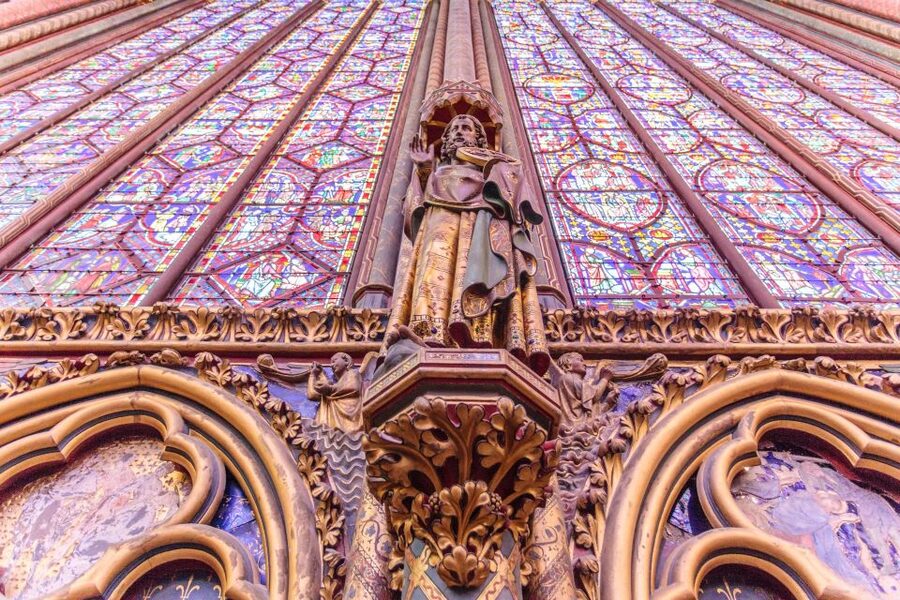
Now the tour shifts into wide, recognizable names: Place de la Concorde, Champs-Elysées, and Arc de Triomphe. This is the section built for long, straight walking corridors and big landmark sightlines.
This is also where the self-guided format pays off. Champs-Elysées can be crowded, and it is easy to feel like you are inside a marketing corridor. But on a route like this, you can choose your pace and decide when to pause for photos versus when to keep moving.
Place de la Concorde and the Arc de Triomphe area give you the “big Paris” feeling. Even if you do not enter anything, you can still appreciate how the city opens up into major public spaces. For many people, this part is the most satisfying because it blends famous names with the simple pleasure of walking toward them in sequence.
Jardins du Trocadéro and Eiffel Tower: your finish line with payoff views
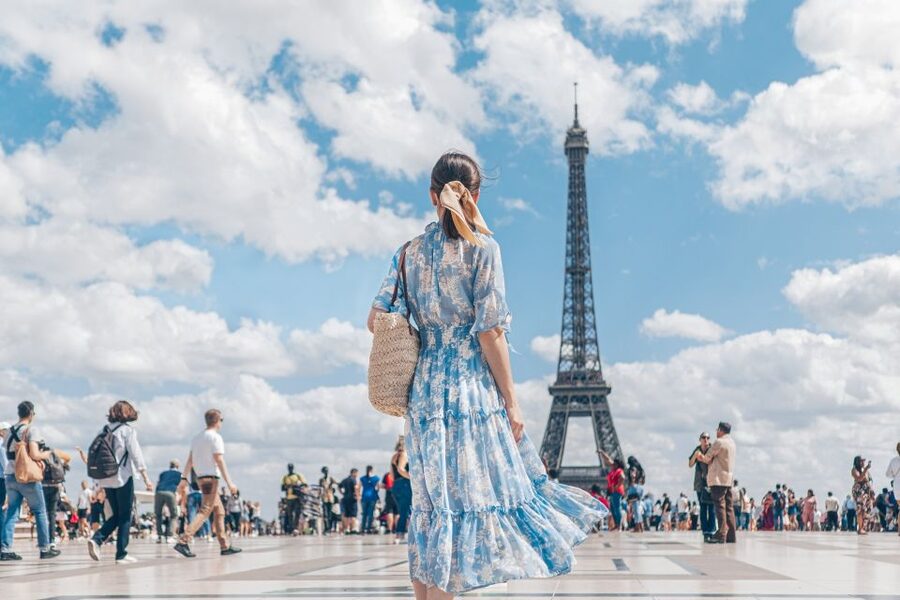
The final stretch includes Jardins du Trocadéro and ends at the Eiffel Tower. This is a strong finish because the route is designed to leave you with a memorable end point after you have already walked through so much of central Paris.
Trocadéro gardens are often where people slow down for views, and in this tour, they work like a runway into the Eiffel Tower moment. If you plan your timing well, this is a good place to spend a little extra time. You can look around, regroup, and decide if you want to snap pictures from multiple angles before calling it a day.
As promised in the tour highlights, the Eiffel Tower is part of the experience, and the tour frames it as a UNESCO-related heritage stop. Either way, the key is that you arrive there after moving through the city on your own schedule, not as a last-second stop on a crowded shuttle route.
Price and value: why this $11 self-guided day can be a smart deal

At $11 per group (up to 25 people), the value is tied to what you plan to do with it. You are not paying for a live guide or entry tickets. You are paying for a prepared booklet, a marked map, and a structure that helps you cover major sights efficiently.
For solo travelers, the money often comes down to one question: Will the booklet meaningfully improve your walk? In my view, it does when you want orientation, practical info, and a clear route between sights. The booklet is meant to help you avoid tedious research. It includes addresses, opening times, and admission guidance for each stop, so you can decide in the moment what makes sense for your day.
For families or small groups, the “per group” pricing can be especially attractive because one purchase can support several people following the same route with the same information.
The one caution is also clear: since entry inside attractions is not included, the day can become “just sightseeing from the outside” unless you plan for tickets separately. If you want indoor experiences, budget time and ticket steps accordingly.
Who this tour suits best, and where you might want extra info
This is a great fit for you if you:
- like planning your own day and moving at your own speed
- want a route that covers major sights without constant decision-making
- prefer practical guidance over a lecture
- are comfortable using a booklet for addresses and ticket planning
It is also a good match if you want to mix big monuments with neighborhood walking time in places like Le Marais and Île de la Cité.
Where you may need extra support is informational depth. The feedback I would take seriously is that the booklet can feel light on background for some major sites, with less construction and origin detail than you might want. If your travel style is “I want the why behind every stone,” plan to add your own notes, quick searches, or reading before you start the walk.
Should you book this Paris self-guided walk?
I think you should book it if your priority is a well-marked, low-stress walking route from Bastille to the Eiffel Tower, with a native-language booklet that helps you plan what to see and when to consider tickets.
Skip it, or pair it with your own reading, if you expect a guide-style deep explanation for every attraction. This works best as a smart framework for exploring, not as a substitute for detailed history.
If you want a Paris day that feels like city walking with just enough structure to keep you on track, this one is a solid pick.
FAQ
How long is the self-guided walking tour?
It takes approximately 2 to 3 hours, and the activity duration is listed as 3 hours.
What does it cost?
The price is $11 per group, up to 25 people.
Where does the route start and where does it end?
The tour starts at Place de la Bastille and ends at the Eiffel Tower.
How many attractions are on the route, and how far do you walk?
The route covers 12 attractions over about 12 km.
What is included with the tour purchase?
You get unlimited access to a self-guided booklet prepared by a Paris Expert-Guide, practical information about the 12 attractions, a short history of Paris city, a map with the marked route, and a 10% discount code for booking a guided tour with Rosotravel.
Are attraction tickets included?
No. The tour does not include entry inside attractions, and tickets are not included.
When will I receive the booklet?
The booklet is sent to you via email about 24-hours before the booking departure.
Is the booklet available in my language?
Yes, the booklet is provided in your native language.
Is it wheelchair accessible, and can I cancel if plans change?
The activity is wheelchair accessible. It also offers free cancellation up to 24 hours in advance for a full refund.
More Walking Tours in Paris



More Tours in Paris




More Tour Reviews in Paris






Not for you? Here's more nearby things to do in Paris we have reviewed












Paris City Tours, side by side.
 ★ 4.6Louvre Museum Timed-Entrance TicketTickets from $2671,977 guest reviews
 ★ 4.6Disneyland® Paris 1-Day TicketTickets from $6149,412 guest reviews
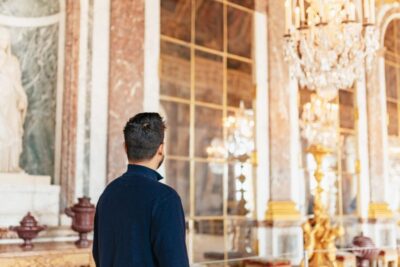 ★ 4.6Versailles Palace and Gardens Full Access TicketTickets from $1741,579 guest reviews
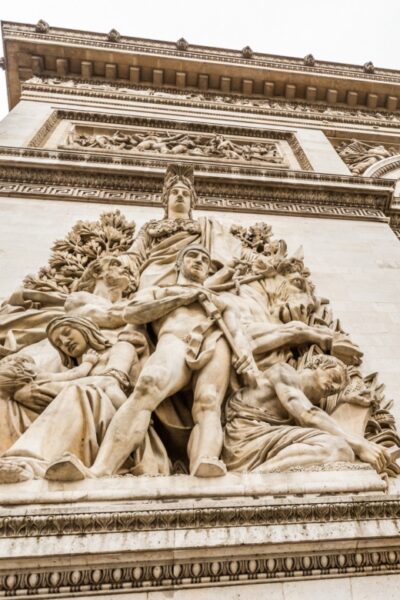 ★ 4.6Arc de Triomphe Rooftop TicketsTickets from $1834,264 guest reviews
 ★ 4.7Orsay Museum Entry TicketTickets from $1525,647 guest reviews
 ★ 4.4Evening River Cruise with MusicTickets from $2722,721 guest reviews
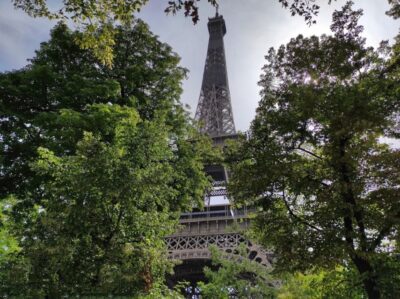 ★ 4.4Eiffel Tower Entry Ticket with Optional Summit AccessTickets from $2920,035 guest reviews
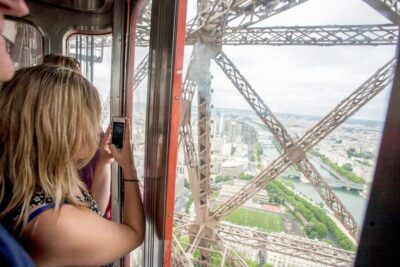 ★ 4.3Eiffel Tower Summit or Second Floor AccessTickets from $5917,248 guest reviews
This tour also belongs to