
Review · NORMANDY DAY TRIPS
Pointe du Hoc,Omaha Beach, American Cemetery – Day trip from Paris to Normandy
Normandy starts before sunrise in Paris. This small-group WWII day trip takes you to Pointe du Hoc and Omaha Beach in a calm, air-conditioned ride, with a driver-guide who connects what you see to the plan behind D-Day. I love the tight group size and the smooth pacing, and I love that admission to the key museum stop is handled for you at Overlord Museum.
The tradeoff is time. Expect a 13 to 14 hour day with a 6:30 am start, and lunch is not included, so plan your food and bring a rain layer just in case.
Key highlights at a glance
- Small-group feel: max 7 travelers, which helps you ask questions and actually hear answers.
- Pointe du Hoc scale: dramatic cliffs, concrete gun bunkers, and the story of the Rangers climbing up under fire.
- Omaha Beach by sector: you get your bearings fast, not just a quick beach walk.
- Museum time that matters: Overlord Museum adds the big-picture context, not just names and dates.
- Colleville-sur-Mer cemetery views: 9,387 crosses, an orientation table, and the sense of distance between history and loss.
- Arromanches Mulberry harbor remnants: see the concrete pieces that helped supply the invasion.
Why this Paris to Normandy D-Day day trip is worth the effort
If you’re trying to do Normandy from Paris, timing is everything. A DIY day can be slow and confusing, and you can lose hours to transfers, parking, and working out what you’re actually looking at. This tour is built for one thing: getting you to the right sites early enough that you can think, walk, and take in the meaning.
I also like that it feels structured without being rigid. You move in a private, climate-controlled vehicle, with a driver-guide handling the driving and the flow. Then you get specific stops where history comes into focus, from the cliffs at Pointe du Hoc to the carefully kept grounds at the American Cemetery.
And yes, it’s long. But a long day can still be the right day if the pace is smart and the guide keeps the story clear.
More Paris tours and experiences for the shortlist

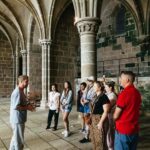
Departure time, group size, and the comfortable minivan ride
You start at 6:30 am from the Théâtre du Lido area on the Champs-Élysées, and the total day usually lands in the 13 to 14 hour range. That early departure is not just for show. It helps you beat some crowds, and it gives your guide time to explain what you’ll see before you’re standing in it.
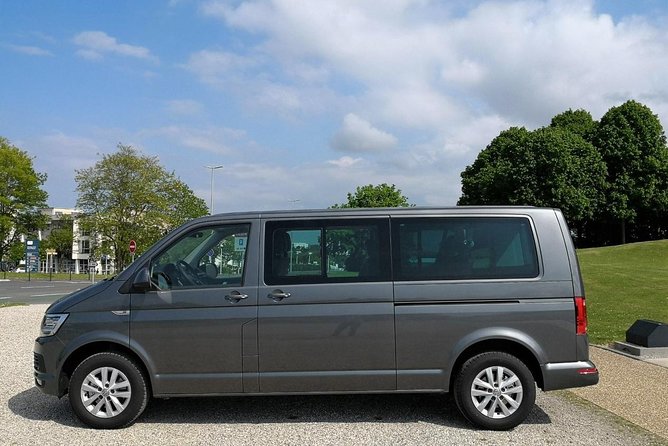
This is a small group capped at 7 travelers, and the vehicle is air-conditioned. Multiple people in the feedback singled out how comfortable and clean the van felt, and how safe the driving was on long roads. That matters on a day when you’ll be standing still at memorials, then moving again, then standing still again.
One more practical note: you’ll have long stretches in the car. Bring something for warmth, and consider charging your phone before you leave. You’ll also have a mobile ticket, so you’re not hunting for paper.
Pointe du Hoc: the cliffs, the bunkers, and the Rangers’ climb
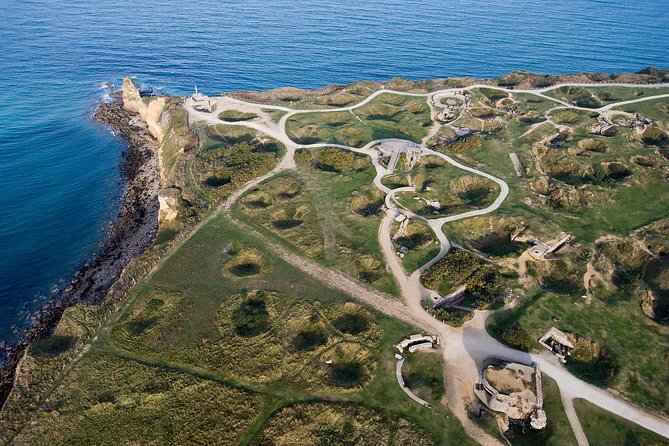
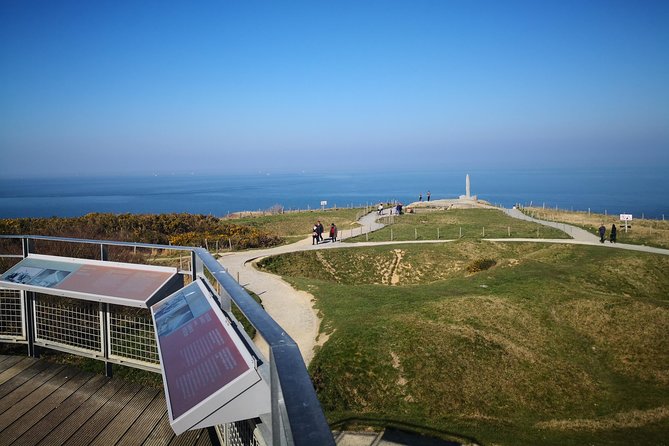
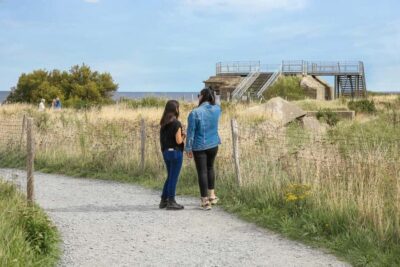
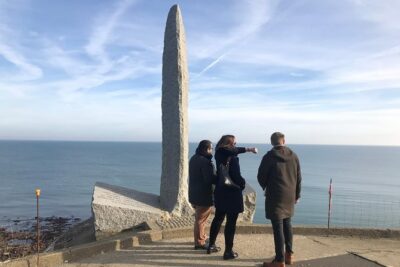
Pointe du Hoc is one of those places where you quickly understand why it was heavily defended. The site sits between Omaha and Utah beaches, and the scale is immediate: about 100-foot-high cliffs overlooking the English Channel. Standing there, it’s easier to grasp how the Germans used height and distance to control the shoreline.
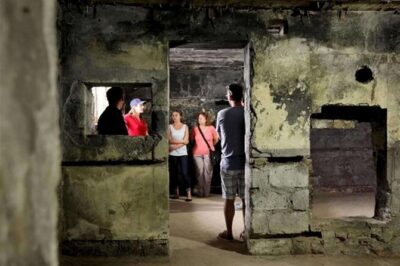
Your guide sets the scene for what you’re seeing. In mid-1943, the Germans set up long-range artillery guns (155mm) in concrete bunkers on these cliffs. This was part of Hitler’s Atlantic Wall plan, a coastal defense system full of bunkers, gun positions, and beach obstacles designed to stop an Allied landing.
Then you get the key D-Day moment: on June 6, 1944 at 7:10 am, 225 US Rangers landed below the cliffs on barges and started scaling up using ropes. The goal was simple, and brutal, destroy the gun emplacement. You can still see battle traces today: blown concrete bunkers, bomb craters, and scars in the terrain.
You’ll have about 40 minutes here, and that’s usually just right for photos, a slow walk, and a clear explanation from your guide. The one thing to manage is your expectations: you won’t see every angle at once. If it’s windy, pause and let your guide reorient you so you’re not just staring at concrete.
National Guard Monument: a small stop with a direct battlefield meaning
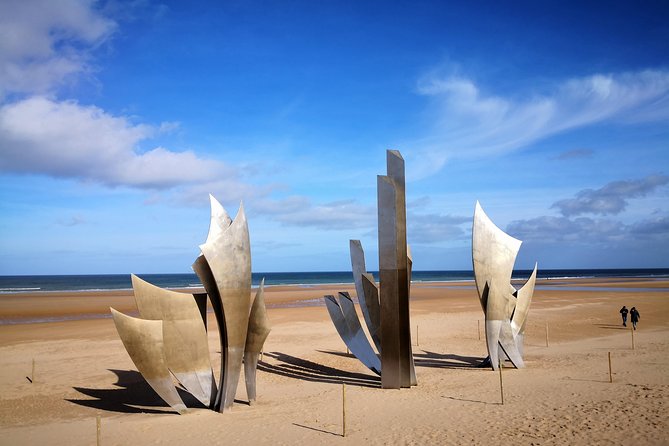
After Pointe du Hoc, you stop at the National Guard Monument, located on the spot where the 29th National Guard Division broke through German defenses on D-Day at WN72. This is not a big headline monument, but that’s why I like it. It shifts you from the dramatic cliffs to the specific units and ground movements that actually changed the day.
You also see the monument maintained in a way that keeps the original bunker context in view. The point here is respect and remembrance, tied to a precise location in the battle map.
You’ll have around 20 minutes. Use that time to ask your guide for what sector you’re in and how the fight moved afterward. It’s short, but it helps the next stops make more sense.
Omaha Beach monuments in the Easy Green area
Omaha Beach can feel overwhelming at first glance because it’s long and the story involves multiple units and landing sectors. The tour solves that problem by steering you toward specific zones, including the Easy Green sector.
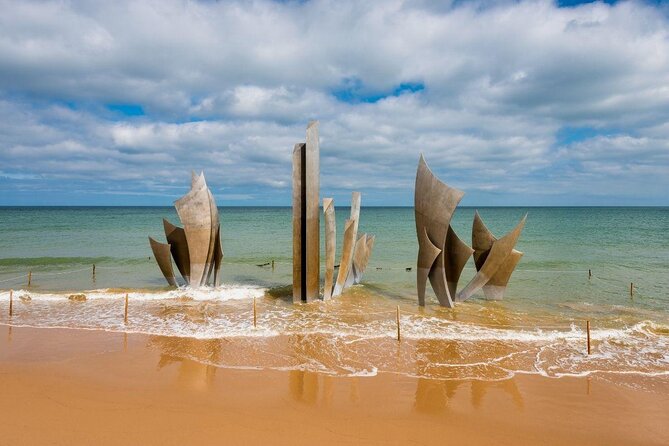
You’ll do photo stops at two Omaha Beach monuments that are designed to be read and understood. The first is Signal of the Liberation, which commemorates the Allied landing on June 6, 1944. On either side are frescoes dedicated to the 1st US Infantry Division and the 116th Regimental Combat Team of the 29th US Infantry Division.
The second monument is The Braves, a large sculptural tribute by Anilore Banon, honoring the courage of Allied soldiers.
You also get a bit of time to walk the beach. One fun, very Normandy thing: you can grab a bit of sand to fill a tiny glass container as a souvenir. It’s a small gesture, but it reminds you this is real ground, not just a memorial backdrop.
In total, you’ll have around 20 minutes at these stops. If it’s cold or windy, don’t fight it. Put on layers, stand where your guide tells you, then let the monuments do their job.






The 1st US Infantry Division memorial and Resistance Nest 62
Next comes a stronger feel for how “Omaha Beach” was made of smaller battles. You visit the Memorial of the 1st US Infantry Division in the Red Sector / Easy area, an obelisk positioned in Widerstandsnest 62 (WN62), also known as Resistance Nest 62.
WN62 matters because it overlooks the Easy Red and Fox Green sectors. In other words, you’re looking out from one of the key defending positions that shaped what attackers faced.
This stop is about 30 minutes, and it’s usually where the guide helps you connect the dots: what the bunker line looked like, how the terrain channeled movement, and why the resistance positions mattered. I love this kind of explanation because it turns “I saw a beach” into “I understand why this part was hard.”
Overlord Museum on Omaha Beach: the big-picture context you need
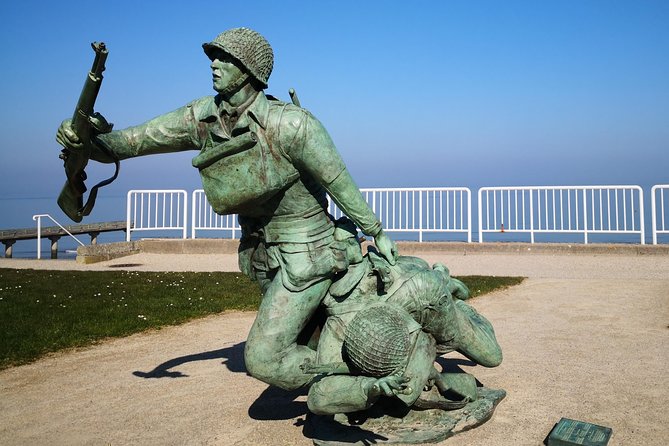
Once you’ve walked the beaches and stood near memorials, the emotional part hits hardest. That’s why the Overlord Museum stop is such a smart move. It gives your brain a map before you sink into the details of the cemetery.
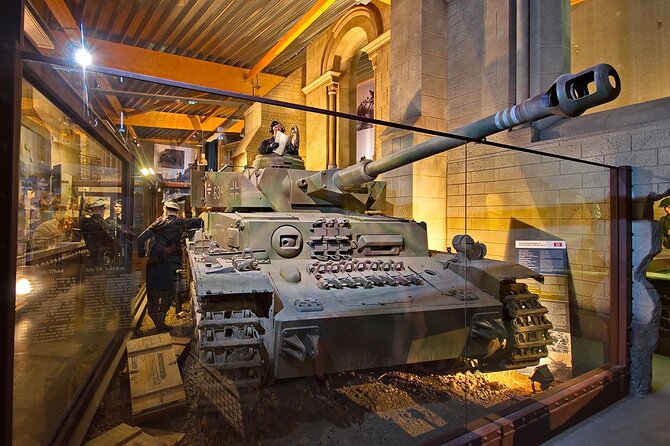
The museum chronicles the Allied landing period leading to the liberation of Paris. You’re not just looking at photos. You see reconstructions and collections tied to the people and machines involved, including personal items from individual soldiers and armored vehicles. The focus includes what’s described as reconstructions with over 35 vehicles, tanks, and guns.
Your time here is about 1 hour, and admission is included. I recommend using that hour to slow down and ask yourself a simple question: what changed after the first day? The museum’s job is to help you answer that, so the later memorials feel less like separate exhibits and more like one story.
Colleville-sur-Mer American Cemetery: 9,387 crosses and a view that hurts
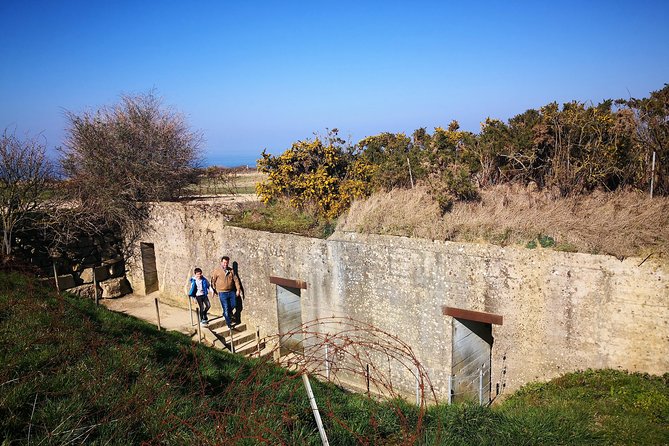
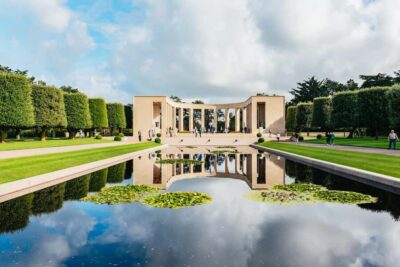
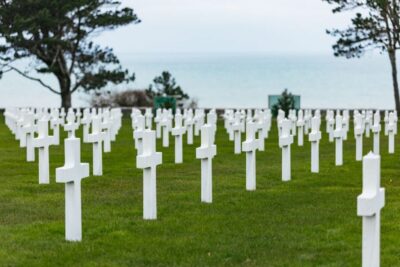
This is the stop most people remember long after the trip ends. The American Cemetery at Colleville-sur-Mer sits on an expansive 180-acre site overlooking Omaha Beach nearby. The grounds are meticulously maintained, with 9,387 white crosses aligned with quiet precision.
You’ll visit with your historian guide, who shares stories of soldiers who fought in the surrounding area and who were awarded for gallantry. The museum-like explanations here matter, because they help turn a list of names into people.
The cemetery includes a memorial chapel and, on the Walls of the Missing, a semicircular garden with 1,557 names. Rosettes mark those since recovered and identified. At the center is the bronze statue Spirit of American Youth Rising from the Waves, and an orientation table gives you a view back toward the landing areas.
Then there’s the emotional geography: reflecting pool in the foreground, burial areas beyond, and granite statues representing the United States and France. It’s not a “look and move on” place. It’s a “stand and understand what you’re standing on” place.
You’ll have around 1 hour. My practical tip is to keep your phone away for parts of this walk. Let your eyes adjust, then let the details settle.
Arromanches Mulberry harbour remnants: the supply miracle you can still touch
After the heavier moments at Omaha and the cemetery, the day shifts to something more practical. You’ll visit Vestiges du Port de Mulberry, connected with the Arromanches landing areas and the artificial Mulberry harbor.
Arromanches is remembered because a temporary harbor was installed right after D-Day. The goal was to unload equipment without waiting for deeper water ports like Le Havre or Cherbourg. This mattered because supply is what keeps an army moving.
The tour describes the system: British forces built huge floating concrete caissons that were towed from England and assembled into piers and walls forming the Mulberry harbor. These included pontoons linked to land by floating roadways.
Even today, sections remain, with big concrete blocks sitting on the sand and more visible further out at sea. It’s history you can almost understand with your hands: not just a story of engineering, but visible proof of how quickly Allies had to solve a problem.
You’ll spend about 20 minutes here. If the weather is clear, stand for a minute and think about scale: this was meant to handle huge volumes, including the numbers shared such as 9,000 tons of material per day and the landing totals by June 12.
Price and value for a Normandy D-Day day trip from Paris
At $326.53 per person for this full-day trip, you’re paying for three things: time, transportation, and guided interpretation at multiple key sites.
DIY from Paris can be doable, but it often costs you in stress and lost hours. One of the best values here is the private, air-conditioned vehicle plus a driver-guide who keeps you oriented across the entire day. Normandy sites are spread out, and explanations are not optional if you want the experience to click.
You also get included admission to the Overlord Museum, which is a meaningful chunk of the day’s content. Combine that with the sequence of memorial stops and you get a tour that feels planned, not assembled.
The small-group size also makes the price feel more reasonable. With only up to 7 travelers, you’re not fighting a big audio line or waiting for people to catch up at every stop.
Worth noting: lunch and drinks are not included. In the feedback, some people mentioned a lunch stop that felt convenient, but the tour itself doesn’t bundle food. I suggest bringing snacks for the car and budgeting for a meal during the day.
Who this tour suits best (and who should rethink it)
This tour is ideal if you:
- Want a focused D-Day sites day without routing your own logistics
- Prefer a small-group setting where you can ask questions
- Like historical context that links terrain, units, and events, not just dates
You might reconsider if you:
- Get worn down by long car days, since you’re out roughly 13 to 14 hours
- Want totally free time at each stop, because the schedule moves through several major sites
For families, the pacing can work well. In the feedback, people appreciated that guides were attentive and kept the day flowing smoothly without losing the children in the group. For anyone who needs a quiet moment, the cemetery is also your built-in pause.
Should you book this Paris to Normandy WWII day trip?
I’d book it if your goal is to see the right places with meaning, and you don’t want to spend your day figuring out how everything connects. The combination of Pointe du Hoc, Omaha Beach, the American Cemetery, and the Arromanches Mulberry harbor site hits the major emotional and practical chapters of the Normandy story.
It’s not a cheap day trip, but it’s not a random sightseeing circuit either. You’re buying: early timing, small-group attention, included museum admission, and a guide style that turns standing still at memorials into understanding what you’re looking at.
If you do go, pack for weather, plan your food, and give yourself permission to pause at the cemetery. That’s where the day stops being an itinerary and becomes a memory.
FAQ
How long is the day trip from Paris to Normandy?
It runs about 13 to 14 hours.
What time does the tour start and where does it meet?
It starts at 6:30 am and meets at Théâtre du Lido, 116 bis Av. des Champs-Élysées, 75008 Paris.
What sites are included in the tour?
The stops are Pointe du Hoc, the National Guard Monument, Omaha Beach monuments, the Memorial of the 1st US Infantry Division, Overlord Museum, the American Cemetery in Colleville-sur-Mer, and the Vestiges du Port de Mulberry in Arromanches.
Is admission to museums included?
Yes. Admission to Overlord Museum is included.
Is lunch provided?
No. Lunch, food, and drinks are not included.
What language is the tour offered in?
The tour is offered in English.
How big is the group?
The tour has a maximum of 7 travelers.
Is the tour weather dependent?
Yes. It requires good weather. If it’s canceled due to poor weather, you’ll be offered another date or a full refund.
What is the cancellation policy?
Free cancellation is available up to 24 hours in advance for a full refund. If you cancel less than 24 hours before the start time, the amount paid is not refunded.
More 1-Day Tours in Paris



More Tour Reviews in Paris


Not for you? Here's more nearby things to do in Paris we have reviewed












Normandy Day Trips, side by side.
 ★ 5.0Normandy D-Day Sites & Cemetery Day Trip from Paris with LunchTickets from $1206,877 guest reviews
 ★ 5.0Normandy D-Day Small-Group Day Trip with Omaha Beach, Cemetery & Cider TastingTickets from $3202,786 guest reviews
 ★ 4.5Normandy D-Day Beaches and American Cemetery Day Trip from ParisTickets from $2072,673 guest reviews
 ★ 4.7Normandy D-Day Sites Guided Day Trip with LunchTickets from $1171,082 guest reviews
 ★ 4.8From Paris: Normandy D-Day Landing Beaches Full-Day TourTickets from $312698 guest reviews
 ★ 4.6From Paris: Normandy D-Day Beaches Day TripTickets from $199566 guest reviews
 ★ 5.0Normandy D-Day Beaches with Juno Beach, bunkers & Canadian Cemetery from ParisTickets from $290296 guest reviews
 ★ 5.0Normandy D-Day Landing Beaches Small-Group Day Trip from ParisTickets from $344275 guest reviews
This tour also belongs to