
Review · NORMANDY DAY TRIPS
Normandy D-Day Beaches and American Cemetery Day Trip from Paris
Normandy’s D-Day sites make time feel heavier. This day trip lines up the big emotional stops, with a WWII expert guide, a long coach ride, and enough site time to actually look, not just pose. I like that you cover Omaha Beach and the American Cemetery in one organized loop, and you also get Arromanches and the Juno area for the larger Allied story. One possible drawback is the long day and the pace, especially in wind, cold sea air, and crowded entry points.
If you do book, read it like a plan for logistics, not a promise of perfect timing. You’ll likely start with the drive north from central Paris, then move site to site with a guide who sets context, including Rangers at Pointe du Hoc, the brutal early hours of Omaha, and the memorial meaning of Colleville-sur-Mer. Still, you should be ready for possible changes due to traffic or closures, and note that Juno can be limited depending on the day’s schedule.
Key things to know before you go
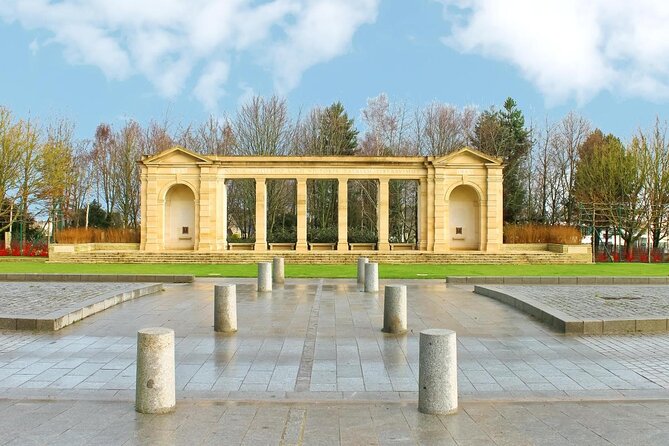
- A full WWII arc in one day: Pointe du Hoc, Omaha Beach, the American Cemetery, Arromanches, and often Juno Beach Center.
- One guide, multiple lenses: you get the battle picture plus the human impact, not just dates and facts.
- Time for reflection, not just photos: the American Cemetery stop is about an hour.
- Lunch is either free time or included (small-group option) at Arromanches, depending on what you select.
- Sea air is real: bring a warm coat in winter and rain protection in the other seasons.
- Pace can feel fast: you do a lot of walking and you need to keep up with regroup times.
Normandy D-Day from Paris, built for one long day
This tour is designed for a simple goal: get you out of Paris and onto the Normandy coast with a guided path that actually connects the sites. The day runs about 13 hours, and the drive is the price of admission here. You’re looking at roughly 3 to 4 hours each way, plus about 5 hours in Normandy, so it’s not a casual half-day “see a bit of everything” trip.
What makes it work is that the stops are not random. You start at Pointe du Hoc, then go to Omaha Beach, then you shift to the American Cemetery, and only after that you move to Arromanches and the Canadian side at Juno. That order matters. It helps your brain place the invasion as both an action and a consequence.
The tour also stays practical about what you need to function during a long day. There are toilets at the American Cemetery, at the Juno Beach Center, and at a comfort stop, and you’ll have a lunch window in Arromanches. You should still plan on being outside for a while, because the coastline has its own weather.
More Paris tours and experiences for the shortlist


Price and value: what you get for about $207
At $207.27 per person, you’re paying for four main things: a guided day with an expert, round-trip transportation from central Paris, entry or included time at major memorial sites, and enough structure to keep you from spending your day figuring things out.
Is it cheap? No. But for Normandy, it’s often the difference between doing a stressful self-drive and getting a smooth itinerary with a real explanation along the way. Also, this is not just about one beach. You’re covering multiple locations that are far apart, plus memorial context that is hard to piece together quickly on your own.
Where value can shift is group size and vehicle comfort. The standard format is an air-conditioned coach, with minivan for the small group option. In the small group style, you may feel more motion and less legroom. Some people also reported that certain days used a smaller vehicle than expected. If comfort is your top priority, it’s worth considering that small-group option may feel tighter, even if the instruction can feel more personal.
The Paris to Normandy drive, why it sets the tone
The day begins with pickup at 22 Rue Jean Rey, 75015 and a coach ride that takes roughly 3 to 4 hours to reach the coast. The itinerary places your first major stop around 10:00 AM, which means you’re likely eating up the first chunk of the morning watching countryside and getting a first wave of context from the guide.
This is where you decide whether you’ll enjoy the experience or rush through it. If you like learning while you travel, you’ll probably appreciate the way the guide uses the drive time to set the stage. People often highlight that their guides gave maps and clear guidance on where to stand and what to look for, which helps once you’re at the craters, cliffs, and beach line.
One practical note: no onboard wifi and no promise of restroom stops on the bus itself. The tour does include comfort stops, but you shouldn’t count on a bathroom whenever you want one.
Pointe du Hoc: cliffs, craters, and the story that grabs first
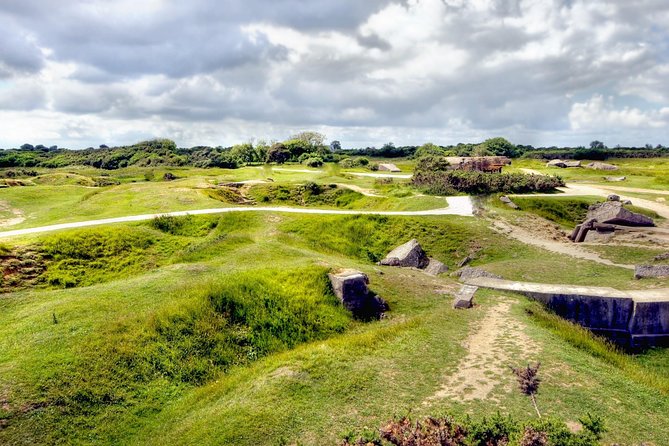
Pointe du Hoc is one of the most striking openings because it’s not just a beach view. It’s a cliff-top site where U.S. Army Rangers scaled the cliffs under heavy fire to destroy German fortifications that threatened the landing areas.
You’ll have about 25 minutes here. That time isn’t huge, but it’s long enough to read the story and walk a short circuit to see the scarred landscape: craters, bunkers, and that unnerving sense that this place was carved up on purpose. Since admission here is free on the stop, you’re really paying for the guide’s explanation and for having someone tell you where your attention should go.
If you’re the type who likes detail, this is where you’ll likely feel the tour earns its keep. The guide’s job is to make you understand why this cliff mattered, not just that it existed. On days with strong guiding, that’s often the moment people remember most.
Omaha Beach: tough landings and the ocean’s quiet afterward
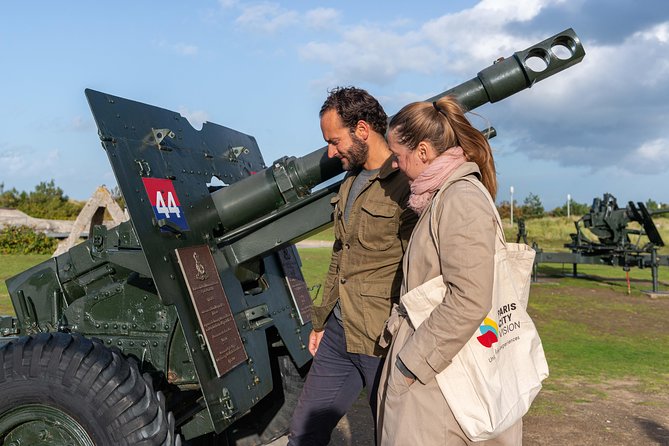
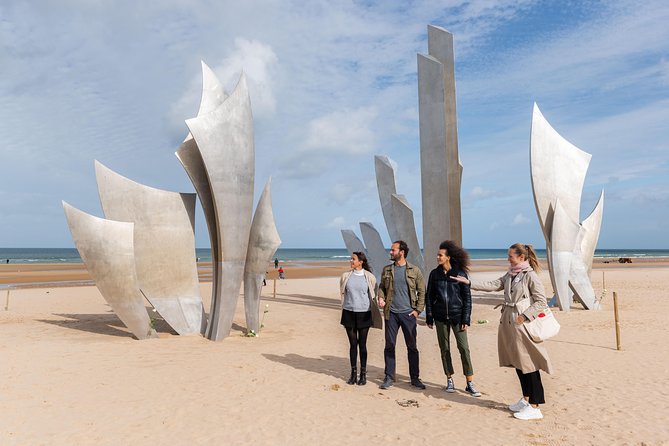
After Pointe du Hoc, you move to Omaha Beach for about 20 minutes, plus a photo-stop style moment where you can take in the beach line and the wider coastal picture.
Omaha is famous for being one of the toughest landings of June 6, 1944. The guide should give you the early-hour perspective, and once you’re there, your eyes start doing the work. You see the scale of the shoreline and you understand, physically, why this wasn’t a “clean landing” story.
A drawback to know upfront is that 20 minutes can feel short if you want to linger on your own. You can fix this with one mindset: use the guided time to get your bearings fast, then take in the views and the visitor center materials at your own pace during the time window.
Also, the coastline can get windy. That means your experience may be more about staying warm and focused than about “walking around for ages.” Bring a hat and layers, and you’ll enjoy Omaha more.






The American Cemetery at Colleville-sur-Mer: the stop that slows you down
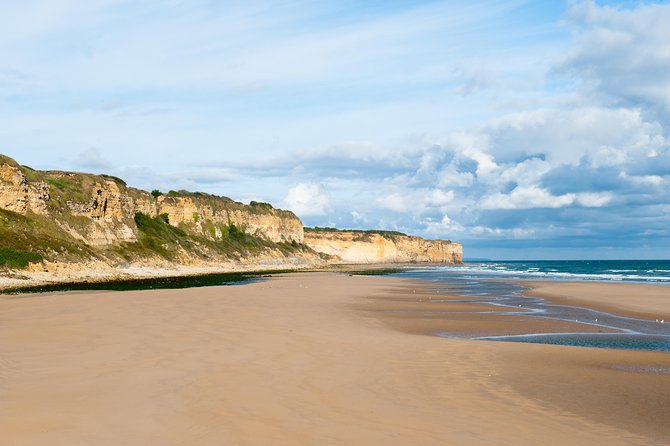
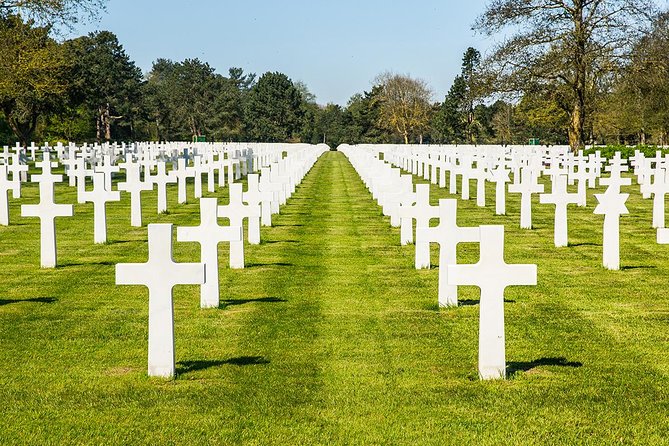
This is the emotional centerpiece of the trip. At Cimetiere Americain de Colleville-sur-Mer, you get about 1 hour on site, and admission is included.
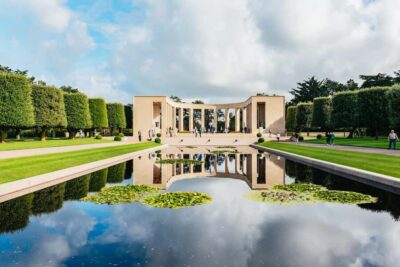
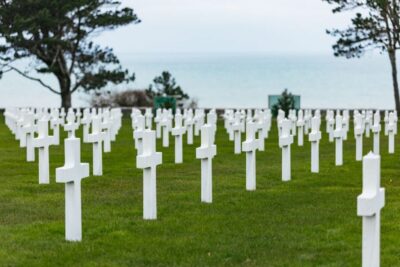
The cemetery has nearly 10,000 American war dead. The setting is calm, even when your brain is running in circles. Here, you’re not looking at battle mechanics. You’re looking at names, sacrifice, and the quiet geometry of remembrance.
You’ll likely feel a shift in how you experience the tour during this hour. The guide’s job is to provide context without rushing you. If the guide keeps a steady pace and gives you options, like where to stand for the most meaningful viewpoints, you’ll come out of this stop with a different kind of understanding than you’d get from a video.
One thing to watch: if the day has heavy wind or cold, you might have less desire to walk slowly. But the design makes it possible to pause and reflect without needing a long loop circuit.
Arromanches: lunch, the harbor ruins, and why logistics mattered
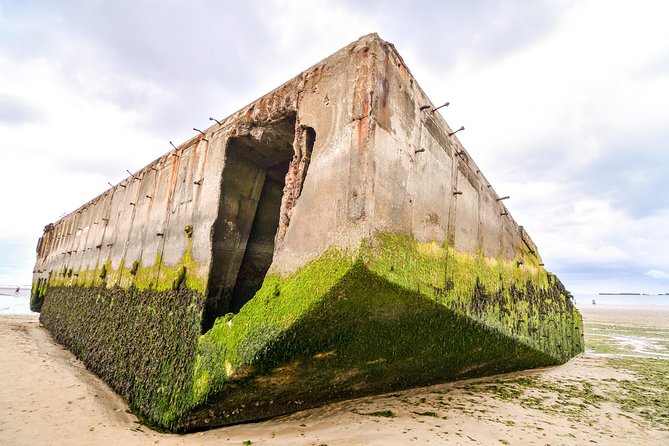
Next comes Arromanches, with a stop called Les Falaises d’Arromanches and free time for lunch. The schedule gives about 1 hour 30 minutes here.
This is where your day gains depth. Arromanches is tied to the artificial harbor built by Allied forces. Instead of focusing only on the first minutes of combat, you get the infrastructure that allowed supplies to reach the front. It’s a reminder that war is not only bravery. It’s also engineering, planning, and stubborn problem-solving.
If you choose the option that includes lunch, you’ll get a two-course lunch with a drink (wine, beer, soft drink, sparkling or still water). If you don’t, you still get time to eat, but you’ll choose on your own.
Practical tip: treat this as your recharge stop. Walk a little, grab lunch, and use the window to warm up. Then you’ll be ready for the last leg by the time you return toward the coast.
Juno Beach Center and the Canadian memorial, with a time caveat
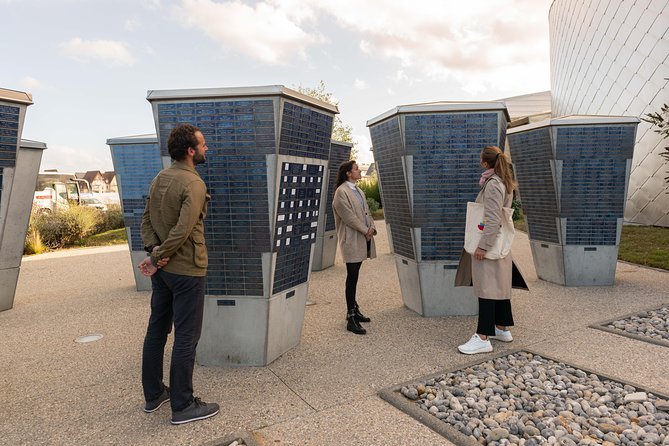
Your final Normandy stop is the Juno Beach area, where you visit the Juno Beach Center connected to the Canadian soldiers’ role in ending Nazi tyranny.
There’s a key reality check: depending on the day’s timing, the Juno stop is possible but not guaranteed. Some days have tighter schedules, especially if traffic runs long or if earlier stops take more time. So while Juno is in the plan, treat it as a “best effort within the itinerary,” not a guaranteed stamp in your passport.
When you do get the Juno Beach Center, you’re in for a different emotional flavor than the American memorials. It broadens the story to include the Canadian effort, and it helps you see the invasion as an allied operation rather than a single-nation narrative.
Toilets are available at the center, which is helpful because this is often where people realize how much the day is about timing your own needs.
Pace, walking, and what to bring so the day stays pleasant
This tour is structured, but it’s still a day on your feet. Even with a comfortable vehicle, you should expect walking and regrouping. People mention it can feel fast-paced, especially if you don’t walk at a steady pace or if you struggle with cold and wind. The guide helps with directions, but after the explanation, you often have your own time to self-tour within the assigned window.
Here’s how I’d pack for it:
- Good walking or flat shoes for uneven outdoor ground.
- A warm coat in winter. In warmer months, bring rain protection.
- A layer you can remove, because bus time can be warm and coastline time can be cold.
- A small day bag, since the tour notes that big luggage isn’t accepted on the coach.
Comfort inside the vehicle matters too. The tour is built for air-conditioned coach travel, and some reports note that buses can have USB ports. Still, if you end up in a minivan on a smaller group option, you might feel less legroom than you want for the full road time.
Audio is another point. While the tour is in English, not every guide audio situation feels perfect in every vehicle and group setup. If you’re sensitive to hearing details, consider bringing your own device for music or noise reduction during the ride, but be ready to focus when the guide stops talking at the sites.
Tour guidance quality: names you’ll hear, and what to look for
A lot of the experience success comes down to the guide. People often mention guides like Steve, Camille, Ann, Demetri, and Zoltan (also spelled Zoltar in some reports). The common thread is that strong guides do two things well: they respect the seriousness of the ground and they help you understand why each site is where it is.
You can spot good guiding by the way your “eyes” turn on. The best guides give clear directions on where to stand, explain what you’re looking at on the cliff or the beach, and keep the group on track without turning the day into a race.
A possible negative exists too. Some people report that on certain days, the guide’s English was hard to follow, or that hearing commentary could be difficult in a larger group. If communication is critical to your enjoyment, pick a tour time that fits your comfort level and consider bringing an earphone solution if you know you need it.
Who this trip suits best, and who might want a slower plan
This is a great fit for you if you want a guided one-day Normandy hit without the planning burden. It suits people who enjoy explanations, like the format of multiple stops, and are happy to be on a schedule for a full day.
It’s also a good match if you’re traveling from Paris and want the American and Canadian memorial story in one organized day, especially with round-trip transport included.
It may be less ideal if you prefer slow pacing, long self-guided wandering, or you have strong mobility limits. The walking is manageable for most people, but the pace can be tight, and regroup times matter. If you’re very sensitive to cold wind and long exposure outdoors, that’s another reason to pick dates carefully and pack layers.
Should you book this D-Day Beaches and American Cemetery day trip?
I’d book this trip if your priority is structure, guided context, and seeing the key sites in one day from Paris. The mix of Pointe du Hoc, Omaha Beach, the American Cemetery, Arromanches, and the Juno area is a smart way to understand the invasion as both battle and aftermath.
I’d think twice if you know you struggle with long days, fast pacing, or you really want guaranteed time at Juno Beach Center. Since timing can change and Juno is not always guaranteed, go in with flexible expectations.
If you book, do the simplest things that make a big difference. Dress for sea air, wear shoes you trust, and use the bus ride time to get your bearings. When the guide is at their best, this is one of those days where the screen and the book turn into something real, and you walk away with memory that sticks.
FAQ
How long is the Normandy D-Day trip from Paris?
Plan for about 13 hours total. The drive from Paris to Normandy takes roughly 3 to 4 hours, and you spend about 5 hours in Normandy, with a drop back at the meeting point that can be around 8:00 PM.
What are the main stops on the tour?
The planned stops include Pointe du Hoc, Omaha Beach, the American Cemetery at Colleville-sur-Mer, Arromanches’ harbor area, and the Juno Beach Center. Juno depends on available time, so it is not guaranteed on every day.
Is lunch included?
Lunch at Arromanches depends on the option you select. You can have free time for lunch, or you can choose a small-group option that includes a two-course lunch with a drink.
Does the tour include transportation from central Paris?
Yes. Round-trip transportation is included by air-conditioned coach, or by minivan for the small group option. Hotel pickup is only if you select that option and your address is in Paris (zip code starting with 75).
Is the tour in English?
Yes, the tour is offered in English, and you’ll receive a mobile ticket.
Are there restrooms during the day?
Toilets are available at the American Cemetery, the Juno Beach Center, and at the comfort stop.
What happens if weather is bad?
This experience requires good weather. If it is canceled due to poor weather, you will be offered a different date or a full refund.
More 1-Day Tours in Paris



More Tour Reviews in Paris


Not for you? Here's more nearby things to do in Paris we have reviewed












Normandy Day Trips, side by side.
 ★ 5.0Normandy D-Day Sites & Cemetery Day Trip from Paris with LunchTickets from $1206,877 guest reviews
 ★ 5.0Normandy D-Day Small-Group Day Trip with Omaha Beach, Cemetery & Cider TastingTickets from $3202,786 guest reviews
 ★ 4.7Normandy D-Day Sites Guided Day Trip with LunchTickets from $1171,082 guest reviews
 ★ 4.8From Paris: Normandy D-Day Landing Beaches Full-Day TourTickets from $312698 guest reviews
 ★ 4.6From Paris: Normandy D-Day Beaches Day TripTickets from $199566 guest reviews
 ★ 5.0Normandy D-Day Beaches with Juno Beach, bunkers & Canadian Cemetery from ParisTickets from $290296 guest reviews
 ★ 5.0Normandy D-Day Landing Beaches Small-Group Day Trip from ParisTickets from $344275 guest reviews
 ★ 4.0Normandy 2Days Trip Landing Beaches and Mont St Michel from ParisTickets from $682219 guest reviews
This tour also belongs to