
Paris wears its wartime scars on busy streets.
What makes this tour special is the way you connect major WWII figures and events to the exact corners you walk past, from Champs Elysees down to Place de la Concorde. You get a focused, private format, led in English, so you can ask questions while the stories are still fresh in your head.
I especially like how the guide brings names into the walk, including Pierre Brossolette and Carl Heinrich von Stulpnagel, not just vague “the Germans were here” statements. I also like the strong visual history moment at Place de la Concorde, where you can notice bullet holes tied to the liberation.
The main drawback is the emotional weight. You will be hearing about arrests, tragic outcomes, and Nazi occupation, so it helps to be ready for serious subject matter and to take the pace your guide sets on the ground.
Key highlights you will not want to miss
- Gestapo in the city center, explained in the context of daily occupied life
- Real WWII names on familiar streets, including Pierre Brossolette and Carl Heinrich von Stulpnagel
- Arc de Triomphe in the story line, placed at the western end of the Champs Elysees
- Bullet holes at Place de la Concorde, a stark clue of liberation
- Le Meurice and Von Choltitz, tied to the question of Paris being destroyed
A Private WW2 Walk Through Paris, From Porte Dauphine to Concorde
This is a private guided walking tour, about 3 hours long, starting at 9:30 am. You meet at Porte Dauphine in Paris, then walk to Place de la Concorde, so you are covering a neat, manageable stretch without trying to do all of Paris in one day.
It runs in English and is designed for people with moderate physical fitness, which matters because the route is on foot and you will be standing and listening at key points. The tour is also near public transportation, which is helpful if you want an easy pre or post plan before and after your walk.
Because it is private, your group is the only group on the route. That is a big deal for a history tour, since you can pace the questions and go deeper when something catches your interest.
Finally, you get a mobile ticket, and the experience lists admission ticket as free. Practically, that usually means you can focus on the walk and the guide’s storytelling, without extra museum tickets piling up.
You can also read our reviews of more walking tours in Paris



Champs Elysees in Occupied Paris: Gestapo, Propaganda, and Real Names
The tour’s first stop is the Champs Elysees, and your guide frames this stretch as a central stage of occupied Paris from 1940 to 1944. This is not history in the abstract. It is the same grand avenue that feels so open today, paired with what happened here when control was tight and fear was real.
One of the first details that lands is how Parisians changed the tone of the place name. The avenue was nicknamed avenue des Boches, a pointed insult tied to Nazi presence. Your guide then connects that name to specific Nazi power on the ground, including the Gestapo offices located on this avenue.
You also get the kind of storytelling that history lovers tend to crave: arrest, resistance, and consequences. The walk includes the arrest of resistance fighter Pierre Brossolette, along with the tragic end that followed. It is heavy material, but it is also what makes the area feel real, because you are not just looking at stone, you are learning what those streets meant to specific people.
The guide also brings in Carl Heinrich von Stulpnagel, and ties his connection to Operation Walkyria to what happened next. You are essentially learning how high-level plans played out in places like this, and how the people behind the plans connected to the occupation machinery you are standing near.
A practical note at this stop
This section works best if you are comfortable with guided walking at a steady pace. Plan to wear shoes that can handle uneven sidewalk sections, and bring a layer, since the Champs Elysees area can feel windier than you expect.
Restaurants, Cafes, Cinemas, and the Strange Normal of Occupation
As the walk moves along the Champs Elysees, the tour shifts from the blunt mechanics of control to the uncomfortable idea of normal life continuing under occupation. Your guide points out places Germans frequented, including Fouquets and Maxims, plus cinemas tied to that era.
That detail may sound minor at first, but it is actually one of the most revealing parts of this kind of tour. It shows how occupation did not only happen at police offices or in dramatic arrests. It showed up in leisure spaces too, which is often harder to grasp unless you hear it tied to the exact locations.
This is also where you see the Champs Elysees described as a propaganda tool in Reich messaging. The avenue’s prestige mattered. The street itself became part of the performance of power, which helps you understand why the Nazi propaganda machine cared about these famous Paris settings.
If you like history that connects culture to politics, this stop is where that connection becomes crystal clear. You start seeing the avenue as a stage with different actors, rather than as a single unbroken monument.
Arc de Triomphe: The Monumental View and the Occupation Layer
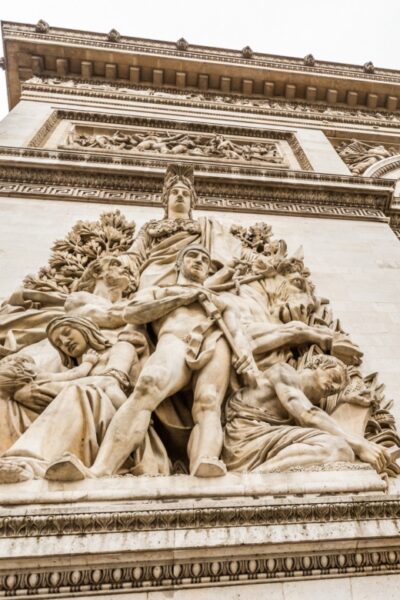
The story line also includes the Arc de Triomphe, discussed as one of the major landmarks at the western end of the Champs Elysees. Even if you have seen the arch before, it is different when your guide places it into a wartime map of influence and control.
This part matters because the tour’s theme is not only about where something happened, but how Paris’s most famous shapes and axes were used to project meaning. Standing near a landmark like this while you hear about occupation and propaganda helps you realize why rulers love big public spaces.
You also get a sense of the geography of the walk: where you started, how the avenue lines up visually, and how the route you are taking fits into the broader city logic from that era. It is the kind of mental map building that makes a tour feel more than just a string of facts.
You can also read our reviews of more guided tours in Paris




Place de la Concorde: Bullet Holes and the Liberation Moment
The tour ends at Place de la Concorde, and this is one of the tour’s most striking visual points. You will notice bullet holes dating from the liberation, a detail that is hard to forget once you have seen it in person.
Even if you already know Paris had liberation fighting, bullet holes change the experience. Facts become physical, and you stop thinking of WWII as a chapter in a book. It becomes something that literally left marks on the city you are walking through.
Near the end of the tour, you also hear about Le Meurice and the role of the governor Von Choltitz. The story you get here centers on his refusal to destroy Paris, despite orders. Your guide frames it with the question people have long asked, is Paris burning?
Why this ending works
This last stretch connects the occupation era to the moment Paris resisted being turned into rubble. You finish with a sense of both tragedy and defiance, which is a better emotional arc than ending on a purely grim note.
Why the Guide Matters More Than You Think
The guide experience is a major part of why this tour earns strong marks. One guide name that comes up clearly is Vincent Lauferon, and the feedback consistently points to how strong the explanations are. That matters because WWII topics can get confusing fast if the story is told as disconnected segments.
What you want from this kind of walking tour is a guide who can link: a street, a person, a specific event, and the outcomes that followed. In your case, you are walking through places tied to the Gestapo, resistance networks, and major operational plans. When it is all connected well, the city becomes a coherent classroom.
Because the tour is private, you are not stuck waiting for group pacing. You can ask your own questions, and you can react to the moments that hit hardest, like the resistance story of Pierre Brossolette or the liberation bullet holes.
What to Watch For on the Ground (So You Enjoy the Walk)
This is a walking tour, so your comfort will shape your experience. The tour suggests moderate physical fitness, which is a good fit for many visitors, but it still means you should be ready for standing time and unbroken strolling between stops.
Start with practical stuff:
- Wear comfortable walking shoes with grip for sidewalks.
- Bring a light rain layer if the weather looks iffy. This route is exposed in places.
- Keep your expectations realistic for a 3 hour window. You are not trying to cover every WWII site in Paris. You are focusing on a tight, meaningful path.
Also remember the emotional tone. You will be hearing about arrests and tragic endings, tied to recognizable locations. If you prefer only surface-level sightseeing, this is not the format that fits. If you like understanding what a place was used for, it fits perfectly.
Price and Value: What You Get for 366.88 Per Person
The price listed is $366.88 per person, for about 3 hours in a private format. That is not a budget option, but you can judge value by what is included and what is being delivered.
Here is why it can still feel like good value for the right traveler:
- You are paying for a WWII specialist guide who ties specific names and events to specific streets.
- You are getting private pacing, so the experience does not feel rushed or diluted.
- The walk includes major, central landmarks you would likely want to see anyway: Champs Elysees, Arc de Triomphe area, and Place de la Concorde.
Where the price might feel less comfortable is if you are traveling alone and you are used to lower-cost group tours. Since it is priced per person, the math is better when you can share the private cost with a small group and still keep it personal.
If you like history tours that feel like a conversation, not a lecture, that is when this price tends to make more sense.
Who This Paris WWII Walking Tour Suits Best
This tour is a great match if you are a WWII enthusiast, or if you like history that is grounded in real places, not generic narration. It is also a strong fit if you already plan to spend time in central Paris and want that time to have a deeper layer.
You will likely enjoy it most if:
- You enjoy following a storyline through multiple landmarks.
- You want names you can remember, like Pierre Brossolette and Von Choltitz.
- You appreciate visual anchors, like the bullet holes at Place de la Concorde.
If you want something light and purely scenic, this may feel too serious for your mood. But if you are open to learning how famous Paris streets were used during occupation, it is exactly the kind of tour that makes the city feel new again.
Should You Book This WWII Walking Tour of Paris?
I think you should book this tour if you want a private WWII story that stays close to the ground. The route is efficient, the central landmarks are instantly recognizable, and the guide’s ability to connect people to places is clearly the core of the experience.
Skip it if you dislike emotionally heavy topics or if you are looking for a purely panoramic sightseeing day. This is a walking tour built for understanding what happened here and why it mattered.
If your ideal Paris day includes smart questions, clear explanations, and a few moments that hit harder than you expect, this one is a strong choice. And if rain shows up, you will still be in the right part of town, close to transit, with a focused route that keeps the experience from turning into a weather casualty.
FAQ
How long is the Half-Day Private Guided Walking Historic WW2 Tour of Paris?
It lasts about 3 hours.
Where do I meet for the tour?
The meeting point is Porte Dauphine, 75016 Paris, France.
Where does the tour end?
The tour ends at Place de la Concorde, 75008 Paris, France.
What time does the tour start?
The start time listed is 9:30 am.
Is the tour offered in English?
Yes, the tour is offered in English.
Is this a private tour?
Yes. It is a private tour, and only your group participates.
Do I need an admission ticket for this experience?
The experience information lists admission ticket as free.
Is there a cancellation option?
Yes, there is free cancellation. You can cancel up to 24 hours in advance for a full refund.
More Walking Tours in Paris
More Tours in Paris


More Tour Reviews in Paris


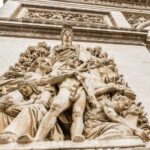


Not for you? Here's more nearby things to do in Paris we have reviewed




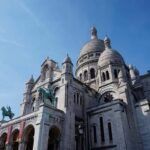



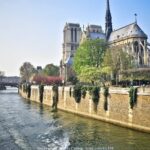


Paris City Tours, side by side.
 ★ 4.6Louvre Museum Timed-Entrance TicketTickets from $2671,977 guest reviews
 ★ 4.6Disneyland® Paris 1-Day TicketTickets from $6149,412 guest reviews
 ★ 4.6Versailles Palace and Gardens Full Access TicketTickets from $1741,579 guest reviews
 ★ 4.6Arc de Triomphe Rooftop TicketsTickets from $1834,264 guest reviews
 ★ 4.7Orsay Museum Entry TicketTickets from $1525,647 guest reviews
 ★ 4.4Evening River Cruise with MusicTickets from $2722,721 guest reviews
 ★ 4.4Eiffel Tower Entry Ticket with Optional Summit AccessTickets from $2920,035 guest reviews
 ★ 4.3Eiffel Tower Summit or Second Floor AccessTickets from $5917,248 guest reviews
This tour also belongs to