
Review · LATIN QUARTER TOURS
Best of the Left Bank: Self-Guided Tour of the Latin Quarter
The Latin Quarter tells stories at street level. This self-guided audio walk lets you follow major Left Bank sights at your pace, and I love the offline audio and maps you can use without hunting for signal. I also like that it anchors the route in literature, starting by Shakespeare and Company where Hemingway, Gertrude Stein, and Ezra Pound once shopped. The one thing to plan for is occasional app-map confusion, so you should keep an eye on where your dot is as you switch streets.
You’ll spend about 2 to 2.5 hours moving through the best-known landmarks of this neighborhood, including churches, universities, and Roman remains, all connected into one logical walking line. It’s offered in English, runs through the Latin Quarter on the Left Bank, and uses the VoiceMap app on Android and iOS. My advice: download everything before you start, then give yourself a little extra time near Rue Mouffetard to eat and drink along the way.
Key Highlights You’ll Actually Use
- Offline audio, maps, and geodata so you can keep walking even when your phone service is weak
- Start at Shakespeare and Company, then trace the Left Bank from literature to universities and monuments
- Short, focused sight stops that work well if you do not want museum lines or tickets
- Cluny Museum, Sorbonne, Panthéon, and Jardin des Plantes appear on your route even if you do not go inside
- Rue Mouffetard gives you an easy food detour built into the walking plan
- Ends at Arènes de Lutèce, a real 2,000-year-old Roman amphitheater that feels like a final reveal
How the Self-Guided Latin Quarter Walk Works
This tour is designed to be simple: press play, follow the route, and stop when you want. You get a self-guided audio experience in English with lifetime access, so you can revisit the walk later without buying it again. It also includes VoiceMap in the form of an app for Android and iOS, which is the key to making the offline features work.
The big practical win is the offline setup. The tour provides offline access to audio, maps, and geodata, which matters in Paris where service can be patchy in narrow streets. If you start with a fully charged phone and the download done, you’ll likely have a smoother experience than someone who tries to stream everything on the go.
You should still treat this as a navigation-friendly walk, not a guided-with-a-human walk. The route is paced for most people, but self-guided tours require you to read street directions and stay aware at turns. One user experience also pointed to confusion about which way to go next when the app did not clearly show their exact position, so I suggest you slow down at every major junction and trust your map more than your instincts.
You can also read our reviews of more guided tours in Paris



Price and Value: Why 14.99 Can Make Sense Here
At $14.99 per person, this is priced more like a smart add-on than a full guided tour replacement. For this kind of area, the real value is that you buy clarity for the time it would otherwise take to figure things out yourself. Instead of bouncing between guidebooks and phone searches, you get an ordered walking route with narration tied to what you are seeing.
The lifetime access also changes the equation. If your first visit is short, you can still come back and replay parts later without paying again. That is especially useful in Paris, where the Latin Quarter is easy to revisit just by taking a metro and starting near the same landmarks.
One more value point is that this walk is built around “see it from the street” sights. It passes by multiple major institutions and monuments, but it does not require museum tickets to enjoy most of the experience. If you want a do-it-yourself afternoon without adding entry fees, that fits your budget better than a tour packed with ticketed stops.
Starting at Shakespeare and Company: Literature Comes First
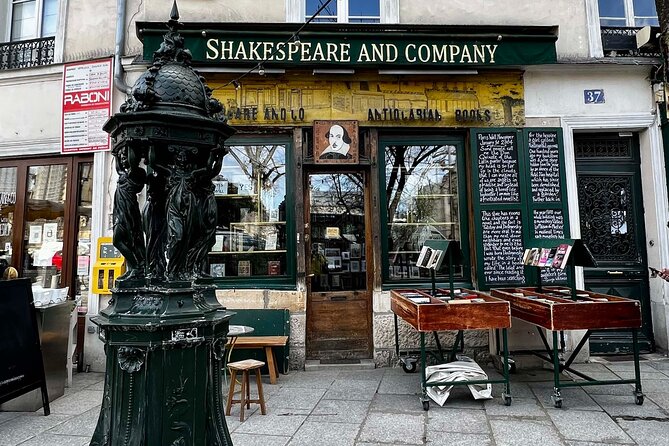
The walk begins outside Shakespeare and Company at 37 Rue de la Bûcherie in the 5th arrondissement. This matters because the Latin Quarter is not only famous for architecture, it is famous for writers, students, and ideas, and the route starts by pointing you to that angle right away.
The audio framing here is specific: it connects the bookshop to Ernest Hemingway, Gertrude Stein, and Ezra Pound, people who helped define the Left Bank literary scene. Even if you never step into the bookstore, you’ll have a stronger sense of place once you know why this corner mattered.
Give yourself a minute before you press play. Stand where the narration says to start, look down the streets, then begin your walk. This simple step helps your brain lock onto the geography early, which reduces the chance you feel “lost” later during turns.
Le Théâtre de la Huchette: A Stage That Never Changed Much
As you move along, you pass Le Théâtre de la Huchette, a small theater that has been staging short plays since 1957. The narration calls out two Ionesco works: The Bald Soprano and The Lesson.
This is one of those stops that works best when you treat it like a pause, even if you do not buy a ticket. The theater is a reminder that the Latin Quarter’s cultural life runs on small venues, not just museums. If you happen to see the marquee or notice a line at the door, you’ll understand why it has stayed relevant.
If your priority is pictures, take one exterior shot and keep walking. The goal is momentum, because the route keeps stacking big names and big buildings in a tight walking radius.
Eglise Saint-Severin: The Church Look That Makes Sense
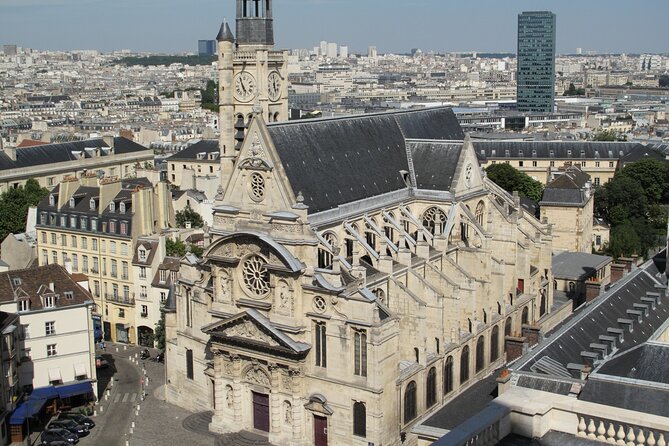
Next up is Eglise Saint-Severin, where the narration highlights a building story you can actually see. The church started with the central nave, then expanded by pushing the walls outward, which created those different rows of pillars.
That is the kind of detail that turns a plain church stop into a moment of understanding. When you look at the interior structure, you can start spotting the “growth” in the design. If you want to get the most out of it, slow your pace as you approach, because the perspective of the pillars is easier to make sense of when you are not rushing.
If the church doors are open, you might step inside, but the tour itself does not promise tickets. In any case, even an exterior look gives you the clue you need to appreciate the space.
More Paris tours and experiences for the shortlist





Cluny Museum Area: Roman Baths and Medieval Art, Without a Ticket
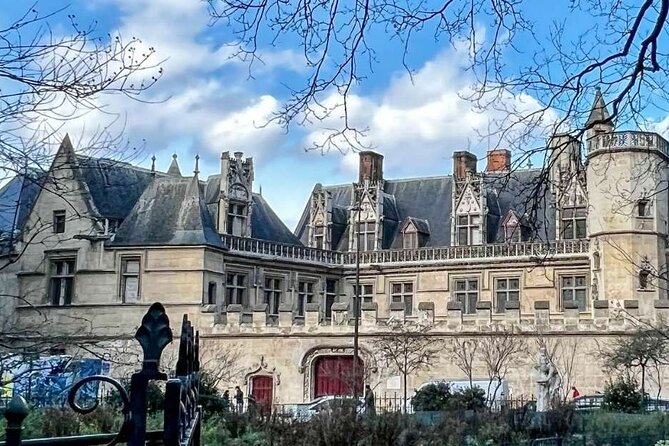
The route passes by Cluny Museum, and it is worth paying attention to what the site actually contains. The Cluny Museum brings together the lavish residence of the Abbot of Cluny, the ancient Roman Baths, and Alexandre du Sommerard’s collection of medieval art.
Even if you do not enter, the name should prime you to notice the “layers” of time. This is one of the places where the Latin Quarter feels like it is built on top of itself, not just decorated in one era. If you do happen to go in later, you’ll already know you are walking through an unusually mixed setting.
From a practical standpoint, this stop is also a good place to check your pace. If you are running ahead of schedule, you can skim here. If you are behind, you can spend a bit more time outside and then catch up later during the more walkable stretches.
Sorbonne and Sainte Chapelle Context: Universities With Royal Roots
As you continue, you pass the Sorbonne. The narration connects the university to Robert de Sorbon, described as the chaplain of King Saint Louis, the king who built the Sainte Chapelle.
This link helps you see the Latin Quarter’s education story as something tied to power and religion, not just textbooks. It also gives you a mental thread for the next big stops, because the tour keeps pointing out who funded institutions and why.
If you like architecture, pause briefly and look at the façade and street alignment. You are not just passing a school, you are passing a piece of how Paris organized knowledge and authority. Then keep moving, because the route continues to escalate in landmark scale.
Panthéon: A Who’s Who of French National Heroes
The walking line includes the Panthéon, a shrine to French national heroes. The narration names major figures including Marie Curie, Voltaire, Victor Hugo, Rousseau, Alexandre Dumas, André Malraux, and Josephine Baker.
This is a high-impact stop because the Panthéon is one of those monuments you see from multiple angles around central Paris. Hearing the list of names while you’re nearby helps you connect the building to people you recognize, instead of treating it like a big dome you pass by.
If your schedule is tight, stick to a quick photo and a short listening moment. The real trick is to time your stop so it does not eat your whole walk, because the later segments bring you toward the market street and toward nature space.
Saint Étienne du Mont and Sainte Geneviève: Protection Legends You Can Feel
Next, the tour passes Saint Étienne du Mont, described as the burial place of another saint, Sainte Geneviève, who protected the city from Atilla the Hun.
This is one of those details that is easy to miss if you only glance at a church. With the narration in your ears, you understand why this site mattered in the local imagination: protection, survival, and sacred authority tied to a specific person.
I recommend listening to the full story part while you’re standing still for a moment. Then move on, because the tour shifts from monuments to street-level life soon after.
Rue Mouffetard: The Old Market Street Part of the Plan
You then head down part of Rue Mouffetard, identified in the narration as the city’s oldest market street. This is where the walk becomes more than sightseeing, it becomes a chance to live like locals in short bursts.
One practical way to use this stop is to plan a snack or a drink break here. The best self-guided tours are flexible enough that you can pause for food without feeling like you are breaking a strict group timetable. Rue Mouffetard makes that easy because it is naturally lined with food and casual stops.
Keep in mind that you are still on a walking tour line. If you stop for a full meal, you might run into timing pressure later at Jardin des Plantes and the amphitheater. A smart compromise is a small sit-down or takeaway item, then resume play on your next street.
Jardin des Plantes: From the King’s Garden to Today’s Green Space
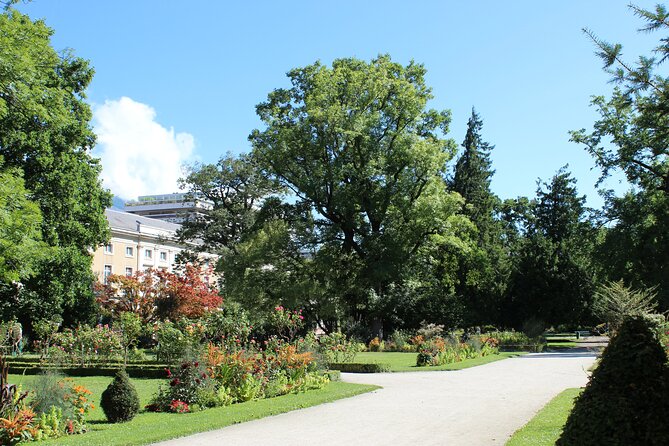
The route goes through a section of Jardin des Plantes, first created in 1635 and called the King’s Garden. If you like history that is written into physical space, this is one of the more satisfying transitions.
Even without entering any specific buildings, walking through the garden area changes your pace. It also gives your ears a break from dense city sound, which helps you absorb the narration. The garden segment is also a good moment to recharge your phone battery and check whether you are still on the right path.
This is where I think the tour fits well for people who want a “walk with context.” You get landmarks, but you also get a breathable stretch between them.
Arènes de Lutèce: Ending at a 2,000-Year-Old Roman Stage
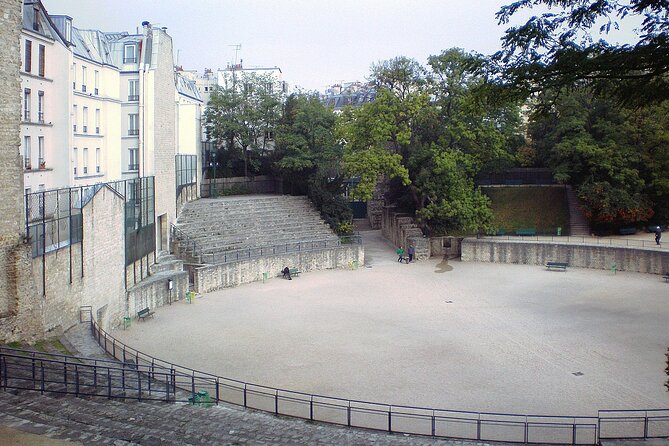
The tour ends at Arènes de Lutèce, a Roman amphitheater with a 2,000-year-old history. It is an excellent finish because it is visually dramatic and emotionally satisfying, especially after a chain of churches, universities, and cultural stops.
When you reach the amphitheater, take a minute to look at the space like it is a stage. The narration ties the route’s theme together, how old Paris overlays new Paris, and how this neighborhood kept reinventing itself over centuries.
From a logistics standpoint, it is also a good “from here to anywhere” endpoint. You can usually connect to transit and keep exploring the 5th arrondissement or push into other Right Bank and Left Bank areas depending on your plan.
What I’d Do Differently to Get the Most From the Tour
I like self-guided tours most when I treat them like a guided tour plus my own pauses. So I suggest you start with offline download done, then wear comfortable shoes, because you will be walking steadily through multiple landmark zones.
Here are a few practical habits that help:
- Download the offline audio and maps before you leave your lodging, not in the street.
- Keep headphones handy, since the tour setup says headphones and smartphone are not included.
- At every turn, check your map dot before you commit to the next street, especially if the app ever feels off.
- Plan a short Rue Mouffetard break, but do not overdo it if you still want the amphitheater at the end.
Also, because this is self-paced, you control how much you linger. If you want more history, you can stop longer at the churches and institutions where the narration gives building details. If you want faster, you can skim exterior listening segments and save your energy for final views.
Should You Book This Self-Guided Latin Quarter Tour?
Book it if you want a structured walk through famous Left Bank sights without buying tickets or waiting in lines. The offline access and lifetime access make it good value at $14.99, especially for travelers who enjoy learning in motion and love stopping for food when a street like Rue Mouffetard calls your name.
Skip it or use extra caution if you know you hate app-based navigation or you tend to get flustered by small routing glitches. One audio experience issue has been reported, and one navigation issue has also been noted, so you’ll want to start with offline downloads and stay alert at intersections.
If you fall somewhere in the middle, this is still a smart way to spend a half-day. It gives you a clear route, a strong literature-to-monuments storyline, and a satisfying finish at Arènes de Lutèce, all while letting you move at your own speed.
FAQ
How long does the Best of the Left Bank: Self-Guided Tour of the Latin Quarter take?
It takes about 2 hours to 2 hours 30 minutes.
Is the tour available in English?
Yes, it is offered in English.
Where does the self-guided tour start?
It starts in front of Shakespeare and Company at 37 Rue de la Bûcherie, 75005 Paris, France.
Where does the tour end?
It ends at Arènes de Lutèce, 49 Rue Monge, 75005 Paris, France.
Do I need tickets for museums or attractions on the route?
Tickets and entrance fees are not included, so you would need to buy anything separately if you want to enter.
What do I need to bring with me?
A smartphone and headphones are not included. You’ll use the VoiceMap app on your phone.
Is the tour available offline?
Yes. It includes offline access to audio, maps, and geodata.
Is it a private experience?
Yes. It is set up so only your group will participate.
Is the experience refundable?
No. It is non-refundable and cannot be changed for any reason.
More Guided Tours in Paris



More Tours in Paris




More Tour Reviews in Paris






Not for you? Here's more nearby things to do in Paris we have reviewed












Latin Quarter Tours, side by side.
 ★ 5.0Paris Bike Tour Hidden Secrets in the Latin Quarter & Le Marais neighborhoodsTickets from $54766 guest reviews
 ★ 4.3Latin Quarter Guided Pub Crawl to Bars and ClubsTickets from $14532 guest reviews
Old Town & Latin Quarter Guided Walking TourTickets from $41404 guest reviews
 ★ 4.5Paris Latin Quarter Pub Crawl Bars and ClubsTickets from $30394 guest reviews
 ★ 5.0Paris – Latin Quarter Free Tour in English (Tip-Based)Tickets from $3269 guest reviews
 ★ 5.0Latin Quarter Paris Guided Walking Tour Semi-Private 12ppl MaxTickets from $59254 guest reviews
 ★ 5.0Paris Latin Quarter Food Tour – Full French Meal by Do Eat BetterTickets from $95217 guest reviews
 ★ 5.0Paris Latin Quarter Walking Tour plus Seine River Cruise OptionTickets from $41203 guest reviews
This tour also belongs to