
Review · PARIS CITY TOURS
Paris: Millefeuille baking class with a chef
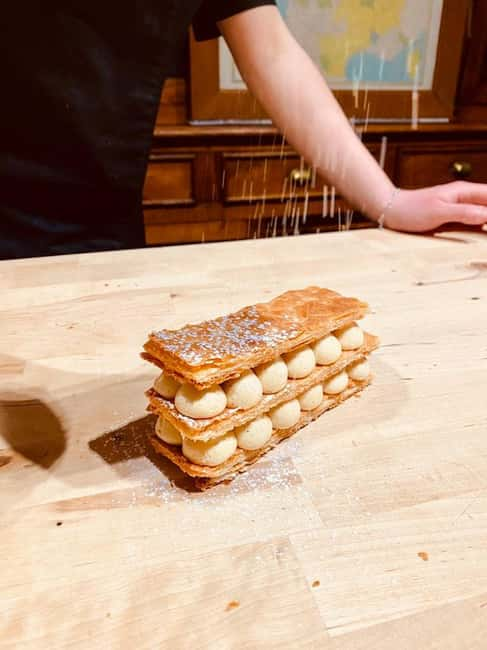
Butter, patience, and perfect layers. In this Paris millefeuille class, you get hands-on coaching to make the puff pastry and pastry cream that give this dessert its signature snap and silk feel. It is a straightforward, skill-building experience that stays focused on the work, not the show.
What I like most is that you are not just watching. You learn the folding and mixing techniques, then you assemble your own dessert with decorative touches before baking. One thing to consider is the price: at $159, it is best viewed as a focused cooking class, not a casual bite.
Key things to know before your Paris millefeuille class
- Chef-led technique for puff pastry and pastry cream, not just assembly
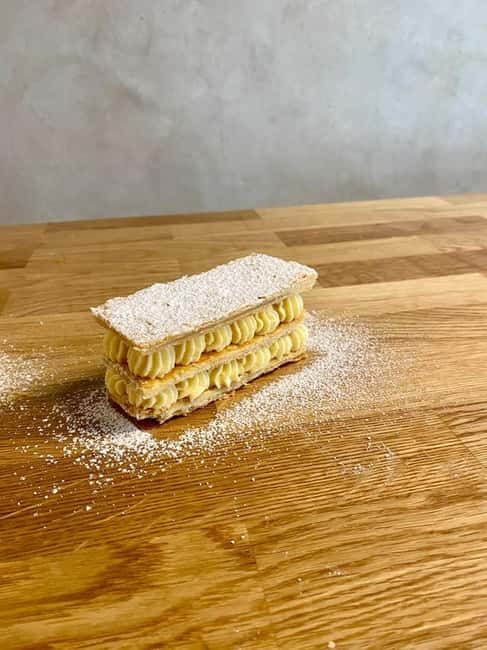
- Your own millefeuille from scratch, including decorative finishing
- Small group limited to 8 people, so questions do not get lost
- Tea, coffee, and water included while you work
- Take-home packaging for travel, plus a digital recipe
- English instruction, with a format that fits different skill levels
Why the millefeuille, also called the Napoleon, is worth your time
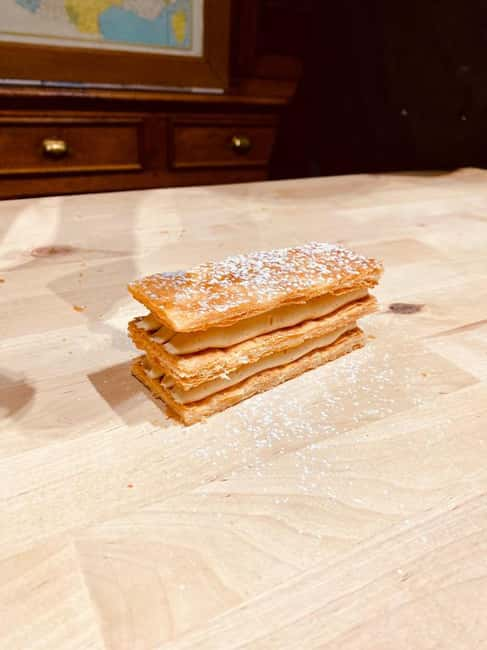
The millefeuille is one of those French desserts that sounds fancy, but the core idea is simple: thin layers, crisp pastry, and smooth cream. The workshop is centered on that classic structure, with puff pastry sheets and pastry cream built into clean, repeatable steps you can actually learn.
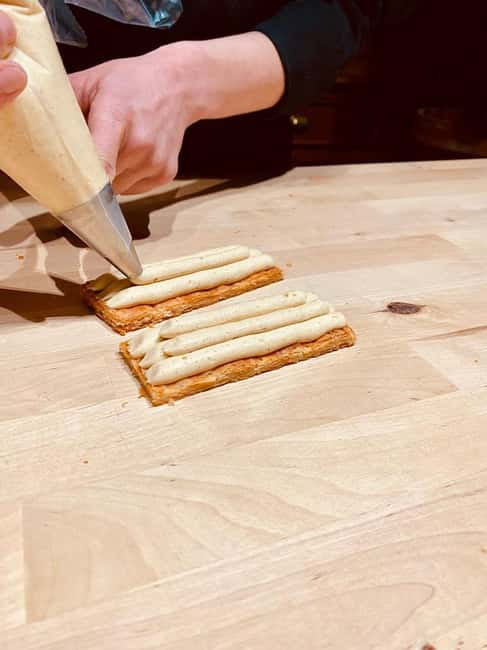
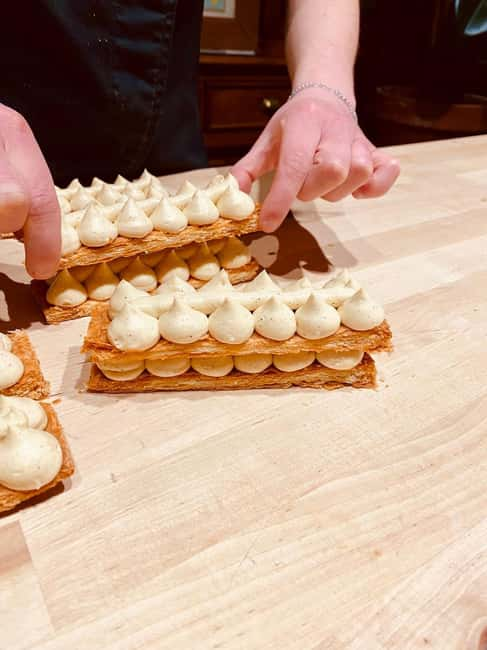
This matters because the magic of millefeuille is not vague. It is about technique. Fold the dough correctly, handle it at the right rhythm, cook the pastry so it stays crisp, then pipe and spread pastry cream so it holds shape without getting runny. In other words, this is less about memorizing a recipe and more about understanding what the dough and cream need from you.
The class also nods to the dessert’s French pedigree, tying the millefeuille to François Pierre de la Varenne, a name associated with early French culinary writing. You do not need a culinary degree to enjoy the connection, but it helps explain why the techniques are taught the way they are.
You can also read our reviews of more cooking classes in Paris


How your 150 minutes works, from dough to packaged dessert
The session runs about 150 minutes, so the pace is real. Expect the flow to be practical: you start by learning the puff pastry process, then move into pastry cream, and finally assemble and finish your millefeuille. You will also have time to enjoy what you make right after it comes together.
A good way to think about it is like this:
- Start with foundations: puff pastry basics, including how dough folds affect layers.
- Build the filling: pastry cream methods and texture cues.
- Assemble: layering pastry and cream, then adding your decorative touches.
- Finish and eat: you enjoy the dessert after the workshop portion, and you leave with it packaged.
Because the class is chef-led and designed for a small group, you can ask questions as you go. That is important with pastry. One small timing or consistency issue can snowball. The structure here is meant to prevent that by coaching you while you are still in the process.
Chef-led techniques for puff pastry and silky pastry cream
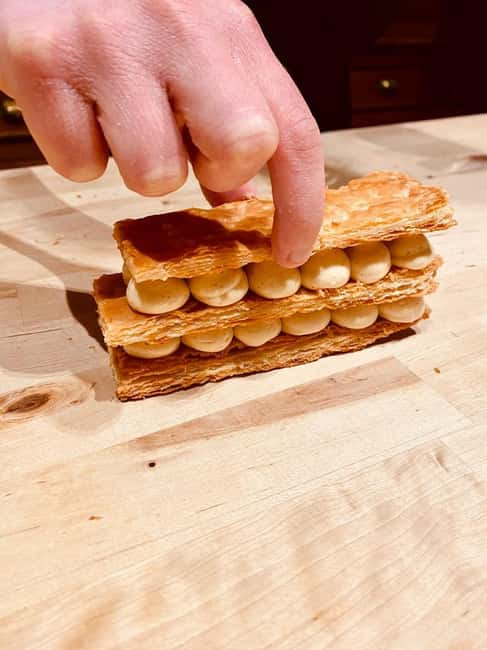
The workshop’s focus is the two core components: puff pastry and pastry cream. If you have ever tried to make either at home, you know where people usually get stuck. Puff pastry can feel unforgiving, and pastry cream can turn from smooth to lumpy or loose if you miss a cue.
Here, you are working step-by-step with a professional pastry chef. The key value is guidance on technique rather than vague advice. You learn what to watch for as you fold dough and as you manage texture during preparation. You also learn how pastry cream should look and feel when it is ready, so the final millefeuille layers stay neat.
Two details from real experiences highlight why this matters. One guest described a very warm, engaging teacher and emphasized patience. Another mentioned that the chef shared tips along the way and guided their family through the process comfortably. That mix of instruction plus calm correction is exactly what you want when you are handling butter-rich dough and a custard-style cream.
And if you are already a home baker, this kind of class still helps because you can compare your instincts to a chef’s method. Technique refinement is often the real payoff.
Assembling your millefeuille with decorative touches that feel doable
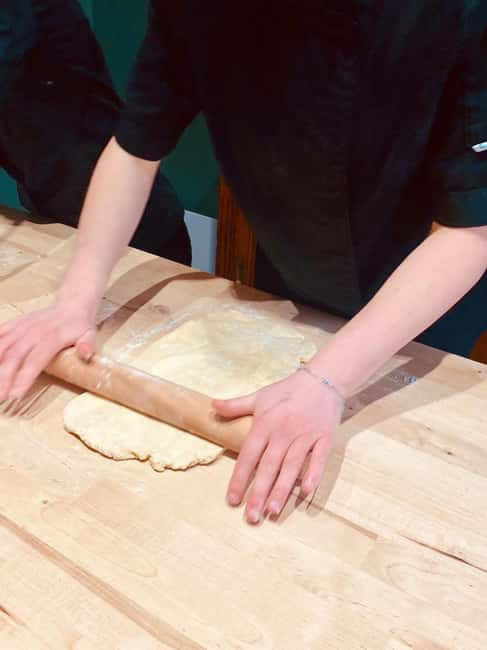
Assembling millefeuille is where the class becomes personal. You create a dessert from scratch, but you also get to customize it. The workshop includes time to add decorative touches before baking and assembling your final piece.
For most people, the fear is not the flavor. It is the presentation. Millefeuille looks precise, with clean layers and neat cream lines. This class pushes you through that precision without assuming you are already confident.
Practically, this is the part that helps you remember what you learned. When you assemble, you see how crisp layers and creamy filling behave together. You also learn how to build your dessert so it holds its structure for transport afterward.
There is an interesting data point from one booking: one person reported that in a 1×1 session they were able to make three millefeuilles. That suggests the chef can adjust flow depending on the setup, and it also indicates that the process is hands-on enough to produce more than one final dessert when time and group format allow.
What you eat, what you take home, and why the packaging matters
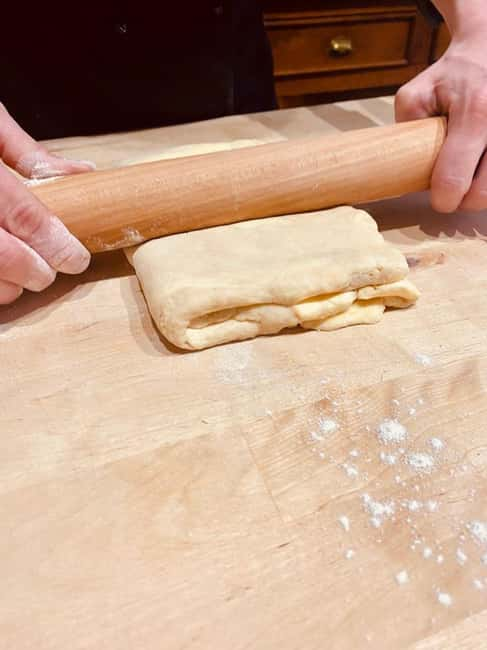
You will enjoy your millefeuille after the workshop portion. That matters more than it sounds. Pastry classes can sometimes feel like you are making something that only exists for later. Here, you get the immediate payoff, so you can taste the result while the lesson is still fresh.
You also get practical extras that reduce the usual headaches:
- Transport packaging for your creation, designed to keep your dessert intact for later
- Digital recipe so you can repeat the method after you return home
- Tea, coffee, and water during the class
The tea and coffee do not change the skill you are learning, but they do keep you comfortable while you work. Pastry timing can be mentally intense. Staying hydrated and having a warm drink keeps the experience from feeling rushed or stressful.
As for travel, packaging is not a small detail. Millefeuille is a layered dessert. Without proper protection, layers shift and cream can smear. The fact that transport packaging is provided means you are more likely to get a dessert that looks like what you made, not what time turned it into.
More Paris tours and experiences for the shortlist




Price and value in Paris: is $159 worth it for 150 minutes?
At $159 per person, the class is not bargain-bin. But it also is not a generic cooking demo. You are paying for a rare combo in Paris: real instruction on technical pastry work, ingredients included, beverages included, and a take-home product with travel-ready packaging.
The value equation looks like this:
- Time: 150 minutes is enough to learn and apply techniques, not just try one step.
- Expert coaching: working with a professional chef matters most for pastry, where small changes affect outcomes.
- Ingredients supplied: you do not have to buy butter, flour, cream, and specialized items just to learn once.
- Small group size (8 max): fewer people per chef means more chances to get unstuck.
- Take-home + digital recipe: you leave with a dessert you made and the method to repeat.
If you enjoy hands-on cooking and want a skill you can recreate, this class tends to make sense. If your goal is primarily to sample French sweets with minimal effort, you might decide something else is a better fit. But if you want to understand how millefeuille is built, this is the kind of class where the price feels more justified.
Who this Paris millefeuille class suits best
This workshop is designed for pastry lovers of all skill levels. That is a big deal. Many baking classes are quietly aimed at people with prior experience. Here, the format focuses on guiding you through the key steps whether you are new or refining technique.
It is a great match if:
- You want to learn both puff pastry and pastry cream, not just assemble a dessert
- You enjoy detailed food instruction and want a clearer mental model of the process
- You like practical souvenirs, especially food you can actually share later
- You want an activity that feels distinctly French without needing advanced equipment
It might be less ideal if:
- You dislike hands-on work or prefer mostly passive experiences
- You are short on time in Paris and can only spare a quick stop
- You expect an activity that is mainly about tasting a range of desserts, not making one from scratch
Small group setup, English instruction, and practical comfort
The class is taught in English and keeps groups small, limited to 8 participants. That size matters for pastry work because you need space, clean workflow, and attention. If you are the type who asks questions while cooking, this setup is likely to feel comfortable.
The workshop is also wheelchair accessible. That does not mean every aspect is identical for every user, since the exact kitchen layout is not detailed here, but the provider states accessibility support is part of the experience.
One more practical point: you are responsible for getting to the workshop location. There is no transport included between locations. The good news is that the workshop is described as easily accessible in Paris, so you can plan it like any other city appointment.
Should you book this millefeuille class in Paris?
I would book it if you want a hands-on Paris food experience built around real technique. You get coaching on puff pastry and pastry cream, you assemble your own millefeuille, and you leave with it packaged for travel plus a digital recipe. That is a strong value bundle for a 150-minute session.
You might skip it if you are mainly after casual tasting or you only want to do something short and low-effort. This class asks you to work. The payoff is that you walk away knowing how millefeuille is made, not just what it tastes like.
If your plans are flexible, you can reserve with pay later and cancel up to 24 hours in advance for a full refund. That reduces the risk if you are juggling an itinerary.
FAQ
How long is the Paris millefeuille making workshop?
The class lasts about 150 minutes.
How large is the class group?
The group is limited to 8 participants.
Is the class taught in English?
Yes, the instructor teaches in English.
What do I take home at the end?
You take home your millefeuille in provided transport packaging. You also receive a digital recipe.
Are ingredients and drinks included?
Yes. All baking ingredients are included, and tea, coffee, and water are provided during the class.
Is the experience wheelchair accessible?
Yes, the workshop is wheelchair accessible.
More Workshops & Classes in Paris
More Cooking Classes in Paris
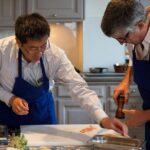
More Tour Reviews in Paris





Not for you? Here's more nearby things to do in Paris we have reviewed









Paris City Tours, side by side.
 ★ 4.6Louvre Museum Timed-Entrance TicketTickets from $2671,977 guest reviews
 ★ 4.6Disneyland® Paris 1-Day TicketTickets from $6149,412 guest reviews
 ★ 4.6Versailles Palace and Gardens Full Access TicketTickets from $1741,579 guest reviews
 ★ 4.6Arc de Triomphe Rooftop TicketsTickets from $1834,264 guest reviews
 ★ 4.7Orsay Museum Entry TicketTickets from $1525,647 guest reviews
 ★ 4.4Evening River Cruise with MusicTickets from $2722,721 guest reviews
 ★ 4.4Eiffel Tower Entry Ticket with Optional Summit AccessTickets from $2920,035 guest reviews
 ★ 4.3Eiffel Tower Summit or Second Floor AccessTickets from $5917,248 guest reviews
This tour also belongs to