
Review · LATIN QUARTER TOURS
Paris: Latin Quarter Guided Walking Tour in German
Latin Quarter in German feels like Paris homework. In just two hours, you get a teacher-style walk through the Latin Quarter that connects the big names with smaller street life. You’ll move from Roman traces to university walls, then end at the cathedral zone.
I especially liked the German-speaking guide approach. The tour is built for understanding, not just sightseeing, with context about history and everyday Paris. In one booking called out Soléne for being personal, friendly, and full of useful anecdotes, and that kind of guided flow is exactly what makes this area click.
The main drawback is time. With a 2-hour route that covers multiple landmarks, you should expect short stops and a walking pace. If you want long museum time or extended cathedral lingering, you may feel a bit rushed.
Key highlights worth planning around
- Cardinal Lemoine start makes it easy to begin your walk right in the Latin Quarter
- Arènes de Lutèce puts Roman Paris on the map early in the route
- Pantheon and La Sorbonne cover the two heavyweight icons of the neighborhood
- Off-the-beaten-track squares and small cafés add breathing room between famous sights
- A dedicated green park pause breaks up the stone streets
- Private group means you can ask questions in German as you go
Why the Latin Quarter works so well as a guided walk
The Latin Quarter is one of those Paris neighborhoods where history is not locked behind doors. It’s on the street, in the layout, and in the constant student energy. This tour leans into that mix by pairing the headline monuments with quieter corners, so you don’t end up doing the same postcard loop everyone does.
Since the guide is German-speaking, the whole experience stays coherent. You are not mentally translating every few minutes, and that matters in a place loaded with layers. The tour also aims to show everyday life, not just dates and dynasties. That means you get a sense of how the area functions today, not only how it looked in older centuries.
Value-wise, this is a smart fit if you want a guided structure without giving up freedom. You still get walking time through real neighborhood blocks, including smaller cafés and squares, and the route ends at a convenient landmark area near Notre-Dame. If you only have a short window and your French isn’t strong, the German language is a major practical plus.
Just keep your expectations aligned. This is a walking tour designed for a relaxed pace, but it is still a tight loop. Think of it as a guided orientation plus a few deeper anchors, not a slow, pick-anything buffet.
You can also read our reviews of more walking tours in Paris



Meeting at Cardinal Lemoine and pacing your first 30 minutes
Your tour starts at the entrance to the Cardinal Lemoine metro station. You’ll look for your guide with a HelpTourists bag. That meeting point is useful because it drops you directly into the neighborhood fabric, not across the city or at some remote bus stop.
In the first stretch, you’ll be setting your bearings, both geographically and historically. The Latin Quarter can feel like a maze if you arrive cold. A guide helps you understand why certain streets and landmarks sit where they do, and how this area developed into the student quarter it’s known for today.
Also, because it’s a private group, the start usually feels smoother. You’re not squeezed into a mass of people marching to the same photo angles. That can make the opening moments less stressful, especially if you’re trying to keep your energy up for the Roman-era stop next.
What to do before you meet:
- Wear comfortable shoes, the walking is part of the value
- Have a phone battery plan for photos, since you’ll likely want them at several major stops
- If you are traveling with someone who speaks only a little German, consider that the guide is live German throughout
Arènes de Lutèce: Roman Paris before the big names
One of the best parts of this route is that it doesn’t start with the obvious giants. You go to Arènes de Lutèce early, so you experience the Romans in Paris as a foundation, not a trivia stop. The tour highlights the remains of the Romans in Paris, and this is where that theme becomes concrete.
This stop is valuable because it changes your mindset. Instead of treating the Latin Quarter as only universities and grand monuments, you see it as a place with a long physical memory. That makes later stops feel connected, not random.
Practical note: even if you’re not a hardcore archaeology person, this kind of early anchoring helps your brain place the neighborhood in time. From there, landmarks like the Pantheon and the Sorbonne stop being separate attractions and start acting like chapters of one story.
If you like walking tours that give you at least one moment that feels visually different from typical Paris stonework, this is a strong choice. It also sets up the contrast the tour aims for later, famous sights on one side and quieter squares and cafés on the other.
Pantheon and the domed “anchor” of the neighborhood
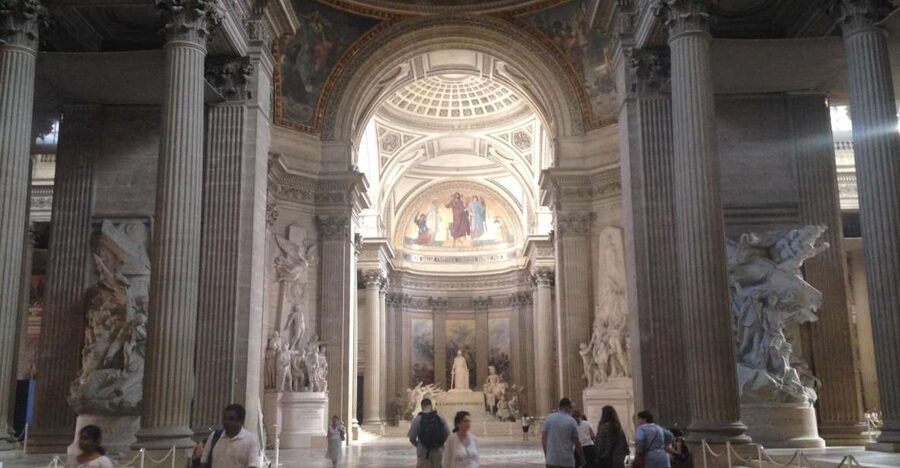
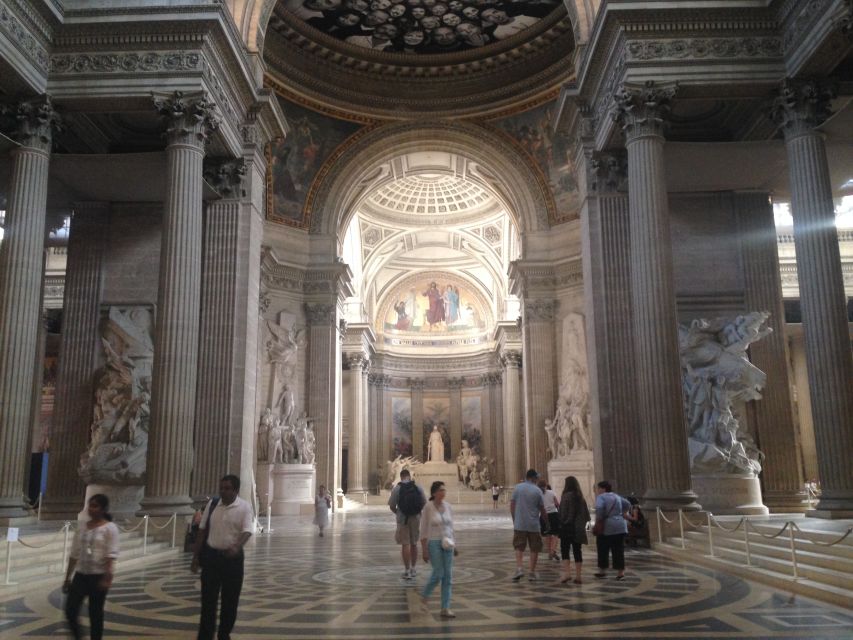
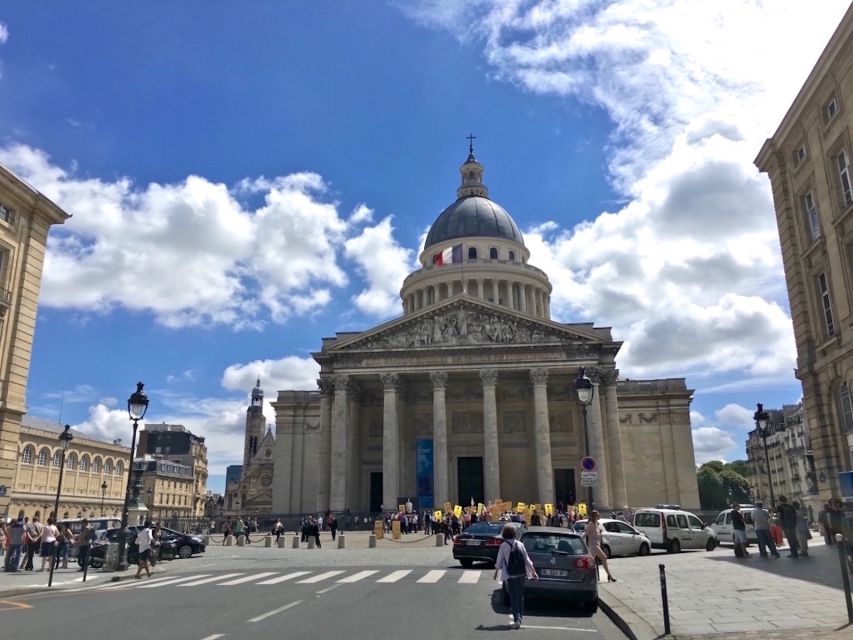
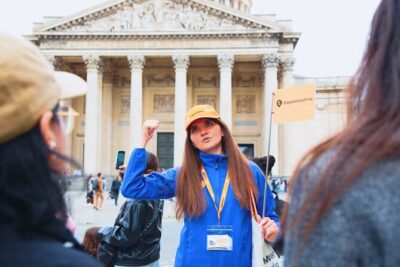
Next comes the Pantheon, Paris, a domed neo-classic mausoleum. Even if you’ve seen photos before, this is the type of landmark that helps your visit feel official. It’s a center of gravity, and your guide’s job here is to connect what you’re looking at to the larger narrative of the Latin Quarter.
This is where the tour’s German language really helps. With history-rich sights, being able to follow the guide’s explanation in real time can turn a quick viewing into understanding. The tour also aims to show the university character of the area, so the Pantheon works as a symbolic marker in a neighborhood known for learning.
What I like about placing a landmark like this in the middle of a walk is that it gives you a mental rest after the Roman stop. You get to “zoom out” on the neighborhood story for a moment. Then you can zoom back in at the next stops, where the details get more lived-in.
Potential consideration: if you’re expecting a long, sit-and-read experience, this is still a walking format. You’ll get a guided look and explanation, but you won’t be spending the whole afternoon here.
La Sorbonne: student-quarter energy with real context
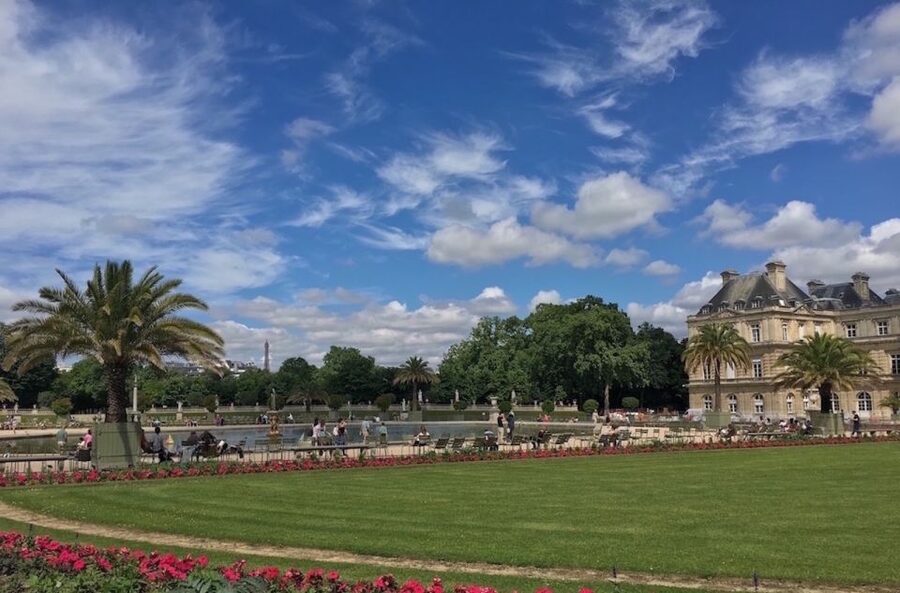
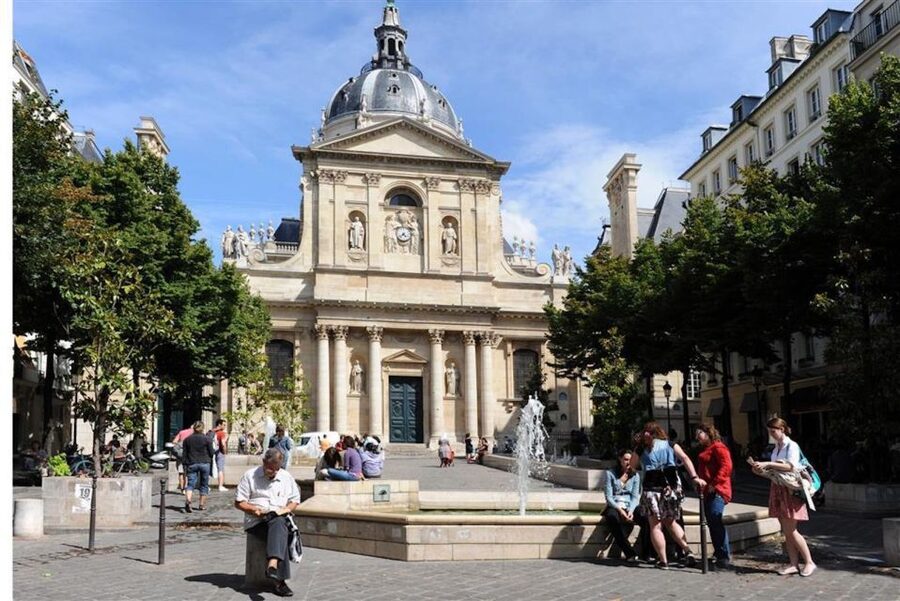
Then you’ll hit La Sorbonne, described as part of the Paris University of Sorbonne. This matters because the Latin Quarter is often called the student quarter, and the tour’s structure supports that idea. It’s not just a monument list. It’s an attempt to show why people have long associated this neighborhood with study and city life.
A university-focused stop also changes the rhythm of the walk. Instead of only monuments and museums, the guide is also setting you up to notice the neighborhood as it functions: the mix of locals, the flow of students, and the way everyday life layers onto older Paris.
I also like that the tour explicitly includes both famous sights and quieter ones, like smaller cafés and squares. That balance helps you avoid the classic problem in Paris sightseeing, where you only see the walls and none of the street.
If you learn best when a guide explains what you’re looking at, this section is a highlight. You’ll likely come away with a clearer picture of how the Latin Quarter’s identity formed and why it still shapes what you see walking around today.
You can also read our reviews of more guided tours in Paris






Musée National du Moyen Age and Hôtel de Cluny area
The next stop is the Musée National du Moyen Age-Thermes et Hotel de Cluny. The name already signals the theme: the Middle Ages and the layers of earlier eras connected to the area. This stop gives you a break from the purely monumental view and adds a “time layering” feeling to the tour.
Even without going into deep museum mode, a guided stop here can be worth it because it shifts the story from civic and academic markers to lived time. You’re still in the Latin Quarter, but the focus turns toward how different periods left their mark in one compact area.
A key bonus is the tour’s emphasis on variety. It’s not only churches and grand buildings. You also get a museum-related landmark that supports the Roman and historical themes you started with.
And then, per the tour description, you’ll relax in one of the most beautiful green spaces in Paris. That park pause is important in a neighborhood built of streets and stone. It gives your legs a reset and your brain a visual reset, especially if you’ve been walking since morning.
If you’re the type who enjoys tours that include at least one “breathing spot,” don’t skip this part. Even if you’re only there briefly, it changes the whole experience.
Shakespeare & Company and finishing toward Notre-Dame
After the museum area and the green pause, the route takes you to Shakespeare & Company, then finishes at Kathedrale Notre-Dame de Paris. Those two endpoints work well together because they feel like a bridge between neighborhood layers and Paris at full volume.
Shakespeare & Company is a fitting stop for a student neighborhood, and it also supports the theme of everyday culture in the Latin Quarter. From there, the last leg funnels you toward Notre-Dame, giving the walk a strong finale at one of the most recognizable landmarks in the city.
I like ending at Notre-Dame because it’s a natural place to continue on your own after the tour. You can decide what you want to do next based on your time and mood, without being stuck in a guided bubble.
One more practical point: since the tour ends at a major landmark area, plan an easy next step. If you want a photo, give yourself a few minutes before you head onward. If you want food, the surrounding area typically makes it easier to find options afterward.
German language, private group, and why it changes the experience
This is a German-language tour, and it’s private. Those two details make a real difference in how you experience the neighborhood.
With a German guide, you can follow the history and everyday-life explanations without pausing every sentence. That matters on a route with several major sights, where the temptation is to treat it like a scavenger hunt. Instead, you can let the story connect the stops.
Private group also keeps the pace from turning stressful. In a walking route, crowd control is half the battle. Here, the structure supports a more relaxed flow, which helps you actually notice things like smaller squares and café corners rather than just rushing past them.
Based on the tone in the feedback around the guide experience, friendly and personal guidance seems to be the standout. One booking specifically praised Soléne for being super and for delivering an informative, varied walk through the Latin Quarter with anecdotes. That’s the kind of guide style that makes the neighborhood feel human, not just historical.
If you enjoy tours where you learn something while still having fun, this format fits.
Price and value: what $94 buys in 2 hours
The price is listed as $94 per person for a two-hour private German-guided walking tour. The big value question is whether you get more than what a self-guided stroll would offer.
You do, because the tour includes:
- A live German-speaking guide
- A structured route that mixes Romans, big landmarks, and quieter squares
- A planned green-space break
- A private-group format that supports conversation
For many travelers, the biggest payoff is language. If you would otherwise need to translate or skip context-heavy stops, a German guide can save time and mental energy. For others, it’s the ordering of sights. Ending at Notre-Dame while covering the Pantheon and Sorbonne along the way is a route design that keeps your time efficient.
What this price does not buy is “all-day museum immersion.” This is a compact walk with multiple anchors. If you want to spend hours inside places, you would likely add independent time before or after.
So I see this as good value if your goal is clear: understand the Latin Quarter quickly, see the key sights and a few quieter ones, and finish in a high-utility location near Notre-Dame.
Who should book this Latin Quarter German walk
This tour is a strong match if you:
- Want German-language guidance and you’d rather not rely on self-translation
- Like walking tours that mix famous landmarks with less expected neighborhood stops
- Have limited time and want a structured introduction to the Latin Quarter, especially around the 5th arrondissement
- Prefer a private-group experience that stays calm enough for questions
It may be less ideal if:
- You want long museum time or slow pacing without moving between several major sights
- You do not speak German and are not comfortable touring in a German-speaking context
It’s also a practical choice for a first visit to this part of Paris. You get a sense of the area as a student quarter and as a layered historical zone, not just a list of famous buildings.
Should you book it?
If you are drawn to history but still want a walk that feels like a living neighborhood, this one makes sense. The combination of Roman remains at Arènes de Lutèce, the Pantheon and Sorbonne stops, and a break in a green space gives you variety without turning the day into a marathon.
Book it if German is your comfort zone and you want the Latin Quarter story told in a way that you can actually follow. Skip it only if you expect long interior visits or you need the tour to function as a full-day plan.
FAQ
How long is the Latin Quarter guided walking tour in German?
The tour duration is 2 hours.
Where does the tour start?
It starts by the entrance to the Cardinal Lemoine metro station, where you should look for your guide with a HelpTourists bag.
Where does the tour end?
The tour finishes at Kathedrale Notre-Dame de Paris.
What language is the guide?
The guide speaks German.
Is this tour private?
Yes, the tour is a private group.
What is included in the price?
The included items are the 2-hour guided tour and a German-speaking tour guide. Food and drinks, and pickup are not included.
More Walking Tours in Paris



More Tours in Paris




More Tour Reviews in Paris






Not for you? Here's more nearby things to do in Paris we have reviewed












Latin Quarter Tours, side by side.
 ★ 5.0Paris Bike Tour Hidden Secrets in the Latin Quarter & Le Marais neighborhoodsTickets from $54766 guest reviews
 ★ 4.3Latin Quarter Guided Pub Crawl to Bars and ClubsTickets from $14532 guest reviews
Old Town & Latin Quarter Guided Walking TourTickets from $41404 guest reviews
 ★ 4.5Paris Latin Quarter Pub Crawl Bars and ClubsTickets from $30394 guest reviews
 ★ 5.0Paris – Latin Quarter Free Tour in English (Tip-Based)Tickets from $3269 guest reviews
 ★ 5.0Latin Quarter Paris Guided Walking Tour Semi-Private 12ppl MaxTickets from $59254 guest reviews
 ★ 5.0Paris Latin Quarter Food Tour – Full French Meal by Do Eat BetterTickets from $95217 guest reviews
 ★ 5.0Paris Latin Quarter Walking Tour plus Seine River Cruise OptionTickets from $41203 guest reviews
This tour also belongs to