
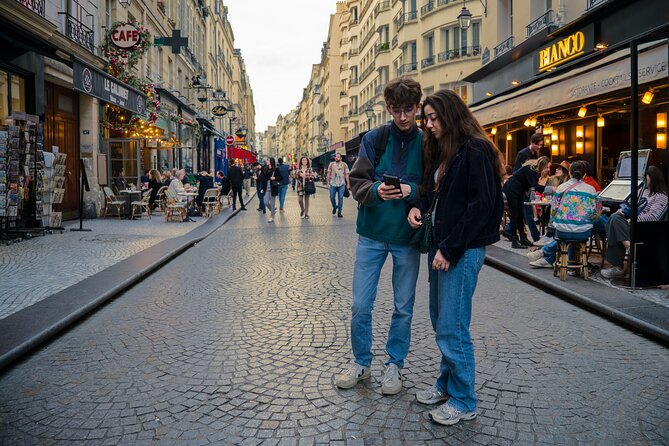
Review · PARIS CITY TOURS
Worktown Games: Private Self-Guided Walking Tours in Paris
A walk game can make Paris feel like a puzzle you solve step by step. This self-guided hunt from Worktown Games turns famous spots into photo clues and tricky questions, with the Right Bank or Latin Quarter route choice. You are walking at your own pace, but the game keeps nudging you off the usual photo spots.
Two things I really like: it is easy to do as a private group (up to 15) without coordinating a live guide, and the format is built for active sightseeing, trivia, and surprise spotting. There is also bonus scoring, so even the bits you might normally speed past suddenly matter.
The main catch is also the biggest upside and downside: it is self-guided, so if you want a human to answer questions on the spot, you will need to rely on the digital clues instead.
Key things to know before you start

- Two route options: pick the Latin Quarter or the Right Bank after you book.
- Mobile ticket plus digital game file: your trail includes a map and photo clues sent by email after booking.
- Point scoring while you walk: answer trivia and spot surprises, then watch your score change with bonus opportunities.
- A puzzle around Jardin de Tuileries: one example clue points you to remains of the demolished Tuileries Palace in the labyrinth gardens.
- Landmarks plus off-piste moments: you still cover major sights, but the tasks push you to notice specific details.
Why a point-scoring walking game works in Paris
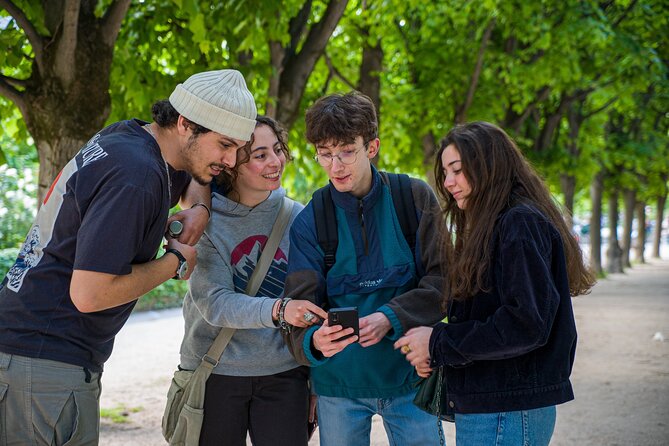
Paris is perfect for this style of activity because the city rewards looking closely. In a normal walk, you can glide past doors, passages, statues, and street corners without realizing you are missing the detail that makes the place feel alive. Here, the game turns that into a mission.
The format is simple, and that is why it works. You follow a digital trail that layers photographs, short history context, and questions over the route. Then you earn points for answering and for finding nearby surprises. Depending on what you see, there can also be bonus points, or points you lose, which is a light bit of tension that makes the walk feel like an event.
You will also get a new angle on landmarks you already recognize. When the tasks are tied to exact spots, you start noticing small differences in materials, signage, layouts, and sightlines. One reviewer said the mini tasks helped them discover new things in a familiar part of Paris. That is exactly the effect you want if your goal is to walk, learn, and not just stand in lines.
You can also read our reviews of more walking tours in Paris



Picking your route file: Right Bank vs Latin Quarter
You choose between two different routes, and after booking you confirm which one you want. That matters because Paris is huge, and these two areas have very different rhythms. The Right Bank often feels more about classic boulevards and elegant passages, while the Latin Quarter tends to feel more student, bookish, and layered with side streets and gardens.
What I like about having a choice is that it lets you match the walk to your day. If you want a more museum and shopping-arcade vibe, the Right Bank option is likely the better fit. If you want gardens and grand institutions with lots of quiet corners, the Latin Quarter route usually feels more natural.
Either way, you are not stuck with one single straight line. Your route is designed as an interactive loop that pulls you through several landmark zones in a compact window of time, around 1 hour 20 minutes. That time frame is ideal for people who want something more active than a sit-down attraction, but who still need an early finish to keep their evening open.
Starting at Jardin de Tuileries, your outdoor game hub
The walk begins and ends at Tuileries Garden (Jardin des Tuileries), 75001 Paris. Starting here is smart because it is central and easy to orient yourself. Even if you arrive at the garden from a few different directions, you can quickly find the energy of the route.
This is also where one of the best “wait, what is that?” moments is pointed out. The game includes bonus hunting in the labyrinth gardens, with an example clue about remains of the demolished Tuileries Palace. That is the kind of detail you would normally miss unless you already knew what to look for.
Because it is a self-guided experience, your real success comes from how you manage your phone and your pace. Keep your map visible, but do not stare at it every second. The goal is to look at what the clue is about, confirm you have found the right spot, then move on. When you do that, the walk feels like a guided experience without the group pressure.
Practical note: the experience runs daily from 9:00 AM to 8:00 PM. If you can, choose a time when the light is decent for outdoor looking and photos, and when you are not sprinting to catch the last metro.
Louvre Museum zone: first clues without the overwhelm
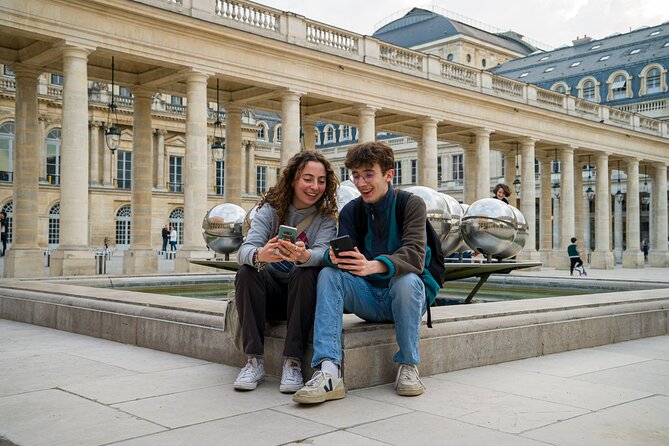
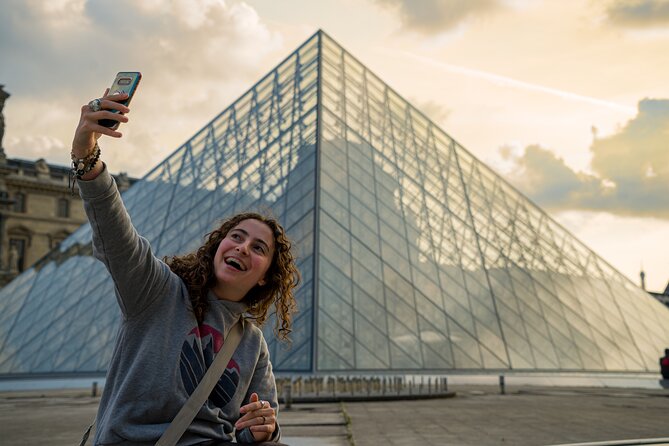
The route includes Louvre Museum as one of its key landmark areas. In a normal visit, the Louvre can feel like a universe you need a week to understand. In this game, the Louvre works more like a backdrop and a checkpoint.
When you reach this stop, the value is not “see everything.” It is “find what the game wants you to notice.” The digital file uses photo clues and tricky questions, which helps you narrow your attention. Instead of getting lost in the scale, you focus on specific details near the route.
One reason this stop works well on a walking game is that the Louvre area has countless angles and surfaces. Even if you are standing in the same general space as other tourists, the tasks guide you to a more specific viewpoint. That makes the experience feel personal, like you earned your own version of the place rather than copied someone else’s route.
A small consideration: Louvre zones can be busy. If you are doing this in peak daytime hours, expect a bit of crowd flow around the perimeter. The best strategy is to pause, scan for the clue target, and then move when it is clear you can get a decent look.
Palais-Royal: where puzzles get to feel like Paris
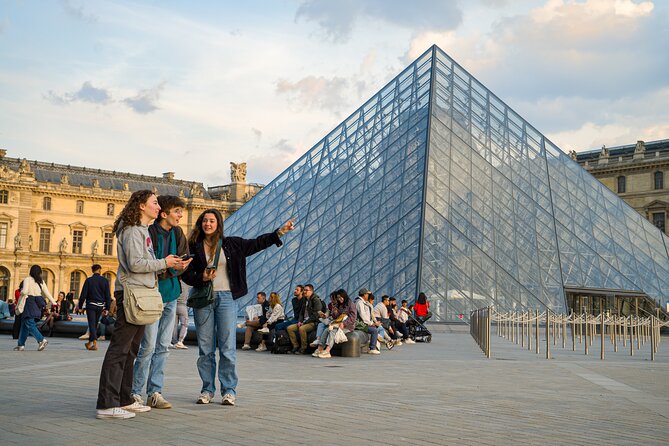
Another major stop is Palais-Royal, and this is where the game becomes more than trivia. This area has a layered street feel, and that is perfect for spotting “surprises” that are not the first thing you see.
The game format nudges you to look for things in the immediate vicinity, then confirm with the digital clues. That means you are not only learning a headline fact. You are practicing observation, which is what turns a familiar landmark into a fresh experience.
I also like that Palais-Royal fits different travel styles. If you enjoy walking and reading, you will enjoy the history context that the digital trail provides. If you are more into playful challenges, the quiz style tasks can keep momentum even when you are not in full museum mode.
One drawback to keep in mind: because you are self-led, you need to be comfortable making short decisions like Where do we stand? Which angle matches the photo clue? If your group wants a strict “stay here and someone tells you what to do,” you might feel a little impatient. But if you are the type who enjoys figuring things out, Palais-Royal is a strong match.
You can also read our reviews of more guided tours in Paris






Pantheon to Luxembourg Gardens: the perfect mix of grand and quiet
The route includes both Pantheon and Luxembourg Gardens, and pairing them makes a lot of sense. These are two different kinds of Paris experiences: one is monumental and institutional, the other is a break with paths, greenery, and space to slow down.
In a walking game, this kind of variety is a win. The Pantheon area gives you that big, “you are in the center of something important” feeling. The game can use that scale to ask questions that point you to details you would otherwise overlook. Then Luxembourg Gardens gives you a calmer stage for bonus hunting and for those moments where you take an extra minute to confirm what the clue is asking you to spot.
What you get from this part of the trail is not just sightseeing. It is a chance to change pace without leaving the route. Gardens make it easier to reset your brain, especially when the quiz questions are a bit tricky.
One practical thing: because this is outdoors for stretches, the timing of your route can affect comfort. If you are sensitive to heat or cold, pick your day and start time carefully, and build in a longer break if the game pulls you into corners that require stopping and looking.
Galerie Vivienne and Arenes de Lutece: your reward stops
The trail also includes Galerie Vivienne and Arenes de Lutece. This is where the game leans into what I think makes it worth doing, even if you already know the big names.
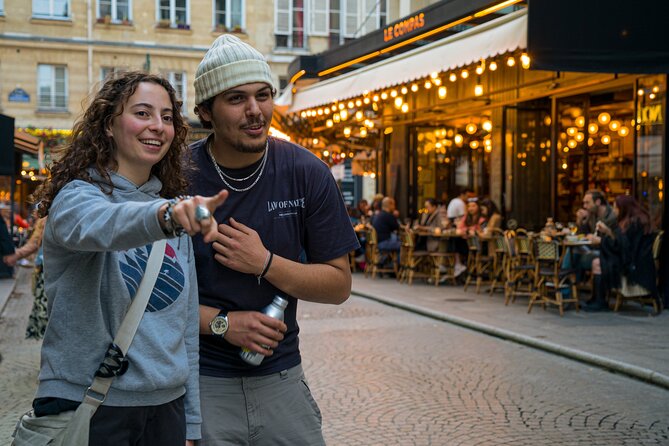
Galerie Vivienne is the kind of Paris space that rewards attention. It is not just a landmark to pass by. In many areas like this, details show up only if you slow down: arches, surfaces, and subtle design cues. A photo clue plus a question turns that into an interactive scavenger hunt. You are learning by hunting, not by reading a plaque.
Arenes de Lutece adds a different kind of payoff. Roman-era leftovers can feel abstract until you are standing in front of them, and the game format helps connect the visible scene to the story behind it. Even if you do not know much going in, the digital prompts help you land on something specific to notice.
A plus here: these are the moments that can make your group argue in a friendly way about answers. The point system is designed so your experience is shaped by your observations, not by speed.
How to actually “play” it well: pacing and points
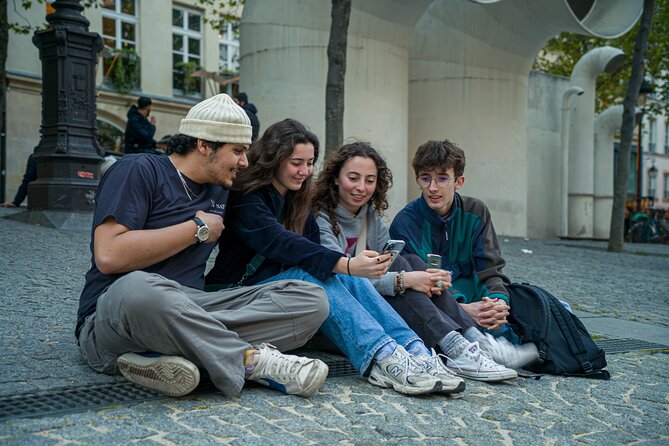
The game is designed for friendly competition between you and your group. That is the main fun, but you need a rhythm that works. If everyone rushes ahead, you will miss the clue you needed. If everyone stands still for too long, you will feel stuck.
My advice is to treat each stop like a mini mission with two steps. First, scan the photo clue quickly. Second, look for the real-world match nearby, then answer the question and move. This keeps the walk fluid and prevents the game from turning into a phone-staring contest.
Also plan for the bonus mechanics. The digital trail includes bonus ways of earning points, and there can be bonus points based on what you see. That matters because it gives you a reason to look around even after you feel like you have “already found the landmark.”
One example clue is the Tuileries Palace remains in the labyrinth gardens. That is your cue that the game expects you to explore a bit, not just stand at the obvious viewpoint. If you want to score well, give yourself permission to take an extra look when a bonus target might be nearby.
Finally, charge your phone before you leave. The trail depends on the digital map and game file, and having a low battery turns the fun into frustration fast.
Price and value: $10.84 per group for up to 15
This costs $10.84 per group, with a cap of up to 15 people. That pricing is what makes this feel like a value play rather than a “pay per person to be entertained” setup. If you are traveling with family or friends, the cost effectively drops a lot per head.
The real value comes from the format. You are paying for a whole experience, a digital copy with photographs, history, and questions, plus a map. You are not paying for a live guide’s time. That means you can squeeze the activity into your schedule without booking around a group tour timetable.
Time matters too. At about 1 hour 20 minutes, it is long enough to feel like an event, but short enough that it does not eat your whole day. That makes it a strong fit for a half-day plan where you still want classic sightseeing after.
A possible consideration is that you are in charge. If you dislike self-guided walking tasks, you may not get the value you expected. But if you do like interactive challenges, the “point hunt” format turns that price into something that feels fair.
Who this Paris self-guided hunt is best for
This is built for groups who want to move together without managing a guide. It is also a strong option for solo planning, since one review specifically called it out as a fun way for a solo visitor to explore.
If you are traveling with kids, teens, or anyone who likes games, the trivia and photo clues can make the walk feel less like school and more like a mission. The point system helps, because people care about the outcome in the moment.
If your group includes people who want a strict pace led by a person, this might frustrate you. Since there is no meeting with a guide, you must handle the reading, navigation, and decision-making.
In terms of logistics, the experience is near public transportation, and service animals are allowed. The route is designed so most people can participate, and the provider says they can adjust the route or materials if you have accessibility needs, as long as you contact them.
Should you book Worktown Games in Paris?
I think it is worth booking if you want a structured way to see Paris that still feels flexible. The combination of digital map plus photo clues, the two route choices, and the point-scoring format makes it a fun “do something different” option without committing to a museum ticket or a timed guided tour.
Skip it if you want someone to lead you, explain everything out loud, and keep the group together. Also skip if you hate walking outdoors for an hour or so, or if you know you will not like using your phone for navigation and answers.
If you are planning a Paris day that needs an active middle, this fits nicely. Starting at Jardin de Tuileries, it brings you through famous landmarks and a couple of more specific detail-rich stops, then sends you back before your energy runs out.
FAQ
How long is the walking game in Paris?
The experience lasts about 1 hour 20 minutes.
Is there a live guide with you?
No. It is self-guided, and you are not met by a guide.
Where does the tour start and end?
It starts at Tuileries Garden, 75001 Paris, France and ends back at the same meeting point.
How do I choose between the two routes?
After booking, you confirm which route you want: Latin Quarter or Right Bank. You receive the digital file for your chosen route.
What do I get after I book?
You should receive a digital map and the game/walking trail file by email after booking. You also get a mobile ticket.
Can I participate if I am traveling solo?
The experience is designed for participation by most travelers, and the format works well as a private activity, including for people doing it on their own.
Is there flexibility if my plans change?
Yes. You can cancel for a full refund if you cancel at least 24 hours before the experience starts.
More Walking Tours in Paris



More Tours in Paris




More Tour Reviews in Paris






Not for you? Here's more nearby things to do in Paris we have reviewed












Paris City Tours, side by side.
 ★ 4.6Louvre Museum Timed-Entrance TicketTickets from $2671,977 guest reviews
 ★ 4.6Disneyland® Paris 1-Day TicketTickets from $6149,412 guest reviews
 ★ 4.6Versailles Palace and Gardens Full Access TicketTickets from $1741,579 guest reviews
 ★ 4.6Arc de Triomphe Rooftop TicketsTickets from $1834,264 guest reviews
 ★ 4.7Orsay Museum Entry TicketTickets from $1525,647 guest reviews
 ★ 4.4Evening River Cruise with MusicTickets from $2722,721 guest reviews
 ★ 4.4Eiffel Tower Entry Ticket with Optional Summit AccessTickets from $2920,035 guest reviews
 ★ 4.3Eiffel Tower Summit or Second Floor AccessTickets from $5917,248 guest reviews
This tour also belongs to