
Review · MUSEUMS
Skip-the-line Les Invalides World War Museum Guided Tour – Semi-Private 8ppl Max
This museum turns history into faces. Les Invalides lays out the chain of events from 19th-century conflicts all the way through World War II, with artifacts and guided context that help it actually make sense. I like the skip-the-line entrance and the max 8 group size. One heads-up: security checks and occasional museum room rules can slow the flow inside.
The tour runs about 2 hours in English, starting and ending right at the Hôtel des Invalides. You get an organized path through major themes, from the Franco-Prussian War era and the road to World War I, to Versailles, the armistice train car, and then the setup and aftermath of World War II in France.
Guides can vary, and names like Romain and Florian have led groups on this kind of route before. Also, the semi-private setup sometimes ends up feeling smaller than you expect, like a family-only group, if fewer people book for that slot.
Key things to know before you go (semi-private, skip-the-line, WW2 focus)

- Skip-the-line entry helps you get inside faster, though security can still create waits at times
- Maximum group size of 8 keeps the pace human and lets the guide tailor answers
- A guided timeline from Franco-Prussian War to WWII means you are not just staring at objects
- WWI artifacts plus Versailles and the armistice train car give you key turning points in one route
- No large bags inside and occasional site rules about quiet areas help you plan what to bring
Les Invalides WWI and WWII tour, in plain human terms
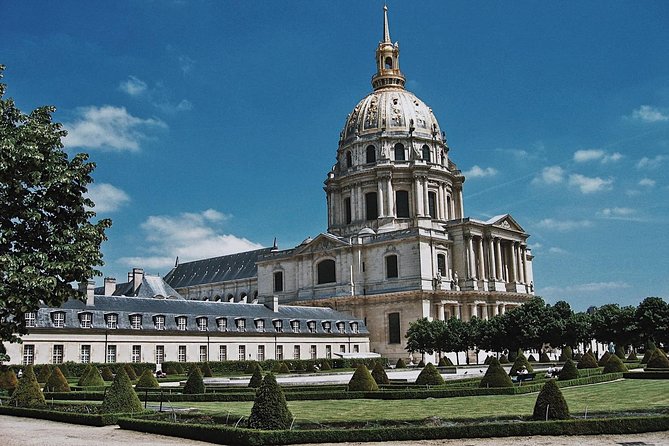
If you only do one “military history” stop in Paris, Les Invalides is a strong pick. The complex is famous for Napoleon’s tomb, but this guided route goes beyond tombs and portraits. You walk through the museum thinking like a timeline, not like a visitor randomly pulled from room to room.
In about two hours, you cover the buildup to World War I, the battles and aftermath, then you jump forward to the conditions that made World War II possible, including the German threat and life in Occupied Paris. The best part is that the guide connects the dots for you, so the war story becomes cause and effect, not just dates and labels.
This is especially valuable in a museum like this, because the collections are broad. Without a guide, you can easily get stuck in the “cool equipment” zone and miss the narrative thread. With a guide, you learn why certain items matter and how they fit into the bigger sequence.
You can also read our reviews of more guided tours in Paris



Entering Les Invalides fast, and what skip-the-line really means
The tour’s main promise is skip-the-line entrance, meaning you are guided straight into the museum experience rather than joining the biggest external queues. That matters because Les Invalides can get crowded, and standing around kills momentum.
Still, keep your expectations realistic. The tour notes that even with skip-the-line or no-wait access, lines may form due to security measures at many attractions. Also, some rooms have rules about speaking quietly, and your guide will flag them before you enter those spaces. That is not a deal-breaker, but it changes your “museum vibe” from chatty to hushed.
Practical tip: travel with only what you truly need. If you arrive with a big bag, you may have to deal with restrictions. The museum allows only handbags or small thin bag packs through security, and large bags or suitcases are not allowed inside.
Meeting at Hôtel des Invalides: logistics that keep you on track
The tour starts at Hôtel des Invalides, 75007 Paris, and it ends back at the meeting point. That round-trip is handy when you are trying to stack other Paris plans the same day.
Duration is listed as about 2 hours, which is long enough to cover major WWI and WWII turning points, but short enough that you are not stuck in a half-day time sink. You do need moderate physical fitness since it is a museum walk with guided movement between exhibits and rooms.
The tour is also described as near public transportation, so you do not have to rely on a private transfer. Hotel pickup and drop-off are not included, so plan to get there on your own with public transit, a taxi, or a ride share.
One small but real requirement: you must provide a mobile phone number (with country code). That matters for the day-of coordination, especially if the museum has temporary closures.
The 19th-century roots that lead to the World War story
You start in the museum with the earlier conflicts that set the stage for the “chain of events” to come. Your guide begins with the 19th century roots and uses key historical figures and moments to frame how Europe got pulled toward major war.
One specific example on this route is the Franco-Prussian War and the presence of Bismarck in the story. You are not meant to memorize a political map. Instead, you learn how alliances, rivalries, and nationalist tensions created the conditions where a single spark could spread fast.
Then the guide moves forward into the moment people associate most with the start of World War I: the assassination of Franz Ferdinand. After that, the tour shifts from “politics on paper” to “war on display,” with uniforms, weapons, equipment, and artifacts that make the conflict feel tangible.
Why I think this approach works: it prevents the common Paris museum problem where you see objects, but you do not know what changed because of them. This route is built to explain why these items exist in the first place.
WWI turning points: Battle of the Marne, iconic taxis, and the road to Versailles
The guided portion of World War I on this tour is built around major moments and recognizable connections. You get to see artifacts and learn about specific battles, including the Battle of the Marne.
One of the more memorable details in this kind of storyline is the mention of an iconic taxi tied to the war effort. The point of including that object in the narrative is not just “cool factor.” It helps you understand how the war changed daily life and mobilization, not only how armies moved on a map.
You also have stops that focus on firsthand materials, including original footage related to the atrocities of the war. That can be heavy, but it is part of what makes the museum experience more than just weapon spotting.
Then the timeline reaches its formal endpoint with the Treaty of Versailles. You are guided to the train car where the armistice was signed, which is one of those museum details that makes history feel suddenly physical. Instead of reading about an agreement, you stand near the object that symbolized a pause in fighting.
Drawback to consider: because the tour is time-limited, the guide will probably pick the highlights and connections rather than trying to cover every hall in depth. If you are the type who loves lingering alone in museums, you may feel slightly “rushed.” If you want structure, this is exactly the right size.
You can also read our reviews of more private tours in Paris






The jump to WWII: from the threat of Hitler to Occupation of Paris
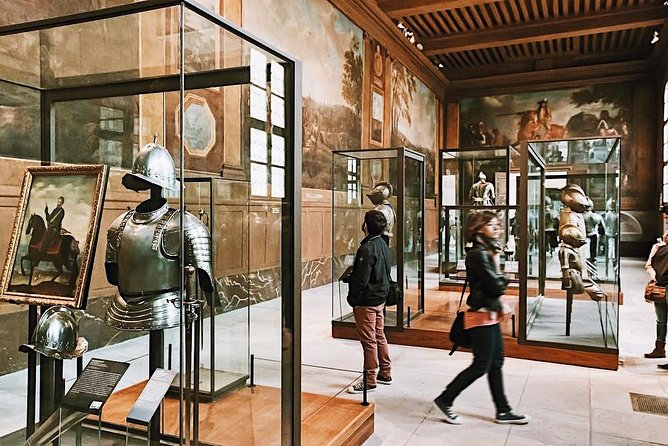
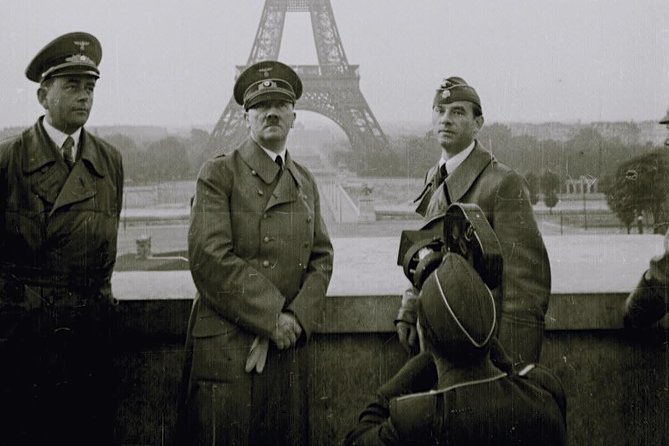
After the WWI wrap, your guide continues forward to explain how the next crisis took shape. You learn about how the threat of Adolf Hitler became reality, and how the situation moved from post-war instability into a renewed large-scale conflict.
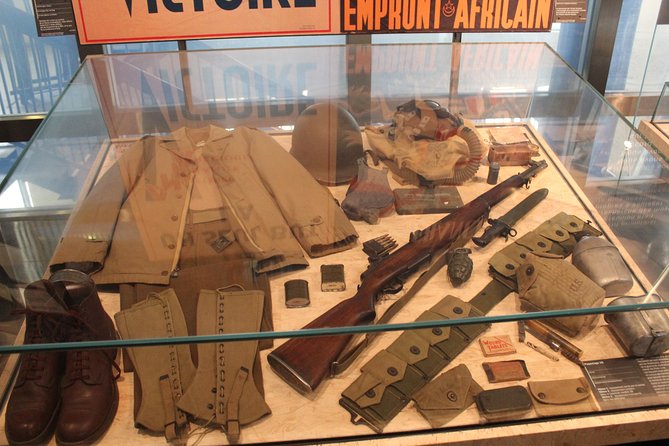
On this route, the guide addresses major WWII landmarks you may recognize from French history lessons, including the Ligne Maginot, Dunkerque, and the Occupation of Paris. That set of topics is useful because it covers both strategic geography and lived conditions.
You also meet prominent French figures connected to this era, including Pétain and De Gaulle. The guide’s job here is to place them into the flow of events, not just mention their names. That context is what helps you avoid the “I’ve heard the names but I’m not sure why” problem.
The itinerary then moves into the endgame of the conflict, with stories tied to Normandy and the Liberation of Paris. The underlying theme is how the city survived, what was preserved, and why that matters when you walk Paris streets later.
Objects, uniforms, and equipment: why artifacts work better with a guide
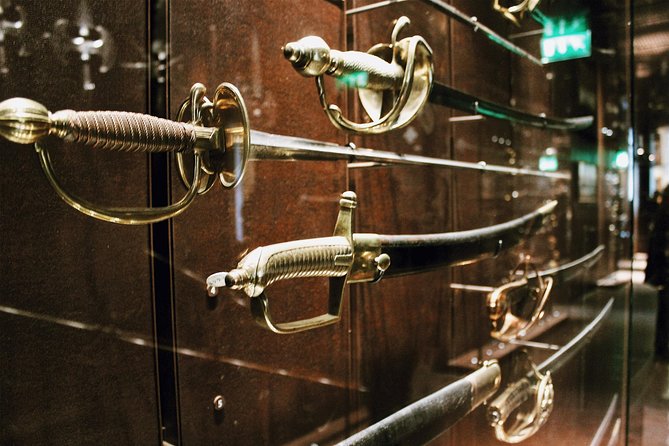
Les Invalides is visually compelling, but the guide is what turns it from “interesting displays” into “a story you can follow.” Seeing uniforms and weapons is one layer. Understanding who used them, when, and what changed because of them is the other layer.
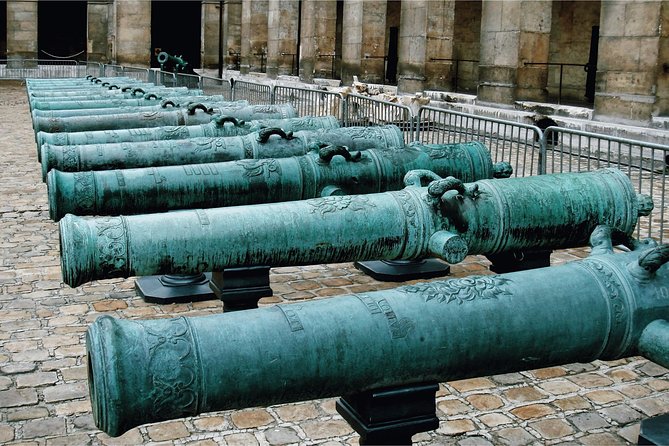
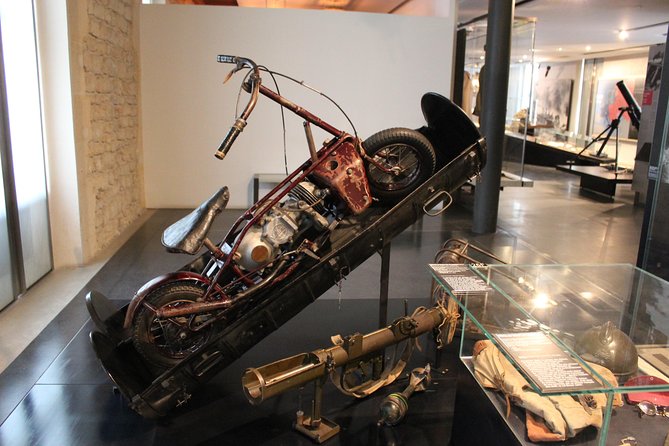
The tour explicitly includes the kind of museum items that anchor the narrative: equipment, uniforms, weapons, and other artifacts tied to battles. You also spend time around collections related to the fighting, including artifacts collected from battlefields.
Your guide also points you to specific media and documents in the museum experience, including original footage about atrocities. That is emotionally difficult, but it is an important part of telling the war honestly, not just presenting it as a history poster.
If you have any interest in how wars shape societies, this tour’s artifact approach is a good way to learn without needing a PhD. It gives you enough structure to make the museum stick in your memory.
Napoleon’s tomb context and why the building matters
Even though the focus of the route is World War history, the setting matters. Les Invalides is one of those Paris landmarks where the building itself signals importance. And since Napoleon’s tomb is part of what many people associate with the complex, it helps to know you are in the right place for both the “symbol of power” side and the “modern war machinery” side.
One of the guide experiences tied to this tour included a strong emphasis on Napoleon’s tomb, along with more WWI detail afterward. That is a reminder that the guide may connect how French military identity evolved over time, from earlier eras into the world wars.
Small-group pace: semi-private up to 8 people
A group max of 8 is the sweet spot for this kind of museum tour. It is small enough that you are not stuck listening to your guide at the back of a crowded herd, and it is large enough to keep costs reasonable compared to a fully private guide.
It also increases the odds of a more personal experience. There is a specific example of a semi-private tour running as just a small family group when availability aligned. You should not assume that outcome for every date, but it tells you what the “semi-private” label is trying to do.
If you like to ask questions, a small group helps. If you prefer quiet wandering, you may want to go for a self-guided museum visit instead. This is built for guided storytelling.
Dress code, bags, and quiet rooms: small rules that matter
This tour has a few practical “don’t get caught off guard” points.
- Appropriate dress is required for entry into some sites on the route.
- No large bags or suitcases inside the museum. Only handbags or small thin bag packs through security.
- Some specific rooms are subject to quiet or restricted right to speak, and your guide will explain the rules before you enter.
These rules are common in major museums, but when you know them ahead of time, you can show up prepared and keep the day smooth.
Price and value: what you get for $143.27
At $143.27 per person for about two hours, the price is not cheap, but it is not random either. You are paying for three things that are hard to replicate alone:
1) A guide who connects the timeline across WWI and WWII, including specific turning points like Versailles and the armistice train car.
2) Skip-the-line entrance that saves time before you even start learning.
3) Entrance fees included, so you are not doing surprise add-ons at the door.
If you try to do Les Invalides by yourself, you can absolutely access the collections. But you also risk missing the narrative that makes the objects hit harder. This tour is for you if you want a structured route and you care about understanding how the war years connect.
If you are purely browsing for general atmosphere and you do not care much about timeline detail, you might find the cost steeper than you need. But if you want guided context, the value math improves fast, especially with a group size that stays under eight.
Who should book, and who should choose something else
This tour is a great fit if you:
- want a focused World War I to World War II narrative in a short window
- like military history told through objects, not only text panels
- prefer small groups over big bus-style museum herds
- want a guide who can explain what you are looking at
It is not a good fit if you:
- need wheelchair access or rely on mobility accommodations, since the tour is not available for those with walking disabilities or using a wheelchair
- dislike any restrictions about bags and quiet speaking rules
- plan to bring large luggage, because the museum does not allow it inside
Also note that the museum dome and museum may occasionally close. If opening time is delayed by more than 1 hour from the tour start time, the operator says they will provide an appropriate alternative, but refunds or discounts are not offered in that case.
Should you book this Les Invalides World War Museum tour?
Yes, if your goal is to leave Les Invalides with a clear story from the early tensions through WWI, Versailles, and then the path to WWII and the Liberation of Paris. The small group size and guided timeline do real work here, and the skip-the-line element helps you spend your time learning, not waiting.
If you are unsure, do this quick check: if you would normally get impatient in big museums unless you have a plan, this tour’s structure is exactly what you need. If you just want to wander slowly at your own pace and you love reading on your own, you may prefer a self-guided visit.
FAQ
How long is the Les Invalides World War Museum guided tour?
The tour is about 2 hours.
What is the maximum group size for this semi-private tour?
The group is capped at 8 people.
Is the tour in English?
Yes, it is offered in English.
Does the price include entrance fees?
Yes. Entrance fees are included.
What does skip-the-line mean for this experience?
It is a skip-the-line museum tour, designed to avoid the main queues at the entrance.
Where does the tour start?
The meeting point is Hôtel des Invalides, 75007 Paris, France.
Is hotel pickup or drop-off included?
No, hotel pickup and drop-off are not included.
Do I need to provide a mobile phone number?
Yes. You must provide a mobile phone number, including the country code.
Are temporary exhibitions included?
No, temporary exhibitions are not included.
Is the tour wheelchair accessible?
No. The tour is not available for travelers with walking disabilities or using a wheelchair.
More Guided Tours in Paris



More Tours in Paris




More Tour Reviews in Paris






Not for you? Here's more nearby things to do in Paris we have reviewed












Museums, side by side.
 ★ 4.6Louvre Museum Timed-Entrance TicketTickets from $2671,977 guest reviews
 ★ 4.7Orsay Museum Entry TicketTickets from $1525,647 guest reviews
 ★ 4.5Louvre Museum Masterpieces Guided Tour with AccessTickets from $8612,023 guest reviews
 ★ 4.6Louvre Museum Entry Ticket With Host and River CruiseTickets from $1009,926 guest reviews
 ★ 4.6Les Invalides: Napoleon’s Tomb & Army Museum EntryTickets from $209,185 guest reviews
 ★ 5.0Louvre Museum – Exclusive Guided Tour (Entry Included)Tickets from $1816,296 guest reviews
 ★ 4.6Louvre Museum Hosted Entry and Mona Lisa AudioguideTickets from $815,235 guest reviews
 ★ 4.7Louvre Museum Tour Mona Lisa & Iconic MasterpiecesTickets from $794,536 guest reviews
This tour also belongs to