
Review · PARIS CITY TOURS
Paris: Theatre Package, The Lesson & The Bald Soprano
Ionesco makes the everyday feel strange. This two-show package pairs La cantatrice chauve and La leçon at Théâtre de la Huchette, a historic room where these absurd plays have become a long-running Paris habit.
It is also one of the few theatre experiences where you can follow along even if your French is basic, because English surtitles appear above the stage on certain days.
What I like most is simple: you get two complete one-hour classics in one evening, so you are not gambling on one hit. And I love that the surtitles are designed for real-time reading above the stage, which turns this into an experience you can actually enjoy instead of just survive.
My only real caution is timing. If you pick a performance day without the English surtitles, you will be watching entirely in French, so the experience becomes much more about comfort with the language.
Key things to know before you go
- Two plays in one night, each about one hour, with a short intermission between them
- English surtitles run in real time above the stage on Wednesdays, and on every day from July 30 to August 17
- Théâtre de la Huchette is the historic venue for this famous “longest continually-performing” double-hit
- Plan to arrive 15 minutes early and show your voucher at the front desk
- Best seats for reading surtitles are included
- No large bags or luggage, so travel light
Théâtre de la Huchette and the Ionesco double-hit

This is a very specific kind of Paris night. You are not hunting for a vibe on a random street corner. Instead, you are walking into Théâtre de la Huchette to see a pair of Eugene Ionesco plays that have effectively become part of the city’s weekly rhythm.
The big draw is the “double-hit” format. You get two different absurd-comedy stories back to back, both performed in French, and both shaped to keep your attention even when language skills are limited. The venue itself matters. Théâtre de la Huchette is the kind of place where the stage feels close enough that the action lands fast, and where long-running traditions are taken seriously.
Now, here is the second reason this package is smart for visitors. On specific days, you can read English translations projected above the stage while the actors perform. That changes everything. You can focus on the jokes, the timing, and the odd logic of the dialogue instead of translating in your head.
More Paris tours and experiences for the shortlist



What you’ll see: La cantatrice chauve (The Bald Soprano)
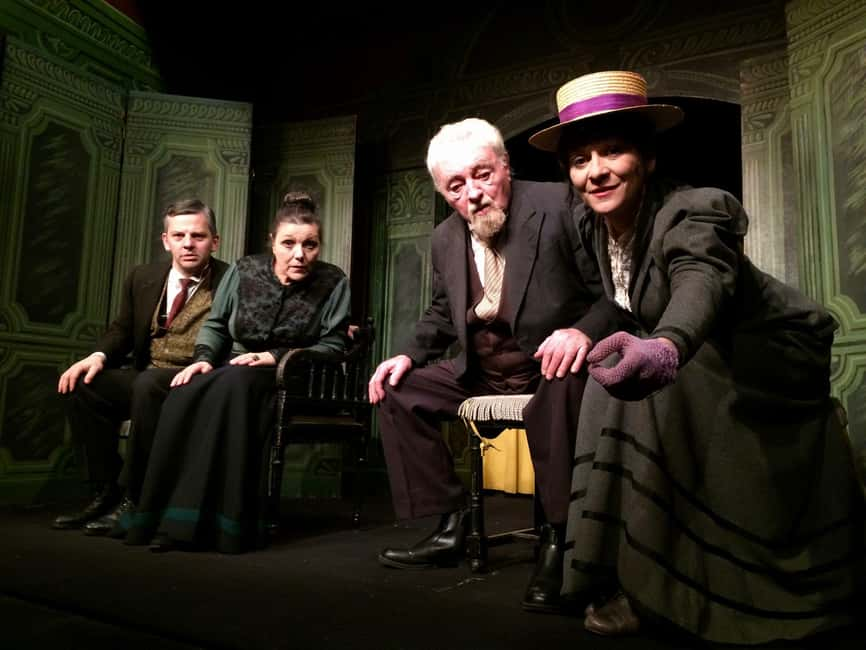
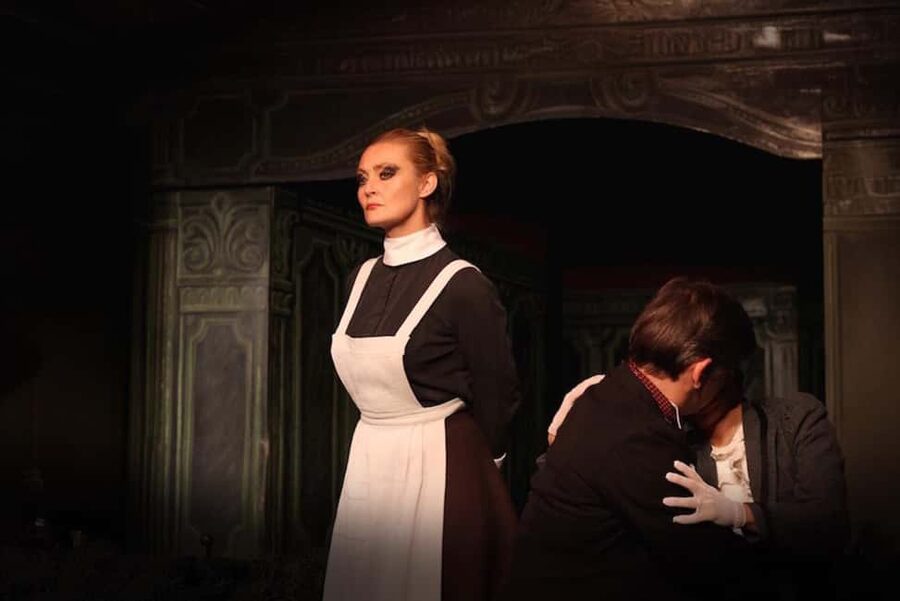
La cantatrice chauve is built like a domestic scene that keeps slipping sideways. You start with what feels ordinary: Mr. and Mrs. Smith settle in for an evening at home. Then, just as the clock hits 5 o’clock, the detective-maid announces the arrival of the Martins, a young couple who may or may not know each other.
After that, it becomes an escalating chain of knocks at the door and small misunderstandings. The play treats everyday conversation like it is a machine that might run correctly, but also might suddenly start making nonsense. And it is often the repetition, the politeness, and the stubborn insistence on details that make the absurdity funny.
What I like about this story for first-timers is that it gives you a clear emotional texture. You are watching social behavior, not a maze of symbolism. Even if you do not catch every French nuance, you still recognize the rhythm of awkward meetings, mismatched expectations, and conversation that goes nowhere in the most confident way possible.
What you’ll see: La leçon (The Lesson)
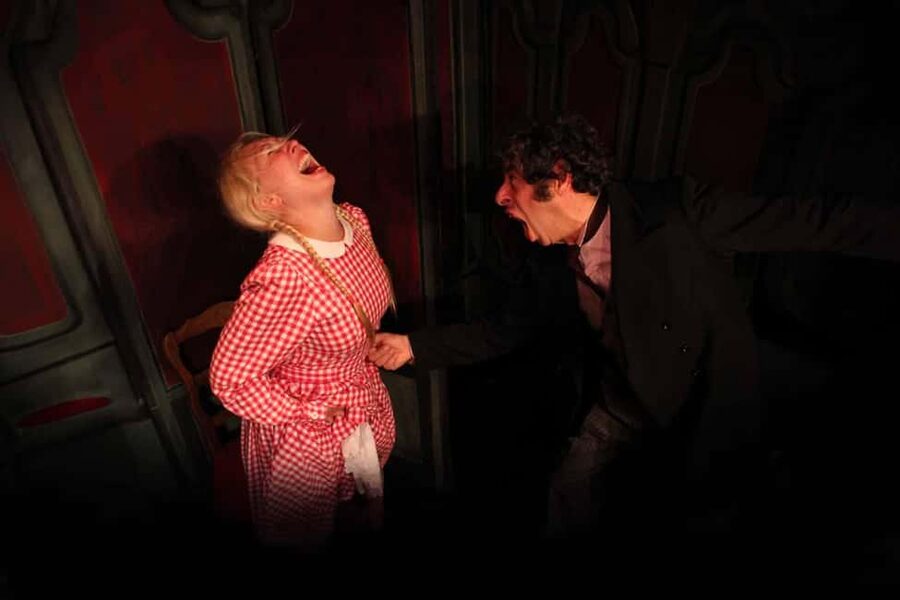
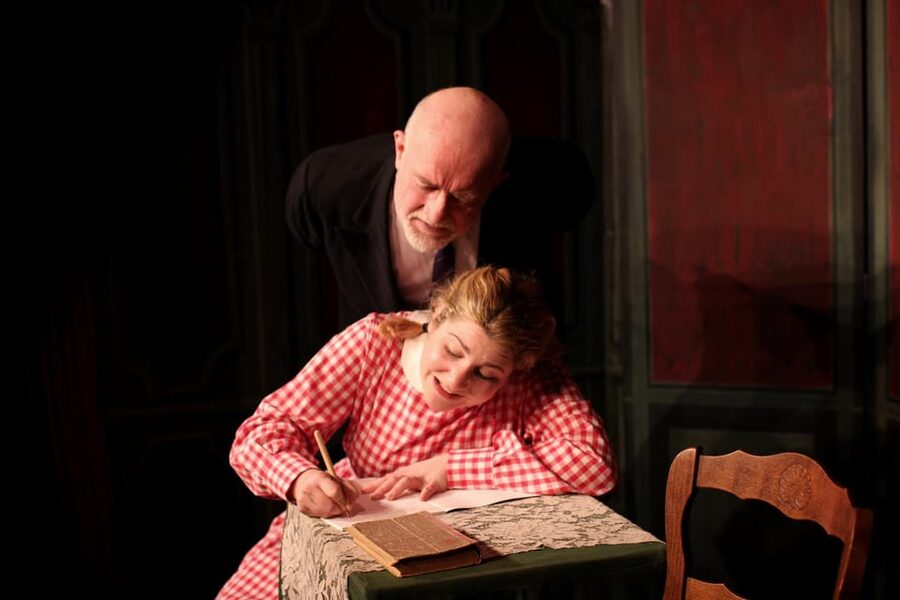
La leçon feels sharper and more confrontational. It centers on an older teacher who meets a student who refuses to be quiet or intimidated. The setup looks harmless at first, like an interaction that could stay controlled. But it quickly turns into a power shift.
The more the “lesson” continues, the more difficult it becomes. The student starts losing confidence, while the teacher seems to gain energy. By the time the exchange really heats up, you realize the central tension is not just about teaching. It is about control, pride, and who gets to change the rules in the room.
This is one of those plays that can feel surprisingly modern. The dialogue may be rooted in its era, but the dynamic feels familiar. Someone tries to stay in charge. Someone else tests the limits. And the room becomes a kind of psychological chessboard where the winner is not obvious until it is too late.
The real game-changer: English surtitles above the stage
Language is the main thing that can make or break theatre in a foreign language. This package tackles that head-on.
For Wednesday performances, you get English surtitles. And for the run from July 30th to August 17th, surtitles appear every day, not just Wednesday. The translations are projected above the stage and run in real time, so you can follow the action as it unfolds.
A helpful detail is how the surtitles are placed. They are positioned above the stage, not off in some separate screen area. That makes it easier to keep your eyes on the actors while still catching the meaning. You do not want to look down constantly. This setup is designed to help you read without losing the moment.
Another point I appreciate: the seats are selected to make reading the surtitles comfortable. That matters because I have seen too many theatre experiences where you get “included seats” that make translation hard to read. Here, the package is built around the idea that you are meant to follow along.
Your evening plan: 1 to 2 hours, with one intermission
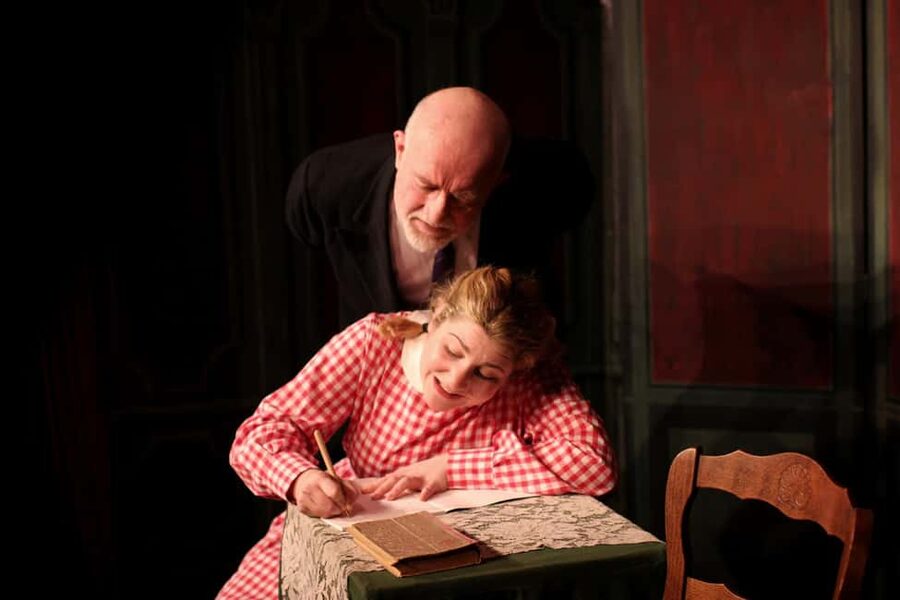
This is a short night by theatre standards. Each piece lasts about one hour, and there is a brief intermission between them. In total, you are likely looking at about 1 to 2 hours, depending on show times.
You should arrive 15 minutes before the first show. At the front desk, you present your voucher, and theatre staff guide you to your seats. I like this approach because it keeps you from wandering around right before curtain. You can settle in, find your row, and get your bearings so the performance starts on a calm note.
The intermission is brief. Treat it as a chance to reset, not as part of a longer social hangout. If you want a smooth evening, plan to use those minutes for the basics, like water and a quick bathroom stop.






Getting there: Saint-Michel and Cluny routes that actually work
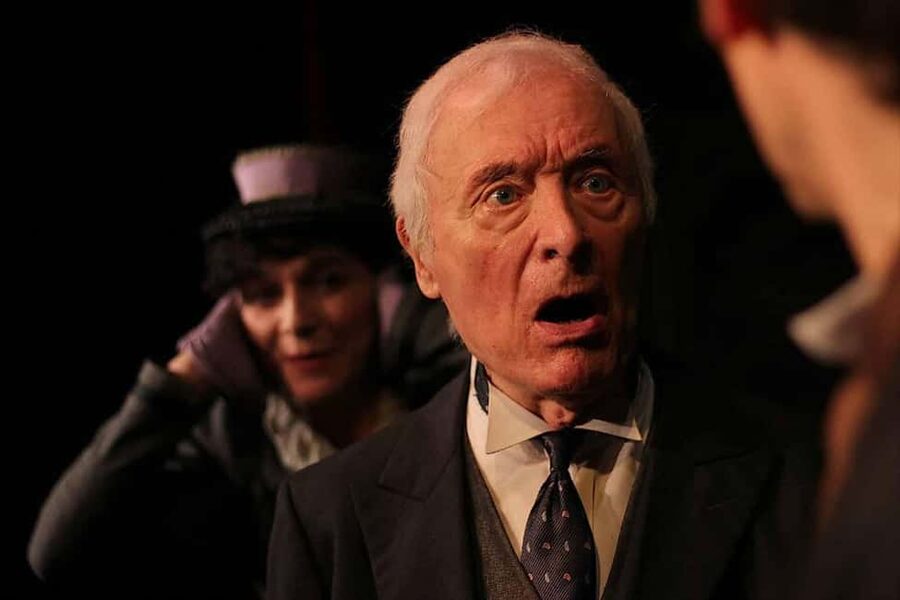
Théâtre de la Huchette is in central Paris, and it is very reachable by transit. If you want the simplest route, aim for the Saint-Michel area.
Here are the options:
- Metro line 4 to Saint-Michel
- Metro line 10 to Cluny – La Sorbonne
- RER C or B to Saint-Michel – Notre-Dame
- Bus lines 21, 27, 38, 85, 96 to Saint-Michel
My practical advice: pick the stop that looks easiest from where you are staying. In real life, the best connection is the one you can reach without multiple transfers and a lot of walking while you are already tired.
Seating and reading: how to keep up without missing the action
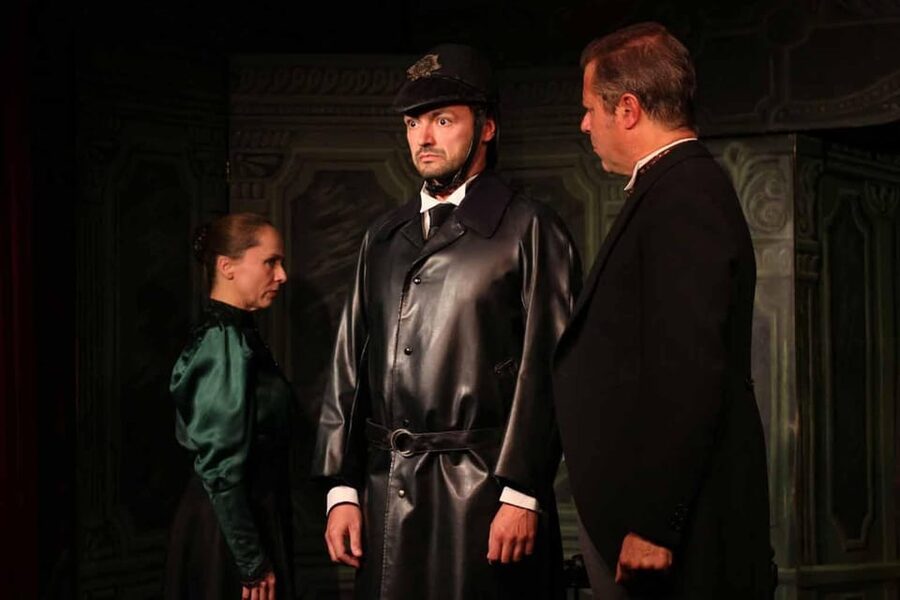
This package includes best seats for comfortable reading of the surtitles, which tells me the operator understands how translation viewing can go wrong. When surtitles are hard to read, you lose the physical comedy and the actor-to-actor timing. Here, the intention is that you can read while still watching facial expressions and gestures.
On nights with surtitles, I suggest you do a simple mental trick. Instead of trying to read every word like a school assignment, treat the English lines as a guide to the point the conversation is making. The humor in these Ionesco plays is partly in what people say and partly in the way they insist on saying it. If you chase 100 percent of the text, you can miss the performance.
Also, keep your phone away once the show starts. Not because of rules you might see, but because your brain will do better if it is fully on stage and surtitles, not split.
What the long run since the late 1950s means for you
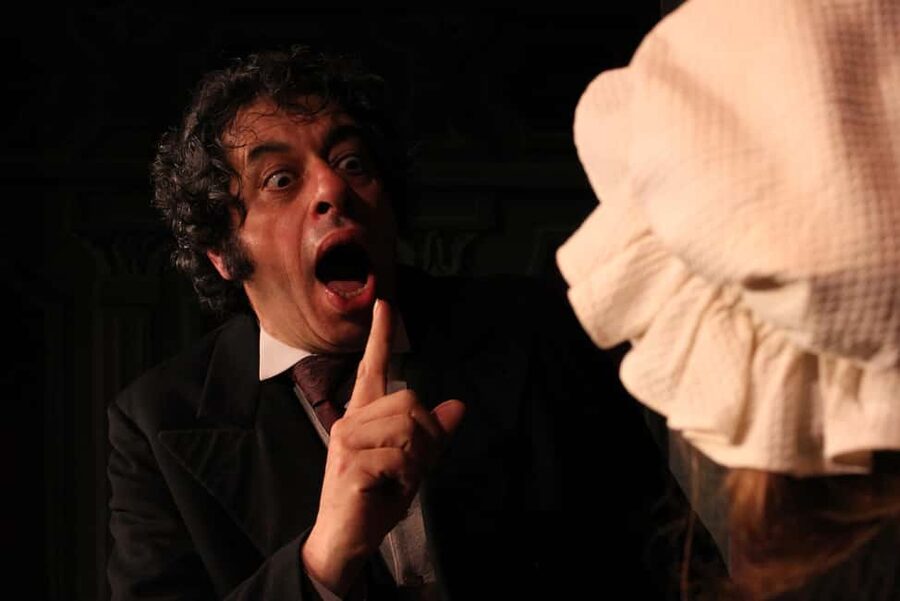
One of the most interesting facts about this double-hit is that it has been playing weekly in Paris since 1957. That is a huge clue about what kind of night this is.
It is not a novelty that will fade after a few seasons. It is a living tradition that has survived changing tastes, new theatre styles, and different generations of audiences. When a production keeps running for that long, it usually means it still lands. The jokes still work. The tension still creates that “wait, what?” reaction.
That long-run effect can be felt even as a first-timer. The staging style and the performance rhythm are likely very polished at this point. The actors know exactly where laughs should come. The audience knows when to expect a turn.
It is also a reason I consider this a strong value choice. You are paying for two shows that have been refined for decades, not two experimental premieres you have to gamble on.
Who this is best for, and who might not love it
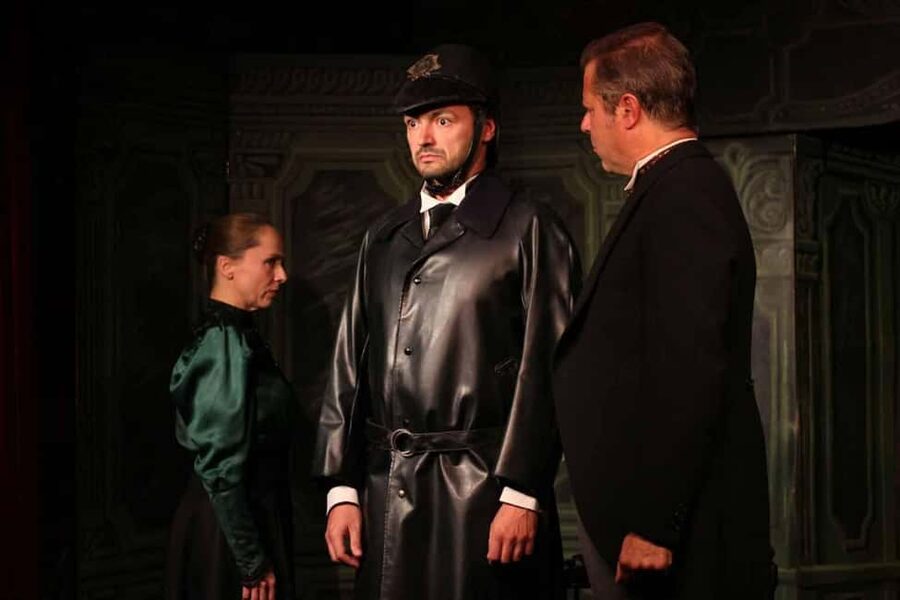
This experience is ideal if you want:
- Two classic plays in one night without having to schedule two separate outings
- An accessible entry point to French theatre thanks to English surtitles on many days
- A comedy style that leans on social awkwardness and logic that slips
In practice, you will probably enjoy it most if you are open to absurd humour and can handle dialogue that does not behave like a normal conversation. If you only want realism or tightly plotted stories, Ionesco may feel too strange on first watch.
Also, this is a good option for mixed-language groups. You can sit with friends who speak little French and still follow the story on the surtitled days.
Price and value: what $68 buys you
At $68 per person, you are buying two full theatre pieces, each about one hour, plus the cost of surtitles when they are running. For Paris, that is a straightforward way to get “theatre night” without shelling out for a single expensive production.
The real value here is not just the number of shows. It is that the package is built around comprehension. Best seats for reading surtitles, English translation timing aligned to the performance, and surtitles on regular days like Wednesdays plus the expanded daily run in late July and early August all point to one thing: the experience is meant to be understood.
If your goal is to do one iconic Paris activity that is easy to follow, this can be a very efficient way to spend your evening.
Practical limits to know before you go
A few logistics can affect how pleasant the night feels.
- No large bags or luggage are allowed. If you are touring around with a suitcase, plan on leaving it somewhere else. Travel light helps a lot.
- The venue is wheelchair accessible, which is a plus if you need that.
- The shows start at specific times based on the schedule. If you are trying to line this up with dinner, keep a buffer, because you want to arrive 15 minutes early.
What to wear is not complicated. Go with something comfortable enough for a couple of hours in a theatre seat.
Should you book this Paris theatre package?
If you like the idea of a classic Paris theatre outing that is funny, a little unsettling, and built to be followed, I would book it, especially if your dates include Wednesday surtitles or the July 30 to August 17 daily run.
Choose it when you want a short, high-impact cultural evening, and when you value having English surtitles above the stage instead of guessing what is happening.
Skip it only if you are set on attending on a date without English surtitles and you know you will struggle with French. Without translations, this kind of absurd theatre can turn from entertaining into frustrating fast.
If your dates fit the surtitled schedule, this is one of the easiest ways to see two Ionesco classics in one night, in a room that has kept the same plays alive for decades.
FAQ
Are the shows in English?
The plays are performed in French. On Wednesdays, English translations are projected above the stage in real time. During July 30 to August 17, English surtitles are available every day.
How long is the theatre program?
Each play is about one hour, with a brief intermission between the two. Overall duration is listed as 1 to 2 hours.
Where is Théâtre de la Huchette, and how do I get there?
You can reach it by Metro line 4 to Saint-Michel, Metro line 10 to Cluny – La Sorbonne, or RER C or B to Saint-Michel – Notre-Dame. Several bus lines also stop at Saint-Michel.
What time should I arrive?
Arrive about 15 minutes before the start of the first show.
What do I do when I arrive?
Present your voucher at the front desk. Theatre staff will guide you to your seats.
Are large bags allowed?
No. Luggage or large bags are not allowed.
More Workshops & Classes in Paris



More Tour Reviews in Paris



Not for you? Here's more nearby things to do in Paris we have reviewed











Paris City Tours, side by side.
 ★ 4.6Louvre Museum Timed-Entrance TicketTickets from $2671,977 guest reviews
 ★ 4.6Disneyland® Paris 1-Day TicketTickets from $6149,412 guest reviews
 ★ 4.6Versailles Palace and Gardens Full Access TicketTickets from $1741,579 guest reviews
 ★ 4.6Arc de Triomphe Rooftop TicketsTickets from $1834,264 guest reviews
 ★ 4.7Orsay Museum Entry TicketTickets from $1525,647 guest reviews
 ★ 4.4Evening River Cruise with MusicTickets from $2722,721 guest reviews
 ★ 4.4Eiffel Tower Entry Ticket with Optional Summit AccessTickets from $2920,035 guest reviews
 ★ 4.3Eiffel Tower Summit or Second Floor AccessTickets from $5917,248 guest reviews
This tour also belongs to