
Review · MONTMARTRE TOURS
Paris – Montmartre Small Group Walking Tour with a True Local
Montmartre clicks when you have a local voice. This 1 hour 45 minute small-group walk (max 6 people) with Corentin is built for the details that never make it into a quick guidebook stop, from the Moulin Rouge to viewpoints on the hill. Two things I love right away: the small group size that keeps it conversational, and the way a true Montmartre native connects art, nightlife, and neighborhood stories into one easy route.
One possible consideration: this is still a real walking tour on hills. It is listed as moderate physical fitness, and it is not recommended for older guests or anyone with mobility limits. Also, access to buildings is not included, so you are enjoying most sights from the street and viewpoints, not doing inside visits.
Quick highlights
- Max 6 people keeps the pace relaxed and your questions actually get answered
- Corentin, born and raised in Montmartre brings local street knowledge, not textbook recaps
- Art and cabaret stops link Van Gogh, Renoir, Picasso, and local legend to places you can point at
- A route that mixes famous landmarks with lesser-known corners without feeling chaotic
- Time for views and photos so the hilltop moments land, not just pass by
- Mostly outdoor viewing (no building access), so you can plan with less guesswork
A Montmartre tour that feels like walking with a friend
Montmartre can be one long photo line if you go in blind. This tour helps you understand what you are seeing while you are seeing it. Corentin is born and raised there, and it shows in how he frames the streets: why people built where they did, how artists worked, and what names like Amélie, Renoir, Picasso, and Van Gogh mean in this neighborhood.
I also like the tone. It is not stiff. It is story-driven, with humor and local legends mixed in. And because the group is capped at 6, the tour does not turn into a lecture where you just hope you hear enough to be worth it.
The other big plus is language and flexibility. Based on feedback, Corentin can handle English and Spanish as well as French, so you are less likely to get stuck in the usual translation gaps that happen on small neighborhood walks.
You can also read our reviews of more walking tours in Paris



From Five Guys to Sacré-Cœur: how the route makes sense
The walk starts at Five Guys, 3 Pl. Blanche (75009), and ends near 1 Parv. du Sacré-Cœur (75018). That matters because you are not just wandering randomly through Montmartre. You are moving through the neighborhood in a way that ties together nightlife, artists’ addresses and studios, and then the big panoramic payoff at the top.
The time breakdown is built around short stops, not long museum-style segments. Expect roughly 10 minutes at several key points, plus a few shorter stops for statues and quick cultural moments. You also get breaks for photos and viewpoints, which I think is the difference between a good Montmartre walk and a tired one.
And because the tour ends up by the Sacré-Cœur hill, you will often feel like you are finishing with your best view, not just your last street corner. That is a smart way to plan if you want Montmartre without burning a whole afternoon.
Moulin Rouge and Belle Époque nightlife without the inside-pressure
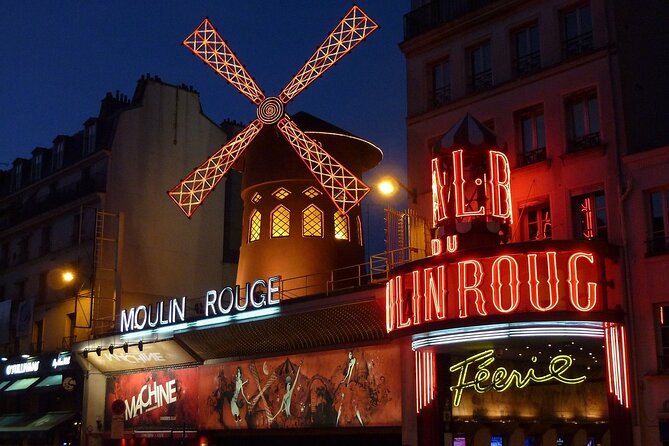
The first landmark is the Moulin Rouge. You get about 10 minutes here, and importantly, admission is not included. So treat this stop as a street-level context moment: what the Moulin Rouge represents in Paris nightlife, and how it became the emblem people still associate with the area.
Right around there, you also pass the Café des Deux Moulins, the one made famous by the movie Amélie. Even if you are not an obsessive film watcher, it is a fun stop because it explains how pop culture sticks to real places. You get the “why this café is remembered” angle, not just a quick glance at a facade.
A practical note: because buildings are not part of the plan, you can keep your expectations realistic. You are here for stories, street scenes, and nearby photo angles, not for tours inside theaters or venues.
Van Gogh’s Paris chapter, told at an apartment stop
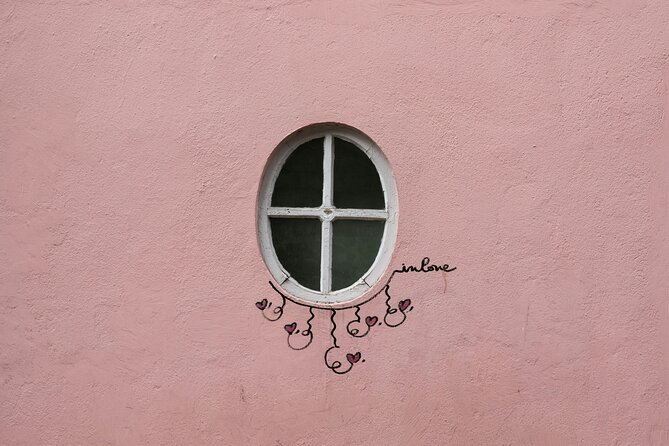
Next you head to the Appartement des frères Vincent et Théo van Gogh. You get roughly 10 minutes, and admission is listed as free. This is one of the most worthwhile parts of the walk because it takes you from famous names to personal timeline.
Corentin’s framing focuses on Van Gogh’s time in Paris as a turning point for his artistic journey, plus the role Montmartre played in his development. If you have ever felt like art history facts are too abstract, this is the antidote. You see a location tied to Vincent and Theo, then you hear how that place fits into what he was learning and trying to express.
If you are traveling with teens or kids, this stop tends to land well too. Feedback mentioned that older children enjoyed the mix of names and stories, and this is where the art becomes more than a slide show.
Renoir at Le Moulin de la Galette: the art you can stand near
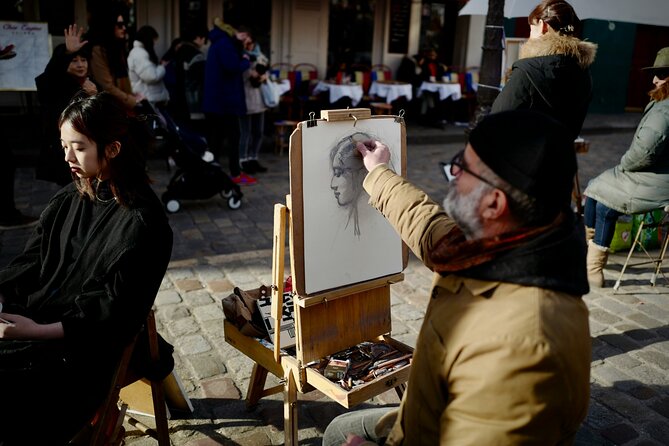
From there, you reach Le Moulin de la Galette for another short stop, about 10 minutes. Admission is listed as free, and again, you are not doing an inside visit. What you are doing is connecting place to painting.
Here is the hook: Renoir painted Le Bal du Moulin de la Galette, and this location is part of the story. The value is in understanding how artists found subject matter in ordinary life, then turned it into something timeless. Corentin also explains the location’s significance in the Paris art scene, which helps you see Montmartre as more than “pretty streets and selfies.”
This is also a good moment to slow down and look for sightlines. Even if the exact views have changed over the decades, you can still sense why a painter would be drawn here.






Bateau-Lavoir and the modern art story you can walk through
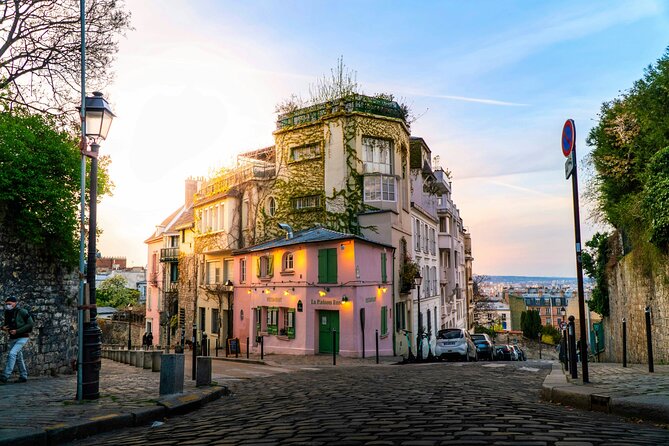
Then comes Le Bateau-Lavoir, about 10 minutes with free admission listed. This stop matters because it is tied to early 20th-century artistic life, including Picasso living and working there.
I like this section because it gives you a chain of influence. You start with earlier art scenes, then you get this later wave where modern art takes shape. You hear how places like this helped artists live near each other and create in a community. That makes modern art feel less like a sudden lightning strike and more like an environment.
If you are the type who wants to connect what you see to what you might later look up, this stop sets you up well. Even without a museum ticket, you leave with names and context you can follow.
The Passe-Muraille, the Clos vineyard, and a few oddball legends
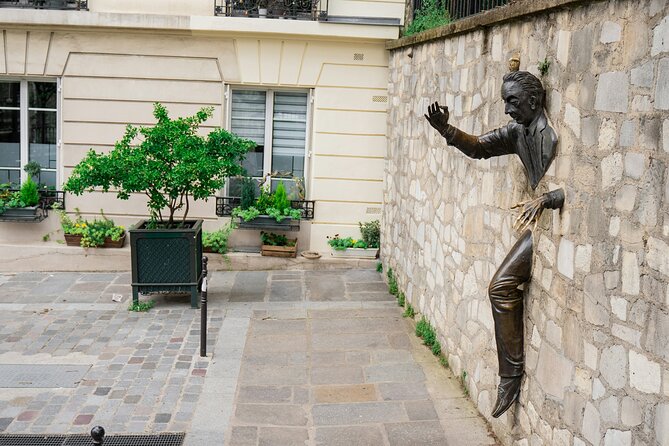
Montmartre has room for whimsy, and the tour keeps that energy. You visit Le Passe-Muraille, a statue inspired by Marcel Aymé’s character, with about 5 minutes at the spot.
Then you get a short stop at Vigne du Clos Montmartre, again about 5 minutes, free. This one is quietly surprising: a vineyard that has a historic place in French wine culture, right inside the city. If you think of vineyards as something you drive out to see, this changes the picture.
These short stops are easy to miss if you are rushing. I actually like them on a guided walk because they break the nonstop landmark rhythm. You get a little story shock, then the tour moves you forward to the next big view.
Au Lapin Agile, an old cabaret that still feels like a stage
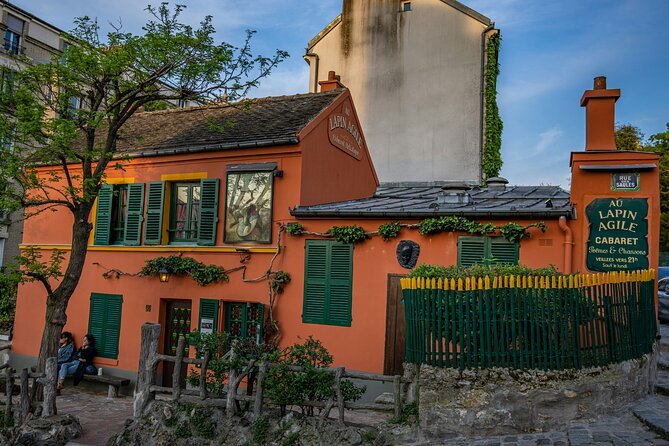
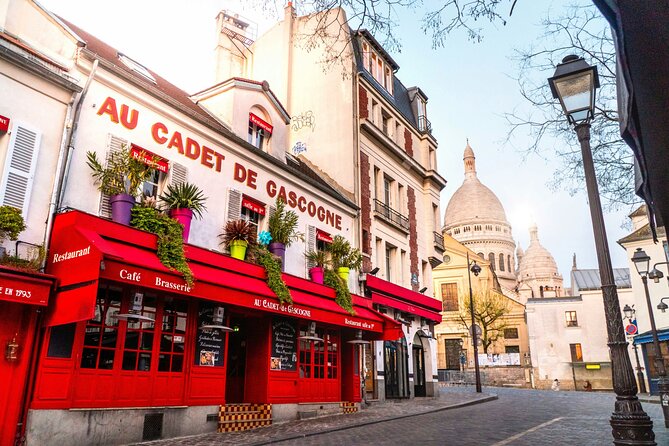
Another fun stop is Au Lapin Agile, about 5 minutes, free. It is Montmartre’s oldest cabaret, and Corentin’s storytelling adds the kind of details that make a name feel lived-in.
Because this tour stays outdoors and does not include building access, this is not about a ticketed performance. It is about understanding the place as part of a long-running culture of artists, performers, and late-night Paris energy.
One detail I found especially fun is that your guide may share amusing anecdotes during the walk, and feedback specifically called out a donkey artist story. I would treat that as an example of what you can expect: playful, local, and memorable.
Sacré-Cœur views and Place du Tertre: the finish that earns its photos
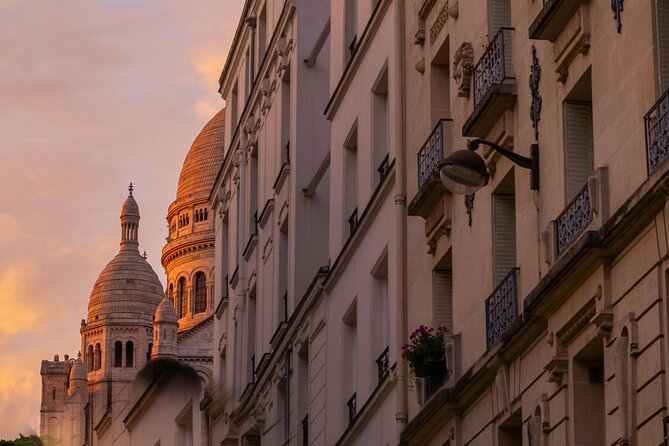
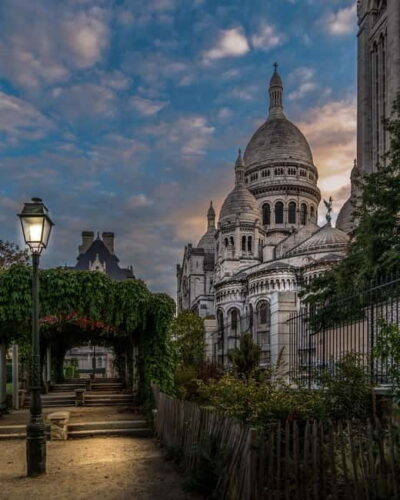
The final big landmark is Basilique du Sacré-Cœur de Montmartre for about 10 minutes. Admission is listed as free, and this is where the hilltop payoff happens. You get panoramic views from the top of Montmartre hill, plus architectural and spiritual context for what Sacré-Cœur means.
If you are planning your day, this is a smart anchor. Instead of saving the best viewpoint for last-minute crowds, you build toward it during the walk. The group can regroup, take photos, and reset before finishing.
After Sacré-Cœur, the tour ends at Place du Tertre (about 5 minutes). This is the classic artist square, where you see the modern version of Montmartre’s creative tradition. It is lively, visual, and the right way to close a story-based route. You will leave with the sense that Montmartre is still an active creative neighborhood, not a set made from a postcard.
Pace, questions, and why small groups are worth the extra thought
For a neighborhood like Montmartre, pace is everything. This walk is listed at about 1 hour 45 minutes and keeps the stops relatively short, which helps you stay comfortable without feeling rushed.
The small group size (max 6) is not a marketing detail, it is the engine. You get room to ask questions, and Corentin can adjust his explanations based on what you care about, whether that is art history, Paris nightlife, or how a film connection like Amélie can make a place unforgettable.
Also, feedback highlighted that the pace felt ideal and that nobody seemed to struggle to keep up. That suggests the walking portion is planned to be manageable for most people with a moderate fitness level.
If you are going with kids, it can work well. One review noted boys ages 12 and 14 enjoyed it, and a family with a 10-year-old loved the experience. The stops are quick, the stories are fun, and you are not stuck in long indoor viewing.
Price and value: what $80 buys you in real-world terms
At $80 for roughly 1 hour 45 minutes, you are paying for a guided experience with a local who has built a route around meaningful stops. You are not buying museum tickets or transportation.
Here is what you do get for the price:
- A native guide, Corentin
- A max 6-person group for a calmer, more interactive feel
- A route that connects famous names to specific neighborhood places
- A story-based walk with time for viewpoints and photos
- A mix of iconic and lesser-known stops, including Moulin Rouge, Van Gogh sites, and artist-centered areas
Here is what you are not buying:
- Inside access to buildings
- Included admission at Moulin Rouge (admission ticket not included)
So if you are expecting a “line-free skip-the-ticket” tour, this is not that. If you want context, interpretation, and a route that makes Montmartre easier to understand, the price starts to feel fair fast.
A rare snag to consider, and how to protect your time
One piece of feedback stood out as a serious problem: a guide scheduling error where the guide did not show up, leaving guests waiting in hot weather. The provider response said a full refund was issued.
That is not the pattern from the rest of the feedback, but it is still a good reminder to treat any tour like an appointment. Confirm your time, show up at the meeting point, and have a plan in case you need to contact the operator that day. Most of the time this will be smooth, but you are traveling in the real world, where mistakes can happen.
Should you book this Montmartre walk?
I would book it if you fit one of these profiles:
- You want Montmartre with story context, not just a list of landmarks
- You like art history but want it connected to real street corners
- You travel with kids or teens who do better with short stops and engaging explanations
- You prefer a small group setting where you can ask questions freely
I might skip it if:
- You need inside building visits, because access to buildings is not part of this plan
- You cannot handle moderate uphill walking, since the tour is not recommended for older guests or mobility limitations
- You are only interested in one or two mega sights and would rather build a self-guided day around them
If you want Montmartre to feel like a neighborhood with a pulse, not a theme park, this one is a strong bet.
FAQ
How long is the Paris Montmartre small group walking tour with Corentin?
It lasts about 1 hour 45 minutes.
How many people are in the group?
The tour has a maximum of 6 travelers.
What is included, and what is not included?
The tour includes a passionate native tour guide. Access to buildings is not included. Admission is listed as not included for the Moulin Rouge stop, while the other listed stops are marked as free.
Where does the tour start and end?
It starts at Five Guys, 3 Pl. Blanche, 75009 Paris, and ends at 1 Parv. du Sacré-Cœur, 75018 Paris.
Is the ticket mobile?
Yes, it uses a mobile ticket.
Is this tour refundable if my plans change?
Free cancellation is available up to 24 hours in advance for a full refund. If you cancel less than 24 hours before the start time, the amount paid is not refunded.
More Walking Tours in Paris



More Tours in Paris





More Tour Reviews in Paris



Not for you? Here's more nearby things to do in Paris we have reviewed












Montmartre Tours, side by side.
 ★ 5.0Montmartre Hidden Gems and Scenic Highlights Walking TourTickets from $382,684 guest reviews
 ★ 5.0Montmartre Hill French Gourmet Food and Wine Tasting Walking TourTickets from $1452,588 guest reviews
 ★ 4.8Montmartre Cheese, Wine & Pastry Guided Walking TourTickets from $1272,255 guest reviews
 ★ 4.9Montmartre Highlights Walking Tour with a Local GuideTickets from $341,668 guest reviews
 ★ 4.1Sacré-Coeur and Montmartre Tour with Expert GuideTickets from $281,027 guest reviews
 ★ 5.0Private Montmartre Food Tour with Wine, Cheese & PastriesTickets from $3021,027 guest reviews
 ★ 5.0Paris Montmartre Food Tour – A Full French Meal by Do Eat BetterTickets from $95877 guest reviews
 ★ 5.0Hidden Montmartre: Paris’ Secret Streets Walking TourTickets from $44809 guest reviews
This tour also belongs to