
Review · MONTMARTRE TOURS
Paris Jewish Heritage: Le Marais & Montmartre Guided Walking Tour
A few streets in Paris carry big, real memory. This Jewish heritage walking tour connects Le Marais and Montmartre through stories, landmarks you can actually see, and a guide who explains how the community changed over centuries.
I like two things a lot. First, the pace works for a human sized group, typically small-group and up to 12 people, with extra attention when you are one of the smaller clusters. Second, the guides bring the places to life with strong storytelling, from guides like Benjamin and Thomas to Pierre Louis, Adrian, and Boniet.
One thing to plan around: you get major sights mainly from the exterior, not inside. If your dream is synagogue interiors or lots of monument entry tickets, this tour will feel a bit more “walk and learn” than “go in and explore.”
Why This Jewish Heritage Tour Works So Well
- Le Marais to Montmartre in one plan: tradition, migration, and community life, then a sharp turn to artists, writers, and modernism.
- Exterior views that still matter: Agoudas Hakehilos Synagogue (Art Nouveau) and the Mémorial de la Shoah are both key stops even without entry.
- A guide-led story, not just a route: you’ll hear how neighborhoods were shaped, rebuilt, and re-shaped through hardship and change.
- Short transit break included: you move between districts using public transport with tickets, so your legs get a breather.
- Iconic ending with real context: the Sacré-Cœur area view lands with a new way of looking at the layers behind the postcard scene.
Getting Oriented: Route, Timing, and What You Will Actually Do
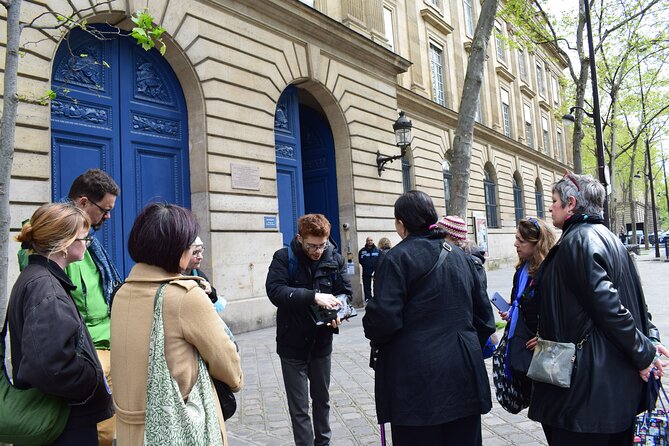
This tour runs about 3 hours 30 minutes, starting at 2:30 pm and ending at Square Louise Michel in Montmartre. You’ll meet at L’Elephant Du Nil, 125 Rue Saint-Antoine, in the 4th arrondissement, then you’ll finish up near the Sacré-Cœur area.
You are walking most of the time, but it is not one long slog. The plan is built in two walking segments, plus a short public transport transfer between Le Marais and Montmartre. That structure matters in Paris, because neighborhoods feel close until you are suddenly climbing, turning corners, and dodging crowds.
Also, do not plan to join after it starts. The meeting point is the start line, not the suggestion. If you want a smooth check-in, arrive 5 to 10 minutes early.
Price-wise, it is $102.12 per person. For that, you are paying for guided interpretation by a local expert, a small group experience, and the public transport tickets between districts. You are also not paying for monument entries or synagogue interiors, because those are not included. In other words, you are buying the thinking and the context, not just sightseeing time.
You can also read our reviews of more walking tours in Paris



Le Marais Segment: Medieval Streets, Rue des Rosiers, and the Agoudas Hakehilos Look
You start in Le Marais, the historic Jewish quarter that shaped its identity through centuries of community institutions, everyday commerce, religious life, and neighborhood cafés. Expect your guide to connect street-level details to larger waves of Jewish history in Paris, including how people rebuilt after destruction during wartime.
What makes Le Marais special on foot is how layered it feels. You walk narrow streets and see the kind of urban fabric where Jewish life once formed a concentrated enclave. Even when today’s storefronts look familiar, your guide helps you notice what replaced what, what persisted, and how identity stayed visible through institutions, schools, and shops.
Agoudas Hakehilos Synagogue Exterior: Art Nouveau in a Jewish Landmark
One standout stop is the Agoudas Hakehilos Synagogue exterior. This is a rare Art Nouveau synagogue design by Hector Guimard. You will not go inside, but you should still treat the photo spot as a “look carefully” moment.
Why it matters: Guimard’s architecture represents something bigger than style. It signals how Jewish communities were not stuck in the past. They were part of city life, part of modern design currents, and building places that still stand out decades later.
If you care about architecture, bring a slightly patient mindset here. The exterior view is your whole “entry” for this site.
Mémorial de la Shoah Exterior: Remembrance Framed by Context
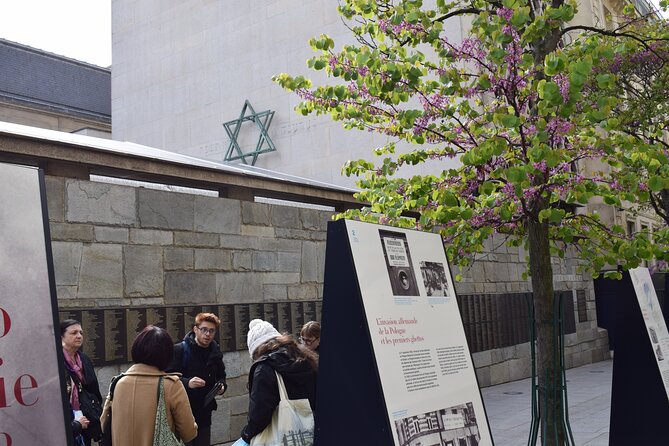
Next you move to the Holocaust Memorial (Mémorial de la Shoah), viewed from the exterior. You’ll get the history of occupation, resistance, and remembrance, and how these chapters continue to shape Jewish identity and memory in Paris.
A quick practical note: this is emotionally heavy content. Some guides keep the pacing calm and thoughtful. Others, depending on how they choose to frame the story, can spend longer here than you might expect. If you prefer lighter transitions, you can still manage it by thinking of the memorial as a turning point, not just a stop.
Also, because the plan is exterior-only, you are not forced into extra museum time. If you want more, you can decide later on your own.
Rue des Rosiers: Where Community Life Has Always Looked Like Food and Shops
After the memorial, you continue toward the heart of the commercial and community stretch along Rue des Rosiers. This is where bakeries, delis, and specialty shops keep the area’s “you can smell it and taste it” feel. Your guide explains how this street developed, changed, and rebuilt across the 20th century.
This part is where the tour becomes easier to love if you like lived-in neighborhoods. You are not only hearing about institutions and tragedy. You are also seeing the everyday patterns that keep culture going.
One practical bonus: many guides add small tastings when they can. For example, Pierre Louis brought along falafel tastes from L’As du Falafel in some departures, and it is a nice way to end the Marais portion on something you can experience, not just memorize.
You can also read our reviews of more guided tours in Paris






Ending the Marais: Near Hôtel de Ville, Then a Transit Reset
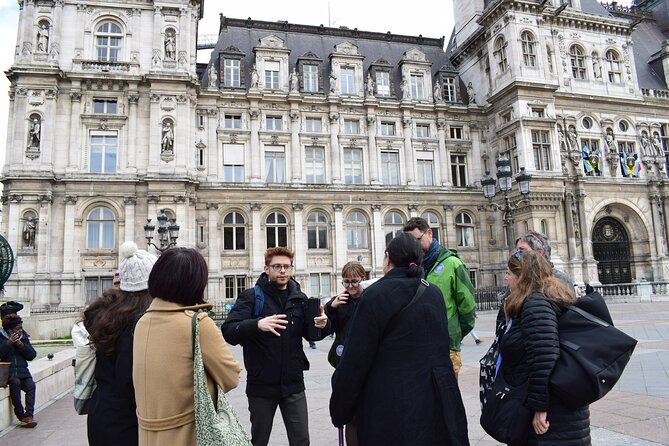
You finish the Le Marais segment near Hôtel de Ville, then you head to Montmartre by public transport. This is not a random detour. It is a planned reset so you can recharge before the tone shift.
When you get off the metro and start walking again in Montmartre, you will feel the contrast right away: from community tradition and long-established institutions to a more creative, artist-driven slice of Jewish Paris.
Montmartre Segment: The Artistic Chapter and the Cost of Fame
Montmartre is the part of the tour that changes the emotional temperature. Instead of the medieval enclave feeling, you get early 20th-century modernism as a theme. This district drew immigrant artists, writers, and musicians who found community in cafés, studios, and literary circles.
Your guide connects names and personal stories to the larger European context of rising nationalism and antisemitism. That contrast is important: the creativity you associate with Montmartre lived alongside political uncertainty.
Key figures your guide may mention include Amedeo Modigliani, Max Jacob, and Marc Chagall. The point is not just name-dropping. It is showing how artists created community while the world around them grew less safe.
A key takeaway you’ll likely come away with: Montmartre’s legend is partly built on the fact that many people later faced exile, persecution, or rupture during the Second World War. So the fun, café-centered atmosphere is never the whole story.
Also, this is a good section for anyone who thinks Jewish heritage tours are only about war and remembrance. Here, you get culture, innovation, and the creative energy that helped shape modern art, even when history was threatening it.
Sacré-Cœur Steps and Square Louise Michel: Ending With a View That Feels Different
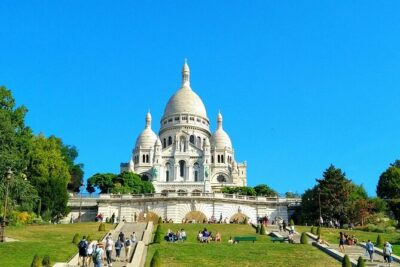
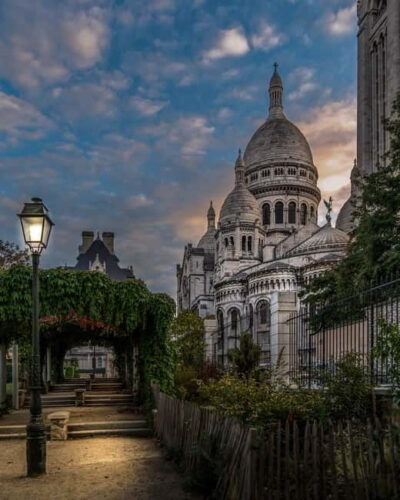
The tour finishes at the steps of the Basilique du Sacré-Cœur and then wraps up around Square Louise-Michel. The famous view over Paris is still the famous view. But your guide should help you see it with a different layer in mind.
This ending works because you are not only leaving with a photo. You are leaving with a mental map of how Jewish life in Paris moved through different “centers” over time. Le Marais emphasizes tradition and rebuilt community life. Montmartre highlights reinvention through art. The Sacré-Cœur viewpoint is the stitch that connects both ideas in your head.
One practical note: you’re ending near the basilica steps. Wear comfortable shoes and pace yourself. Even with a small group, Montmartre has its way of reminding you that Paris is not flat.
What You Get From the Guides: Storytelling That Changes the Streets
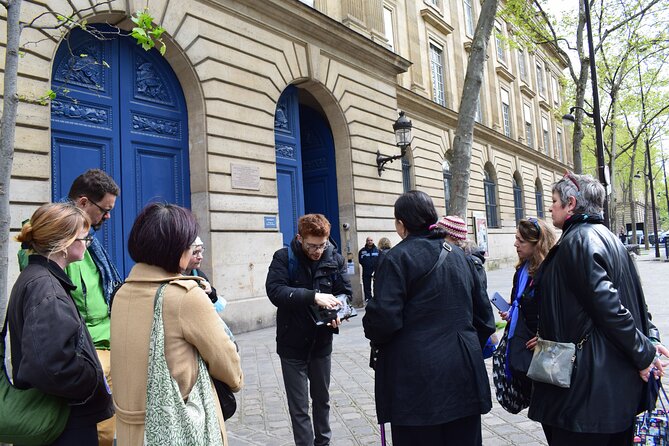
The best part of this tour is the human one. In past departures, guides like Benjamin have been praised for sensitivity and context, not just facts. Other guides like Thomas and Adrian have been noted for energetic explanations and strong engagement. Boniet and Pierre Louis have also been highlighted for clear, patient answers and the ability to answer questions without hand-waving.
That matters because Jewish Paris is not a single museum. It is a changing set of places, some preserved, some destroyed, some repurposed. A good guide helps you hold all those fragments at once.
That said, there is one recurring caution: a few people felt the early part moved slowly, and some wanted more framing up front so they could see where the story was going. If you’re the type who needs a quick outline early, you can mentally ask your guide for a “big picture” summary at the first stop, even if they cover it later.
Also, one person flagged that the focus can sometimes lean heavily toward the Holocaust context compared with day-to-day life in Le Marais. Your experience will depend on your guide and your group questions. If you want a more balanced split between everyday communal life and tragedy, bring it up kindly during the tour.
Value and Who This Tour Is Best For
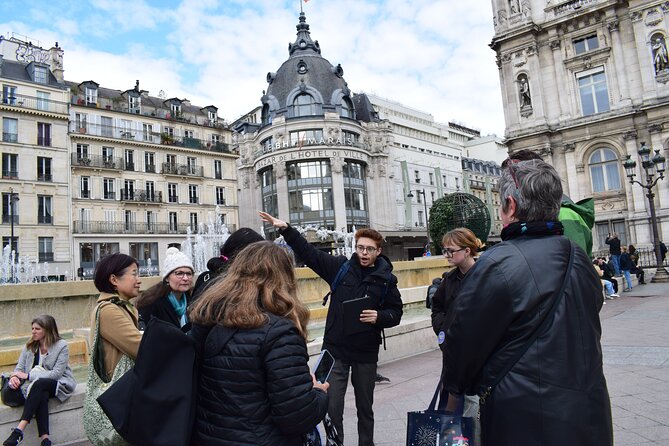
For $102.12, you are not just paying for walking. You are paying for guided interpretation, small-group interaction, and included public transport tickets between districts. Since synagogue interiors and entry to monuments are not included, the tour is best if you want a guided narrative more than ticketed sightseeing.
This is a great fit if you:
- want Jewish heritage in Paris connected to specific neighborhoods you can revisit later on your own
- like walking tours that explain how places evolved, not just what they are called
- care about architecture and landmark exteriors, especially Art Nouveau details at the Agoudas Hakehilos Synagogue
- want both Le Marais and Montmartre in one afternoon without over-planning
It may not be the best fit if you:
- want synagogue interiors or lots of indoor monument time, because you should expect exterior-focused stops
- need a lighter emotional load, since the Mémorial de la Shoah stop is part of the route
- expect a very “modern life” emphasis on Le Marais only, since the tour storyline runs through multiple eras and themes
Practical Tips Before You Go
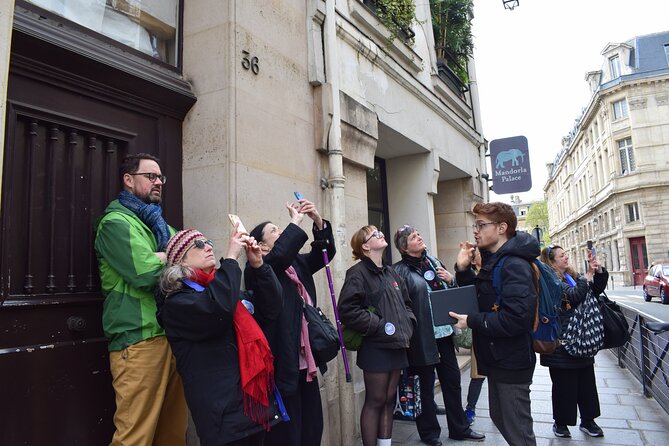
- Bring layers. One departure ran cold and rainy, and the route still went on. A compact rain jacket is a smart move.
- Plan for walking and some steps near Sacré-Cœur. Comfortable shoes are not optional.
- Keep your expectations aligned with the format: exterior views plus storytelling, not lots of paid entry time.
- If you care about a specific angle, ask early. People who got the most out of it asked questions and used the guide’s flexibility.
Should You Book This Paris Jewish Heritage Tour?
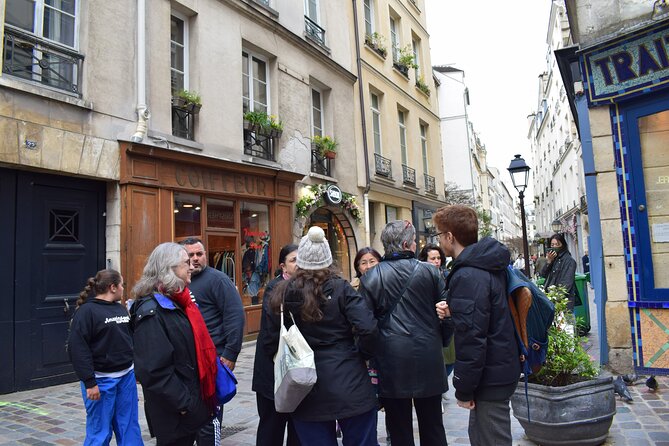
Book it if you want a thoughtful, guided way to understand Jewish Paris across two neighborhoods that could not be more different in mood. Le Marais gives you continuity, institutions, and community survival through time. Montmartre gives you creativity and the human cost behind the art mythology. Ending at the Sacré-Cœur steps turns the postcard view into something more meaningful.
Skip it, or be cautious, if you specifically want synagogue interiors, museum entry time, or a tour that spends most of its minutes on daily life in Le Marais only. Also be aware that the Holocaust memorial stop is included, viewed from outside, and the emotional weight is part of the design.
If your goal is a small-group story-led walk that helps you see Paris with sharper context, this one is an easy “yes.”
FAQ
How long is the Paris Jewish Heritage tour?
It runs for about 3 hours 30 minutes.
What time does the tour start?
The start time is 2:30 pm.
Where do I meet the guide?
Meet at L’Elephant Du Nil, 125 Rue Saint-Antoine, 75004 Paris.
Where does the tour end?
It ends at Square Louise Michel, 6 Pl. Saint-Pierre, 75018 Paris.
Is the tour in English?
Yes, it is offered in English.
Is it a small group tour?
Yes. It is a small-group experience, with up to 12 travelers and designed for a more interactive experience for up to 9 persons.
Do you visit the inside of synagogues?
No. The synagogue visit is exterior only, and indoor synagogue visits are not included.
Do you enter monuments or historical sites?
No. Entry to monuments and historical sites is not included, and the Holocaust Memorial is seen from the exterior.
How do you travel between Le Marais and Montmartre?
You take a short public transfer using included public transport tickets.
What is the cancellation rule?
You can cancel up to 24 hours in advance for a full refund. If you cancel less than 24 hours before the start time, the amount paid is not refunded.
More Walking Tours in Paris



More Tours in Paris




More Tour Reviews in Paris






Not for you? Here's more nearby things to do in Paris we have reviewed












Montmartre Tours, side by side.
 ★ 5.0Montmartre Hidden Gems and Scenic Highlights Walking TourTickets from $382,684 guest reviews
 ★ 5.0Montmartre Hill French Gourmet Food and Wine Tasting Walking TourTickets from $1452,588 guest reviews
 ★ 4.8Montmartre Cheese, Wine & Pastry Guided Walking TourTickets from $1272,255 guest reviews
 ★ 4.9Montmartre Highlights Walking Tour with a Local GuideTickets from $341,668 guest reviews
 ★ 4.1Sacré-Coeur and Montmartre Tour with Expert GuideTickets from $281,027 guest reviews
 ★ 5.0Private Montmartre Food Tour with Wine, Cheese & PastriesTickets from $3021,027 guest reviews
 ★ 5.0Paris Montmartre Food Tour – A Full French Meal by Do Eat BetterTickets from $95877 guest reviews
 ★ 5.0Hidden Montmartre: Paris’ Secret Streets Walking TourTickets from $44809 guest reviews
This tour also belongs to