
Review · PARIS CITY TOURS
Paris: Baguette and French Breads Class
Paris breadmaking turns flour into confidence. In this 4-hour class, I love how you learn the process step by step, starting from basic ingredients and ending with breads you can be proud of. It is interesting because you get a real feel for Parisian technique, not just a quick lesson with a few instructions.
I also really like the small group setup run by Le Foodist, with English guidance from Florence. In the time together you can make multiple breads from scratch, including baguettes plus breads like brioche and ciabatta, and then you sit down as a group to taste what you baked with things like butter and cheese, and even wine. One possible drawback to plan for: since the group is small and you often work in pairs, you may not always control every single step moment to moment, especially during the hands-on mixing or the oven moments.
Key things that make this bread class worth your time
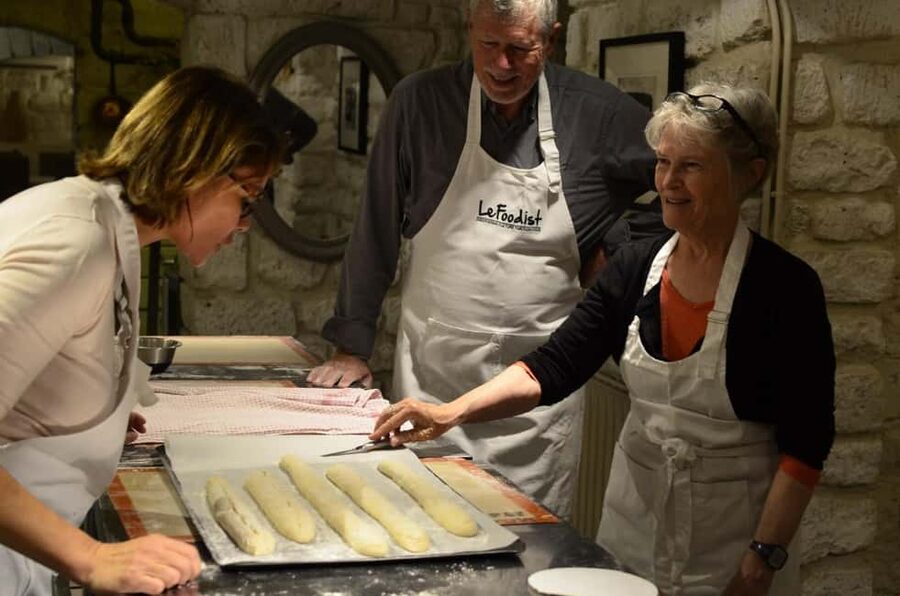
- Small group, up to 8: more attention when your dough needs help.
- Florence teaches the why: not just the what, especially around timing and dough feel.
- You bake real breads: baguettes plus richer styles like brioche, and breads like ciabatta.
- Learning shaping is the main event: tension for baguettes, rolling technique for brioche.
- Proofing, resting, and signing: you learn how timing and surface prep affect the oven results.
- Take-home payoff: you leave with a bag full of what you made.
Paris-Style Breadmaking: What You Actually Do in 4 Hours
This is the kind of class where your hands stay busy. The goal is not to watch someone else bake while you take notes. You start with four basic ingredients, and you work through the whole chain: mixing dough, letting it rise, shaping, and finally baking.
What makes it feel very Paris is that the lesson focuses on technique and control, not shortcuts. Baguette making is all about tension, proofing timing, and oven-ready dough. Brioche is softer and more forgiving in some ways, but it still has rules, especially around shaping and handling. Ciabatta adds its own feel, with dough that behaves differently than a classic baguette dough.
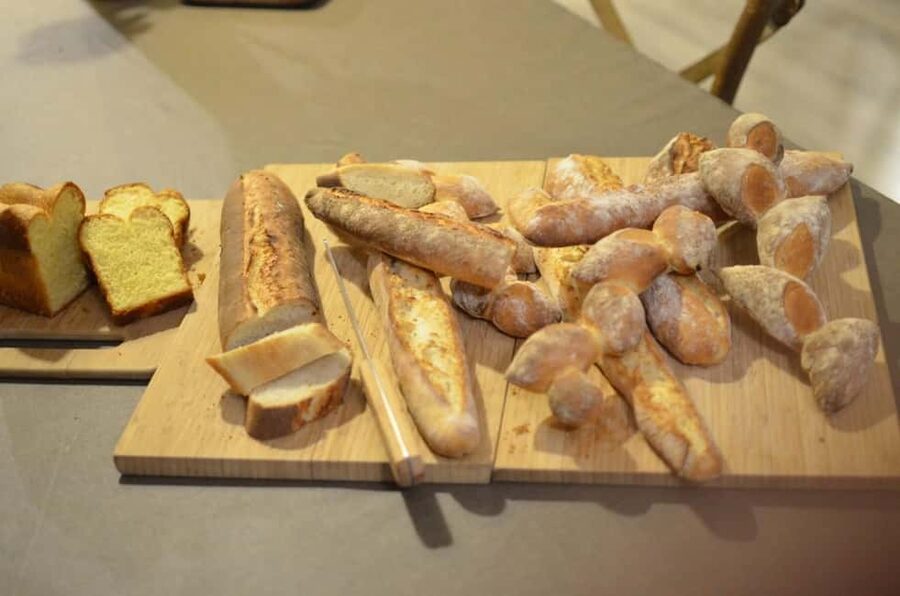
At the end, you do not just receive a small sample. You taste what you baked, and you also take home a bag full of your creations so you can share later.
More Paris tours and experiences for the shortlist


Your Dough Plan: Flour, Water, Salt, Yeast, and Timing
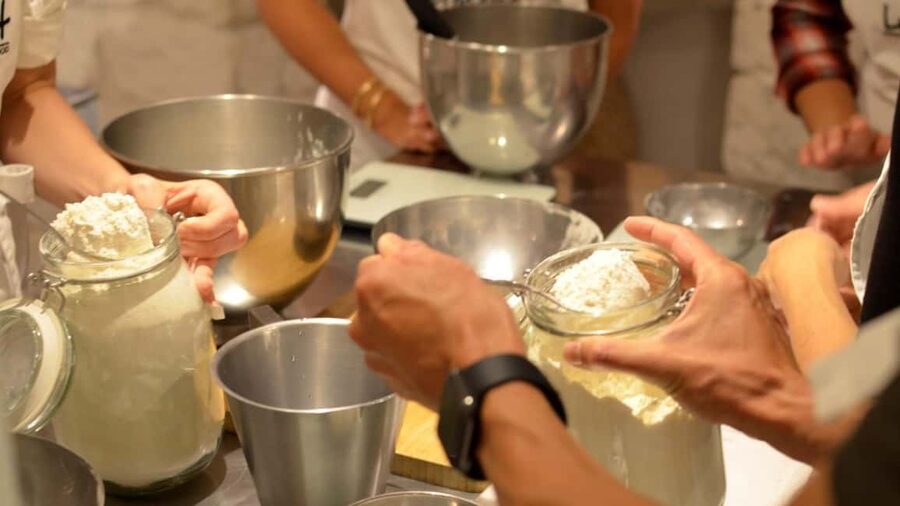
The class starts the practical way: flour, water, salt, and yeast. That matters because everything you do later is built on how these four work together.
You will measure, then mix your doughs. This is where the class teaches you to pay attention to what you are aiming for. The instructor’s guidance is not just about following steps, it is about recognizing the dough’s feel as it comes together. You also learn basic do’s and don’ts, because bread dough can look fine and still behave wrong after proofing if you rushed a step or handled it roughly.
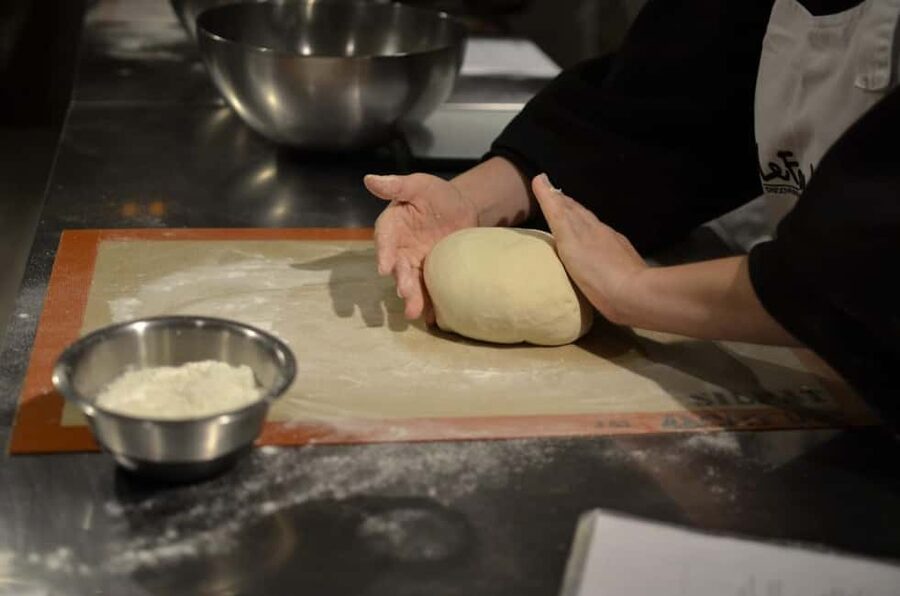
Then comes proofing. Proofing is the bread’s breathing phase. You let the dough rise, and the class teaches you how that rise connects to what happens next. After proofing, you deflate before shaping, which sounds simple but changes the dough structure. You do not just smash it, you learn how to manage it so it still has energy for shaping.
The bigger takeaway here is timing. Bread is schedule-sensitive. If you proof too long or shape too early, the oven results change fast. In a 4-hour class, the instructor keeps the rhythm, but you also learn what you are watching for.
Mixing and Shaping Techniques: Baguette Tension to Brioche Rolling
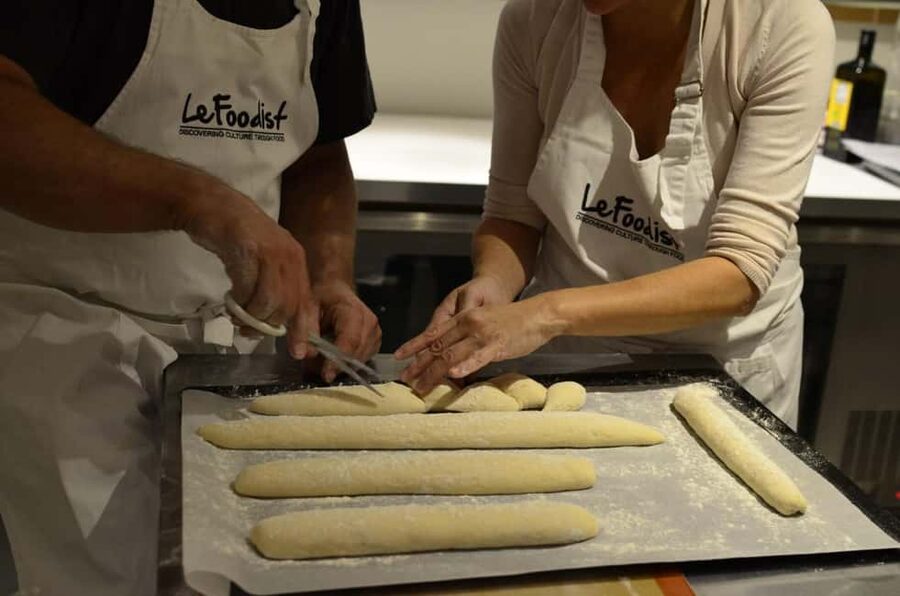
Shaping is where the class becomes more than just bread science. It becomes craft.
For baguettes, tension is critical. That means you learn how to shape so the surface holds the right tightness. In practical terms, you are aiming for dough that can expand and form the right structure in the oven, not dough that slumps. The instructor shows the method, then helps while you shape so you can feel the difference between a shaped loaf that is ready and one that is not.
For brioche, the technique changes. Instead of baguette tension, you focus more on rolling and forming. Brioche dough tends to be richer and can behave differently than a lean dough. Rolling and shaping technique helps you guide the dough into a form that bakes evenly and looks like the classic style you came to learn.
If your class includes ciabatta, you will also see how shaping expectations differ from baguettes. Ciabatta often asks you to respect a softer, more relaxed dough feel. The point is that French bread is not one technique. It is a set of techniques, with different rules for different styles.
Proof, Rest, and Sign: The Moment Before the Oven
Once your dough is shaped, you do not go straight to baking. You proof again and rest again, and you learn that bread needs pauses. Each pause affects texture.
One of the more unique parts of this class is the “signing” step. You are guided to “sign” your bread before it goes into the oven. This is aesthetically important, but the class also treats it as functional. The surface prep you do beforehand helps the bread open in the oven the way it should.
This is one of the reasons I think this class works better than a basic bread demo. You see that a loaf’s appearance is not random. The surface marks connect to how the dough expands under heat.
Baking Like You Mean It: Temperature, Time, and Humidity
Then it is oven time. And this is where the class gets real, because baking results are not just “the recipe.” The instructor highlights that temperature and time matter, and so does humidity.
Humidity sounds like a detail until you have a loaf that did not come out the way you expected. That is why this class is valuable even if you are not planning to bake daily at home. You leave understanding that ovens behave differently and dough behaves differently. That knowledge helps you troubleshoot later instead of repeating the same mistake.
Baking also brings the sensory payoff. Your apartment kitchen can smell nice, but a bread oven routine has a specific aroma and crackle. In a class setting, you get to see and taste the results immediately, which makes learning faster than reading instructions later.






Taste What You Make: Cheese, Jam, Wine, and Pain Perdu
At the end, you taste your breads. This is not a small afterthought. It is part of learning.
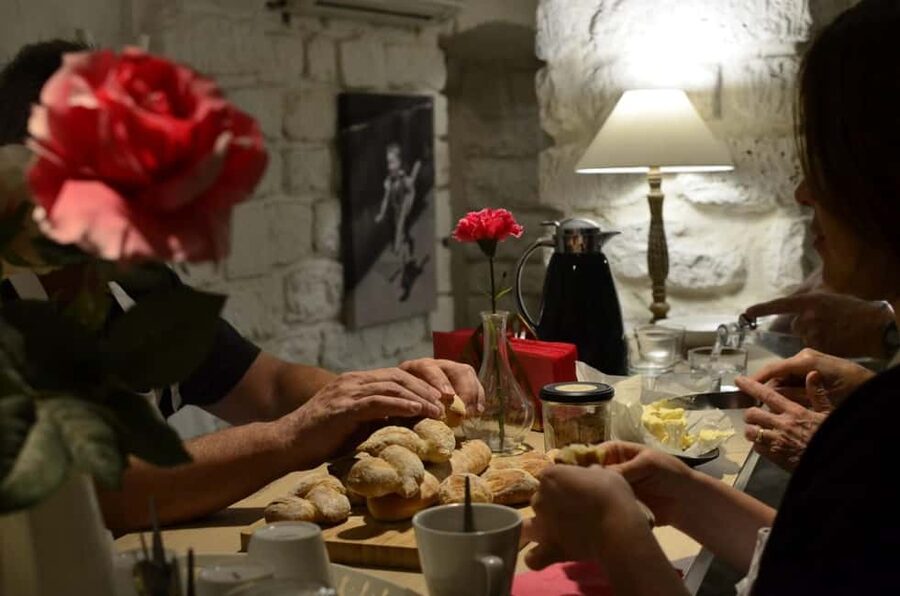
The class includes tasting with French cheese and jam, and there can also be options like enjoying a type of cooking bread such as pain perdu. In one example of how the ending can feel, the group sits together to enjoy their breads with butter, cheese, and wine. Even if your ending pairing is different, the structure is consistent: you get to eat what you baked, right there in the class.
This matters because bread tastes different when it is fresh and warm. You can also better connect technique to flavor and texture. A baguette with the right bake will crack and release aroma differently than one that baked a little too cool. Brioche that is shaped correctly tastes richer and more even. Once you taste side by side, technique stops being abstract.
Small Group Setup: Working in Pairs (and Getting Real Help)
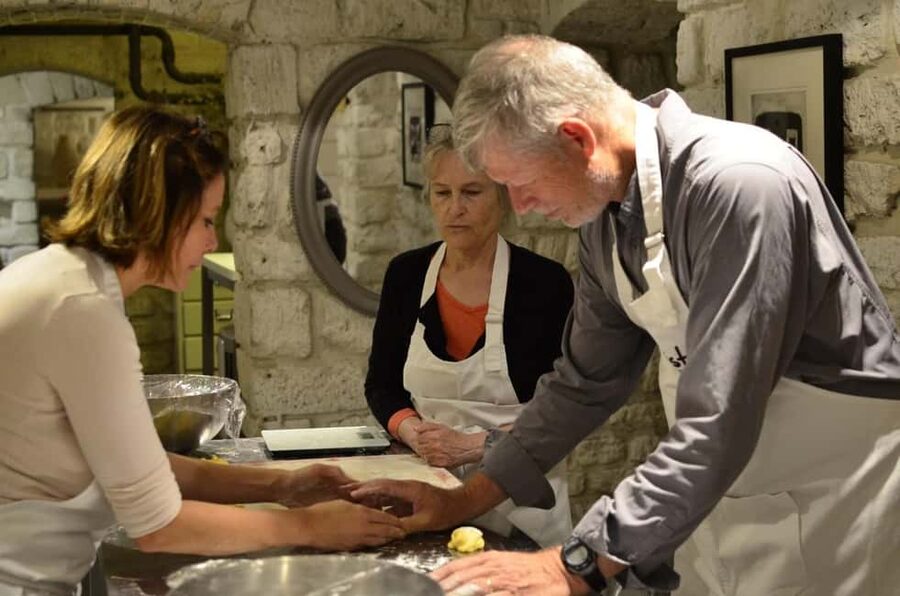
This class is limited to 8 participants, and you typically work in pairs. That is a plus because it keeps the instructor focused, and it creates a social rhythm. You also end up sharing the results, since you eat what you make as a group.
There is a practical tradeoff. If you want full control of every motion, pairing can feel limiting. One review I found especially helpful pointed out that you may want more hands-on time, such as watching dough mixing, observing the bakes in the oven, or seeing exact ingredient weights more clearly. If that kind of detail matters to you, it is worth showing up ready to ask questions and to watch carefully during every step.
Still, the overall feedback is that Florence is a strong teacher and helps you achieve good results. In other words, you are not just thrown into dough and left to guess.
Price and Value: Is $175 Worth a 4-Hour Baking Lesson?
$175 per person sounds like a splurge until you break down what you are paying for.
You get:
- a 4-hour instructor-led class in English
- small group attention for up to 8 people
- hands-on breadmaking from basic ingredients
- multiple bread styles, such as baguettes plus breads like brioche and ciabatta
- time to taste what you make
- a bag full of creations to take home
In a cooking class, you are paying for technique, timing coaching, and the right environment. Bread is tricky, and it rewards fast feedback. When you are learning shaping and proofing, one small error can show up later in the oven. The instructor’s guidance reduces guesswork.
If you bake at home already, you might say you are paying for momentum and correction. If you do not bake much, you are paying for a practical introduction that you can actually recreate later.
For me, the value comes from the full process. You are not getting a shortcut. You are learning how each stage affects the next.
Who This Class Fits Best
This is a great choice if you:
- want a hands-on food experience in Paris that goes beyond tasting
- love bread and want to understand the differences between baguette, brioche, and breads like ciabatta
- want a small group setting where you can ask questions and get feedback
It may be less perfect if:
- you expect to do every step solo without sharing tasks with a partner
- you mainly want to watch experts rather than work dough yourself
- you are looking for a long sit-down meal experience, since the core is the baking work and the tasting that follows
That said, even with pairing, the overall structure is designed to keep you working. You leave with real bread, not just memories.
Should You Book This Paris Baguette and French Breads Class?
If your idea of a perfect Paris day includes flour on your hands and a loaf you baked yourself, I would book it. The strong points are clear: a small group of 8, teaching led by Florence, and a step-by-step path from mixing and proofing to shaping, signing, and baking. Add the fact that you take home a bag full of what you made, and it is not just an experience, it is food for later.
My main caution is about expectations for “solo control.” Because you work in pairs, you might not be hands-on at every exact moment. If that is a dealbreaker for you, ask how the instructor splits tasks in your session before you commit.
If you can go with a learning mindset and stay ready to ask questions, this class is a fun, practical way to understand why Paris bread feels different.
FAQ
How long is the Paris baguette and French breads class?
The class lasts 4 hours.
How much does it cost per person?
The price is $175 per person.
How big is the class group?
It is a small group limited to 8 participants.
What language is the instructor?
The class is taught in English.
What breads will I make?
You will make baguette and French breads. Based on the class experience described, you may make baguettes along with brioche and ciabatta, and there can be tasting with options like pain perdu.
Will I take home what I bake?
Yes. You leave with a bag full of your creations to share or enjoy later.
Do we get to taste the breads during the class?
Yes. There is a time to taste the breads, with pairings such as French cheese and jam, and sometimes other options like butter and wine.
What is included in the price?
The cooking class is included.
Is free cancellation available?
Yes. You can cancel up to 24 hours in advance for a full refund.
Is reserve now and pay later available?
Yes. You can reserve now & pay later, meaning you book your spot without paying today.
More Workshops & Classes in Paris



More Tour Reviews in Paris



Not for you? Here's more nearby things to do in Paris we have reviewed












Paris City Tours, side by side.
 ★ 4.6Louvre Museum Timed-Entrance TicketTickets from $2671,977 guest reviews
 ★ 4.6Disneyland® Paris 1-Day TicketTickets from $6149,412 guest reviews
 ★ 4.6Versailles Palace and Gardens Full Access TicketTickets from $1741,579 guest reviews
 ★ 4.6Arc de Triomphe Rooftop TicketsTickets from $1834,264 guest reviews
 ★ 4.7Orsay Museum Entry TicketTickets from $1525,647 guest reviews
 ★ 4.4Evening River Cruise with MusicTickets from $2722,721 guest reviews
 ★ 4.4Eiffel Tower Entry Ticket with Optional Summit AccessTickets from $2920,035 guest reviews
 ★ 4.3Eiffel Tower Summit or Second Floor AccessTickets from $5917,248 guest reviews
This tour also belongs to