

Review · PARIS CITY TOURS
Paris 1920: Lost Generation Writers of the Left Bank (Small Group Walking Tour)
The Lost Generation route is a real Paris story.
This small group Left Bank walk, led by Ellen, connects World War I context to the writers who shaped 1920s literary life, with a tablet full of photo and video support. I especially like how the pacing leaves room to ask questions, and how the stop choices are tied to specific turning points for authors you think you already know. One thing to consider: you spend a good chunk of time outside, looking at locations rather than touring inside buildings.
Two highlights for me are the literary power spots around Shakespeare and Company and the Hemingway and Joyce connections that land in very walkable distances. The finish in Montparnasse is also a smart touch, because the tour ends where the social energy of the era is part of the story, not just the biography. Still, if you want a deep, author-by-author reading of every major work, this format covers many names in three hours, so it can feel like a focused overview rather than a long sit down.
Key points at a glance
- Small group size (maximum 8) makes it easier to get answers as you walk
- Tablet-led photos and video bring writers and moments to life
- Left Bank route includes major names plus attention to lesser-known voices
- A café opening with coffee sets a calm, story-forward tone
- Montparnasse café ending ties literature to the nightlife side of the decade
- Mostly outside stops means comfortable shoes matter more than ticketed venues
Paris 1920s on foot: why this Lost Generation tour feels different
Paris in the 1920s is often sold as a vibe. This tour turns the vibe into locations, with the point of each stop explained as you move. That matters, because the Left Bank can blur together once you are focused on streets and signage.
I like that the tour does not treat the authors like museum glass. It links World War I involvement, expatriate life, publishing culture, and the social world around cafés and bookstores. You are not just hearing names. You are getting the why behind where they ended up.
You will also notice the tour is built for conversation. Ellen uses a tablet to show excerpts and archived visuals, but she also answers questions along the way. That is a big deal on a walking tour, because literature talks can go in unexpected directions, especially if you are a book person.
The only real drawback I see from the format is that you are outside for much of it. The sights are important, but it is not a “go inside famous apartments” kind of experience. If you hate standing and want lots of timed breaks, you might feel the walking more.
You can also read our reviews of more walking tours in Paris



Start at Rue Lacépède: coffee, WWI context, and meeting the cast
The tour begins at 57 Rue Lacépède (75005) at 2:00 pm. The first stop is at a café, and the tone is relaxed and practical: you get a short introduction to the Lost Generation writers and how World War I shaped their lives and work.
It is a smart way to start. Too often, a literature tour jumps straight to the glamorous decade and skips the pressure cooker that preceded it. Here, you get that “before” story early, so the later stops about expatriate life and publishing choices land with more meaning.
There is no ticket admission required for this start, but the café coffee is up to you. Plan to buy a drink if you want to match the tour flow. I like that you do not feel forced into anything, but the welcome coffee gives you a calm launch point before the street walking starts.
This is also where you can set your expectations. The tour covers multiple authors, so you get selected details rather than a full biography lecture. If you have a top two or three names, this opening is the moment to listen for the threads tied to them.
Rue Mouffetard: Hemingway’s early flat and Joyce finishing Ulysses
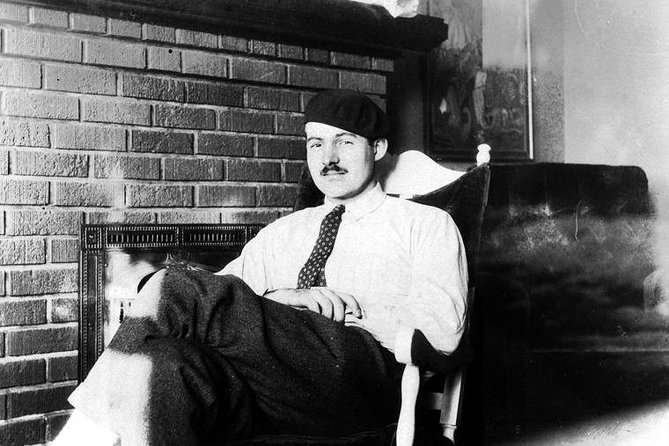
From the initial café, you move to Rue Mouffetard for a shorter stop (about 10 minutes). This is one of the tour’s best “click” moments because it ties street-level Paris to two cornerstone literary figures.
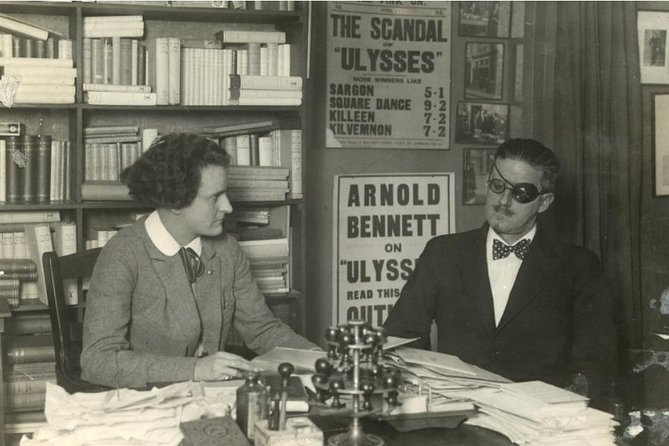
You will look at the first flat where Ernest Hemingway lived in Paris, and you will also connect that area to James Joyce as he finished Ulysses. The tour frames it in a way that is more than trivia. Joyce finishing Ulysses “in the face of much opposition” adds friction to the story, so it feels like part of a lived battle, not a neat timeline checkbox.
A quick note on how to get the most out of this stop: keep your phone put away and actually watch the street. Rue Mouffetard is compact and lively, and it is easy to drift into “this looks nice” mode. Ellen’s tablet and excerpts help you re-center on the author details, but your eyes still need a second to lock onto the right angle of the street.
If you are a Hemingway or Joyce fan, this is likely the stop where your memory of reading starts to overlap with the map in your head. Even if you are not a hardcore specialist, these are names almost everyone recognizes, and the tour uses them as doorways into the era.
Odeon and the original Shakespeare and Company: publishing as a meeting place
Next is Odeon, where you visit the original location of the famed Shakespeare and Company (about 15 minutes). This stop is free to view, and the value is how the tour explains the bookstore as a cultural engine.
You learn why this shop functioned as a second home for writers such as Hemingway, Pound, Stein, and especially Joyce. That idea matters because it changes how you see a bookstore. It is not just where books got sold. It is where writers built networks, argued about work, and found support.
A particularly useful detail here is the connection to Sylvia Beach, who published Ulysses. Even if you have only a surface knowledge of Beach, this stop gives you a clear reason to remember her as part of the Lost Generation story, not just a footnote.
In practical terms, think of this as your “Paris literary infrastructure” stop. Streets and buildings are the backdrop, but the bookstore explains how literature traveled between people.
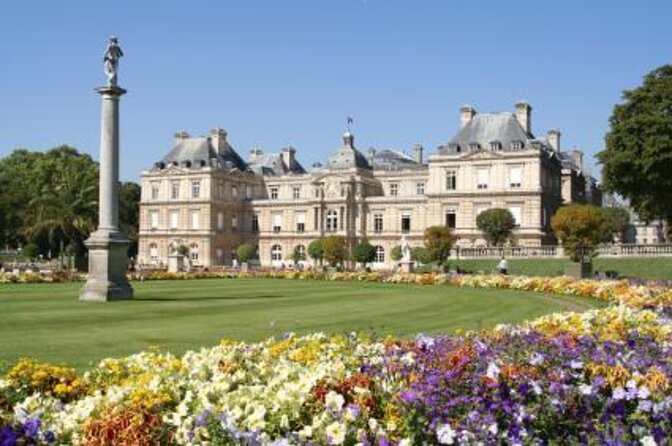
Rue Servandoni near Luxembourg Gardens: homes, art worlds, and the author web

Your fourth stop is Rue Servandoni, around the Luxembourg Gardens area (about 30 minutes). Here the tour expands from writers into the wider creative orbit, including visual artists and the social overlap between art and literature.
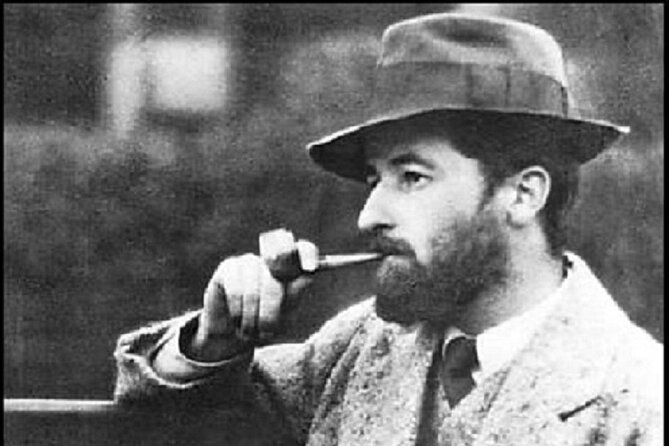
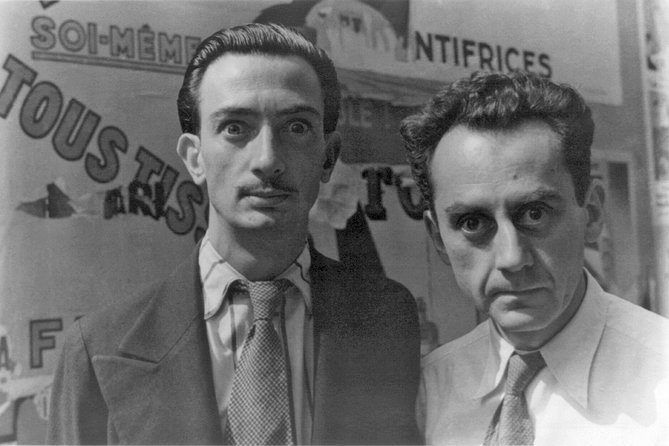
You will see locations tied to Man Ray and William Faulkner, and the route also brings Hemingway back into the conversation. That repetition is not a mistake. It shows you how authors were not moving in straight lines. People circulated, neighborhoods overlapped, and creative life clustered in pockets rather than following neat boundaries.
This is also the part of the tour where the structure can start to feel “small but dense.” You are stopping at several key points in a limited time. If you like to take photos, do it lightly. The best payoff comes when you listen to the connections Ellen makes between the places and the relationships behind the work.
One of the tour’s strengths, based on how it is described by readers, is attention to both the big names and some lesser-known voices. You may hear about writers beyond the usual top-tier trio, including women authors such as Anaïs Nin and Alice Prin. That kind of mix helps you leave with a broader sense of who shaped the decade, not just a list of male legends.





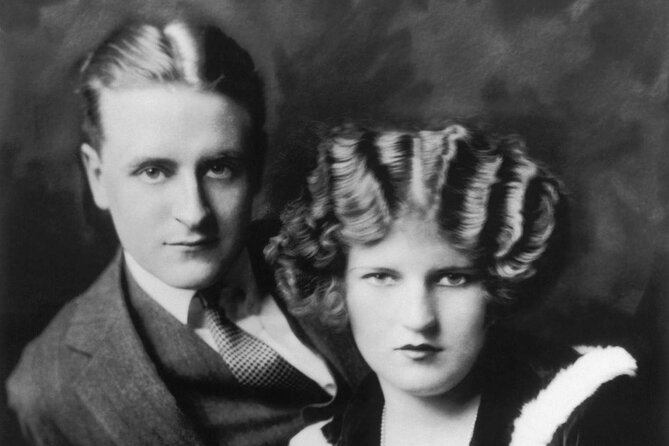
Montparnasse café ending: Fitzgerald, Pound, and Stein, with a social angle
The tour wraps up in Montparnasse (about 30 minutes) at one of the listed café options, most specifically Le Select (99 Bd du Montparnasse, 75006). Other possible ending spots include places like La Rotonde or Le Dome, or Harry’s NY Bar near the Opera.
This ending is more than a pleasant finish. It is where the tour ties the writers’ creative life back to the nightlife and party side of the 1920s. Ellen discusses the Fitzgeralds, the complicated story that followed them, and the way ambition and consequence tangled together.
You also hear about Ezra Pound with the split-lens approach the tour uses: talent on one side, and his political views on the other. The same kind of balanced framing shows up with Gertrude Stein, described as controversial, not sanitized.
If you want a small “Paris moment” at the end, this is it. You are invited to enjoy a drink. The drink itself is not listed as included, so budget for it if you plan to take part.
And this is where the tour’s tone often clicks. You started with coffee and wartime context, you walked through publishing and creative homes, and you end with the social machine. That arc gives you a clearer picture of why the Lost Generation felt so loud, so fast, and so fragile.
Ellen’s tablet-led storytelling: photos, video, and book excerpts that actually help
A big practical difference here is the use of a tablet during the walk. Ellen uses it to show photo and video documentation and excerpts from each author. That means you are not relying on memory alone while you stand on a Paris street.
From the way the experience is described, the tablet presentation is not a random slideshow. It supports the stop-by-stop stories with visuals and short passages, which helps the authors feel connected to real moments rather than floating as abstract “literary figures.”
I also like that this helps on days when your brain is already overloaded from travel. Paris walking can get tiring fast, and it is easy to zone out. The tablet keeps the information moving, but you still have the option to ask questions.
There is a hint of personal warmth in the delivery as well. Ellen is described as using a good sense of humor, and there is even a mention that she has a dachshund named Axel and that you might get to hold him if conditions are right. That kind of small human detail does not change the academic facts, but it does make the tour feel friend-led rather than lecture-led.
Price and value: what $120.14 buys you in the real world
At $120.14 per person, this is not the cheapest way to do a Left Bank walk. But you are paying for a specific combo: small group size, guided storytelling, and tablet-supported media, plus a route designed around major literary sites.
The group limit of up to 8 people is one of the clearest value signals. Larger group tours usually mean less interaction, fewer chance to ask follow-ups, and faster pacing. Here, the tour is set up for questions, and that is where the experience can feel worth the money, especially if you care about relationships between authors and the publishing world.
The other value driver is the format. You are not just walking between random landmarks. Each stop is tied to a particular author moment, and the guide uses excerpts and visuals to connect that moment to the work itself. That reduces the mental effort of “imagining what happened here,” which you otherwise end up doing on your own.
If you are on a tight budget, you might decide to recreate part of the route independently. But you will likely still end up seeking a guide for the context, because the connections between Hemingway, Joyce, Beach, Stein, and Pound are hard to see on your own in a quick glance.
Who this tour fits best, and who might prefer a different pace
This tour is a strong match if you want a guided way to experience Paris 1920s literature while walking through the Left Bank and ending in Montparnasse.
It also suits you if you enjoy hearing the human side of writers: where they lived, who they mixed with, how publishing spaces worked, and how social life fed the writing. The tour’s stop choices support exactly that.
The moderate physical fitness note matters. You should be comfortable walking for most of three hours and standing for short timed stops. The good news is the pace is described as leisurely by multiple people, and it is not a sprint through the city.
The part that could be frustrating for some is how concentrated the author coverage is. It is not built for exhaustive deep dives on every major writer, and some people prefer longer breaks. If you need frequent seating time, you might want a tour with more café stops.
And if you expect the tour to include lots of inside visits, adjust your expectations. This is about the story in place, so you are mostly outside looking at locations connected to the authors.
Should you book this Lost Generation Left Bank tour?
Yes, if you want a small group, story-forward walk that connects the Lost Generation to real addresses and real publishing spaces. I think it is especially worth it when you care about Hemingway and Joyce, because those two anchors drive some of the most memorable stops. It is also a good choice if you like a guide who answers questions and uses visuals, not just spoken facts.
You might skip it if you hate walking between brief outdoor stops or if your goal is a long, work-by-work literary lecture with tons of seated time. In that case, you may prefer a more discussion-heavy class or a different walking route style.
If your ideal Paris day is calm, curious, and bookish, this one is a solid bet.
FAQ
How long is the Paris 1920 Lost Generation Left Bank walking tour?
It runs about 3 hours.
What is the group size for this tour?
The tour has a maximum of 8 travelers.
What is included in the price?
The ticket includes a local guide and use of a tablet for photo and video documentation and reading excerpts. A mobile ticket is also provided.
Where does the tour start and where does it end?
It starts at 57 Rue Lacépède, 75005 Paris and ends in Montparnasse at one of the listed options, including Le Select (99 Bd du Montparnasse, 75006), La Rotonde, Le Dome, or Harry’s NY Bar near the Opera.
Is food or drink included?
No food or beverage is included. At the end, you are invited to enjoy a drink, but it is not stated as included.
What is the cancellation policy?
Free cancellation is available up to 24 hours in advance of the experience start time for a full refund.
More Walking Tours in Paris


More Tours in Paris



More Tour Reviews in Paris


Not for you? Here's more nearby things to do in Paris we have reviewed









Paris City Tours, side by side.
 ★ 4.6Louvre Museum Timed-Entrance TicketTickets from $2671,977 guest reviews
 ★ 4.6Disneyland® Paris 1-Day TicketTickets from $6149,412 guest reviews
 ★ 4.6Versailles Palace and Gardens Full Access TicketTickets from $1741,579 guest reviews
 ★ 4.6Arc de Triomphe Rooftop TicketsTickets from $1834,264 guest reviews
 ★ 4.7Orsay Museum Entry TicketTickets from $1525,647 guest reviews
 ★ 4.4Evening River Cruise with MusicTickets from $2722,721 guest reviews
 ★ 4.4Eiffel Tower Entry Ticket with Optional Summit AccessTickets from $2920,035 guest reviews
 ★ 4.3Eiffel Tower Summit or Second Floor AccessTickets from $5917,248 guest reviews