

Review · LOUVRE MUSEUM TOURS
Murders and Mysteries of the Louvre Museum
The Louvre has a darker side. This Louvre murder-and-mystery tour threads medieval fortress leftovers with the museum’s biggest artworks, and I like two things a lot: the story-driven route and the way it helps you see more than just the crowd magnets. One possible drawback is that the halls are loud, and guide English clarity can vary, so you may need to stand close to hear.
You meet at the Louvre Pyramid area, after security has done its thing but before your ticketed entry. I also like the small group limit of 8 people, because it keeps the experience from turning into a human traffic jam. After the 2-hour guided part, your ticket lets you stay inside and explore on your own.
You’ll move through scenes that connect art to real-world scandal and fear, starting with the medieval royal castle remnants and moving into the museum’s major collections. Expect stops that include the Egyptian collection, Venus de Milo, the crown jewelry collection, French masterpieces, and the Mona Lisa, plus darker context tied to iconic works and even rumored magic and rituals in the ancient galleries.
Key highlights to know before you go
- Medieval fortress storytelling: You see the Louvre not just as a palace of art, but as a former stronghold with grim origins.
- Egyptian galleries with mystery themes: You get context for long-forgotten rituals and the kinds of beliefs people projected onto the ancient world.
- Famous masterpieces with added bite: Venus de Milo and the Crown Jewels come with the backstory you usually skip when rushing through.
- Mona Lisa, approached like a puzzle: You’ll be guided to interpret her expression in a new way, not just snap a photo and move on.
- 2 hours that actually fit the Louvre: It is a focused hit list, plus enough time to wander afterward if you want.
Entering the Louvre Pyramid with a crime-scene mindset

The Louvre can feel like a maze even when you know what you want to see. This tour reframes the museum as a place where secrets were kept, crimes happened, and power shifted hands, sometimes violently. That theme matters because it gives your eyes a reason to slow down.
I like that the route is not just, here are the famous rooms, go enjoy. Instead, the guide connects what you’re looking at to the Louvre’s medieval beginnings as a fortress and its later life as a royal residence. That shift helps you notice details you’d otherwise pass by, like how the old castle bones show up inside a museum built around art.
The vibe is part history lesson, part spooky story, without turning into a cheesy haunted attraction. You still get the art, but the setting feels sharper, like you’re reading a mystery where the clues are carvings, symbols, and the way a scene is composed.
You can also read our reviews of more museum experiences in Paris



Where to meet and how to start without losing time
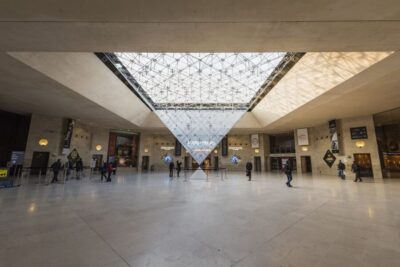
Meet your guide under the Louvre Pyramid area, specifically at the Statue of Louis XIV in front of the Louvre Pyramid on Rue de Rivoli, 75001 Paris. Your voucher lists the precise meeting point, but that landmark is the anchor you can aim for.
One timing detail makes or breaks the start: you meet your guide after the security check but before the ticketed entrance. That means you do not get full “skip everything” treatment, so factor in that security still happens. The good news is that once you’re through security, the guide helps you move faster than you would alone.
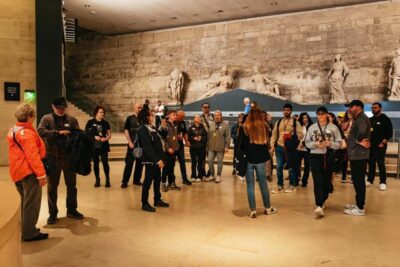
Group size stays small, limited to 8 participants. In a building this size, “small” is not a brag, it’s a practical advantage. It helps you keep up with turns, stairs, and the guide’s pace, and it reduces the chance that you end up chasing the group through a crowded hall.
The medieval remnants: the Louvre’s old walls tell the story
A huge part of why this tour works is that it starts with the Louvre’s physical origin. You get to see medieval remnants of the former royal castle, the kind of stone-and-structure leftovers that make the building feel older than its reputation.
When a museum is at its most famous, it’s easy to forget it was once a fortress. Here, that fortress idea is more than trivia. It shapes how you interpret spaces, corridors, and the overall layout, because you’re imagining the Louvre as a controlled place built for defense and power.
You’ll also hear about betrayal, scandal, and murder that took place in these halls over centuries. That subject is heavy, but the way it’s used is practical. It gives weight to the artwork you’ll see later, especially pieces where scenes of fear, power plays, or moral shock are central.
If you like your art history with a storyline, this is where the tour grabs you. It’s also the section where you can mentally switch from tourist mode to detective mode.
Egypt, rituals, and the long shadow of ancient belief
The Louvre’s Egyptian collection is enormous, and most visitors feel either overwhelmed or under-informed. On this tour, you don’t try to cover everything. You focus on the kinds of themes that make Egypt feel mysterious even to modern eyes.
You learn about magic and long-forgotten rituals in the ancient world, presented as ideas people used to explain life, death, and protection. That matters because it changes how you look at objects. Instead of seeing only decorative artifacts, you start thinking about function and belief.
The Egyptian section is also a nice pacing break. After medieval walls and royal intrigue, it’s a different kind of darkness, more spiritual than political. You go from human betrayal to the ancient attempts to manage fate.
If you’re the type who normally says, I don’t know what I’m looking at, this tour helps you. It gives you a lens, so you can walk away feeling like you understood why the objects mattered, not just what they are.
Venus de Milo and the crown jewelry: famous stops, sharper context
It’s hard to talk about the Louvre without mentioning Venus de Milo. Here, you’ll see her as more than a single iconic statue in a room full of camera flashes. You’ll get context that connects the piece to the larger language of French art and the museum’s collecting story.
Then you move toward the crown jewelry collection, the kind of display that makes you instantly understand why royalty loved symbols. Jewelry is power you can wear. It’s identity you can flash in public. And in a museum that’s already framed as scandal-adjacent, it fits the theme perfectly.
The crown-jewels stop also gives you a new way to think about craftsmanship. Even if you have limited time, you’ll learn what to look for, like materials, design choices, and how objects communicate status. That’s the difference between seeing a display and truly registering it.
French masterpieces come next, and the tour uses the same approach: connect the work to the world around it. You learn how techniques and relationships between artists can shape what you see, including how stories are built inside a painting or sculpture.
This is one of the most praised aspects of the experience: guides who explain not just what is famous, but how pieces work and how different works talk to each other. The result is that you come away with more than a checklist.





The ancient world’s darker stories in iconic works
The tour leans into mystery and horror in a way that stays tied to art. Instead of treating the subject like shock value, the guide connects dark events to iconic works and the scenes those works depict.
You’ll hear how the Louvre collections carry backstories, some strange, some horrifying, that shaped the way people viewed the world at the time those works were made. That perspective helps you see why certain scenes feel tense, why expressions look the way they do, and why symbols show up repeatedly.
In the most memorable moments, the guide basically turns the gallery into a script. You’re not just standing in front of a painting, you’re following a sequence of motives, fear, and consequence. It’s a practical storytelling method, because it makes huge rooms feel navigable.
One careful consideration: the tour is still in the Louvre. It is crowded, loud, and busy. If your hearing is even slightly sensitive, position yourself where you can hear. In reviews, some guests noted that guide audio could be difficult in a loud environment, and you do not want to miss the story beats that make this tour different.
Mona Lisa with a puzzle approach, not a selfie race
Yes, you’ll see the Mona Lisa. But the key is how you see her.
Instead of treating her as a mandatory photo stop, the tour encourages you to understand her enigmatic smile from a new angle. That means you’re paying attention to expression and presentation in a more structured way, so the famous face becomes a mystery you can actually think through.
This part is especially valuable if you already know the basic mythos. You can still get something out of it because the guide doesn’t just repeat the headline facts. You’re led to look for interpretation cues, and that changes the feel of the visit.
Also, the time advantage matters. The Louvre is so large that many visitors only have seconds where they’d rather have minutes. A guided approach helps you spend real attention on one of the most crowded works on earth.
How the 2-hour plan fits the Louvre’s size and your energy
Two hours in the Louvre sounds short, but it’s the right length if you are trying to avoid wasted wandering. This tour gives you a focused route through some major collections, plus the medieval framing that makes the museum feel cohesive.
The format also gives you an exit strategy. After the guided part ends, your ticket allows you to stay and explore the rest at your own pace. I like having that flexibility, because once you learn what kinds of stories the guide uses, you can spot similar themes as you roam.
Here’s the practical mindset I’d suggest: use the tour for orientation and interpretation, then use your remaining time for choice. If you loved Egyptian themes, you can go back for more. If you wanted extra time with French art, you can follow that thread.
Because the group stays small, you’re not stuck doing the slowest possible version of a highlights tour. You also avoid the most common solo problem, which is getting distracted and losing the plot halfway through the museum.
Price and value at about $200 per person
At $200 per person, this is not a budget add-on. So the question is what you’re buying.
You’re paying for a live guide, small-group pacing (max 8), and museum entrance fees included in the ticket price. You also get skip-the-line access for museum entry, which can save time in a building where long lines can eat your day.
The skip-the-line detail matters: it does not include the queue for the security check. So, you should still plan for at least some waiting at the start. Once you’re through security, though, the guide’s handling of the route and timing is where you feel the value.
Is it worth it? For me, it’s a strong choice if you want meaning, not just famous rooms. If you already know you prefer to roam independently with a self-guided plan, you might skip this. But if you’re the kind of visitor who wants your time in the Louvre to come with stories and direction, the price can make sense fast.
What to bring, what not to bring, and how to stay with the group
Bring a passport or ID card. The tour also has a size limit for what you can bring inside: items exceeding 55 x 35 x 20 cm are not permitted in the museum.
For most people, the practical takeaway is simple: travel light. Leave luggage behind, or plan for a small bag that fits the size rule. This isn’t just for convenience. It’s also about avoiding delays at entry and making it easier for the guide to keep the group moving.
In a crowded Louvre, staying together is real work. Some guests noted that it can be tricky to keep everyone together in dense crowds. Your best defense is awareness. Stand where you can see and hear the guide. If you need a bathroom break, make sure it’s done before you fall behind.
Also, if you struggle with spoken English in noisy places, consider positioning yourself near the guide from the start. The tour offers English and French, but the environment can still make audio hard to catch.
Who this tour suits best
This tour fits best if you want two things at once: major Louvre highlights and a darker narrative thread that connects rooms and objects. It’s ideal for first-timers who feel overwhelmed and want a smarter path than a random loop.
It’s also good if you like story-based art interpretation. The combination of medieval origins, royal scandal, and mystery themes gives you a lens that makes the museum feel less like disconnected rooms.
If you have very limited patience for crowds and prefer quiet, you may find the Louvre itself challenging no matter what. But within that reality, the small group format and guided route help you keep your momentum.
Should you book this Louvre murders and mysteries tour?
Book it if you want your Louvre visit to feel like a guided investigation. You’ll see the big names, but with added context: medieval fortress remnants, Egyptian ritual themes, and interpretive takes on works like Venus de Milo and the Mona Lisa. If time is tight, the 2-hour format is also a big plus, and you still get to stay inside afterward.
Skip it if you know you prefer to wander slowly, pin every object you like, and build your own route from scratch. In that case, the Louvre might be better with a self-guided plan and extra time.
If you do book, I’d go in with one mindset: treat the tour as orientation plus story. Then use the rest of your time inside to chase what grabbed you, rather than trying to see everything.
FAQ
How long is the Louvre murders and mysteries tour?
The duration is 2 hours.
Where do I meet the guide?
Meet your guide at the Statue of Louis XIV in front of the Louvre Pyramid, Louvre Museum, Rue de Rivoli, 75001 Paris, France. The exact meeting point is confirmed on your voucher.
Is skip-the-line entry included?
Yes, the tour includes skip-the-line access to enter the Museum. It does not include the queue for the security check.
What language is the tour offered in?
The live tour guide offers English and French.
What should I bring?
Bring your passport or ID card.
Are luggage and large bags allowed?
No luggage or large bags are allowed. Items larger than 55 x 35 x 20 cm are not permitted in the museum.
Is the museum entrance fee included in the price?
Yes, museum entrance fees are included in the ticket price. Tips are optional and not included.
More Museum Experiences in Paris



More Tour Reviews in Paris


Not for you? Here's more nearby things to do in Paris we have reviewed












Louvre Museum Tours, side by side.
 ★ 4.6Louvre Museum Timed-Entrance TicketTickets from $2671,977 guest reviews
 ★ 4.3Louvre Guided Tour with Reserved Access & Boat CruiseTickets from $8116,353 guest reviews
 ★ 4.5Louvre Museum Masterpieces Guided Tour with AccessTickets from $8612,023 guest reviews
 ★ 4.6Louvre Museum Entry Ticket With Host and River CruiseTickets from $1009,926 guest reviews
 ★ 4.1Priority Access Louvre with Host -Direct to Mona LisaTickets from $748,387 guest reviews
 ★ 4.6Mona Lisa & Louvre Masterpieces Tour with Reserved AccessTickets from $806,812 guest reviews
 ★ 5.0Louvre Museum – Exclusive Guided Tour (Entry Included)Tickets from $1816,296 guest reviews
 ★ 4.0Louvre Reserved Ticket and River Cruise ComboTickets from $376,054 guest reviews
This tour also belongs to