
Review · PARIS CITY TOURS
Medieval Paris Private Walking Tour
Paris changes fast, the Middle Ages never do.
This Medieval Paris Private Walking Tour is a tight, 2-hour route that helps you read the city like a manuscript, with key stops such as Notre-Dame Cathedral and the Latin Quarter. I like that it is private, so your guide can pace the story for your questions, and you stay focused on medieval Paris rather than bouncing around all day. I also like the way the tour connects old symbols on façades with big landmarks, so places feel tied together instead of random.
What really makes this tour work is the mix of architectural and street-level history. You will pass the Hotel de Cluny (home to the Museum of the Middle Ages), walk through the area around the Sorbonne, and see the Flamboyant Gothic Saint-Jacques Tower, plus the Fountain of the Innocents and the mercantile history around Les Halles. In the feedback I saw, the guide named Isabella stood out for being friendly and for explaining the Middle Ages in ways that do not feel like a lecture, especially if you want details you usually miss on standard highlights tours.
One consideration: this is rain or shine and you are on your feet for about 2 hours, so if you hate wet sidewalks or you want frequent long breaks, plan around that. At $171 per person for a private tour, it is best value when you truly want a guide at your side, not just a quick look from the street.
Key highlights worth your time
- Private pacing for real questions instead of crowd choreography
- Notre-Dame as the medieval centerpiece, with context that sticks
- Latin Quarter walking loop through the oldest layers of central Paris
- Hotel de Cluny, Sorbonne, and Saint-Jacques Tower in one efficient pass
- Fontaine des Innocents and Les Halles for everyday medieval life
- Middle Ages to Pompidou Centre links that make modern Paris click
Why a 2-hour private walk makes sense for medieval Paris
Medieval Paris is not spread out evenly. A lot of the story happens in a compact area, and the Middle Ages are easiest to understand when you connect buildings you can actually see from one street to the next. This tour keeps that momentum by staying focused on a small set of monuments and neighborhoods, so the history does not feel like a slideshow.
The private format matters more than you might think. With just you and your group (not a big bus crowd), your guide can slow down at the exact façade details you notice, and you can ask follow-ups when something clicks, like why a medieval church or college still shapes a modern skyline. You get a guided walk that feels built for attention, not speed.
It also helps that the tour has a very clear structure. You start near the Cluny la Sorbonne Metro Station area and end back at the meeting point, which makes the whole thing feel simple. When you only have two hours, that kind of clarity is a gift.
You can also read our reviews of more walking tours in Paris



Meeting at Cluny la Sorbonne, then stepping into medieval Paris
You meet the guide in front of McDonald’s at Cluny la Sorbonne Metro Station (Line 10). Look for a guide holding a red canvas tote bag. It sounds minor, but in Paris that can save you real time, especially if you arrive a few minutes early and want to settle in.
From there, the tour begins the way good medieval tours should, by walking. You will move through medieval streets and pick up what life looked like around major institutions, churches, and markets. The guide’s job here is practical: turning buildings into readable clues, like symbols carved on façades or why certain neighborhoods became important.
You can expect a lively, explanatory pace, and the tour runs in both English and French. It is also rain or shine, so your guide will keep moving even if the light gets gray. That is another reason private works well here, because your guide can help you adjust what you look at when weather changes your comfort.
Hotel de Cluny: abbots, the Museum of the Middle Ages, and street clues
One of my favorite aspects of this tour is that it does not lead with only the famous monuments. It starts feeding you the “in-between” places that help you understand how medieval Paris functioned.
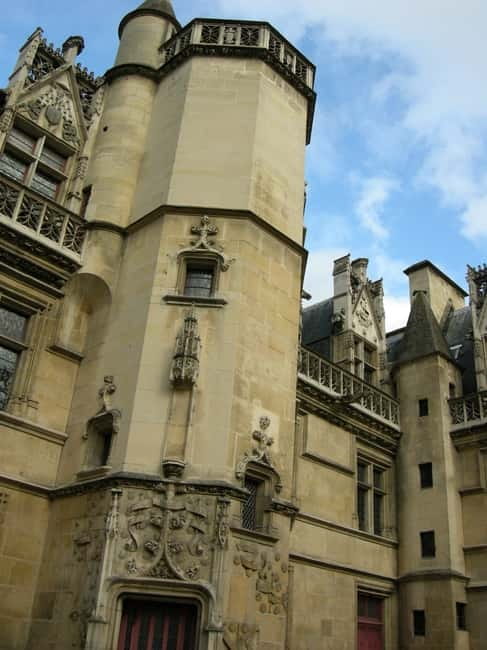
You pass the Hotel de Cluny, which used to be a mansion for the abbots of Cluny and is now the Museum of the Middle Ages. Even if you do not plan to go inside during the walk, the building matters. It is a strong example of how religious power, wealth, and architecture were connected, and your guide can point out features that show the site’s significance without requiring you to spend extra time ticketing.
Why this stop is worth attention: it helps you see medieval Paris as more than cathedrals. Institutions like this shaped the education, art, and networks of the city. When you later stand near Notre-Dame or walk around the Latin Quarter, that earlier context makes the landmarks feel less like isolated icons.
A small practical note: because this is a walking tour, you will experience Hotel de Cluny mostly from the outside and in the flow of the route. If you want long museum time inside, you might still add a separate visit later.
Notre-Dame Cathedral: the medieval focal point you can actually feel
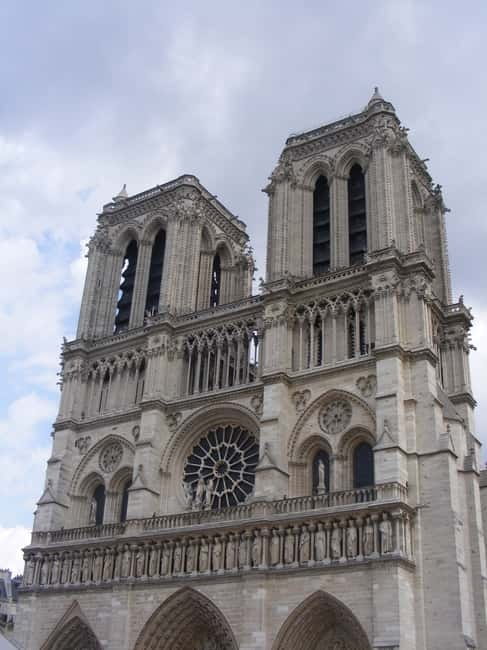
Next comes Notre-Dame de Paris, described as the most important monument to medieval Paris, and it earns that reputation for a reason. When you stand near it with a guide’s context, you start seeing the cathedral as a city organizer, not just a big church.
Your guide focuses on what Notre-Dame meant in the Middle Ages: the role of religion in daily life, how art and architecture communicated power, and why this location became a reference point for the city. The tour also uses Notre-Dame to anchor the larger story you are hearing, so everything after feels connected.
What I like about the way this works: you get more than background facts. You get an interpretation that makes you look closer, at how the cathedral sits within the medieval street grid and how the surrounding area relates to the institutions and neighborhoods you will visit next.
If you are the type who likes to understand “why here,” this is a strong stop. If you only care about a quick exterior photo, you might find yourself wanting a bit more time here on your own after the walk.
Latin Quarter on foot: where medieval lives on near the Sorbonne
The tour then moves into the Latin Quarter, one of the oldest parts of the city. This is where medieval Paris becomes easier to grasp because so many layers are still visible in the street atmosphere and the presence of major learning institutions.
You will see the Sorbonne, highlighted as one of Europe’s oldest universities. The point is not just that it is old. It is that learning, scholarship, and religious culture were deeply intertwined in medieval Europe. When you hear how that played out in Paris, the neighborhood stops feeling like a postcard and starts feeling like a place that shaped generations.
Your guide also points out how the medieval city continues in modern rhythms. You will keep moving, passing key sites that help you build a mental map of how people studied, worshipped, and worked in the same general area.
This is also where private format shines. The Latin Quarter is easy to walk through quickly on your own and miss what matters. With a guide, you get a “what to notice” checklist, and you start spotting medieval symbols on façades that you would otherwise overlook.
You can also read our reviews of more private tours in Paris






Saint-Jacques Tower: a Gothic survivor with a big backstory
You will also see the Saint-Jacques Tower, described as the remaining part of the 16th-century Church of Saint-Jacques-de-la-Boucherie. The emphasis here is on continuity and survival, how parts of the medieval and early modern skyline persist even when other structures change.
The tower is a strong visual marker. But the real value is how your guide ties it into the broader Middle Ages theme, explaining why certain architectural styles became statements of identity and devotion. You get a sense of time layering, like Paris keeping older fragments visible while rebuilding around them.
If you like architecture that tells a story, this stop is a good payoff. And because you are walking, you see how the tower sits in relation to nearby streets, which helps you understand its presence in a real urban setting, not just on a distance photo.
Les Halles and the Fountain of the Innocents: markets and daily life
One of the tour’s clever moves is that it does not treat medieval Paris as only big institutions and churches. It brings you to the heart of daily movement and commerce.
You will learn about the mercantile history around Les Halles, and then you will see the Fontaine des Innocents, noted as the oldest intact fountain in Paris. Even if you have walked past fountains before, this one has meaning because it is tied to a specific area of the city and to how people used public spaces.
Why this matters for your understanding: the Middle Ages were not only theology and learning. They were also markets, food supply, trades, and constant public activity. When your guide links those ideas to the locations you are seeing, the tour feels more grounded and more human.
If you want to understand what medieval Paris felt like day to day, this is the part that tends to stick with you. You come away remembering not only what something is, but what it was for in city life.
The surprising Pompidou connection to medieval Paris
Near the end, the tour makes one of its most memorable moves: it explains the connection between the medieval world and the ultra-modern Centre Pompidou.
This is not the usual kind of fact tourists expect on a medieval route, and that is why it works. You start noticing that Paris keeps borrowing ideas about public life, art, and institutions, even when the architecture looks nothing alike. Your guide helps you connect the medieval priorities to the modern ones, so Pompidou becomes more than a contemporary landmark you pass on a metro ride.
You will also learn how modern urban planning and cultural institutions can echo earlier patterns, like how cities keep reusing central spaces for art, ideas, and gathering. If you tend to think of eras as separate, this section helps you see the thread.
Just keep expectations fair: you are not touring inside Pompidou itself during this walk. The value is the explanation and the way it reframes what you have already been seeing.
Price and value: is $171 per person worth it?
At $171 per person for a private 2-hour walk, the value depends on your group size and what you want from the day. If you are traveling solo or as a couple and you care about getting context for what you see, a private guide can be worth it because you are paying for time plus interpretation.
Here, you get a focused set of stops that include major medieval landmarks and institutions: Notre-Dame, Hotel de Cluny, the Latin Quarter, the Sorbonne, Saint-Jacques Tower, Les Halles, and the Fontaine des Innocents, plus the Middle Ages to Pompidou connection. You also get English or French live guiding, which matters if you want the story to be accurate and readable without translating in your head.
I also like that Paris in person private tours has credibility built in, including recognition as one of the top small tour operators in Europe. And the tour rating is very high, 4.9 with 12 ratings, which usually signals consistency in guide quality and the overall experience.
If you only want quick photos and you are comfortable reading guidebooks on your own, you might find the price steep. But if you want your two hours to feel like understanding Paris rather than just seeing Paris, this tour is a solid use of time.
Who this tour is best for
This tour is a good match if you want medieval Paris without the overwhelm. It suits history lovers, architecture fans, and anyone who likes guided storytelling that connects buildings to everyday life.
It is also ideal for people who are short on time in the city. If you have limited hours between museum visits, or you want to start your trip with a clear medieval map, this walk does that job well.
If your group includes different interests, the route covers a lot of ground. You get religious architecture, university history, street-level market life, and a modern cultural link to Pompidou, all in a single chain of walking.
Practical tips for a smooth medieval streets experience
Since it operates rain or shine, dress for weather first. Bring a compact umbrella or a light rain layer so you can keep looking at façades and details instead of rushing to shelter. Comfortable shoes matter too, because this is a city sidewalk walk and medieval streets can feel uneven.
Also plan your mindset. Medieval Paris is not just about memorizing dates. It is about noticing symbols, patterns, and how institutions shaped neighborhoods. If you go in expecting a “why this place matters” story, you will enjoy the tour more.
One more practical note: food and drinks are not included, so consider grabbing a snack before or after. With only two hours, you do not want low energy to slow down your attention span.
Should you book this Medieval Paris Private Walking Tour?
I think it is a strong choice if you want a guided, structured introduction to medieval Paris in a short window. The private format, the mix of stops, and the way the tour links medieval life to modern Paris are the reasons it works.
Book it if you like learning on your feet, especially at Notre-Dame, around the Latin Quarter and Sorbonne, and near the Fontaine des Innocents and Les Halles area. It is also a good fit if you want a guide who can translate complicated history into plain, street-level meaning, a style that stood out with the guide name Isabella in the feedback I saw.
Skip it only if you want a long museum day, or if walking in rain and cold is a deal-breaker for you. For many visitors, though, two focused hours with a private guide is exactly the sweet spot.
FAQ
How long is the Medieval Paris Private Walking Tour?
The tour lasts about 2 hours.
Where does the tour start?
Meet your guide in front of McDonald’s at the Cluny la Sorbonne Metro Station (Line 10). Look for the guide with the red canvas tote bag.
What sites does the tour include?
The tour includes stops such as Hotel de Cluny, Notre-Dame Cathedral, the Latin Quarter, the Sorbonne, Saint-Jacques Tower, Les Halles, the Fontaine des Innocents, and it also explains connections to the Centre Pompidou.
Is the tour private?
Yes. It is listed as a private group tour.
What languages are available?
The tour is available in English and French.
Is food included?
No. Food and drinks are not included.
Is it canceled if it rains?
The tour operates rain or shine.
More Walking Tours in Paris



More Tours in Paris






More Tour Reviews in Paris






Not for you? Here's more nearby things to do in Paris we have reviewed












Paris City Tours, side by side.
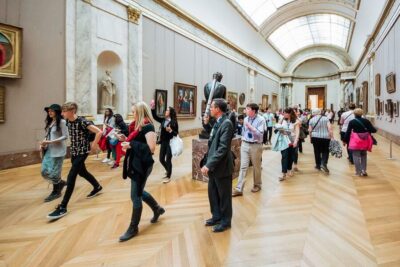 ★ 4.6Louvre Museum Timed-Entrance TicketTickets from $2671,977 guest reviews
 ★ 4.6Disneyland® Paris 1-Day TicketTickets from $6149,412 guest reviews
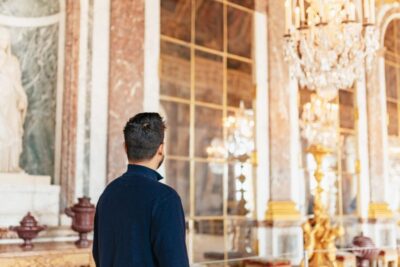 ★ 4.6Versailles Palace and Gardens Full Access TicketTickets from $1741,579 guest reviews
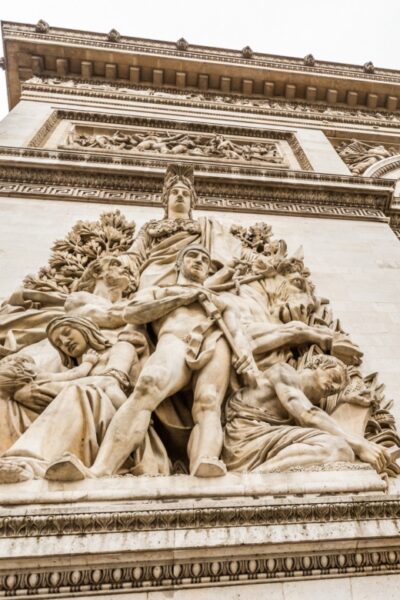 ★ 4.6Arc de Triomphe Rooftop TicketsTickets from $1834,264 guest reviews
 ★ 4.7Orsay Museum Entry TicketTickets from $1525,647 guest reviews
 ★ 4.4Evening River Cruise with MusicTickets from $2722,721 guest reviews
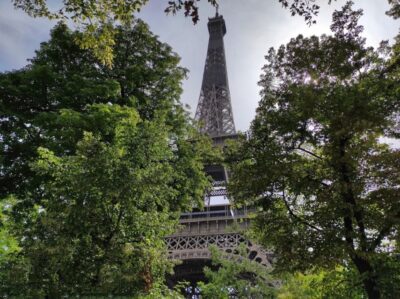 ★ 4.4Eiffel Tower Entry Ticket with Optional Summit AccessTickets from $2920,035 guest reviews
 ★ 4.3Eiffel Tower Summit or Second Floor AccessTickets from $5917,248 guest reviews