
Review · LOUVRE MUSEUM TOURS
Guided tour of the Louvre Museum with tickets included
The Louvre is the kind of museum that scares people. This guided, skip-the-line plan gets you to the top works in about two hours, with art history context you will not get from wandering alone. I love that the group is capped at max 6 travelers, so the guide can actually answer questions and adjust to what you care about.
I also love the way the route builds a story, starting with the Louvre as a medieval fortress and moving through ancient Greece, Renaissance and Middle Ages art, Napoleon-era Classicism, and finally Romantic painting. The main drawback is simple: two hours is not long enough for everything, so treat this as your highlights first pass, then plan extra time if you want deeper detours.
Key highlights at a glance

- Skip-the-line entry so you spend your energy looking, not waiting
- A tight 2-hour route that hits big icons and key themes
- Named stops and masterworks like Venus de Milo, Victory of Samothrace, the Mona Lisa, and Liberty Guiding the People
- A guide-led art-history lens that explains what you are seeing and why it mattered
- Small group experience (max 6) with room for questions
- A route that moves through time from medieval walls to 19th-century France
Meeting at Le Café Marly and Getting Past the Louvre Crowd
Your tour starts at Le Café Marly, 93 Rue de Rivoli, 75001 Paris. That matters, because the Louvre area can feel like one big maze, especially when you are early and it is crowded. The good news is that the tour ends back at the same meeting point, so you are not left figuring out how to retrace your steps.
This is built around one practical idea: you cannot do the Louvre well by “winging it” for only a couple hours. The included skip-the-line entrance helps you avoid the worst bottleneck at the start. With that extra time, you can actually get meaning from what you see, instead of just rushing between rooms.
One small practical note from real-world experience: meeting up can be tricky if you expect an obvious sign from far away. I suggest arriving 10 to 15 minutes early, and having your phone ready with your confirmation and the guide’s contact method (if provided). Crowds happen, and the faster you sync up, the faster the Louvre becomes fun.
More Paris tours and experiences for the shortlist



Medieval Louvre Walls and Tanis Sphinx: The Museum’s Opening Act
Most people start the Louvre with paintings and forget the building itself has a backstory. This tour opens with the Medieval Louvre route, including the 13th-century walls. That one move changes how you read the museum. You stop thinking of it as a random collection hall and start seeing it as a fortress that evolved into a world-class art center.
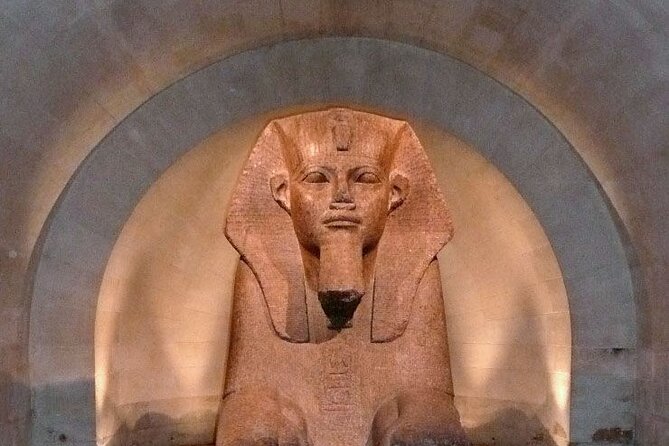
Then you shift into ancient wonder with the Tanis Sphinx, a sphinx dated to around 4,000 years old. It is a strong palate cleanser. Before you hit the famous Greek statues, you get a sense of how long humans have been making symbols, stories, and power objects.
If you like your museum visits guided by themes, this opening works. You will spend less time asking Where do I go next, and more time asking What am I looking at, and why does it belong here?
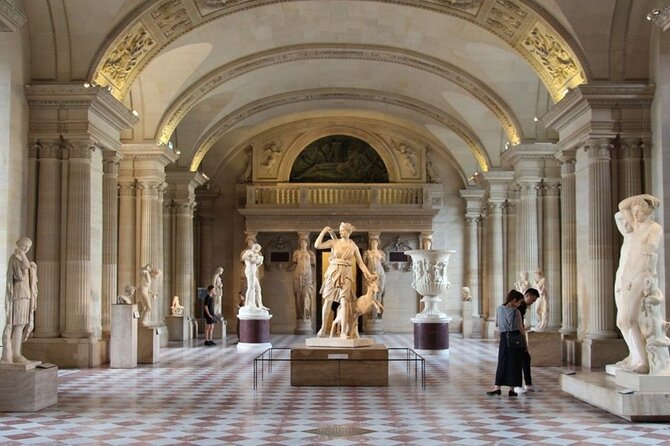
Greek Galleries: Athena, Venus de Milo, and Victory of Samothrace
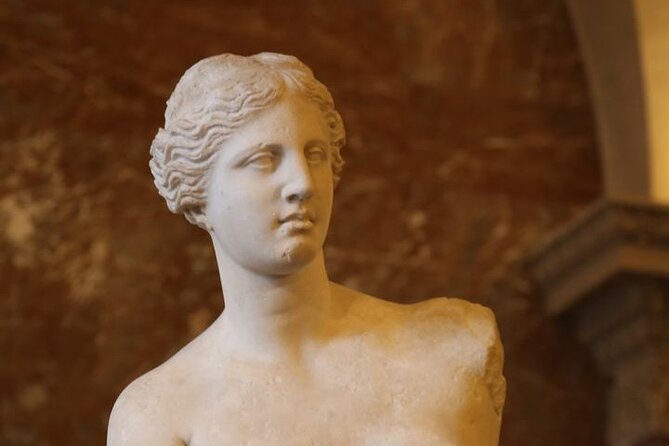
Next comes the Greek department with several headline works. You will see Athena of Velletrie, Venus de Milo, and Victory of Samothrace. These are not just famous because of name recognition. They are famous because they show different ways ancient artists solved problems: movement, proportion, drapery, and how to make stone feel alive.
This is where a good guide really earns their fee. The guide can point out details you likely would miss. For example, with Victory of Samothrace, the impression of wind and motion is the whole point, and it is much easier to appreciate once you know what to look for.
I like this segment because it anchors your visit in a visual baseline. Once you understand what ancient Greek art aimed for, the rest of the Louvre starts behaving like a timeline, not a pile of masterpieces.
Galerie Apollon to the Mona Lisa: The Grand Walk Through Power and Art
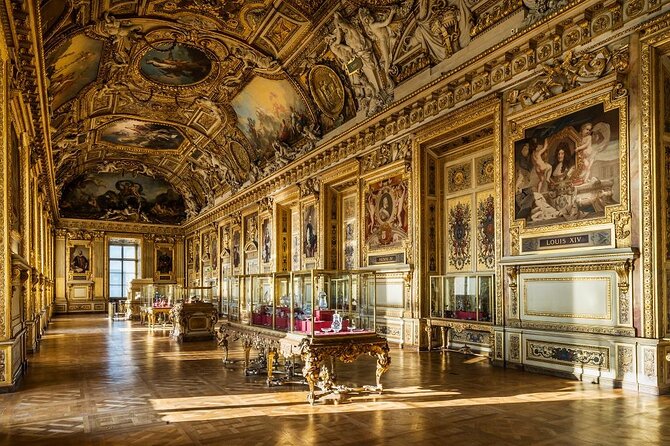
You then hit one of the Louvre’s signature showpieces: Galerie Apollon, tied to a piece that inspired Versailles. Even if you are not a “court history” person, the idea is easy to grasp. The Louvre did not just collect art, it helped shape how later French elites wanted their culture to look and feel.
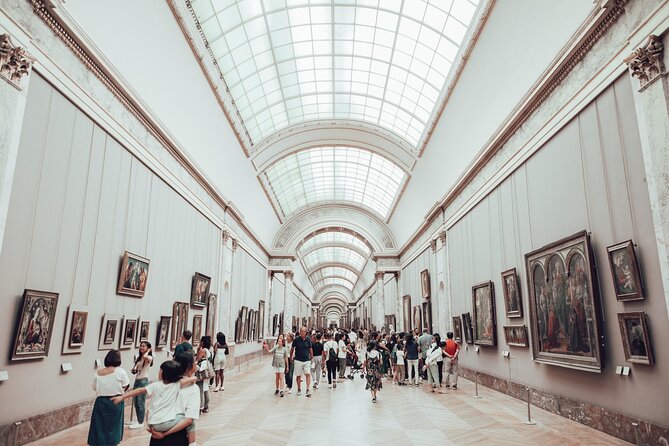
After that, the tour moves into the Grande Galerie, the Louvre’s immense space. This is where the tour plan pays off again. In a museum this big, you need a path. A guided sequence stops you from bouncing randomly between crowd magnets and quiet rooms.
In the Grande Galerie you will encounter major works including Guirlandao’s L’enfant et l’ancien, Veronese’s Les noces de Cana, and Leonardo da Vinci’s Mona Lisa. The key value here is context. The Mona Lisa is famous everywhere, but the guide’s job is to help you understand what makes it work in its setting, not just as a selfie destination.
Tip for your own pacing: with icons like this, you will see more if you slow down for a minute to follow what the guide points out. That changes your experience from photo-grind to actual art-viewing.
From Giotto’s Stigmata to Italian Painting Moments

One of the most interesting pivot points in the tour is the section on Italian painting of the Middle Ages, including Saint Francis receiving the stigmata by Giotto. This is a smart stop because it adds a different kind of emotional language. Greek sculpture often feels about form and presence, while Giotto’s work often hits through expression and story.
Why this matters for you: if you only see the Louvre through its most famous bodies and faces, you can miss how religious art helped people understand belief, ethics, and identity. Giotto is a perfect example of why “old” art still feels modern when you understand its storytelling.
If you are traveling with kids, this is also a good moment. Narrative art is easier for younger eyes to follow, and a guide who answers questions well can keep that momentum going without turning the tour into a lecture.
You can also read our reviews of more guided tours in Paris






Classicism Rooms: Jacques-Louis David, Napoleon, and Ancient Heroes
From there, the tour jumps into Classicism with two big hits by Jacques-Louis David: The Coronation of Napoleon and Leonidas at Thermopylae. This part is excellent if you want the Louvre to feel like a political and cultural machine, not just an art museum.
Classicism in the Louvre is about ideals. It is about clarity, authority, and lessons from antiquity. With David, you also get the sense that art was used as messaging. Napoleon’s image-making, in particular, is not subtle.
You will likely appreciate this segment more if you think of paintings as arguments. David’s style pushes the viewer toward the message. A guide’s job is to translate that visual language into something you can read on the spot.
Romanticism Finale in the Louvre: Medusa and Liberty Guiding the People
The tour ends with Romanticism, including Géricault’s Raft of the Medusa and Eugène Delacroix’s Liberty Guiding the People. This is a strong way to close, because Romanticism brings movement back into the story. It is dramatic. It is emotional. It is often about shock, urgency, and public feeling.
Raft of the Medusa is especially intense. Liberty Guiding the People feels like a political poster made of paint and motion. Together, they show how France’s 19th-century ideas about crisis and freedom get translated into art.
I like this finish because it gives you an emotional landing pad. When you walk out, you remember how the Louvre made you feel, not only what you saw.
Why the Guide Matters More Than the Usual Map
This kind of tour succeeds because it is not just a checklist. The guide, Matteo Allavena, is the heart of it. The consistent theme across real experiences is that he keeps the pace tight and the explanations clear, while still making space for questions.
Another big plus is flexibility. If you have a reason to care more about one period, the guide can adjust instead of reading off a rigid script. That is huge in the Louvre, where you might think you want everything, then realize your feet are voting for selective priorities.
And yes, skip-the-line helps. But the real win is how the guide turns the Louvre from overwhelming into navigable. After the route, you are not starting from zero. You have a framework, and that makes it much easier to wander afterward, even if you only have limited time.
Small practical reality check: this experience includes entrance and a speaker guide, but it does not include coffee or food. So if you want to stay sharp, eat beforehand. Also, transfer is not included, so make sure you have a plan to reach the meeting point on your own.
Price, Group Size, and Value for a Paris Highlight
The price is $114.93 per person, for about two hours, with skip-the-line entry and the museum ticket included. The entrance fee listed is 28 euros. What you are really paying for is the guide time, the focused route, and the access help that saves your day.
Is it expensive? Paris can be. But the value makes sense if you are in the Louvre only once, or you truly do not want to spend your limited trip time wrestling with logistics. A small group of up to 6 also pushes the experience away from a mass-tour feel and toward a more interactive visit.
If you qualify for free admission, that changes the math. Free admission applies to visitors under 18 and EEA residents under 26, with valid ID and proof of residency. In that case, you would still pay for the guide and skip-the-line part, but you avoid the ticket cost.
One more value tip: many people book in advance. The average booking window is about 57 days. If you wait until the last minute, you may run into fewer choices, and you take on more risk that schedules do not line up with your exact timing.
Who This Tour Fits Best
This works best if you want a highlights route with context, not an open-ended museum marathon. It is a great choice for first-time Louvre visits because the timeline structure helps you understand what you are looking at.
It also suits families, including kids who might need questions answered in real time to stay engaged. The tour length is short enough to keep attention, and the stops are varied enough that it does not feel like only one style or era.
If you are the type who loves to read every wall label and disappear into side galleries, you might find two hours too short. But as a fast “orient me” experience, it is very strong.
Should You Book This Louvre Tour?
If your goal is to see major works without wasting hours in queues or wandering aimlessly, I think this is a smart book. The route covers medieval to ancient to 19th-century France, with named masterpieces and a guide who can explain what you are seeing in plain, practical terms.
Book it if:
- You want a 2-hour plan that reduces decision stress
- You care about understanding the icons, not only photographing them
- You prefer a small group, not a crowd herd
- You want to get the Louvre’s biggest themes in one go
Skip it if:
- You have a full day and want maximum freedom with no set structure
- You are okay with self-guided wandering and long queues
- You only want one narrow slice of the museum and nothing else
If you do book, arrive early for the meeting point and wear shoes you can stand in. Then treat the tour as your Louvre “map with stories,” and plan your own follow-up walk based on what clicked during the guided stops.
FAQ
How long is the guided Louvre tour?
It lasts about 2 hours.
What is included in the tour price?
The tour includes a speaker guide, the entrance fee (28 euros), and skip-the-line entry.
Does this experience include skip-the-line access?
Yes, skip the line is included.
What language is the tour offered in?
The tour is offered in English.
Who is the tour guide?
The provider is Matteo Allavena.
Where do we meet, and where does the tour end?
You meet at Le Café Marly, 93 Rue de Rivoli, 75001 Paris. The tour ends back at the same meeting point.
How many people are in the group?
The tour has a maximum of 6 travelers.
What will we see during the tour?
You will visit key Louvre highlights such as the 13th-century walls, the Tanis Sphinx, the Greek department works like Athena of Velletrie, Venus de Milo, and Victory of Samothrace, Galerie Apollon, the Grande Galerie (including the Mona Lisa), and rooms featuring works like Giotto’s Saint Francis receiving the stigmata, Jacques-Louis David’s The Coronation of Napoleon and Leonidas at Thermopylae, plus Géricault’s Raft of the Medusa and Delacroix’s Liberty Guiding the People.
Is food or coffee included?
No. Coffee and/or tea and food and drinks are not included.
Can I cancel and get a full refund?
Yes, free cancellation is available. You must cancel at least 24 hours before the experience’s start time for a full refund.
More Tickets in Paris



More Tours in Paris




More Tour Reviews in Paris

Not for you? Here's more nearby things to do in Paris we have reviewed












Louvre Museum Tours, side by side.
 ★ 4.6Louvre Museum Timed-Entrance TicketTickets from $2671,977 guest reviews
 ★ 4.3Louvre Guided Tour with Reserved Access & Boat CruiseTickets from $8116,353 guest reviews
 ★ 4.5Louvre Museum Masterpieces Guided Tour with AccessTickets from $8612,023 guest reviews
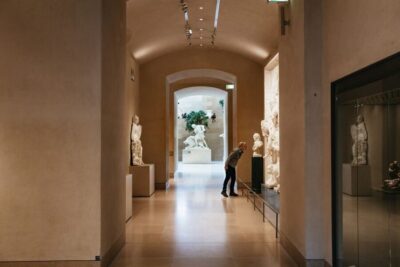 ★ 4.6Louvre Museum Entry Ticket With Host and River CruiseTickets from $1009,926 guest reviews
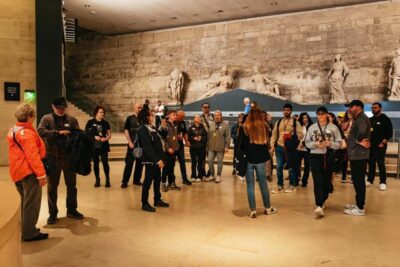 ★ 4.1Priority Access Louvre with Host -Direct to Mona LisaTickets from $748,387 guest reviews
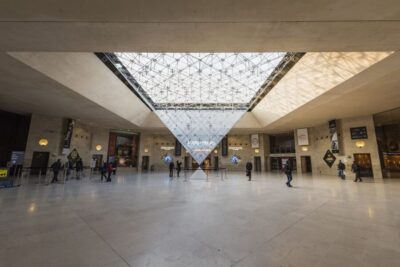 ★ 4.6Mona Lisa & Louvre Masterpieces Tour with Reserved AccessTickets from $806,812 guest reviews
 ★ 5.0Louvre Museum – Exclusive Guided Tour (Entry Included)Tickets from $1816,296 guest reviews
 ★ 4.0Louvre Reserved Ticket and River Cruise ComboTickets from $376,054 guest reviews
This tour also belongs to