
Review · VERSAILLES DAY TRIPS
Versailles Revolution Tour – 1789
Revolution in Versailles is not what you expect. This interactive walk turns the town streets into an 1789 stage, with you moving between key sites of the French Revolution. I liked how the tour uses the story of the Estates in May 1789 to give you clear context fast, instead of dumping dates.
Two things I really enjoyed were the hands-on, role-based feel of the walk and the way the route connects French events to the American Independence story, including the Treaty of Versailles. The main drawback to consider is practical: there is no access to the castle, so if you want palace rooms as your main goal, this may feel like the wrong kind of Versailles.
Key highlights that make this tour worth your time
- You start at the Louis XIV equestrian statue in front of Versailles, then walk through the town
- Arms Square to the opening of the General Estates is staged like a real procession moment
- June 20 tennis court oath stop helps you picture the shift from debate to action
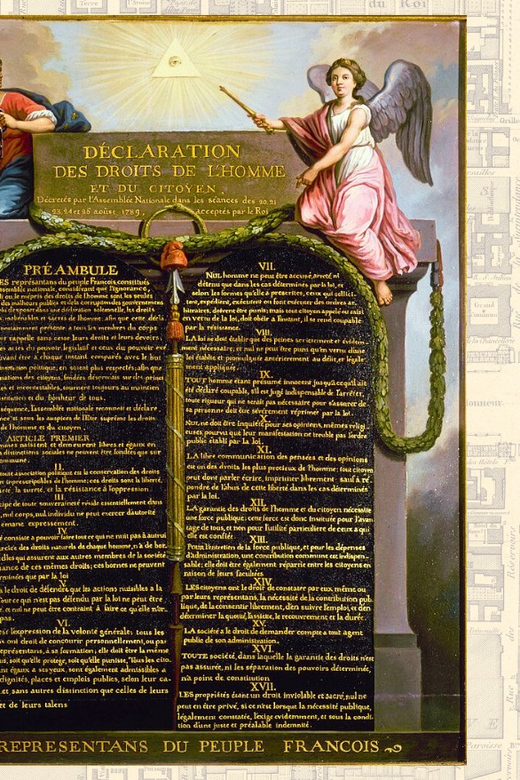
- The Declaration of the Rights of Man and the Citizen is brought into the story, not just mentioned
- Marie Antoinette, Louis XVI, and Marie du Barry are woven into the route so you understand who mattered and why
- Lafayette and the American Independence angle leads to the Treaty of Versailles site
What makes this Versailles Revolution tour different
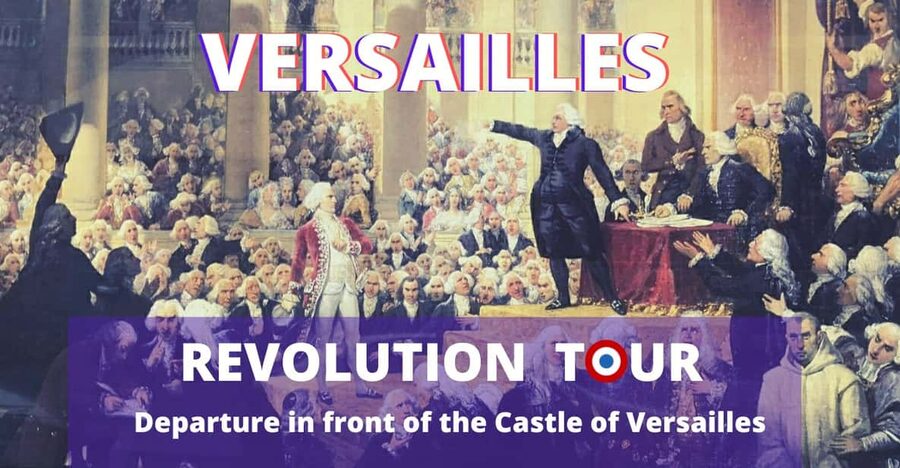
This is a 2 hour, in town, interactive walk that treats Versailles like a timeline you can actually follow. You are not just watching from a distance. You are guided through 1789 with a deputy role, which means the tour pushes you to think like someone involved in what is happening, not like a detached spectator.
I also like that the tour is built for momentum. Instead of starting with the most famous palace views and working backward, it begins with the General Estates setting and carries you toward the Declaration of the Rights of Man and the Citizen and beyond. Along the way, you connect major faces like Marie Antoinette and Louis XVI to specific places, including the quieter buildings where political change started to take shape.
One more reason it works: it is not only about France. The route includes the Treaty of Versailles connection at the end of the American Independence war. That link helps you see that the French Revolution was not happening in a vacuum.
You can also read our reviews of more tours and experiences in Paris.



Meeting at the Louis XIV statue, then leaving the crowds behind
Your starting point is easy to find once you know the landmark: you meet in front of the equestrian statue of Louis XIV, at Arms Square, right by the Castle of Versailles area.
That choice matters. The statue is the big visual anchor that tells you the tour is rooted in Versailles identity, not just random street history. From there, the guide leads you into the town of Versailles, close to the castle but not inside it. So you get the feeling of “I can picture the street I’m standing on in 1789,” even though you are not touring palace rooms.
The tour also runs in English and French. And the duration is tight, which is good because 2 hours is long enough to feel like you learned something real, without turning into a whole day commitment. If you are doing other Versailles sights the same day, this tour can slot in neatly.
Arms Square: the General Estates opening and the procession feel
The tour’s first big stop is Arms Square, tied to the opening of the General Estates in May 1789. This is where the story becomes political theater. You are guided through the idea of a procession, and you start to feel how public ceremonies were part of power and legitimacy.
What I like about this approach is that it gives you a “before” picture. It is one thing to know that the General Estates existed. It is another to understand how their opening set expectations, created tension, and pushed people toward decisions they could not easily undo.
You are also walking early in the experience, which helps you stay present. Instead of talking first, you are moving through the setting, and that makes the whole walk feel more like a lived route and less like a museum lecture.
Hôtel des Menus-Plaisirs: where the Revolution really starts to click
Next comes the Hôtel des Menus-Plaisirs, a key turning point where the Revolution is described as beginning. This stop is valuable because it connects the idea of revolution to a physical place where change accelerated.
Tours can sometimes gloss over this phase and jump straight to the dramatic moments people remember. Here, the guide’s pacing gives you the logic of why events unfold the way they do. You start to understand that revolutionary momentum came from multiple sparks: political arguments, pressure on institutions, and the growing sense that the old rules could not hold.
The most practical benefit is mental clarity. By the time you reach the tennis court moment, you are not just thinking about June 20 as a famous date. You are ready to understand it as an explosion of frustration and principle.
The Royal tennis court oath (June 20): decision day, not just a story beat
The Royal tennis court stop is built around the tennis court oath on June 20. This part matters because it bridges the gap between “we argue” and “we commit.” The oath is often taught as a symbol, but the best guides show you what the oath meant in the flow of events.
Here, you get help imagining the pressure of that moment. Instead of treating it like distant pageantry, you see it as a move forced by circumstance, where people chose collective action when normal channels failed.
A small detail that makes this work is the tour style itself. You are not just hearing facts. You are being guided through a sense of roles and decisions, which helps you keep the story straight. It also helps if you already know the basics, because you get a clearer sense of why the oath landed where it did.






Marie Antoinette, Louis XVI, and Madame du Barry in real locations
One of the tour highlights is how it handles major figures. You do not just get a name drop. You connect people to places and to the political atmosphere around them.
That includes Marie Antoinette and Louis XVI, and it also includes a stop tied to Hôtel de Madame du Barry, described as the last favorite of Louis XV. This part helps you understand something uncomfortable but important: the Revolution was not only about taxes and institutions. It was also about public anger aimed at perceived favoritism and unequal power.
I found this approach useful because it reduces the feeling that history is only big speeches and heroic crowds. You understand the smaller social and political signals that made revolutionary anger believable to everyday people.
The guide you are likely to meet, Baptiste Barennes, also brings a playful human touch. One review noted the tour can feel more fun than expected at times, so if you want every single detail to sound like a textbook, adjust your expectations slightly. If you want a walk where the people and places feel connected, this style is a plus.
Following the path of the women, then shifting to diplomacy
The next stop brings you to Paris Avenue, associated with the arrival of the women as part of revolutionary movement. This is another “why this place” moment. You start to see the Revolution as a chain of actions that moved through space, not only as ideas that stayed on paper.
After that, the route changes tone in a smart way. You head toward the former Foreign Affaires Hotel, the site connected to the Treaty of Versailles that closed the American Independence war.
This is one of the reasons the tour stands out to me. It stops treating the French Revolution as sealed inside French borders. The Treaty of Versailles connection helps you see how France’s involvement in the American conflict and the resulting diplomacy fed back into French political atmosphere.
If you like big-picture history that still has street-level anchors, this is where it pays off.
The interactive style: role-play that keeps teenagers engaged
The tour is designed as an interactive walk in 1789 with you acting as a deputy who came for the General Estates in May 1789. That structure changes how you listen. You are not passively absorbing. You are following a story through a lens of civic responsibility, pressure, and decision-making.
At the end, the experience can include a lively discussion in role as deputies. One review even mentions teenagers joining the conversation. That tells you something useful: this format can work even if not everyone in your group is a “history only” person.
A bonus detail from a review is that the end included chouquettes from a local baker, plus discussion. Since that is not listed as a guaranteed included item, think of it as a possible extra that can make the finish feel like a real neighborhood ending rather than a hard stop at the final sentence.
Guide Baptiste Barennes and why that matters for value
The experience lists the guide as Baptiste Barennes, and his background is a big part of the value. He is described as having 10 years of experience as a guide and 5 years guiding in the Versailles castle gardens.
That matters because it shows up in how the walk flows. A good guide does not just recite. He directs you to the right place, at the right moment, and explains what to notice. One review highlighted how Baptiste took the group to sights they would not have found on their own. Another emphasized that he answered questions with background knowledge and small, important details.
There is also a comfort factor. If you end up on a smaller group arrangement, the tour can feel more private and easier to ask questions in real time. One review mentioned a scenario where the guide was just with the group, and that made the experience feel more focused.
So if you care about a guide who can handle follow-up questions without getting robotic, Baptiste’s reputation from the feedback you provided is a solid indicator.
Price and value: $41 for a focused 2 hour story
At $41 per person for a 2 hour walking tour, the value depends on what you want from Versailles.
If you are already planning to spend time inside the castle, a tour that stays in town can be a smart counterweight. Palace tours give you visuals and grandeur. This kind of Revolution tour gives you the political and human logic behind those visuals.
Also, this tour includes a little takeaway: at the end you receive a reproduction of an engraving of Versailles. The description mentions it as an old map of Versailles redesigned, with other options depending on what is available. Even if you only keep it as a souvenir that reminds you of the route, it helps you remember what you stood in front of.
So in practical terms: you are paying for guided storytelling, interactive structure, and a route that helps you connect multiple big ideas (French Revolution and American Independence) without spending your entire day in line.
What to bring and how to set your expectations
Because the tour is a 2 hour walk in Versailles town, wear comfortable shoes. The route is close to the castle, but you are still moving enough to want real walking comfort.
Set expectations on one key point: there is no access to the castle of Versailles. That means you should treat this as a companion experience to other Versailles plans, not a replacement if your main goal is the palace rooms.
Language coverage is helpful. The tour lists English and French, which is great if you have mixed language needs. If you prefer one language strongly, check the available starts when you book.
Finally, think of it as a “1789 walk through the plot.” If you want only architecture and dates, you might find yourself wishing for more formal, quiet lecturing. If you want a guided story with interactive energy and place-based context, you are in the right lane.
Should you book the Versailles Revolution Tour 1789?
Book this tour if you want Versailles beyond mirror rooms and royal apartments. It is designed to connect the Revolution’s major turning points, including the tennis court oath and the Declaration of the Rights of Man and the Citizen, to real places in Versailles town. The American Independence and Treaty of Versailles link is also a strong reason to choose it, especially if you like history that crosses borders.
Skip it or choose a different option if your top priority is going inside the castle. Since this tour stays in town and explicitly does not include castle access, it will not satisfy the “palace rooms” craving.
If you do want the fuller picture, this is a smart, efficient way to spend 2 hours: you get a guided story, an interactive deputy role, and a souvenir map-style engraving to anchor what you learned when you walk away.
FAQ
How long is the Versailles Revolution Tour 1789?
The tour lasts 2 hours.
Where do I meet for the tour?
You meet in front of the equestrian statue of Louis XIV, at Arms Square, in front of the Castle of Versailles area.
Is the tour inside the Palace of Versailles?
No. The tour takes place in the town of Versailles close to the castle, and there is no access to the castle of Versailles.
What languages are offered?
The live tour guide offers English and French.
What is included in the price?
The guided tour is included, and at the end you receive a reproduction of an engraving or old Versailles map that has been redesigned. Everything is included in the price.
What is the price per person?
The price is $41 per person.
Is the tour wheelchair accessible?
Yes, the tour is wheelchair accessible.
What is the cancellation policy?
Free cancellation is available up to 24 hours in advance for a full refund.
Does the booking offer a pay later option?
Yes, you can reserve now and pay later, meaning you pay nothing today.
More Tours in Paris





More Tour Reviews in Paris
Not for you? Here's more nearby things to do in Paris we have reviewed












Versailles Day Trips, side by side.
 ★ 4.6Versailles Palace and Gardens Full Access TicketTickets from $1741,579 guest reviews
 ★ 4.7Versailles: Skip-the-Line Tour of Palace with Gardens AccessTickets from $749,778 guest reviews
 ★ 4.6From Paris: Versailles Palace & Gardens with TransportationTickets from $536,222 guest reviews
 ★ 4.6Versailles: Skip-the-Line Guided Palace Tour and Full AccessTickets from $885,214 guest reviews
 ★ 4.5Versailles Palace and Gardens Tour from ParisTickets from $713,390 guest reviews
 ★ 4.7From Paris: Versailles Skip-the-Line Tour & Gardens AccessTickets from $1243,011 guest reviews
 ★ 5.0Versailles Palace Bike Tour with Market & Marie-Antoinette hamletTickets from $1312,680 guest reviews
 ★ 4.2From Paris: Versailles Guided Tour with Skip-the-Line EntryTickets from $1152,422 guest reviews
This tour also belongs to