
Review · MONTMARTRE TOURS
Montmartre Walking Tour in English
Montmartre is Paris with a tilt. This English walking tour turns a steep neighborhood into a story you can follow, with memorable stops like Cafe des Deux Moulins and Van Gogh’s house along the way. I especially like how it links famous art and movie set locations to the everyday streets you will actually walk.
One heads-up: the pace can feel more talk-heavy than fast, with plenty of narration in between sights, which may not suit everyone. Still, the guides behind this walk, including Eva and Raj, get praised for being friendly, patient, and very well informed.
Key highlights to look for on this Montmartre walk
- Cafe des Deux Moulins, made famous by the film Amelie
- Van Gogh’s house area, where you get a sense of the artist’s Paris
- Studios connected to Picasso and Modigliani, with focus on the working artist world
- Vineyard and one of Paris’s oldest cabaret scenes, tied to Montmartre’s nightlife legend
- Moulin Rouge, the famous finale with a real sense of place
Entering Montmartre’s Hill of Martyrs
Montmartre’s name comes from Latin Mons Martyrum, the Hill of Martyrs. The legend you hear goes a little dark and dramatic, tied to Saint Denis being beheaded by the Romans, then walking with his severed head before collapsing and dying on the hill.
That creepy story matters because it sets up the contrast you’ll keep noticing as you walk. Montmartre went from a quieter village surrounded by vineyards, gardens, and orchards to a place that pulled in artists by the dozens, helped along by cheap wine, low rents, and plenty of drinking establishments. It is the kind of neighborhood where the past does not sit politely in a museum, it lives in the streets.
And the mills are part of that too. At one point, as many as 13 mills lined the slopes to grind wheat, barley, and rye, and today only two survive as recognizable symbols. The tour uses details like these to make the geography feel meaningful, not just scenic.
You can also read our reviews of more walking tours in Paris



Meeting Point at Metro Blanche, Follow the Yellow Umbrella
Your start point is in front of the Metro Blanche, at the only exit. Look for the yellow umbrella, and you will be in the right place.
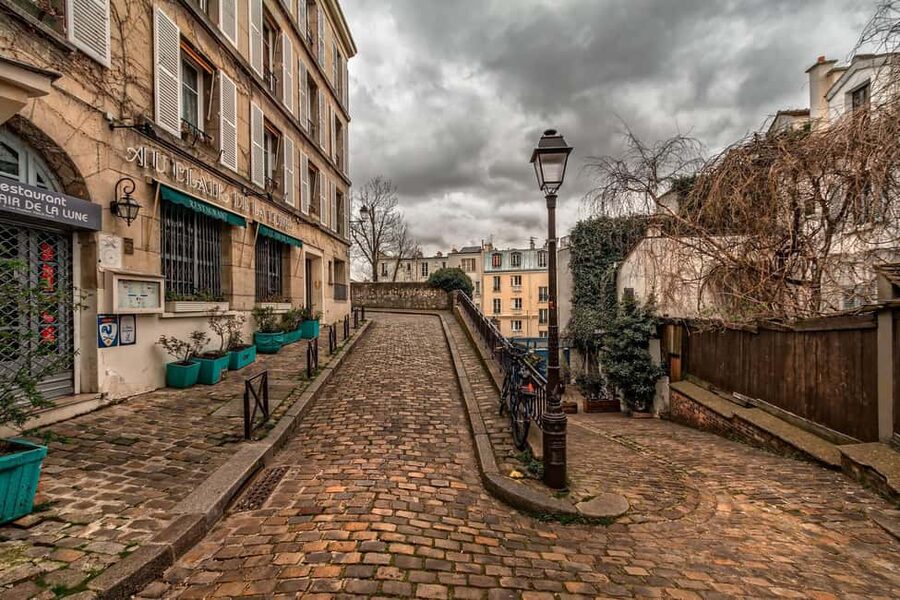
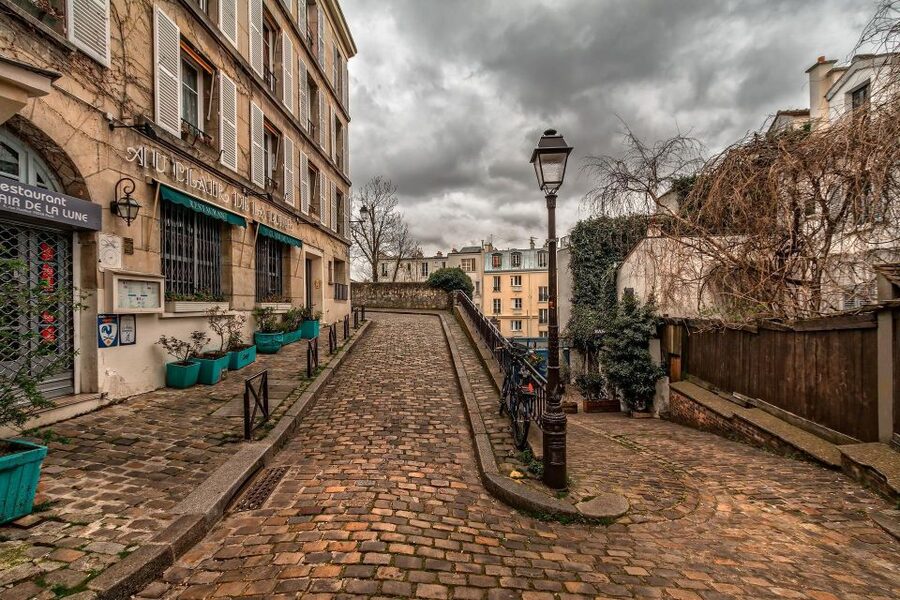
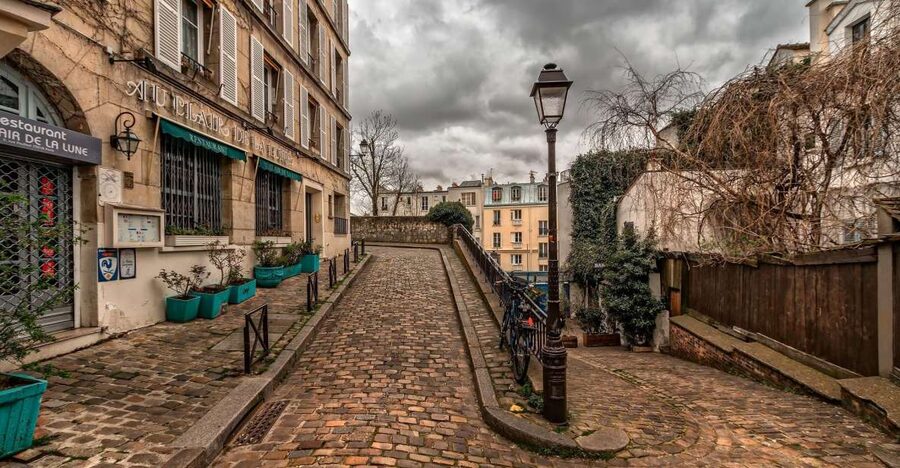
From there, you are in the right mindset: Montmartre streets are steep and winding, with crooked buildings and ivy-covered corners that look like they belong in a film. Even if you have visited before, the physical layout here changes how you experience everything. Plan to dress for walking, and if it is cold or rainy, the tour finds cover rather than cancelling.
150 minutes in English, what the pace feels like
This is a 150-minute live English tour with an expert local guide and a carefully built narrative. That “narrative” part is not vague marketing, it shows up in the way the tour connects legends, artists, and real locations into one flow.
Here is the practical trade-off. If you prefer a quick hit of photos with minimal talking, you might find this one leans toward more speech than some other tours. One reviewer even suggested it could be faster with less narration, and that is a fair consideration.
On the other hand, the same narration is what makes the experience click for people who like context. Guides such as Eva and Raj are repeatedly praised for information, humor, and making the material feel approachable rather than stiff. If you enjoy learning why places matter, rather than just where they are, this structure is a big plus.
Cafe des Deux Moulins, Amelie vibes, and why this stop matters
One of the first big landmarks is Cafe des Deux Moulins, famous from the film Amelie. The café is more than a screen reference, it sits in the heart of the Montmartre vibe, where cafés, cabarets, and small drinking spots shaped the area’s reputation.
What I like about this kind of stop is that it gives you a quick emotional anchor. You see a place that people recognize instantly, then you hear how Montmartre became the kind of district that supported that whole culture of nightlife and artists. The tour does not treat the film moment as a shortcut. It uses it to set the scene for how locals and visitors actually behaved in past decades.
Practical tip: this is also the kind of spot where you will want to pause for photos, and the lines to sit outside can affect your timing. If you want a calm picture, keep an eye on where the crowd funnels and be ready to wait briefly.
Van Gogh’s house area, art in the real streetscape
Next up is Van Gogh’s house. Van Gogh is one of those names that can feel untouchable when you only read about him in books. Here, you get the chance to connect the art world to the specific neighborhood that pulled in artists like him.
Montmartre at the turn of the 19th and 20th century was a magnet. It attracted painters like Monet and Renoir and also the edgy new wave people associated with the area’s nightlife. When the guide talks about why artists flocked there, Van Gogh’s presence becomes more than a “famous building.” It becomes part of a pattern, a reason the area turned into a creative magnet.
Watch for how the tour frames what you see around you. The point is not only to look at the house location. The point is to understand the street life around the artist world, including the fact that the area was known for relaxed social energy, low-cost living, and the kind of nightlife that kept the neighborhood in constant motion.






Studios tied to Picasso and Modigliani, where creativity felt close
The tour also covers studios connected to Picasso and Modigliani. These names help you understand how Montmartre worked as an artistic hub, not just a stage for famous events.
What you should take from this stop is the idea of workshops and creative communities. The tour’s narrative emphasizes that Montmartre’s special pull was partly practical, low rents and affordable spaces. It was also cultural, the presence of cafés, dancing halls, and cabarets where art and entertainment overlapped constantly.
Since the buildings and streets you are walking past might not look like movie sets anymore, the guide matters even more. A good guide helps you interpret small visual cues and connect them to the way artists would have lived and worked. If you like that “why this place, why here” style of explanation, this is the portion you will likely enjoy most.
The vineyard and an old cabaret, from vines to can-can legends
Then comes a very Montmartre moment: a vineyard setting and an older cabaret scene, often talked about as one of the oldest of its kind in Paris. This is where the tour’s legend and nightlife themes really merge.
Earlier, you hear how Montmartre began as a village with orchards and vineyards. Now the story shifts to dancing halls and cabarets where nightlife took over the hill. The tour connects that change to the area’s reputation for drinking, cheap wine, and a loosened social atmosphere that encouraged people to spend evenings out.
The famous cabaret references you hear about include Le Chat Noir and the later can-can era associated with Moulin Rouge. The guide’s job here is to keep it from becoming a fantasy version of the past. You want the “how did it become this” explanation, not just a list of big names.
If you like themes, this section is a strong one. You get to watch the neighborhood’s identity evolve in real time while you walk, from agriculture roots to performance culture.
Moulin Rouge, the famous finale with context
The final headline stop is Moulin Rouge. Even if you have seen it before from photos or online, visiting it through this kind of narrative changes how you look at it. You stop thinking of it as just a symbol and start seeing it as the outcome of a specific local history.
The tour frames Moulin Rouge as part of a wider ecosystem: cafés, cabarets, dance culture, and artist life feeding into each other. That is why the preceding stops matter. Cafe des Deux Moulins, Van Gogh’s presence, the idea of studios, and the vineyard-to-cabaret storyline all build toward this moment.
A practical note: Moulin Rouge area can be busy and photo-focused. If you are sensitive to crowds, try to keep your expectations realistic. Your goal is not perfect photos in every direction, it is to understand why this place became a symbol and how the surrounding streets reinforce that reputation.
Price and value, pay what you wish plus an online booking fee
The tour is listed at about $31 per person, but the important part is how payment works. This is a pay what you wish style tour, and the amount you pay now is described as a small online booking fee. Your guide payment is up to you based on your experience.
So is it worth it? For most people, yes, if you care about learning and you like structured storytelling. You get 150 minutes with an expert local guide and a narrative that connects multiple Montmartre icons into one arc. If you were planning to do a DIY walk and look everything up, the guide saves time and adds context you would struggle to piece together quickly.
One more value angle: because the tour emphasizes key places tied to art and culture, you are not just collecting landmarks. You are getting a viewpoint on why Montmartre became what it is, including the shift from quiet village to artist hotspot and nightlife center.
If you dislike long explanations, or you mostly want scenic walking and quick photo stops, then pay what you wish tours can feel less predictable. In that case, it is worth considering whether you prefer a tighter, faster itinerary. But if you enjoy the “story behind the streets” vibe, this format is a good fit.
Who this Montmartre tour suits best
This walk is ideal if you want a guided Montmartre overview that goes beyond the obvious postcard corners. It suits you if you like art history with human scale, because the tour connects major artist names and famous locations to a neighborhood culture that supported them.
It also fits well for first-time Montmartre visitors who want orientation fast. The tour uses key references, from Cafe des Deux Moulins to Van Gogh and Moulin Rouge, to help you build a mental map of what goes where and why it matters.
You might want a different option if you strongly prefer minimal narration. One review highlighted that the pace could be faster with less speech. If you know you get restless with long explanations, you will need to plan to stay engaged by taking breaks for photos and using the stops to reset your attention.
Quick FAQ for planning your Montmartre walk
FAQ
Is the Montmartre walking tour in English?
Yes. The tour is a live experience with an English-speaking guide.
How long is the tour?
It lasts about 150 minutes.
Where do I meet the guide?
Meet in front of Metro Blanche, at the only exit. Look for the yellow umbrella.
What famous places are included on the route?
The highlights include Cafe des Deux Moulins, Van Gogh’s house, Studios Picasso/Modigliani, a vineyard plus an older cabaret, and Moulin Rouge.
Is hotel pickup included?
No. Hotel pickup and drop-off are not included.
Does the tour run in bad weather?
Yes, it runs rain or shine. If it gets cold or rains, the guide will find cover.
Is there free cancellation?
You can cancel up to 24 hours in advance for a full refund.
How does the pay what you wish setup work?
This is a pay what you wish tour. What you pay now is only a small online booking fee, and you decide the amount you want to pay the guide.
Should you book this Montmartre walking tour?
Book it if you want Montmartre to make sense, not just look pretty. The best reason is the combination of iconic stops plus a guide who connects the neighborhood’s shift from village to artist hotspot to nightlife legend. If you like story-driven walking, and you appreciate being told why a place is famous, this is a strong choice.
Pass on it or consider a different style if you mainly want a quick, photo-focused stroll with minimal talking. In that case, the narration-heavy feel might frustrate you.
If you fall in the middle, you will probably do well. You get 150 minutes, key art and entertainment landmarks, and a local guide experience built around a narrative, with coverage available if weather turns.
More Walking Tours in Paris



More Tours in Paris





More Tour Reviews in Paris



Not for you? Here's more nearby things to do in Paris we have reviewed












Montmartre Tours, side by side.
 ★ 5.0Montmartre Hidden Gems and Scenic Highlights Walking TourTickets from $382,684 guest reviews
 ★ 5.0Montmartre Hill French Gourmet Food and Wine Tasting Walking TourTickets from $1452,588 guest reviews
 ★ 4.8Montmartre Cheese, Wine & Pastry Guided Walking TourTickets from $1272,255 guest reviews
 ★ 4.9Montmartre Highlights Walking Tour with a Local GuideTickets from $341,668 guest reviews
 ★ 4.1Sacré-Coeur and Montmartre Tour with Expert GuideTickets from $281,027 guest reviews
 ★ 5.0Private Montmartre Food Tour with Wine, Cheese & PastriesTickets from $3021,027 guest reviews
 ★ 5.0Paris Montmartre Food Tour – A Full French Meal by Do Eat BetterTickets from $95877 guest reviews
 ★ 5.0Hidden Montmartre: Paris’ Secret Streets Walking TourTickets from $44809 guest reviews
This tour also belongs to