
Review · PARIS CITY TOURS
WW1 Somme Battlefields – Private tour from Paris aboard a Van (2 pax)
A World War I morning, minus the guessing. This private Somme day trip from Paris is one long push through the places where the battle plan met the ground, with an English speaking guide who connects the dots. I especially love the door-to-door private van ease and the way you get context before you reach each memorial site. My other big plus is that the schedule mixes outdoor landmarks with museums like the Thiepval panorama and Péronne’s Historial. One drawback to plan for, it is a long day, and lunch is not included.
You will start early, then spend the day moving from the first day’s violence to later breakthroughs, without the stress of driving or guessing routes. Expect short stop time at some sites, longer time at the museums, and a calm but heavy walk through preserved trenches. You will come away with a clearer sense of where “no-man’s-land” sat and what it meant for the soldiers who had to cross it.
Somme Battlefield Highlights, the parts that matter most
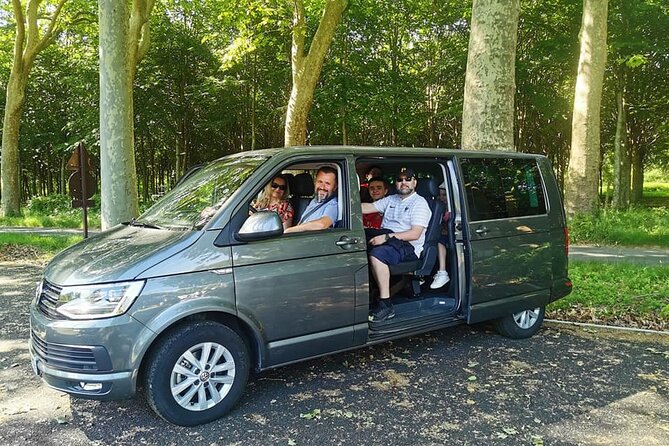
- Private transport from Paris makes the day realistic, with pickup in select districts and an air-conditioned vehicle
- Lochnagar Crater ties you directly to the first day of the battle and the British tunneling effort
- Ulster Memorial Tower and Thiepval Wood help you understand why this ridge mattered from July through September
- Two WW1 museum stops include Joe Sacco’s panoramic mural at Thiepval and trench-focused exhibits in Péronne
- Beaumont-Hamel Newfoundland Memorial preserves trenches, so you are not only reading history, you are walking it
From Paris to the Somme: a 6:30am start that makes sense
This is a private tour for up to 2 people, which is the big deal here. Instead of crowds and bus herding, you ride in a private van and get stops tuned to what your guide wants you to notice. Pickup starts at 6:30am, so yes, you’ll need an early wake-up routine and likely coffee first. The tradeoff is you avoid losing half the day to travel logistics.
The tour includes hotel pickup and drop-off in these Paris districts only: 75008, 75007, and 75016. If you’re outside those areas, you’ll need to arrange your own connection, since the tour specifically lists those pickup zones. You also get a mobile ticket, which keeps things simple when you move between sites.
Time-wise, plan for about 12 to 13 hours total. Some stops are brief, like the Lochnagar Crater photo and interpretation time, while the museums take longer. The flow is designed to keep you moving toward meaning. You’re not just seeing monuments, you’re learning how each one fits into the wider battle story.
You can also read our reviews of more private tours in Paris



Lochnagar Crater near La Boisselle: the first-day mine you can almost feel
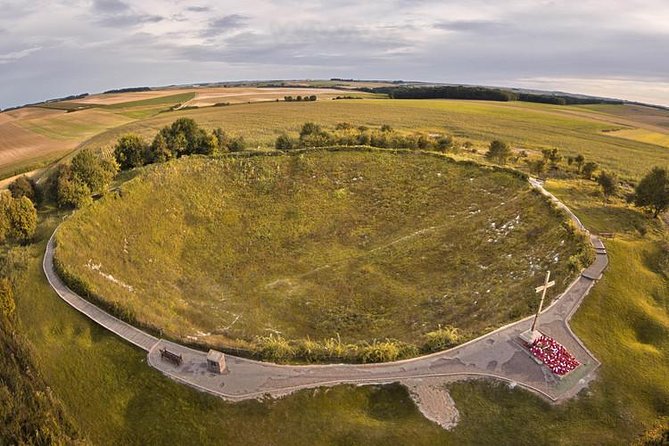
The day begins with the Lochnagar Crater area in La Boisselle, tied to a specific moment: the opening of the Battle of the Somme on 1 July 1916. This crater was formed by a mine placed under German front lines from the British section of the battlefield. Your guide’s explanation matters here, because the crater looks like a dramatic scar, but the story behind it is what sticks.
You’ll hear how the British tunneling companies dug a shaft down about 90 feet, then pushed roughly 300 yards toward German lines. They loaded 60,000 lbs (about 27 tons) of ammonal explosive into two chambers, spaced about 60 feet apart. The target was the German strongpoint known as Schwaben Höhe, south of La Boisselle.
You only spend about 10 minutes at this stop, so treat it like an orientation moment rather than a lingering viewpoint. In that short time, you’re basically grabbing the visual anchor for the day, then moving on with the mental map already in place. If you want photos, bring a steady posture, because the ground around these sites can be uneven and you’ll want to be careful.
Ulster Memorial Tower and Thiepval Wood: why a ridge held on
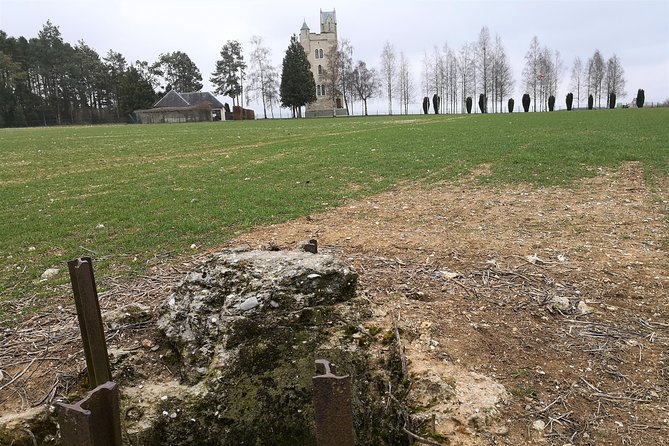
Next up is the Ulster Memorial Tower and Thiepval Wood, and this is where the day starts shifting from “what happened” to “why it mattered.” The tower sits on land that was the German front line during the first major phase of the battle. Your guide connects the memorial to a specific fortified position called the Schwaben Redoubt, which the Ulster Division eventually captured.
This stop is also about timing. Your guide helps you understand that sites here were not simply taken on July 1 and then done. Thiepval ridge stayed a major objective for the Allies and was not taken until the end of September. That changes how you read everything else on the route. Instead of a single day of action, you see it as a longer grind of attempts, losses, and stubborn defense.
You spend about 30 minutes here, and it’s a good chunk of time for looking, listening, and then realizing how close the memorial points are to where the fighting actually concentrated. The tower is also a clear marker for the relationship between Ulster positions and the wooded ground at Thiepval, including the historic charge associated with the 36th (Ulster) Division on 1 July 1916.
Thiepval’s Historial: Joe Sacco’s panoramic mural and the shapes of war
After the outdoor stops, you switch gears to Historial de la Grande Guerre, Musée de Thiepval. This is not just a room full of artifacts, it’s set up like an explanation you can walk through. At the entrance, there’s a large animated map with period photographs and film. It’s the kind of first step that helps your brain stop wandering.
Then comes the main visual payoff, a panoramic mural by illustrator Joe Sacco. The mural depicts 1 July 1916 hour after hour, with scenes laid out over 60 metres of back-lit glass. It’s dramatic, yes, but it’s also useful because it forces you to notice time, not just space.
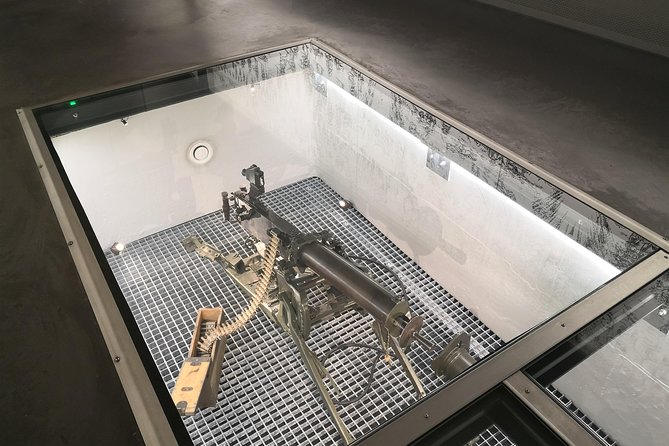
In the museum hall, you’ll also see a vast display pit covered by glass with collection pieces and archaeological remains. Short videos provide supporting context, including archive footage and educational animations. You also get a specific reminder of how heavily defended this place was: a Maxim machine gun captured by a British regiment at Thiepval. That detail helps you understand why “small advances” could cost enormous losses.
This stop is timed at about 30 minutes, and the entry is listed as included in the day plan. If you are someone who finds museums overwhelming, don’t worry. This one is designed to be clear and guided by the themes of the day’s route.
Beaumont-Hamel Newfoundland Memorial: preserved trenches and numbers you can’t forget
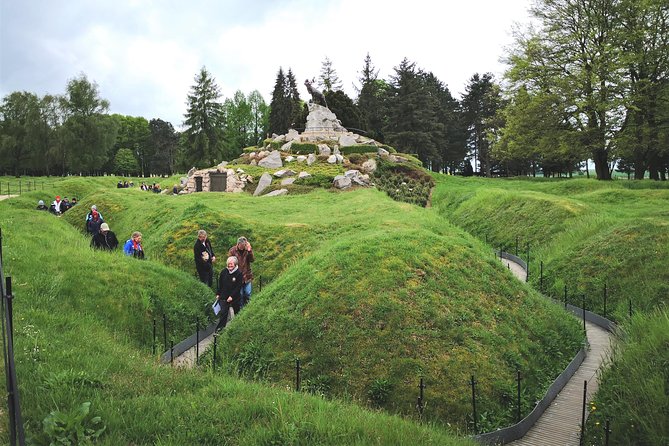
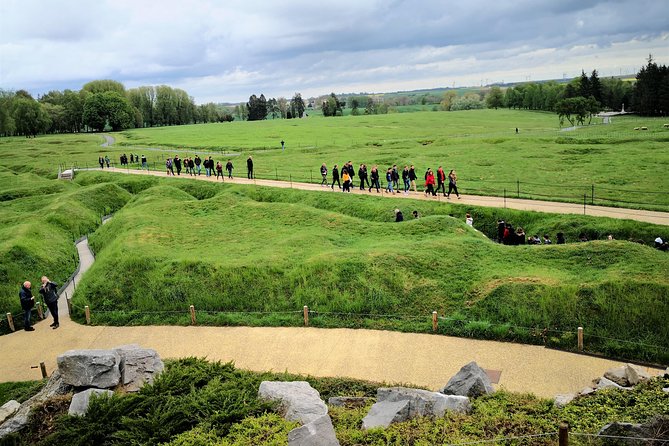
If the Thiepval museum helps you see the day, Beaumont-Hamel Newfoundland Memorial helps you feel it in the body. The preserved battlefield park keeps a large portion of the ground from the fighting, and the walk moves through a network of trenches that are now serene. That contrast is part of the impact. You’re seeing where people lived and died, and now the air is calm.
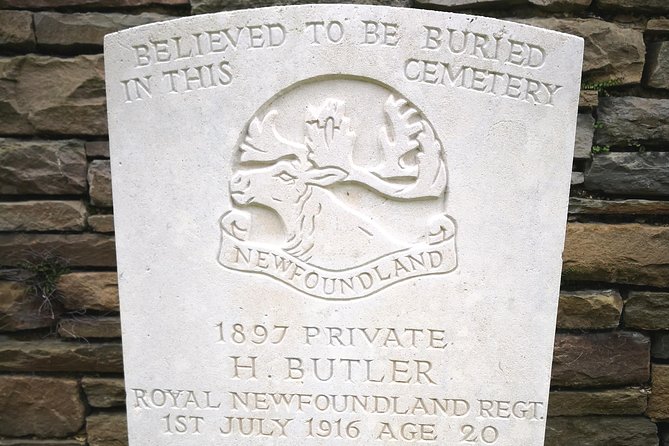
This memorial is dedicated to the Dominion of Newfoundland forces killed during WWI. The park covers about 74 acres, including the area over which the Newfoundland Regiment made its unsuccessful attack on 1 July 1916. Your guide sets the moment with specific orders and timing.
The key details are brutal in a plain way. At 8:45 a.m., the Newfoundland Regiment and the 1st Battalion of the Essex Regiment received orders to move forward. Out of 780 men who went forward, about 110 survived unscathed. Only 68 were available for roll call the next day. Those numbers don’t need extra interpretation, they do the work.
You spend about 1 hour here, and it’s the longest outdoor segment besides the later museum stop. Wear comfortable shoes and plan for walking on preserved paths. Even if the ground looks quiet, you’ll want to watch your footing.




Delville Wood South African Memorial in Longueval: a first action with lasting weight
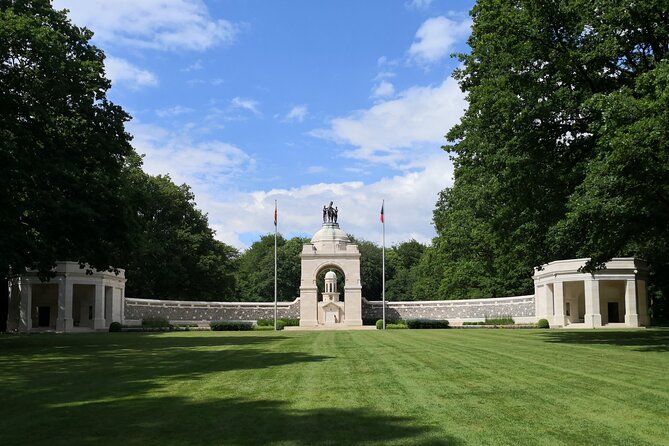
Next you visit the Delville Wood War Memorial in Longueval, dedicated to South African forces. This is where the Somme story expands beyond one nation’s memory. The memorial marks the role played by South African troops in the Battle of Delville Wood, part of the broader Somme offensive.
Your guide explains that Delville Wood was the first major action South Africa’s forces saw in Flanders and France, which gives this stop a particular emotional focus. Other battles commemorated here include participation by South African forces at Arras and Passchendaele, so it acts like a bridge from the Somme to later WWI campaigns.
The memorial itself is built with a classic, solid design language: a flint and stone screen either side of an archway, with a shelter at each end. On top is a bronze statue of two men and a war horse. The two male figures symbolize Castor and Pollux, and your guide can explain how this symbol was used to represent two white races of South Africa. That kind of period symbolism is part of the memorial’s design, so it’s worth paying attention while you’re there.
This stop is about 40 minutes. It’s long enough to read the structure and take it in without feeling rushed. The effect comes from steady viewing and your guide’s linking of South African action to the wider Somme framework.
Péronne’s Historial museum in a medieval castle: objects, mannequins, and trench art
After lunch time on your own (since lunch is not included), you head to the Historial de la Grande Guerre in Péronne. This museum is housed in a 13th century medieval castle, and the setting helps. You’re not in a white box, you’re in a building that looks like it belongs to centuries of conflict and defense.
The museum is known for showing WWI across cultural, social, and military scales. The central parts of each gallery focus on life at the front, not only battlefield events. You’ll see mannequins dressed in uniforms with weapons and personal effects. The display design includes life-size bodies placed in white marble pits cut out of the floor, intended to symbolize the Somme region riddled by trenches and the common suffering of soldiers.
Weapons and military equipment appear in the center galleries too, often presented in pits on the ground. Civilian life also shows up, in wall cabinets divided by Germany, France, and Great Britain. This matters because it reinforces the idea that war pulled in entire populations, not just the front line.
One of the standout themes is trench art. The museum offers testimony through trench artists such as Otto Dix, using sketches and graphic etchings created in response to the war. This is not an abstract lesson. It’s evidence in the form of what people made when they had no safe way to forget.
Your time here is about 1 hour, and admission is listed as included in the experience. If you only had time for one museum stop, this would be the one to keep your energy for.
Price and value for a private day trip from Paris (up to 2 people)
The total price is $976.96 per group, up to 2 passengers. That sounds high until you break it down into what you’re buying: private round-trip transportation, air-conditioned vehicle, driver guide, and museum admission at Péronne. It’s also buying time. A Somme day is long, and doing it by your own driving schedules can turn into a logistics headache fast.
If you book for 2 people, you’re effectively splitting the cost, making it close to the price of a couple of big guided city tours, but you’re getting a full-day route to some of WWI’s most significant memorial spaces. If you’re booking as just one person, the value depends on whether you can fill the second seat, since this is priced per group for up to 2.
The other value angle is how private format changes your learning. You can ask follow-up questions while you’re stopped at the places where those questions come from. In a crowd, you get a timeline. In a private van, you get a conversation.
Should you book this Somme tour, or build it yourself?
Book it if you want the Somme explained in plain language with a plan that actually holds up for a long day from Paris. The mix of Lochnagar Crater, Ulster Memorial Tower, Beaumont-Hamel trenches, Delville Wood, plus the two museum experiences means you see both the big map story and the human-scale interpretation.
I’d especially recommend it if you care about details like how the tunneling effort shaped early battle geography, or why Thiepval ridge took months instead of days to fall. The museum stops, especially the Thiepval panoramic mural by Joe Sacco, are built for understanding, not just looking.
Skip it if you strongly prefer total freedom, because this route is scheduled and timed, and you’ll still have to handle lunch on your own. Also, if you dislike early starts, remember pickup is 6:30am and the day runs roughly 12 to 13 hours.
FAQ
How long is the WW1 Somme private tour from Paris?
It runs about 12 to 13 hours.
What time does the tour start?
The listed start time is 6:30am.
Is this tour private or shared?
It is private. Only your group participates.
What language is the tour offered in?
The tour is offered in English.
Are there museum tickets included?
Admission to the Historial de la Grande Guerre in Péronne is included, and the Thiepval Historial stop is listed with admission included in the day plan.
Do I need to plan lunch?
Lunch is not included.
Where does pickup happen in Paris?
Pickup is offered in Paris districts 75008, 75007, and 75016.
Do I receive a mobile ticket?
Yes, a mobile ticket is offered.
Is free cancellation available?
Yes. You can cancel up to 24 hours in advance for a full refund.
More Private Tours in Paris



More Tours in Paris




More Tour Reviews in Paris



Not for you? Here's more nearby things to do in Paris we have reviewed












Paris City Tours, side by side.
 ★ 4.6Louvre Museum Timed-Entrance TicketTickets from $2671,977 guest reviews
 ★ 4.6Disneyland® Paris 1-Day TicketTickets from $6149,412 guest reviews
 ★ 4.6Versailles Palace and Gardens Full Access TicketTickets from $1741,579 guest reviews
 ★ 4.6Arc de Triomphe Rooftop TicketsTickets from $1834,264 guest reviews
 ★ 4.7Orsay Museum Entry TicketTickets from $1525,647 guest reviews
 ★ 4.4Evening River Cruise with MusicTickets from $2722,721 guest reviews
 ★ 4.4Eiffel Tower Entry Ticket with Optional Summit AccessTickets from $2920,035 guest reviews
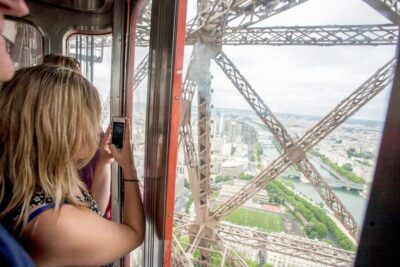 ★ 4.3Eiffel Tower Summit or Second Floor AccessTickets from $5917,248 guest reviews