
Review · LOUVRE MUSEUM TOURS
Treasure Hunt in Paris – From the Panthéon to the Louvre
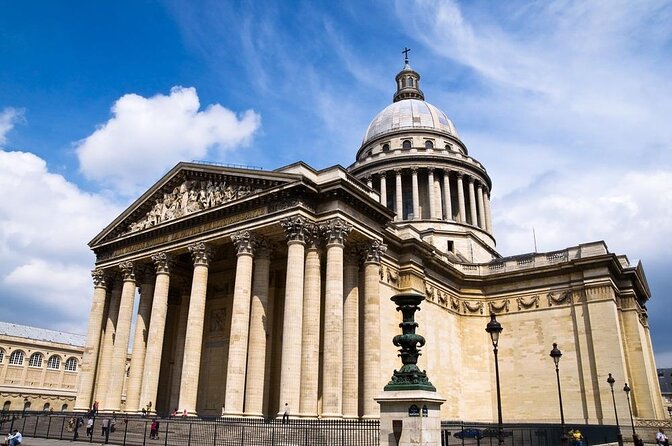
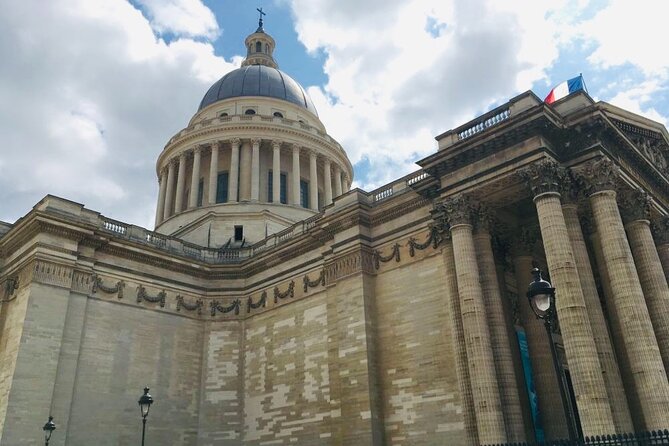
Solve Paris like a detective. This Panthéon to the Louvre treasure hunt turns famous landmarks into a clue trail you can work through at your own pace, from the Latin Quarter to the final chest in front of the Louvre. You start at the foot of the Panthéon, follow riddles through historic streets and bridges, and finish with a story reveal right at the museum.
Two things I like a lot: the format is simple and engaging (a booklet with riddles, map, and cultural notes, no app needed), and the route is built for real sightseeing without feeling like a lecture. Plus, you can get help during the game if you get stuck, and the clues are designed to keep multiple ages interested.
One consideration: it’s self-guided, so you’ll rely on the booklet and clues rather than a live guide narrating each spot, and the activity is time-limited (it automatically ends after 3 hours).
Key things to know before you go
- Self-guided treasure hunt with a booklet, map, and riddles, plus answer sheets
- No mobile app required, just a mobile ticket and your game materials
- A smart route through the Latin Quarter, Cluny area, Seine, Île de la Cité, Pont Neuf, and Pont des Arts
- Two languages available for the materials: English and French
- Assistance is available during the game if you need it, and the group size tops out at 25 people
- Plan for a 2-hour average experience, with a hard stop after 3 hours
How the Panthéon to the Louvre treasure hunt really works
This is not a guided walking tour where you follow a person holding a flag. It’s a self-guided game. You’ll pick up everything you need and then work the trail yourself, using a game booklet that includes riddles, a map, and cultural notes. There’s no app to download and no headset. If you like your Paris time to feel active and slightly playful, this format is a good match.
After a short briefing at the start, you receive your materials and first clue. From there, it’s observation and logic. Each stop leads you toward the next riddle, and you’ll ultimately decode the story behind the chest that ends in front of the Louvre.
You can also ask for help if you’re stuck. That matters, because scavenger hunts can go two ways: either you’re having fun, or you’re staring at paper. Here, you get enough support to keep the pace moving.
Timing is the other big piece. The hunt averages about 2 hours and will automatically end after 3 hours, wherever you are on the route. So yes, you can pause for photos or a quick snack run nearby, but long breaks will cut into your clue-solving time.
You can also read our reviews of more tours and experiences in Paris.



Starting at Rue Soufflot, at the foot of the Panthéon
Your adventure begins at 1 Rue Soufflot (75005) in the Latin Quarter. The Panthéon area is a strong start point because it feels central, classic, and walkable. You’re already near one of the city’s most atmospheric neighborhoods, with streets that gradually turn from open views into older, narrower lanes.
You’ll get a quick briefing and your first clue right at the beginning of the trail. This matters more than it sounds. A good first clue sets the rhythm. It gets you into the right mindset immediately: read, look closely, then decide what the clue is pointing you toward.
This start also helps you avoid the most common sightseeing problem in Paris: wandering around with no plan. Here, the plan is the game. You’re not just going to landmark after landmark, you’re moving because each location feeds the next step.
The Latin Quarter streets and Cluny Museum clues
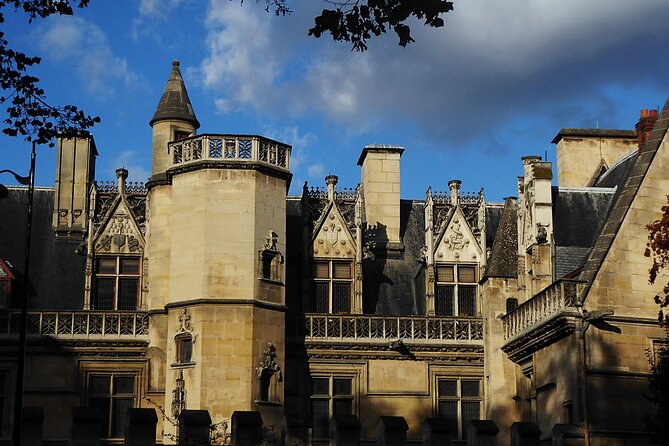
Next, the route brings you into the Latin Quarter, with a walk past the Cluny Museum area. This is where the treasure hunt earns its keep. You’re not only seeing postcard Paris, you’re working your way through older streets where the city’s layers feel close together.
Clues here are built around observation and logic. The game nudges you to slow down and pay attention to details rather than simply passing by. If you’re the type who loves turning streets into puzzles, this segment is a highlight. It’s also a great place for teamwork, because different people notice different things: street angles, signs, shapes, and small visual hints that you’d otherwise ignore.
A practical note: you’ll be walking through older parts of the city where paths can feel tight. That’s not a dealbreaker, but it does mean comfortable shoes help. The hunt is meant to be doable for most participants, but you’ll still feel the pace.
The Notre-Dame area, and the puzzle that pulls you across the Seine
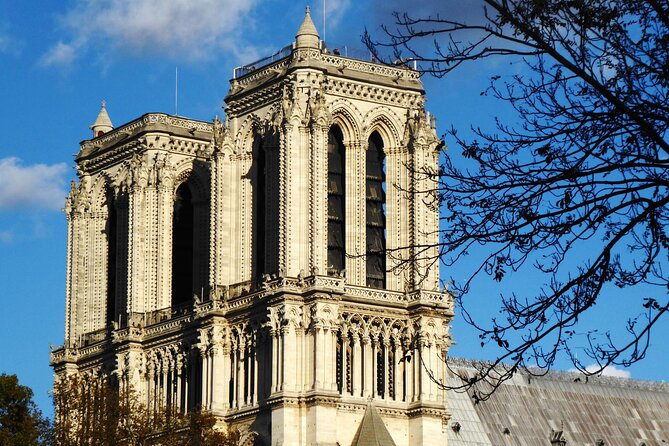
The game then points you toward the Notre Dame de Paris area, described as connected to the chest’s mysterious owner. This part of the hunt is effective because it makes the famous view feel like a destination rather than just a stop.
After that, you cross to Île de la Cité. The route places you between Pont Saint-Michel and Notre-Dame’s area, which sets up one of the best “historic heart of Paris” zones for your next riddle. The setting does two jobs at once. It gives you a dramatic backdrop for your clues, and it keeps you oriented in the geography of central Paris.
This is one of those moments where a self-guided treasure hunt works better than a typical walking tour. A guide can tell you what to look at, but the game makes you choose what matters to you in the moment. That’s how you remember streets.
Place Dauphine, Pont Neuf, and Pont des Arts for the final build-up
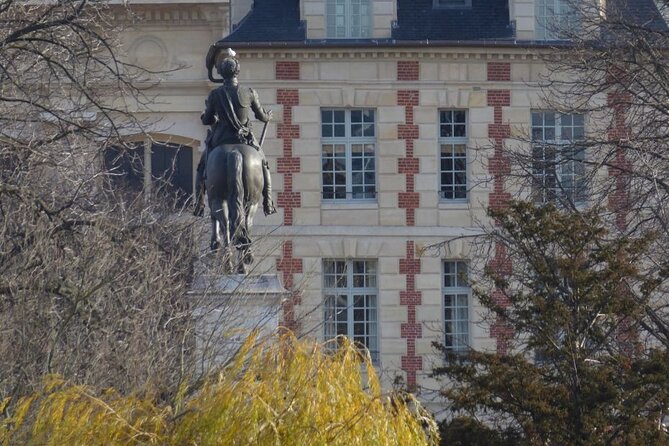
Once you reach the Île de la Cité, the path continues through some of Paris’s most recognizable river scenes, including Place Dauphine. This square is described as especially charming, and it’s a smart transition space. Squares are where you catch your breath, reposition your group, and re-check the next clue.
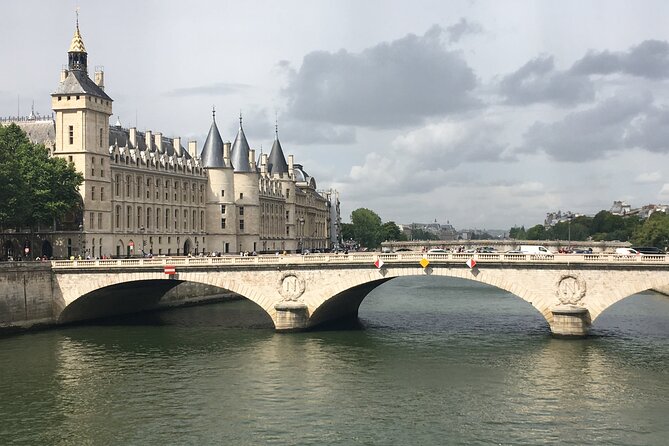
From there, you head onto Pont Neuf, noted as the oldest bridge in the city. Then you cross Pont des Arts, the iconic bridge of artists and lovers, which the route explicitly uses as a key segment before the final phase.
Here’s why this segment matters for most people: bridges act like moving “checkpoints.” As you cross, you naturally get wider views and clearer direction. That makes it easier to navigate a self-guided trail, especially if you’re traveling with kids or you’re in a multi-language group.
Then you get ready for the finale. The final clues lead you to the chest opening location near the Louvre.






The Louvre finish: where the chest opens in front of Cour Carrée
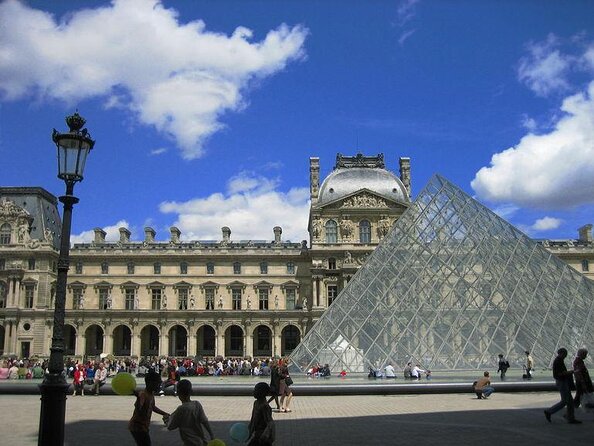
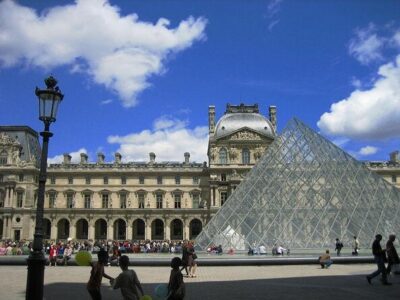
The treasure hunt ends in front of the Louvre Museum, with the chest finally opening and revealing its story right at the finish point near the Cour Carrée side on Place du Louvre.
This ending is well chosen. The Louvre can feel intimidating on a first visit because it’s huge and busy, and you can easily waste time just figuring out where to go. Finishing the hunt at the museum front gives you a clear purpose for getting there, and a concrete “we did it” moment rather than an open-ended visit.
You’ll also find the location practical. The closest metro station listed is Louvre-Rivoli, and the end meeting point is described around the church bell tower area as well as the Louvre entrance side. In plain terms, you won’t be wandering in circles if you’re using the provided map and landmarks.
Price and value: what $36.05 buys you in 2 hours
At $36.05 per person, this is priced like a straightforward activity ticket rather than a private tour with a guide. What you’re paying for is time, structure, and the built-in “story engine” that turns landmarks into tasks.
Here’s the value logic I see:
- You get a printed game booklet with riddles, map, and cultural notes, which replaces the usual cost of a printed guide.
- You get answer sheets and the materials needed to play.
- You get English or French materials, which reduces the awkwardness when groups have different preferences.
- It’s self-paced, so you can move with your group rather than syncing to someone else’s speech.
You also get a real social element. Even though you’re self-guided, you’re not alone. With a max group size of 25, you can usually find room to collaborate, compare ideas, and stay motivated.
Is it as educational as a museum guide? No. But it’s not trying to be. It’s a different type of learning, the kind that sticks because you actively worked for it.
Who this suits best (families, first-timers, teams)
This treasure hunt style is especially good for:
- Families with kids and teens who like puzzles. The format is designed to keep multiple ages engaged, and the final code moment is the kind of payoff younger travelers remember.
- First-time Paris visitors who want a hit list of iconic places without locking themselves into a rigid tour schedule.
- Friend groups or team builders who enjoy light competition and teamwork. Riddles naturally create roles: reader, map-checker, clue solver, and photo scout.
The experience also works well if you’re visiting during the day and want something that feels different from sitting in a cafe watching the world go by. It’s walking, but it’s walking with a purpose.
One helpful practical detail from the way the host operates: the organizer is known for being friendly and flexible, including accommodating a later start when needed. And if the weather is sunny, it’s smart to bring a hat and something for sun protection.
Practical tips to finish the hunt without stress
The biggest thing to plan around is the time limit. The activity lasts about 2 hours on average, but it automatically ends after 3 hours wherever you are. That means you should treat this like a game with a finish line, not a casual stroll where you can wander for as long as you like.
A few tips that make a real difference:
- Keep your group together, especially at the start and around the bridges, where it’s easy to lose each other for a minute.
- Take photos quickly and move on. This is a clue-solving route, and the pauses add up.
- Don’t plan long snack or coffee breaks during the middle sections. If you take a break, you reduce your time to complete the investigation.
- Wear shoes you can walk in. The route uses central streets and bridge crossings, and you’ll want comfort for a couple of hours.
Weather matters too. The experience requires good weather. If it’s canceled because of poor conditions, you’ll be offered another date or a full refund.
Should you book the Panthéon to the Louvre treasure hunt?
If you want Paris to feel like a scavenger hunt with iconic landmarks as the stage, I’d say yes. This is a smart value activity because it gives you a structure to follow, a map and clues to work with, and a satisfying finish at the Louvre entrance. You’ll see a tight loop of central highlights without waiting for a guide or worrying about long museum lines as part of the game.
Book it if:
- You enjoy puzzles and problem-solving.
- You’re traveling with family members who want to be active.
- You want an easy first-day plan that mixes big sights with streets and viewpoints.
- You like the idea of learning by noticing rather than listening.
Skip it if:
- You strongly prefer a live guide explaining history at each stop.
- You hate time limits or dislike activities that require teamwork.
- Your group can’t reliably handle walking and coordinating through busy central areas.
Overall, this is one of those Paris experiences that makes the city feel personal, because you’re moving through it with clues in hand. The best part is the finale: the chest opens in front of the Louvre, and you get to leave with a story you solved yourself.
FAQ
How long is the treasure hunt from the Panthéon to the Louvre?
It lasts about 2 hours on average. The activity automatically ends after 3 hours, wherever you are on the route.
Where do we start and where do we finish?
You start at 1 Rue Soufflot, 75005 Paris. You finish in front of the Louvre Museum entrance on the Cour Carrée side at Place du Louvre (near the Louvre-Rivoli metro station).
Is this a guided tour with a live guide?
No. It is a self-guided activity. You get a booklet with riddles and a map, and assistance is available during the game if needed.
Do we need to download an app?
No. There is no mobile app or downloads required. You use a mobile ticket and the game booklet materials.
What is included in the game?
Included are the game booklet (with riddles, map, and cultural notes), answer sheets and necessary materials, and assistance during the game if you need it. It is available in English and French.
What about language options?
The materials are available in English and French.
Is there any time guidance or limit we should know?
Yes. The investigation averages 2 hours, and it automatically ends after 3 hours. Taking breaks reduces the time you have to finish.
What happens if weather is bad?
The experience requires good weather. If it is canceled due to poor weather, you’ll be offered a different date or a full refund.
More Tour Reviews in Paris
Not for you? Here's more nearby things to do in Paris we have reviewed












Louvre Museum Tours, side by side.
 ★ 4.6Louvre Museum Timed-Entrance TicketTickets from $2671,977 guest reviews
 ★ 4.3Louvre Guided Tour with Reserved Access & Boat CruiseTickets from $8116,353 guest reviews
 ★ 4.5Louvre Museum Masterpieces Guided Tour with AccessTickets from $8612,023 guest reviews
 ★ 4.6Louvre Museum Entry Ticket With Host and River CruiseTickets from $1009,926 guest reviews
 ★ 4.1Priority Access Louvre with Host -Direct to Mona LisaTickets from $748,387 guest reviews
 ★ 4.6Mona Lisa & Louvre Masterpieces Tour with Reserved AccessTickets from $806,812 guest reviews
 ★ 5.0Louvre Museum – Exclusive Guided Tour (Entry Included)Tickets from $1816,296 guest reviews
 ★ 4.0Louvre Reserved Ticket and River Cruise ComboTickets from $376,054 guest reviews
This tour also belongs to